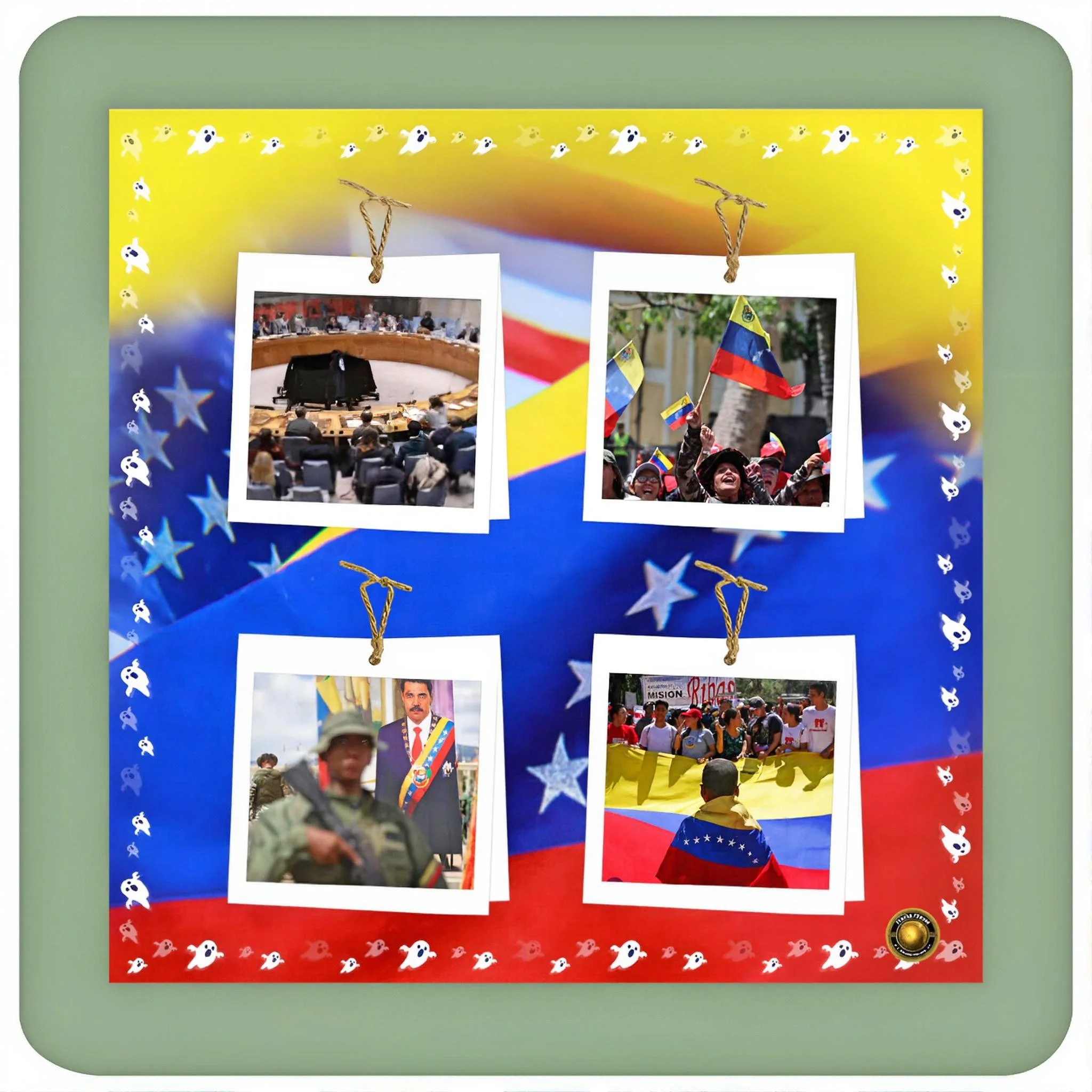
UNSC Key Notes: The US Intervention and Regime Change in Venezuela - Part I
Executive Summary
On January 3, 2026, the geopolitical landscape of the Americas was fundamentally altered when United States military forces executed a high-risk extraction operation in Caracas, resulting in the capture of Venezuelan President Nicolás Maduro and First Lady Cilia Flores.
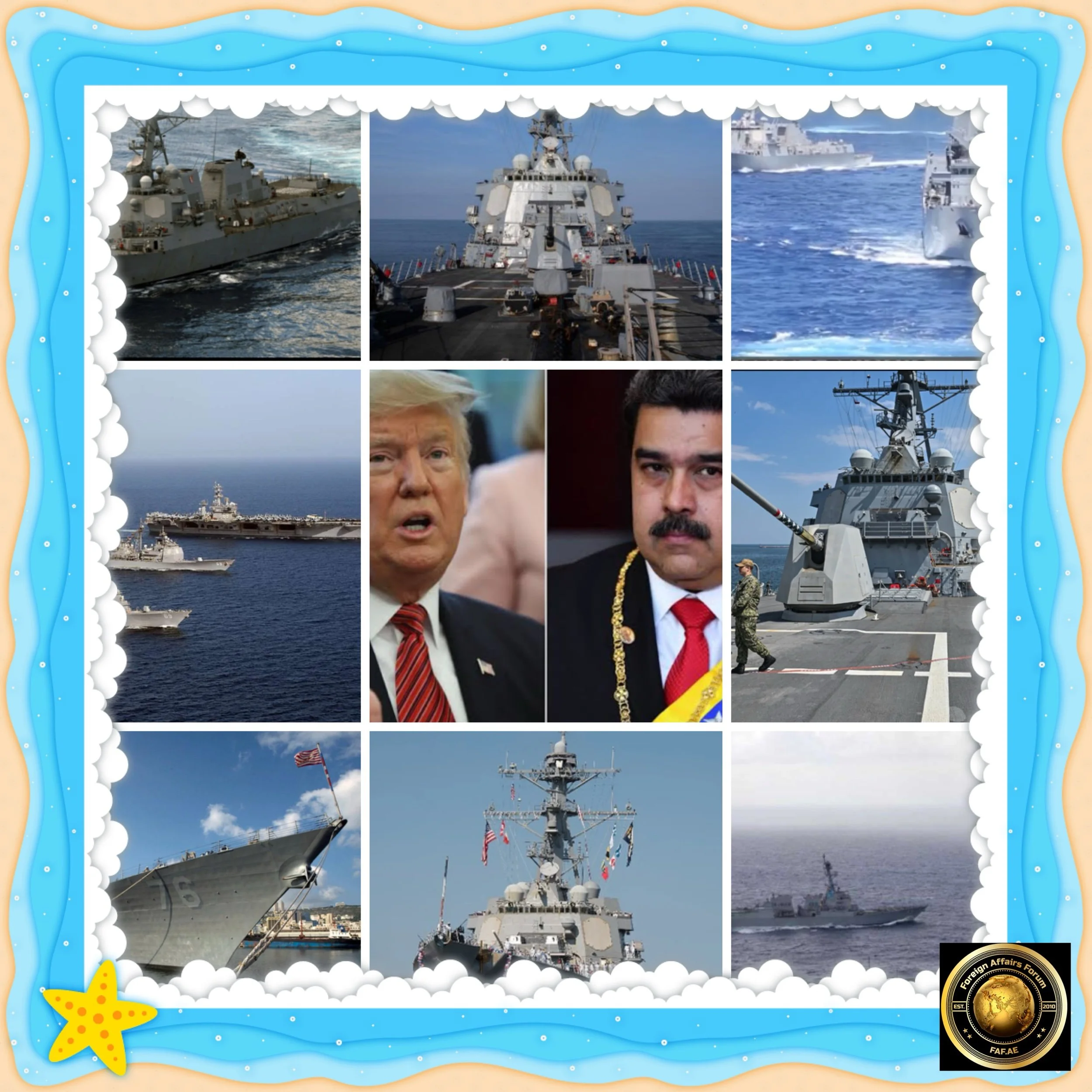
This operation, code-named Southern Spear, marks the culmination of months of escalating naval interdictions and kinetic strikes targeting what Washington has designated as narco-terrorist infrastructure.
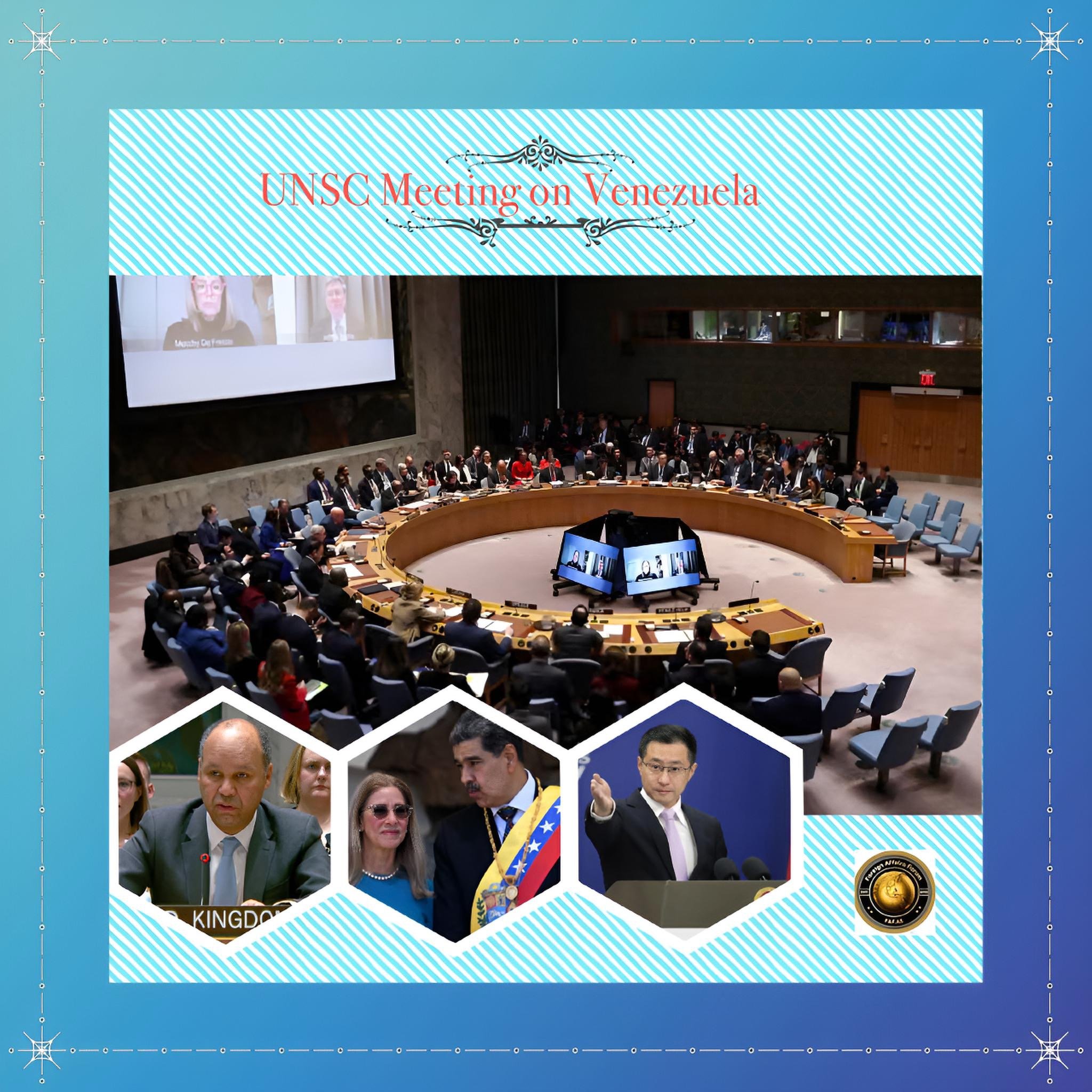
The United Nations Security Council (UNSC) convened in an emergency session on January 4 and 5 to address the fallout, revealing a stark and dangerous paralysis in the international legal order. While the United States maintains the operation was a necessary act of law enforcement and self-defense against a criminal enterprise, a significant bloc of the international community, led by Russia and China, has condemned the action as a flagrant violation of the UN Charter and Venezuelan sovereignty.
The situation remains volatile, with the United States declaring an intent to temporarily administer Venezuelan state functions to stabilize oil production, effectively placing the nation under a form of protectorate status that has no clear precedent in modern international law.
Introduction
The long-standing diplomatic attrition between Washington and Caracas transitioned into direct military conflict in the opening days of 2026. Following the disputed July 2024 elections, where the opposition led by Edmundo González claimed victory against incumbent Nicolás Maduro, the diplomatic isolation of the Bolivarian Republic intensified. However, the strategy shifted markedly in late 2025 under the new US administration.
Moving beyond economic sanctions, the United States designated the Maduro government a Foreign Terrorist Organization, specifically citing ties to the Cartel of the Suns and Tren de Aragua. This legal reclassification provided the domestic justification for Operation Southern Spear, which began as maritime counternarcotics interdictions and evolved into a regime-change operation. The extraction of a sitting head of state by a foreign power has precipitated a constitutional vacuum in Venezuela and a diplomatic crisis at the United Nations, where the definition of sovereignty is now actively contested.
History and Current Status
The trajectory toward this conflict was set by the collapse of the Barbados Agreements and the subsequent refusal of the Maduro administration to release verifiable tally sheets from the 2024 presidential election. While the international community initially responded with renewed economic sanctions, the stalemate persisted through 2025.
In September 2025, the US Department of Defense initiated Operation Southern Spear, deploying naval assets to the Caribbean under the banner of enhanced counternarcotics operations. Between September and December 2025, US forces conducted over thirty lethal strikes against vessels in international waters alleged to be trafficking narcotics, resulting in over one hundred fatalities.
The status quo shattered on January 3, 2026. US special operations forces, supported by air and naval assets, struck military targets within Caracas before seizing President Maduro. Currently, the Venezuelan capital is in a state of precarious uncertainty.
Vice President Delcy Rodríguez has technically assumed authority under the constitution, yet her ability to govern is severely constrained by the overwhelming US military presence and Washington’s declaration that it will oversee the country’s reconstruction.
The United States has effectively established a blockade, controlling the flow of goods and oil, while sporadic resistance from paramilitary groups, known as colectivos, continues in urban centers.
Key Developments in the Security Council
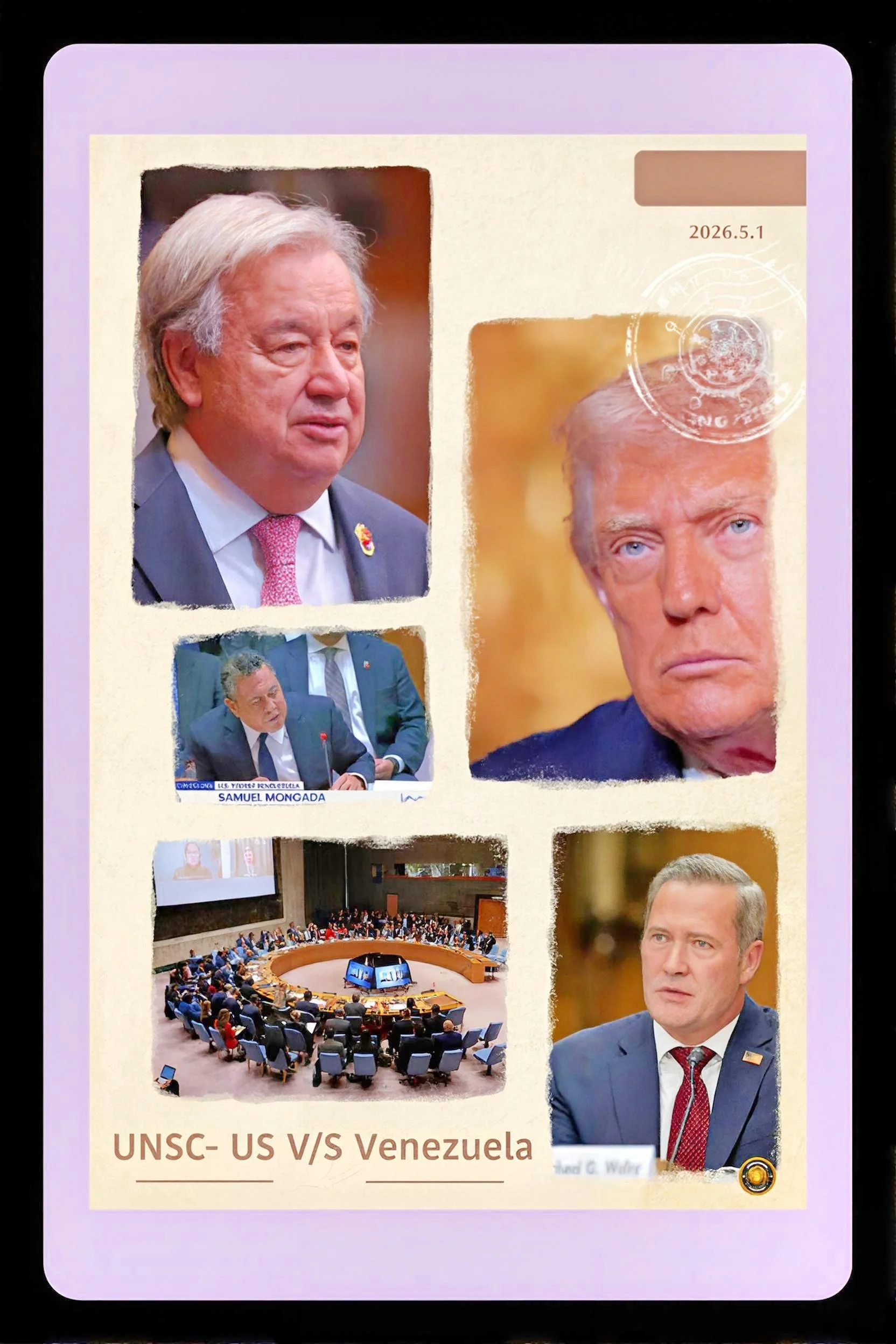
The emergency meetings at the UNSC have been characterized by acrimonious debate and a predictable deadlock. Secretary-General António Guterres opened the session by warning that the operation establishes a dangerous precedent for international relations, urging all parties to respect the principles of the UN Charter, specifically Article 2(4) regarding the prohibition of the use of force.
The Russian Federation and the People’s Republic of China have issued blistering condemnations. The Russian representative denounced the extraction as an armed invasion and an act of aggression, drawing parallels to 19th-century colonialism.
China’s Foreign Ministry echoed these sentiments, emphasizing that no domestic law enforcement mandate supersedes the sovereign immunity of a foreign head of state.
Both nations argued that the US justification of self-defense under Article 51 was legally weightless, as Venezuela had not launched an armed attack against the United States.
Conversely, the United States, utilizing its veto power to block any condemnatory resolution, framed the operation not as a war against Venezuela, but as a specialized law enforcement action against a non-state criminal entity occupying the seat of government.
US diplomats argued that the fusion of the Venezuelan state with narco-trafficking cartels posed an imminent threat to the national security of the Western Hemisphere, necessitating unilateral action when multilateral mechanisms failed.
Latest Facts and Concerns
The immediate concern for the international community is the vacuum of power in Caracas. While the US has transferred Maduro to American soil to face narco-terrorism charges, the political roadmap for Venezuela remains opaque.
President Trump’s statement that the US would run Venezuela to ensure stability has alienated even regional allies who previously opposed Maduro. Brazil, Colombia, and Mexico have issued joint statements rejecting external military control, fearing that the normalization of such interventions could destabilize the entire Latin American region.
Humanitarian organizations are reporting that the naval blockade and air strikes have disrupted food and medicine supply chains, exacerbating an already critical humanitarian emergency.
There are unverified reports of factional fighting within the Venezuelan military, with some units surrendering to US forces and others pledging loyalty to the remnants of the Maduro regime.
The primary operational concern is the security of the oil infrastructure, which US officials have explicitly targeted for rehabilitation, raising accusations from the Global South that the operation is fundamentally resource-driven.
Cause-and-Effect Analysis
The primary cause of this escalation was the failure of diplomatic and economic pressure to effect democratic transition. The resilience of the Maduro government against sanctions, bolstered by support from extra-regional powers, convinced Washington that only kinetic action would dislodge the regime.
The US administration’s calculation likely factored in the geopolitics of energy; securing Venezuelan oil reserves became a strategic priority amidst global supply constraints.
The effect of this intervention is a bifurcation of the global order. The operation has forced nations to choose between a US-led interpretation of security, which prioritizes the removal of criminalized regimes, and a strict Westphalian interpretation of sovereignty championed by the Global South.
Economically, the immediate effect is a spike in oil market volatility, though the long-term US goal is clearly to bring Venezuelan crude back online under American supervision.
Domestically, Venezuela faces the risk of a protracted insurgency. If the remnants of the regime retreat into the hinterlands or merge with guerrilla groups like the ELN, the US could find itself entangled in a costly and prolonged occupation.
Future Steps
The immediate next step involves the legal processing of Nicolás Maduro within the US federal court system, a spectacle that will dominate global media but offers little resolution to the crisis on the ground. Diplomatic efforts will likely focus on the formation of a transitional government. While the US has previously recognized Edmundo González, the current rhetoric suggests Washington may prefer a direct provisional administration, a move that would likely provoke sustained resistance.
In the Security Council, the deadlock guarantees that no UN peacekeeping force will be deployed. Consequently, the burden of security will fall entirely on US forces and any willing coalition partners, though few are expected to join given the controversial nature of the intervention.
We can anticipate a move by Russia and China to censure the US in the General Assembly, where the veto does not apply, though such a resolution would be non-binding. The critical variable remains the Venezuelan military; if the officer corps agrees to a transition, order may be restored relatively quickly. If they fracture, Venezuela faces a civil war scenario.
Conclusion
The US intervention in Venezuela represents a watershed moment in 21st-century geopolitics. It signals the end of the post-Cold War era’s reluctance toward direct regime change in the Western Hemisphere and reasserts the Monroe Doctrine with aggressive clarity. While the operation successfully decapitated the Maduro government, it has severely damaged the credibility of international legal institutions, which proved powerless to prevent or regulate the conflict.
The United States has achieved its tactical objective but has assumed a strategic burden of immense complexity. The coming months will determine whether this action restores democracy and prosperity to a failed state or plunges the region into a cycle of insurgency and anti-American radicalism.
As the UNSC remains paralyzed, the resolution of the Venezuelan crisis will be determined not by international law, but by the raw application of power and the realities of occupation.