The Intelligence Revolution That Demands Human Hands on the Wheel—Navigating Artificial Intelligence as Collaborator, Not Replacement
Executive Summary
Coexistence or Subjugation: Why the Next Decade of AI Depends on Getting Human-Machine Partnership Right Now
The emergence of large language models and advanced generative artificial intelligence systems has fundamentally altered the trajectory of human work and learning.
In his 2024 book Co-Intelligence, Wharton professor Ethan Mollick articulates a pragmatic framework for understanding and leveraging these systems not as replacements for human capability, but as collaborative intelligence partners.
This paradigm shift—from viewing AI as either threat or oracle to understanding it as a skilled co-worker—represents perhaps the most consequential adjustment in how humans organize knowledge work since the digital revolution.
The stakes extend far beyond productivity metrics. Organizations that master collaborative intelligence will secure competitive advantages, while those that miscalculate risk both talent disruption and missed innovation opportunities.
The evidence increasingly demonstrates that the future belongs not to humans versus machines, but to those who learn to think, create, and decide together with AI systems while maintaining critical human judgment as the essential guardrail.
Foreward
When AI Crossed the Threshold—What Happened in November 2022 and Why it Changed Everything
In November 2022, something tangible shifted in the technological landscape. ChatGPT, a large language model trained on vast repositories of human text, achieved a threshold that previous AI systems had approached but never clearly crossed: it could perform creative, knowledge-intensive work that previously seemed uniquely human. Within two months, it reached 100 million users, making it the fastest-adopted application in history.
The existential question that followed was not whether AI could automate tasks, but whether it could augment the decision-making, creative, and analytical capacities of knowledge workers themselves.
Ethan Mollick's response to this moment was neither utopian nor dystopian. Rather than celebrate AI as the harbinger of human obsolescence or condemn it as a threat to employment, he proposed that the optimal path forward required redefining the relationship itself.
Co-intelligence represents an intellectual position grounded in pragmatism: AI systems possess genuine capabilities across certain domains, but they also suffer from predictable blindspots, errors, and limitations. The quality of outcomes depends critically on how humans position themselves in relation to these systems.
This framework arrives at a crucial inflection point. As of late 2025, artificial intelligence adoption in the workplace has moved beyond pilot projects and organizational experiments. Approximately 37% of organizations now report implementing AI to improve productivity, efficiency, and quality. Yet according to McKinsey's 2025 AI survey, only one percent of companies believe they have achieved meaningful maturity in AI deployment. The gap between adoption and mastery is vast, and it is precisely in this space that Mollick's co-intelligence framework offers diagnostic value.
The philosophical and practical implications extend across three domains that structure this analysis: business and organizational transformation, education and skill development, and the broader societal question of how technological change maps onto employment and human flourishing. Each domain presents distinct challenges and opportunities that the co-intelligence framework addresses differently.
History and Current Status
From Academic Breakthrough to Boardroom Reality—How Three Years of AI Deployment Revealed the Real Opportunity
The development of large language models represents an evolutionary sequence rather than a singular breakthrough.
The transformer architecture, introduced by researchers at Google in 2017, provided the mathematical foundation for processing language at scale. What changed fundamentally between 2022 and 2024 was not the underlying technology, but its scale, accessibility, and demonstrated capability on tasks outside its training distribution.
ChatGPT launched publicly on 30 November 2022, and within the first week, Mollick found himself unable to sleep, processing the implications of what the system represented. His account of that moment reflects not technologist enthusiasm, but genuine epistemological disruption.
The AI could engage in dialogue, offer substantive feedback on writing, debug code, explain complex concepts, and generate content in multiple domains. Critically, it could perform these functions without explicit prior instruction on those specific tasks—a capability now understood as emergent intelligence.
By early 2024, as Mollick finalized Co-Intelligence for publication, the landscape had transformed. OpenAI released GPT-4, demonstrating significant performance gains across academic exams, professional certifications, and applied tasks. GPT-4 achieved the eighth percentile of human performance on consulting tasks at Boston Consulting Group, and performed at roughly the 40th percentile on a broad range of professional work. This was not theoretical capability; it was practical competence in domains that required judgment, synthesis, and context-awareness.
The current status, as of January 2026, reflects an industry at an inflection point. OpenAI has released GPT-5 and GPT-5.2, models characterized by significantly enhanced reasoning capabilities, multimodal processing (text, image, audio, and potentially video), and extended context windows that allow the models to maintain coherence across longer conversations and more complex tasks.
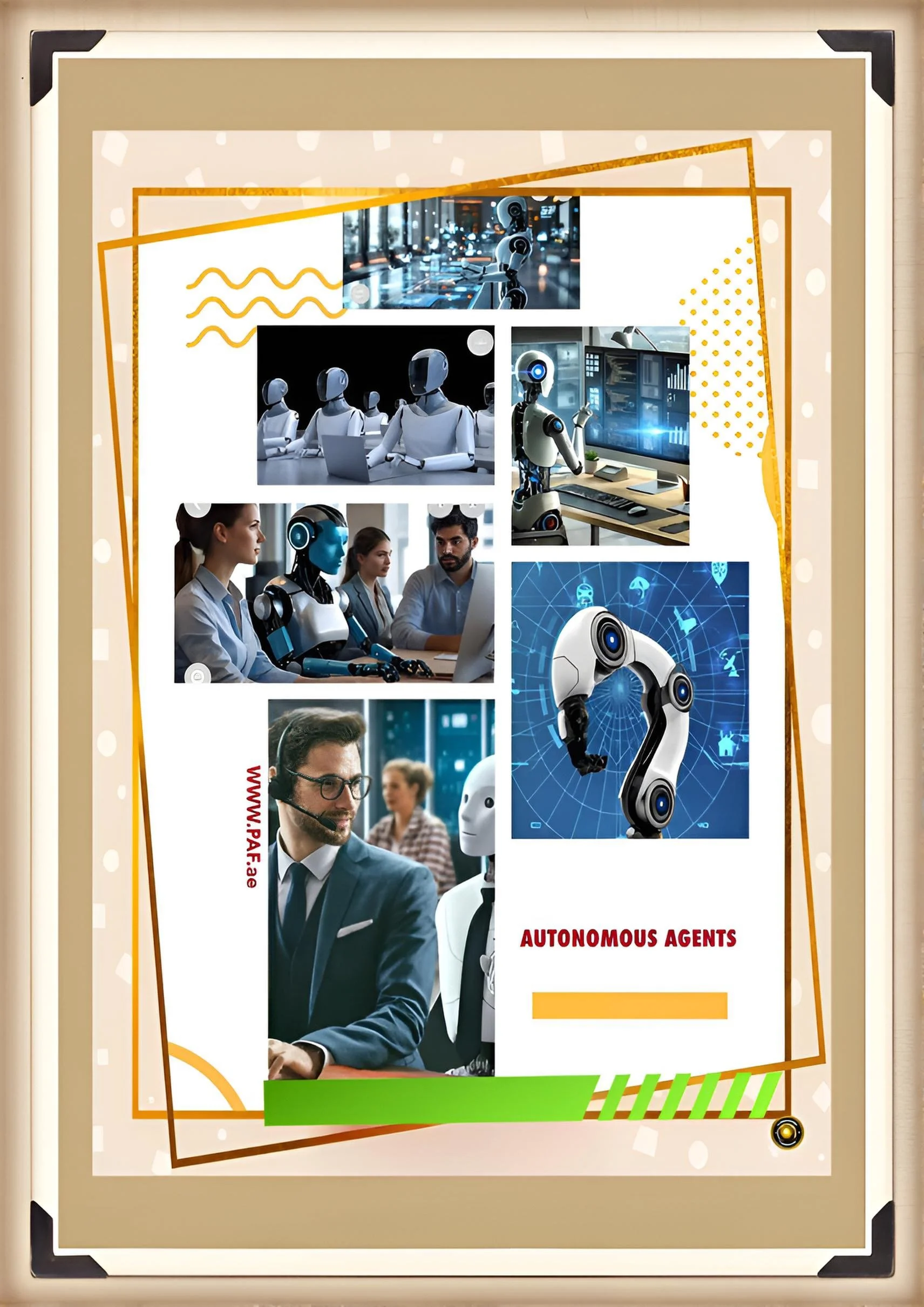
The scope of applications has expanded beyond text generation to autonomous agents—AI systems capable of executing multi-step workflows with minimal human oversight.
This evolution reveals a critical distinction in Mollick's framework: the current generation of AI systems is demonstrably not the most capable version that will ever exist. Mollick's fourth principle—"assume this is the worst AI you'll ever use"—becomes not merely a prudent mindset but an empirically validated observation. Each iteration demonstrates performance gains, reduced hallucination rates, improved reasoning, and broader applicability. The implication is that organizations and individuals building working relationships with these tools today are establishing patterns that will become more powerful and more consequential as the underlying capabilities advance.
The adoption curve follows a familiar pattern from previous transformative technologies. Generative AI adoption among workers followed a trajectory comparable to personal computer adoption in the early 1980s. However, the diffusion is occurring more rapidly. Usage has grown from early academic and technical communities to mainstream professional environments. Younger and more educated workers lead adoption, but usage is spreading across age cohorts and educational backgrounds.
Key Developments
The Four Rules That Separate AI Leaders from Chaos—Mollick's Pragmatic Framework for Avoiding Strategic Collapse
Mollick's Four Principles of Co-Intelligence
The operational core of the co-intelligence framework rests on four principles that function as both ethical guidelines and practical instructions for effective human-AI collaboration.
First, always invite AI to the table. This principle inverts the burden of proof. Rather than waiting for explicit authorization to use AI or seeking perfect understanding of how it will contribute, practitioners are encouraged to treat AI as a default collaborator across the full spectrum of professional activities.
Mollick's research and classroom experience demonstrates that this principle applies across tasks as different as drafting marketing copy, analyzing data, debugging code, brainstorming strategic initiatives, and providing feedback on work.
The operative insight is that AI's performance follows a jagged frontier—it performs remarkably well on some tasks while struggling on others, often in counterintuitive ways. The only way to understand where the frontier lies for specific work is experimentation. The cost of including AI in tasks where it performs poorly is typically lower than the cost of excluding it from tasks where it provides genuine value.
Second, be the human in the loop. While AI systems have demonstrated impressive capabilities, Mollick emphasizes that human judgment, validation, and decision-making remain essential. This principle acknowledges an asymmetry: AI systems are confident in their outputs regardless of accuracy.
They hallucinate—generating plausible but false information with the same confidence with which they generate accurate information. Research across domains documents this vulnerability: medical AI generated false citations at a 28.6 percent rate when asked to produce references for systematic reviews; legal chatbots showed hallucination rates between 58 and 88 percent on legal questions. The implication is stark: humans must serve as quality control, fact-checkers, and final decision-makers. This is not a temporary phase that better technology will eventually eliminate, but a structural requirement of working with systems that operate through pattern matching on training data rather than genuine understanding.
Third, treat AI like a person (but remember it is not). This principle addresses the practical ergonomics of interaction. People often complicate their instructions to AI, when in fact clearer specification of role, context, and desired output produces superior results. If you prompt AI to "act as a marketing strategist with twenty years of experience in B2B technology adoption" before requesting strategic analysis, the outputs typically exceed those from generic prompts.
The principle is anthropomorphic in its framing but philosophically honest: the anthropomorphism is instrumental, not metaphysical. It acknowledges that AI systems are not conscious entities, not moral agents, and not authentic collaborators in the human sense. Yet treating them as if they occupy a functional role analogous to a skilled colleague produces better results than treating them as tool-dispensers or oracles. This represents a practical stance that Mollick maintains even as he notes the philosophical oddness of the recommendation.
Fourth, assume this is the worst version of AI you will ever encounter. This principle functions as both humility and foresight. Current models represent snapshots in a rapidly advancing technology trajectory. GPT-5 and its successors demonstrate capabilities that earlier models lacked.
Reasoning modes that extend the model's internal "thinking" to solve complex problems are emerging. Agentic AI—systems that can autonomously plan and execute sequences of actions—is advancing rapidly. The implication is that organizations should design workflows and relationships with AI assuming that capabilities will improve substantially. This has two effects: it reduces overconfidence in current limitations (which may soon evaporate), and it encourages building patterns that are flexible enough to accommodate more sophisticated AI systems.
These four principles coalesce around a central observation: the quality of human-AI collaboration depends primarily not on the technology itself, but on how humans position themselves in relation to it.
The same GPT-4 system will yield dramatically different results depending on whether the user treats it as a consultant (investing time in clear problem specification, validation of outputs, integration of results into their own judgment) or as a servant (expecting it to deliver finished work requiring no human quality control).
Mollick's Models of Human-AI Collaboration
Beyond the four principles, Mollick describes two distinct models of human-AI collaboration, each with different implications for how work gets organized. The first model he terms "centaur"—a clear delineation of tasks where humans excel (judgment, creativity, relationship-building, ethical decision-making) and tasks where AI excels (data synthesis, pattern recognition, rapid content generation, routine analysis). Centaurs delegate strategically. They maintain human control over decisions while using AI to accelerate information processing and exploratory work.
The second model is the "cyborg"—a more deeply integrated relationship where human and AI thinking become intertwined within specific activities. A cyborg writer might produce a first draft with AI, then spend more time on revision and refinement because the initial generation freed cognitive capacity for higher-level thinking.
A cyborg analyst might use AI to surface patterns in data, then conduct AI-assisted exploration of those patterns to understand causal mechanisms, then return to human judgment for interpretation and strategic implications. The cyborg model risks greater dependence on AI capabilities, but it can also unlock productivity gains that pure delegation cannot achieve.
The distinction matters because it defines expectations and risk profiles. Centaur models work well for clearly defined tasks where success criteria are unambiguous.
Cyborg models work better for creative, exploratory, or strategically important work where iteration and integration are essential. Most organizations implementing co-intelligence will operate in both modes simultaneously, with different work streams optimized for different models.
Business and Organizational Transformation
20% of Companies Are Restructuring Now—Why Your Organization's Middle Management May Be Obsolete in 18 Months
The empirical evidence on AI's impact in business contexts is accumulating rapidly. Research across consulting, customer service, and knowledge work domains demonstrates measurable productivity gains.
Boston Consulting Group studies found that consultants using GPT-4 completed tasks 12 percent faster and achieved 25 percent higher quality on certain assignments. Customer service applications show 14 percent improvements in task completion rates. Job interview assistance with AI agents increased job starts by 17 percent and retention by 18 percent.
These findings must be understood against the scale of knowledge work being affected. An International Monetary Fund estimate suggests that nearly 40 percent of global employment is exposed to AI capabilities—with exposure running 60 percent in advanced economies. However, exposure does not equal displacement. Exposure means the tasks performed in those occupations can be affected by AI. How organizations respond to that exposure determines whether AI becomes augmentation or replacement.
The evidence suggests organizations adopting co-intelligence frameworks are achieving augmentation effects. When companies frame AI as a tool for unlocking employee capability—rather than as a replacement for employees—adoption and outcomes improve substantially. Gallup research indicates employees are 20 percent more likely to adapt to AI when they have a voice in decisions affecting them, 60 percent more likely to embrace AI when they feel fairly compensated and valued, and 20 percent more likely to adopt when offered adequate training and upskilling opportunities.
One of the most consequential organizational shifts involves the flattening of management structures. Gartner predicts that by 2026, approximately 20 percent of organizations will use AI to eliminate more than half of current middle management positions.
This is not because all middle management is automatable. Rather, specific functions that have historically required supervisory oversight—scheduling, reporting, performance monitoring, workflow coordination—can now be executed by AI systems. The implication is that remaining managers must shift toward strategic, value-adding activities. Organizations that fail to make this transition risk creating stranded middle management layers with diminished responsibilities.
The emerging management model is what some strategists term the "player-coach" approach. Rather than managers who exclusively supervise, organizations are moving toward leaders who combine deep functional expertise with the ability to orchestrate hybrid teams of humans and AI systems. These managers excel at ensuring that human judgment and machine intelligence interact seamlessly, rather than at controlling individual workflows. This transition is not automatic; it requires both explicit training and cultural change.
A second major shift involves the disaggregation of work itself. Rather than assigning entire roles to either humans or AI, organizations are increasingly decomposing work into constituent tasks, then allocating those tasks based on comparative advantage. A financial analyst role, for instance, might retain responsibility for interpretation and strategic recommendations (human comparative advantage) while delegating data compilation, normalization, pattern identification, and scenario modeling to AI (AI comparative advantage). This task-level allocation is far more granular than traditional role definition, and it requires different management approaches.
The economic implications are substantial. Wharton's budget lab estimates that AI will increase productivity and GDP by 1.5 percent by 2035, growing to 3.7 percent by 2075, with the strongest productivity gains occurring between 2030 and 2040 as adoption saturates. However, these aggregate figures mask significant sectoral and distributional variations. Sectors reliant on digital tools and information processing gain most.
Manufacturing and logistics face complex transitions. Geographically, adoption rates vary based on regulatory environment, labor costs, and technological infrastructure. Organizationally, the top one percent of companies that have achieved genuine maturity in AI deployment are already capturing significant competitive advantages, while the remaining 99 percent are experimenting with incomplete understanding.
Impact on Education and Learning
How Teachers and Students Are Using AI to Restore What Assembly-Line Schooling Destroyed
Education represents perhaps the domain where co-intelligence principles have most clearly articulated with positive outcomes. Early teacher and student surveys from 2023 reported that 88 percent of teachers perceived ChatGPT to have positive impact, while 79 percent of students reported similarly positive experiences. The rationale connects directly to Mollick's core insight: AI can augment both teaching and learning when used thoughtfully.
For teachers, AI handles administrative work—generating syllabus materials, developing assessment frameworks, creating differentiated learning activities—thereby freeing instructor time for direct student interaction, feedback, and mentoring.
The research suggests that when AI automates routine curriculum development tasks, teachers report more autonomy in how they structure learning experiences. Additionally, AI tutoring systems can provide personalized, adaptive learning support. Students receive explanations tailored to their current understanding, can ask clarifying questions in low-pressure environments without classroom anxiety, and progress through material at individualized paces.
For students, the benefits are similarly multifaceted. Language learners receive immediate grammar, vocabulary, and pronunciation feedback. Students developing writing skills use AI as a low-stakes feedback mechanism during drafting, enabling more experimental and risk-taking writing. Mathematics students struggling with conceptual understanding can access AI tutors that explain problems from multiple angles until comprehension occurs.
Critically, students from non-native English backgrounds report that AI tutoring reduces the inequality gap created by English-language instruction, by providing personalized explanations and removing social pressure from asking for clarification in classroom settings.
The global market reflects this potential. The AI-in-education market stood at approximately 5.18 billion dollars in 2024, with projections reaching 112.3 billion by 2032—a compound annual growth rate exceeding 40 percent. However, this market growth reveals emerging concerns.
Some research indicates that while AI tutoring improves test scores in the short term, it may undermine long-term retention and deep learning. A 2024 study found that students receiving AI tutoring scored better on immediate assessments but showed reduced retention when tested weeks later.
Mollick's framework addresses this tension by emphasizing the human-in-the-loop principle. AI tutoring works best not as a replacement for human instruction, but as a supplement to it.
Students using AI should retain engagement with concepts through human instruction, peer collaboration, and their own intellectual struggle. When AI entirely replaces human instruction, students may develop test-taking skill without conceptual depth.
The pedagogical implication is that educators implementing AI must consciously design workflows that preserve human-human interaction and student cognitive effort. This requires restraint—using AI where it demonstrably improves learning without allowing it to atrophy human teaching relationships or replace productive struggle with frictionless answers.
The distinction echoes Mollick's centaur versus cyborg models: centaur teaching might use AI for assessment and personalized problem generation while preserving human instruction. Cyborg teaching might deeply integrate AI into student exploration of concepts, with human instructors guiding the investigation and integrating discoveries into broader understanding.
The evidence from early implementation suggests that thoughtful integration—treating AI as a component of educational systems rather than as a wholesale replacement—yields the best outcomes. Institutions that approach AI adoption with explicit pedagogical intention rather than as a technological fix show higher rates of successful implementation and student learning.[28]
Concerns and Limitations
The Confident Liar Problem—Why Trusting AI Systems Completely Could Cost You Millions
Despite the accumulating evidence of benefits, significant concerns about AI co-intelligence merit serious examination. These concerns fall into three categories: technical limitations of current systems, ethical and societal implications, and psychological and organizational risks.
Technical Limitations: The Hallucination Problem
The most immediately consequential limitation of large language models is their tendency to generate plausible but false information with confidence indistinguishable from accurate information. This phenomenon, termed hallucination, emerges from the fundamental architecture of these systems.
They are optimized to predict the next most statistically probable word given preceding text. They have no access to ground truth, no real-time verification mechanisms, and no inherent understanding of factuality. They can and will fabricate sources, citations, statistics, and claims when their training pattern-matching suggests such output is expected.
The consequences escalate in high-stakes domains. Healthcare hallucinations have recommended unnecessary surgery, advised abrupt discontinuation of critical medications, discouraged appropriate vaccinations, and proposed incorrect treatment protocols. Legal applications have generated fabricated case citations that attorneys submitted to courts, resulting in sanctions and reputational damage. In financial services, hallucinations of even 0.5 percent can translate to millions in impact.
Deloitte research on agentic AI—autonomous systems acting on AI-generated outputs—demonstrates how hallucinations compound. When one AI system relies on output from another AI system without human verification, errors propagate through interconnected workflows, accumulating into significant distortion. This chain-reaction problem becomes particularly acute as organizations deploy AI agents to execute workflows with reduced human oversight.
Mollick's principle of being the human in the loop directly addresses this limitation, but its implementation requires organizational discipline. Many organizations attempting to improve efficiency by reducing human oversight of AI outputs have discovered that they must build in verification and validation mechanisms. This partially offsets the efficiency gains that motivated the automation in the first place.
The practical implication is that hallucination risk is not a temporary problem that improving technology will solve, but a structural feature that will require ongoing human quality control and validation across high-stakes applications.
Ethical and Societal Implications: Job Displacement and Inequality
A second category of concern involves the distributional consequences of AI adoption. While aggregate productivity may increase, the benefits and harms are not distributed evenly across workers, sectors, and geographies.
The job displacement concern is substantial. The International Monetary Fund estimates that 800 million jobs globally could be affected by AI automation through 2030. However, affected does not mean eliminated. Some jobs will be automated entirely. Others will be transformed—the work performed will change, but employment will persist. A third category will experience partial automation—some tasks become machine-executed while others remain human-intensive.
The most vulnerable workers are those in routine cognitive roles: data entry, basic analysis, customer service, administrative support, and junior professional positions that historically served as entry points for early-career professionals. As AI systems improve at performing these tasks, the pathway into knowledge work becomes compressed. A college graduate seeking entry-level data analysis work finds fewer positions available; the work that remains is more complex and demands more experience.
This creates a particular problem in emerging economies. Advanced economies with aging workforces can potentially absorb displacement through upskilling and transition. Emerging economies relying on lower-cost labor competing in information services face a different scenario. The arbitrage advantage of lower-cost knowledge workers erodes when AI dramatically reduces labor cost sensitivity. Workers displaced from global services competition face limited local opportunity structures.
The distributional consequences of AI adoption will depend heavily on policy choices. If governments invest in education, transition support, and geographic development, displacement can be managed. If adoption proceeds without such support, inequality will likely increase.
Moldick's framework does not directly address these distributional questions, though it does emphasize maintaining human judgment about when and how to deploy AI. An organization choosing to deploy AI primarily to reduce headcount rather than to augment remaining workers is making a choice about how to distribute AI's benefits. Alternative choices—using AI to reduce work hours, increase wages for remaining workers, or invest in reskilling—would distribute benefits differently.
Psychological and Organizational Risks
A third category of concern involves the cognitive and emotional effects of working alongside AI systems. Psychological research suggests that constant context-switching between human and machine thinking patterns, combined with sustained cognitive demand, can generate stress responses and cognitive fatigue. For some workers, particularly those prone to obsessive focus or digital dependency, the risk escalates to what some psychologists suggest might be termed "AI-induced psychological dissociation," though this remains informal language rather than a clinical diagnosis.
The long-term organizational risk is that workers relying on AI for intellectual support may atrophy their own critical thinking capabilities. When AI systems confidently generate answers—even when those answers are sometimes wrong—users risk becoming passive consumers rather than active thinkers. This creates a vicious cycle: as workers depend on AI, their ability to evaluate AI output diminishes, making them more vulnerable to hallucinations and errors.
Mollick addresses this through explicit emphasis on maintaining human agency. The co-intelligence framework assumes that humans remain the decision-makers and validators. Organizations implementing this framework successfully maintain parallel human capability development alongside AI deployment. Organizations that attempt to maximize efficiency by transitioning critical thinking to AI systems are likely to discover that they have undermined the human judgment necessary to oversee AI effectively.
Cause-and-Effect Analysis
The Productivity Paradox: How AI Saves Time for Those Who Know How to Direct It, and Wastes Time for Everyone Else
The mechanisms through which co-intelligence generates value can be traced through several causal pathways that operate at different organizational and individual levels.
At the individual level, co-intelligence functions as a cognitive augmentation. Certain thinking tasks—generating multiple perspectives on a problem, retrieving and organizing information, synthesizing complex material into digestible summaries—become faster and less cognitively demanding when performed with AI. This reduction in effort on routine cognitive work frees mental capacity for higher-order thinking: evaluating different perspectives, making judgment calls where ambiguity persists, making decisions in real-world contexts where principles conflict.
An analyst using co-intelligence to summarize data and identify anomalies can devote more time to understanding why anomalies exist and what they mean strategically. A writer using co-intelligence to generate initial drafts can spend more revising, reconceptualizing, and refining to achieve the specific voice and argument structure required.
At the organizational level, co-intelligence generates value through task decomposition and specialized allocation. When work is understood as a collection of constituent tasks rather than indivisible roles, organizations can allocate each task to whoever or whatever performs it most effectively.
Some tasks genuinely require human judgment. Others benefit from human creativity or relationship-building. Some tasks are pure pattern-matching and data processing, where AI excels. As organizations learn to map task characteristics to performer capabilities (human or AI), efficiency improves.
This task-level allocation, however, is not automatic. It requires explicit organizational attention. Managers must understand which tasks their teams perform, which AI systems are capable of, and how to integrate AI support without deskilling human workers or creating excessive hand-offs. Organizations that implement this thoughtfully see productivity gains. Those that treat AI as a replacement for staff often find that remaining workers become burdened with verification and oversight, and productivity improvements fail to materialize.
At the sectoral level, co-intelligence drives differential competitiveness. Sectors where knowledge work dominates—professional services, finance, software development, research—see the largest initial productivity gains. Sectors requiring physical manipulation or site presence experience transformation more slowly. Geopolitically, this uneven diffusion creates competitive dynamics. Countries and regions successfully adopting co-intelligence models will outcompete those that do not.
However, a critical cause-and-effect relationship runs in both directions. Not only does AI capability enable new work patterns, but work patterns enable AI capability development. Organizations deploying AI at scale generate data about how AI systems perform in real-world conditions. This data, fed back into model development, improves future systems. The countries and organizations that deploy AI most extensively gain advantage in developing the next generation of AI.
This creates a potential divergence in timelines. Some forecasters predict that agentic AI—systems capable of autonomously executing complex, multi-step tasks—could achieve superhuman capabilities in coding and other domains by 2027, shortening the timeline to more general superintelligence. Others, adjusting for implementation challenges and realistic deployment constraints, predict a 2032-2035 timeline.
The actual timeline depends on deployment decisions made by leading organizations and countries over the next 1-2 years. Organizations choosing to deploy advanced AI extensively to automate tasks will accelerate the arrival of more capable systems. Those choosing measured, human-augmentation-focused deployment will slow it.
Future Scenarios and Trajectory
Superintelligence May Arrive by 2027—Here's What Organizations Need to Do Before It Does
The evolution of AI over the next 1-3 years appears to be entering a critical phase, with several competing scenarios now visible.
In the near term (2026-2027), the most likely developments involve continued capability improvements in reasoning and multi-modal processing.
OpenAI's GPT-5.2 and successive iterations are demonstrating enhanced ability to work through complex problems step-by-step, maintaining reasoning chains across longer sequences. Multi-modal capabilities—integrating text, image, video, and voice—are enabling AI systems to work with richer forms of information. Agentic AI is becoming more capable of autonomous task execution.
Organizationally, the 2026-2027 period will likely see acceleration in middle management restructuring. The 20 percent of organizations that proactively redesign management structures around AI will likely see productivity gains and reduced costs. Those that delay restructuring will face pressure from competitors and will likely undergo more disruptive transitions.
Similarly, the adoption of co-intelligence frameworks will likely spread from early-adopter organizations to broader populations of businesses and educational institutions. This diffusion will likely reveal both successful models and cautionary cases, creating clearer patterns for others to follow.
The medium-term question (2027-2032) involves the trajectory of agentic AI capability. Multiple independent forecasting efforts now place the timeline for superhuman AI programming and reasoning capabilities between 2027 and 2032.
At this milestone, AI systems would be capable of autonomously carrying out complex software development tasks without human supervision. Such capability would accelerate AI research itself, as the same systems could be directed to improve subsequent AI systems.
From this point forward, trajectories diverge significantly depending on implementation and governance choices.
Some scenarios envision a "fast takeoff" where AI systems improve at accelerating rates, reaching superintelligence (capability exceeding the best humans across virtually all cognitive domains) within months or years. Other scenarios envision continued acceleration but with longer timelines, placing full superintelligence 5-10 years beyond the superhuman programmer milestone.
These timelines are not certainties. They reflect current machine learning experts' best-guess forecasts based on recent progress and extrapolation of trends. Actual development could be faster (if breakthroughs in optimization occur) or slower (if current approaches reach saturation and new paradigms are required).
The point of articulating scenarios is not prediction but preparation: organizations and societies that take seriously the possibility of superhuman AI within 3-10 years can begin making policy, safety, and strategic decisions now rather than scrambling to respond once capabilities arrive.
Mollick's framework becomes more consequential in this light. If AI systems improve along the trajectories most forecasters expect, the distinction between co-intelligence (human-directed, human-augmented AI) and other approaches becomes existentially important. Organizations and societies that have learned to maintain human judgment and direction while leveraging AI capability will likely navigate transitions more successfully than those that have either rejected AI entirely or delegated decision-making completely to automated systems.
The window to develop these capabilities and relationships is now, when mistakes are costly but not catastrophic, rather than later when AI systems are far more powerful.
From a practical standpoint, organizations should treat the 2026-2030 period as an extended laboratory. Experiment with co-intelligence models now. Develop organizational culture and capability in human-AI collaboration. Establish validation and verification processes for AI outputs. Train managers in orchestrating hybrid teams. Build pathways for workers to develop AI-adjacent skills. These investments, made now, will position organizations to adapt effectively regardless of whether AI reaches superintelligence in 2027 or 2035.
Conclusion
The Choice We're Making Now About AI Will Define Human Relevance for Centuries—Choose Wisely
Ethan Mollick's Co-Intelligence framework addresses the central question of how humans and machines can work together effectively. The answer is neither that machines will supersede humans nor that humans should reject machines. Rather, humans and AI systems possess complementary capabilities, and productivity, creativity, and quality of life improve when these capabilities are integrated thoughtfully.
The evidence accumulated over three years of deployment supports this conclusion. Organizations using co-intelligence approaches report productivity gains, improved employee satisfaction, and better decision-making. Educational institutions using AI as a teaching tool rather than a replacement for teachers see learning improvements. Workers who understand how to collaborate with AI systems enhance their own capabilities and career prospects.
Yet this optimistic assessment must be tempered with serious concerns. AI systems hallucinate—confidently generating false information. Deployment decisions about whether AI augments or replaces human workers will have profound distributional consequences. The psychological and cognitive effects of constant human-AI collaboration are not fully understood. As AI capabilities improve, governance and safety challenges become more acute.
The critical insight from Mollick's framework is that these challenges are not inevitable consequences of AI advancement, but rather products of how AI is deployed and integrated. Organizations choosing to maintain human judgment as central, investing in verification and validation processes, and using AI to augment rather than replace human workers create very different futures than those that do not.
The trajectory toward more capable AI systems appears likely regardless of current choices. What remains open is how humans position themselves in relation to that capability. Will co-intelligence represent humans and machines working in genuine partnership, with humans directing strategy and maintaining judgment while machines handle high-speed cognitive work? Or will it represent something more like humans becoming passive consumers of machine outputs, losing the capacity for independent thought?
That question is being answered now through thousands of organizational and individual choices about how to work with AI.
Those choices will define not just efficiency and productivity, but the future relationship between human agency and technological capability.