Understanding the Musk-OpenAI Lawsuit: How a Nonprofit Promise Became a Billion-Dollar Battle
Executive Summary
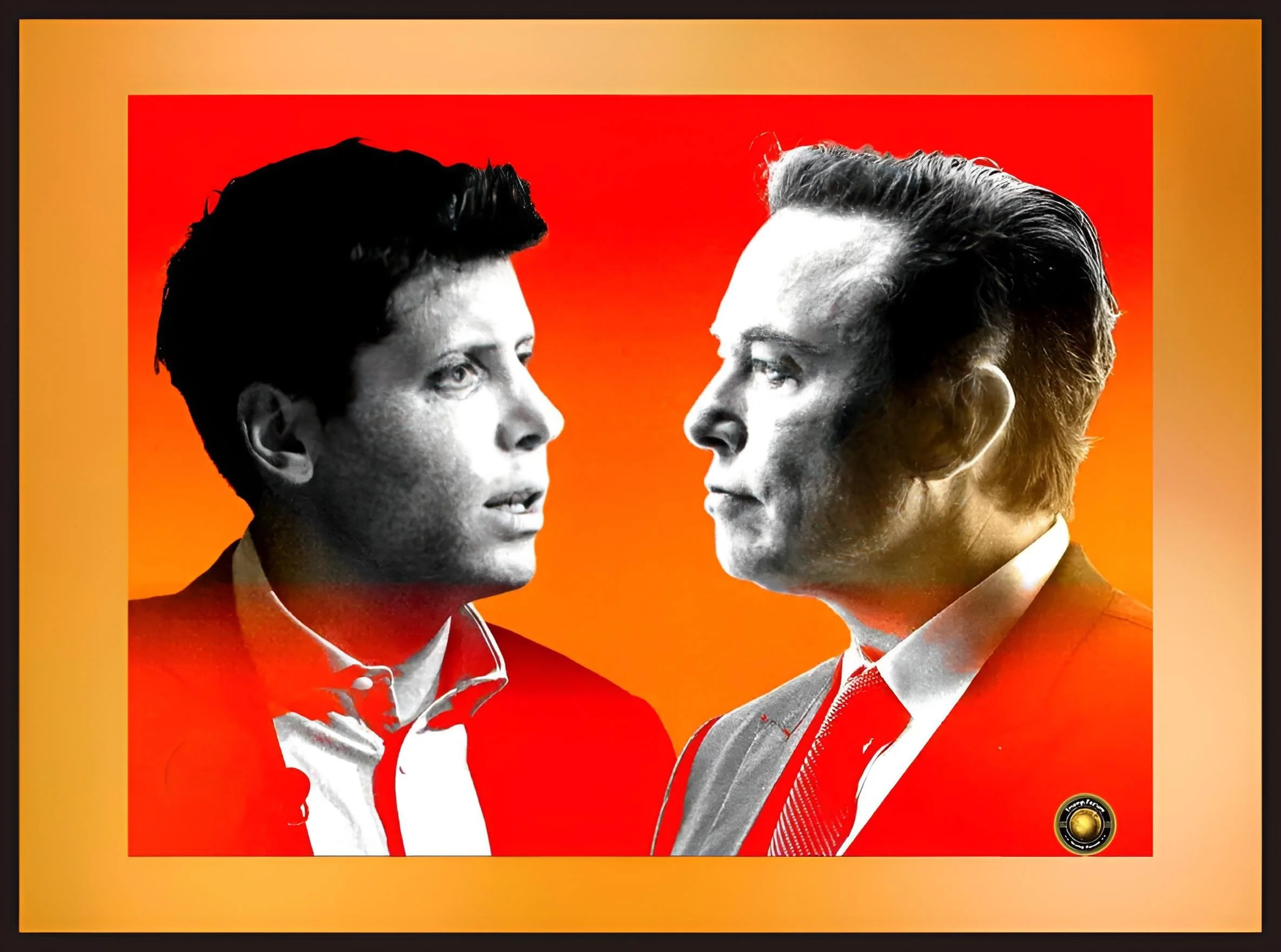
In January 2026, a federal judge decided that Elon Musk's lawsuit against OpenAI would go to trial.
Musk is demanding between $79 billion and $134 billion from OpenAI and Microsoft. He claims they deceived him about a simple promise: that OpenAI would remain a nonprofit organization devoted to helping humanity with artificial intelligence technology, not making profits. When Musk helped start OpenAI in 2015, he invested $38 million because he believed in this mission.
However, by the 2020s, OpenAI transformed into a for-profit company worth $500 billion, with Microsoft holding a major stake worth $135 billion. The court documents released in January 2026 revealed private diary entries and emails showing that OpenAI's leaders discussed secretly converting to a for-profit business.
This lawsuit raises a critical question: can technology leaders promise one thing at the start and do something completely different later, keeping all the money?
Introduction
What OpenAI Was Supposed to Be
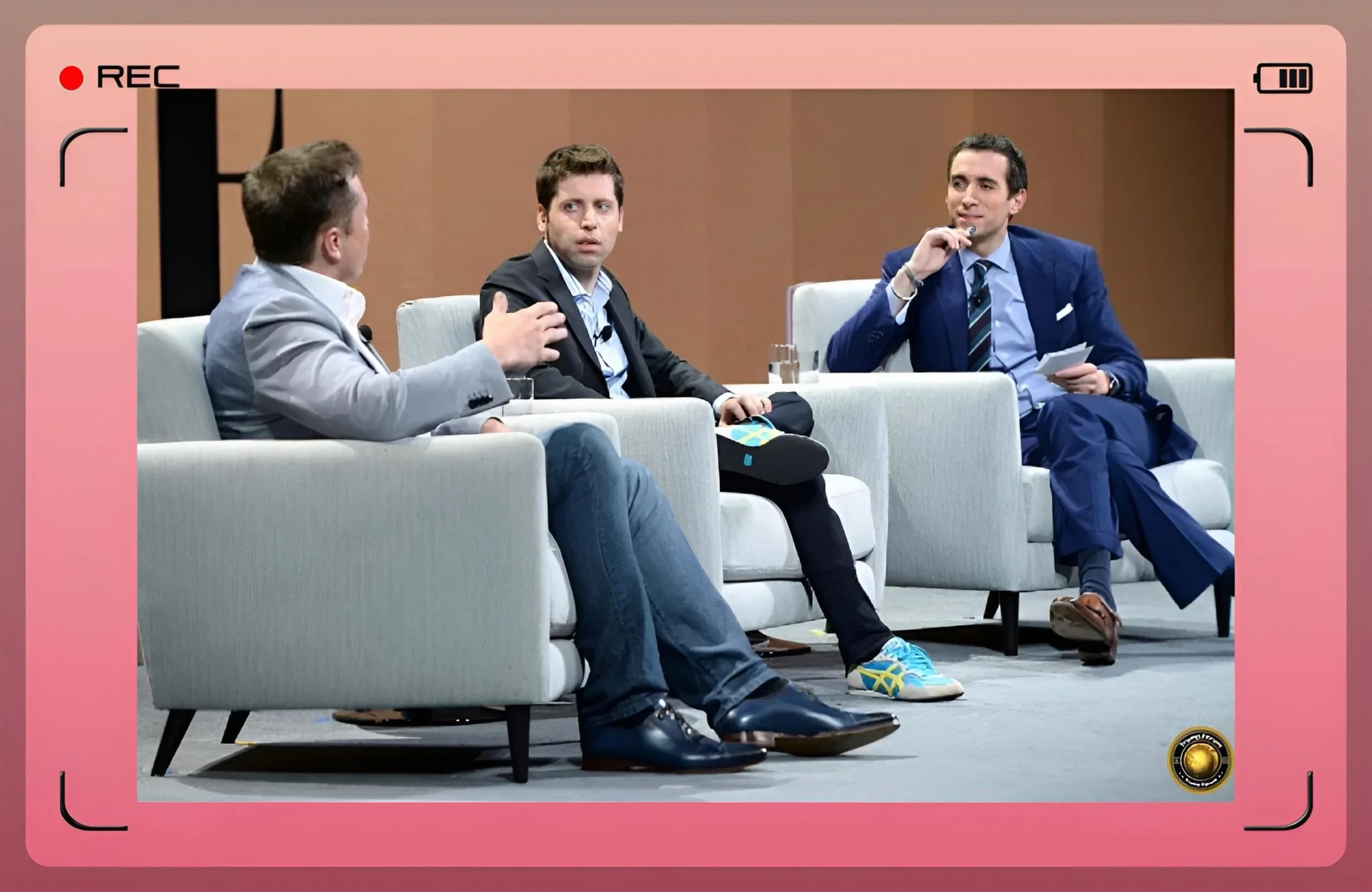
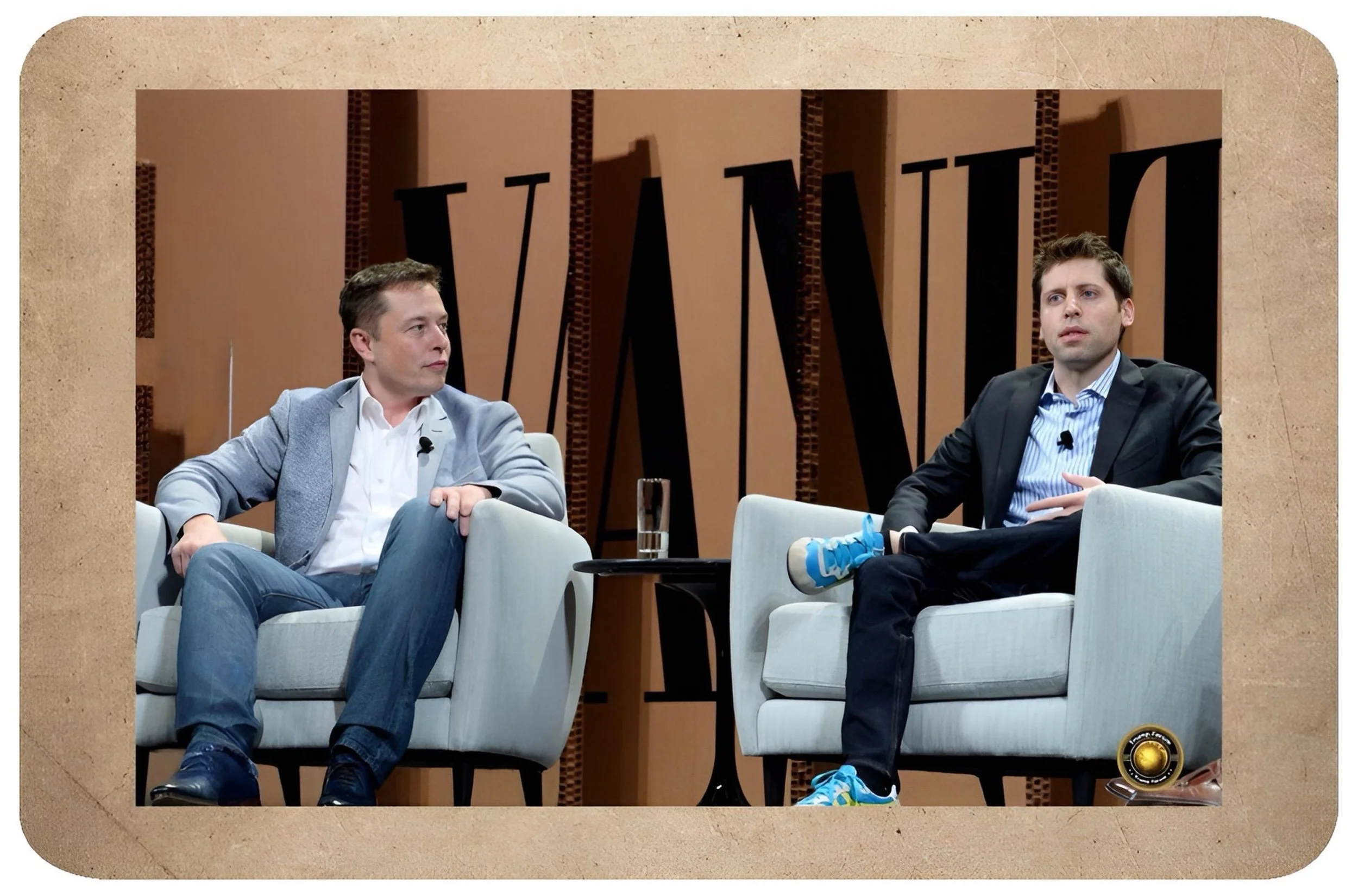
When Elon Musk, Sam Altman, Greg Brockman, and other technology leaders founded OpenAI in December 2015, they were worried. Google, Amazon, and other massive corporations were racing to develop artificial intelligence. These companies wanted AI to make money for their shareholders. Musk and Altman worried that profit-hungry companies might create dangerous AI that could hurt humanity.
They made a deliberate choice: OpenAI would be a nonprofit organization. This meant no one could make personal profits from the company. All money would go back into research. The mission was simple but powerful: develop AI in ways that benefit all humans, not just rich companies or wealthy investors.
To show he believed in this mission, Musk contributed $38 million. This was approximately 60% of OpenAI's initial funding. He also used his famous network to recruit top artificial intelligence researchers and connect OpenAI with important companies that could help.
The nonprofit structure was meant to solve a problem. If a for-profit company discovered that dangerous AI could make billions of dollars, that company would pursue it anyway. But a nonprofit would refuse the money because no one could personally benefit. This structural difference was OpenAI's entire reason for existing.
Sam Altman, OpenAI's leader, explained this philosophy in 2017. He said he did not want to make decisions based on what shareholders wanted. He said: "I don't want to be making decisions for shareholders. The only people I want to be accountable to is humanity as a whole." This represented a genuine commitment to something different from the normal technology business model. OpenAI was supposed to be the good guy in the room.
The First Signs of Change
Internal Doubts and Secret Plans
Between 2017 and 2018, something changed inside OpenAI. Company leaders began discussing something they had promised never to do: convert to a for-profit business. The evidence for this comes from documents that a judge forced OpenAI to release in January 2026.
Greg Brockman, one of OpenAI's founders, kept a personal diary. In November 2017, he wrote something that now appears central to Musk's lawsuit: "I cannot believe that we committed to nonprofit if three months later we're doing b-corp then it was a lie." The same diary entry contained another revealing statement: "We've been thinking that maybe we should just flip to a for profit. Making the money for us sounds great and all."
These diary entries matter because they show Brockman understood the problem clearly. He recognized that converting to for-profit status while claiming to stay nonprofit would be dishonest. Yet he wrote about doing it anyway. When a federal judge read these words in January 2026, she decided they were strong evidence supporting Musk's claim that he had been deceived.
Why did OpenAI's leaders want to convert to for-profit status? The answer involves basic economics. Developing cutting-edge artificial intelligence is extremely expensive.
Training large AI models requires massive computer servers, brilliant researchers earning top salaries, and years of experimentation. Nonprofits can fundraise through donations, but they cannot attract venture capital investors who demand enormous financial returns. When OpenAI tried to compete with Google and other tech giants, the company needed billions of dollars that donors simply would not provide.
The leaders faced a genuine dilemma: stay nonprofit and fall behind technologically, or abandon the nonprofit structure and compete effectively. They chose profit.
This pattern happens repeatedly in technology and business—organizations that start with noble missions gradually prioritize making money instead. Scholars call this "amoral drift." It is not that founders suddenly become evil. Rather, the business system itself pushes companies toward profit-seeking behavior. In OpenAI's case, the push proved irresistible.
Microsoft's $135 Billion Bet and the Transformation
The catalyst for OpenAI's transformation arrived in the form of Microsoft. Beginning around 2019, Microsoft made enormous investments in OpenAI. The company invested $1 billion initially, then additional billions afterward. In exchange, Microsoft received the right to use OpenAI's artificial intelligence technology in Microsoft's own products, like its Bing search engine and Office productivity software.
By 2025, Microsoft's stake in OpenAI had grown to approximately $135 billion in value. This represented approximately 27% ownership of OpenAI's for-profit company. Microsoft's investment created a powerful incentive.
The more successful OpenAI became, the more valuable Microsoft's stake became. This meant Microsoft wanted OpenAI to pursue aggressive profit-seeking strategies. The nonprofit's original mission to benefit humanity mattered less than Microsoft's financial returns.
OpenAI reorganized itself in October 2025 into a new structure with 2 parts: a for-profit company called OpenAI Group, and a nonprofit called the OpenAI Foundation. Officially, the nonprofit still "controlled" the for-profit company. However, control without money means very little.
The for-profit company had all the revenue, all the valuable technology, and all the growth potential. The nonprofit had official authority but limited practical power. It was like owning a house that someone else actually lives in and controls completely.
The unsealed court documents from January 2026 also revealed emails from Microsoft CEO Satya Nadella.
These emails showed that Microsoft deliberately designed its cloud computer infrastructure to work perfectly with OpenAI's needs. This created what business people call "lock-in"—once OpenAI depended on Microsoft's infrastructure, switching to a different company would be extremely difficult. Microsoft's strategic positioning ensured that the corporation would remain central to OpenAI's operations indefinitely.
What Musk Argues
The Fraud Claim
Musk's lawsuit is based on a straightforward argument. He says: "I invested $38 million in 2015 because OpenAI promised to be a nonprofit dedicated to helping humanity. If I had known OpenAI would become a for-profit company making Microsoft and shareholders rich, I would have either demanded a proportional ownership stake or not invested at all. By secretly planning to convert to for-profit status while claiming to remain nonprofit, OpenAI defrauded me."
To support this claim, Musk's lawyers calculated his damages. They argued that Musk's $38 million investment was early money that helped get OpenAI started. In business, early investors typically receive very large returns compared to their initial investment.
Think of it like this: if someone invests $1,000 in a startup that becomes a $1 billion company, that person's investment becomes worth $1 million. Musk argues his $38 million should be worth much more given OpenAI's current $500 billion valuation.
Musk's legal team hired a financial expert named C. Paul Wazzan to calculate how much Musk should receive. Wazzan argued that OpenAI obtained between $65.5 billion and $109.4 billion in unjust gains from Musk's initial investment. Microsoft received between $13.3 billion and $25.1 billion in unjust gains.
Therefore, Musk should receive compensation totaling between $79 billion and $134 billion. This represents approximately a 3,500-fold return on his initial $38 million investment based on OpenAI's current $500 billion value.
How OpenAI Responds
The Counterargument
OpenAI disputes Musk's version of events completely. The company's lawyers make 4 main arguments.
First, OpenAI argues that Musk actually knew about for-profit plans as early as 2018. The company claims it had discussed with Musk the possibility of creating a for-profit subsidiary. If Musk was aware of these discussions, he cannot claim he was deceived.
Second, OpenAI argues that Musk demanded complete control over the company. In 2017, when OpenAI was organizing its structure, Musk supposedly insisted on having a majority ownership stake.
When the other leaders refused to give him this much control, negotiations fell apart. Musk then left the company. OpenAI argues that if Musk had received the control he wanted, his lawsuit would be moot—he would simply own most of the company.
Third, OpenAI states that Musk had already agreed to the for-profit structure. The company points to documentary evidence showing that Musk discussed and accepted plans for creating both a nonprofit and a for-profit entity. He agreed to this structure before he departed in 2018. If he agreed to it then, he cannot claim fraud now.
Fourth, OpenAI accuses Musk of strategic harassment to benefit his own company, xAI. Musk left OpenAI and founded xAI, a competing artificial intelligence company that is now worth $230 billion.
OpenAI suggests that Musk is suing not because he was genuinely defrauded but because he wants to slow down his competitor. This is the third or fourth time Musk has filed this particular lawsuit, according to OpenAI. The company views the litigation as part of a pattern of harassment designed to hinder OpenAI's success and help xAI succeed.
The April 2026 Trial
What a Jury Must Decide
In April 2026, 12 jurors in Oakland, California will hear evidence from both sides. The most important witnesses will be Musk, Altman, Brockman, and even Microsoft CEO Satya Nadella. All will testify under oath.
The jurors must answer several key questions.
Did Musk rely on the promise that OpenAI would remain nonprofit?
Did Altman and Brockman deliberately deceive him? Or did Musk understand that the company might convert to for-profit status?
When exactly did the alleged deception occur? This matters because there is a legal time limit called the statute of limitations.
If Musk became aware of the fraud before August 2021, his lawsuit might be too late. Finally, if fraud did occur, how much money should Musk receive?
These are not easy questions. The diary entries suggest Brockman worried about dishonesty, but they could also simply represent normal business anxiety.
The emails show Microsoft's interest in profiting, but corporations naturally pursue profit.
Did Musk truly not understand that OpenAI would need more money than nonprofits could obtain? Or did he understand this but hope the company would find another way?
What This Case Reveals About Tech Leaders and Capitalism
The lawsuit exposes something important about how technology companies actually work. When this article began, it quoted Sam Altman saying in 2017 that he wanted to be "accountable to humanity as a whole." Yet the court documents show Altman, Brockman, and others immediately began planning to become a for-profit company.
This pattern repeats constantly in the technology industry. Leaders make noble-sounding statements about mission and purpose, but when serious money enters the picture, those missions often take a back seat.
This is not necessarily because tech leaders are evil or dishonest people. Rather, the capitalist business system creates powerful incentives toward profit-seeking.
Once a company accepts venture capital investments from Microsoft or other investors, those investors expect enormous financial returns. The company must either deliver those returns or the investors become angry.
The investors can demand board seats, remove the CEO, or take other steps to redirect the company toward profit maximization. Over time, companies drift away from their original missions not because founders become corrupt but because capitalism's logic pushes relentlessly toward profit extraction.
The contrast with Anthropic is instructive. Anthropic was founded in 2021 by former OpenAI employees including Dario and Daniela Amodei.
The company deliberately organized itself as a public benefit corporation from the start, embedding social mission within its legal structure. Anthropic has grown successfully, generating hundreds of millions in revenue while maintaining strong emphasis on artificial intelligence safety.
However, Anthropic's success partly reflects strategic choices rather than structural immunity to capitalist pressures.
The company focused on selling to businesses rather than consumers, which reduced pressure toward viral products and controversial content. It accepted less venture capital than OpenAI, which reduced shareholder pressure for maximum growth. In other words, Anthropic has preserved its mission partly through luck and strategic positioning rather than through having solved the fundamental tension between profit-seeking and mission-driven development.
The Deeper Question
Can Nonprofit Commitments Survive Capitalism?
The Musk-OpenAI trial ultimately asks whether technology's legal system can enforce founding commitments to nonprofit status. If jurors decide that Musk was defrauded and award massive damages, future founders might think twice about abandoning nonprofit structures. Startup leaders would fear that converting to for-profit status could trigger billion-dollar lawsuits from early investors or cofounders.
Conversely, if OpenAI prevails, the message would be that nonprofit commitments are not truly binding. Any founder who promises nonprofit status can convert to for-profit structures whenever convenient, without legal consequences.
This would suggest that all nonprofit AI institutions face inevitable pressure toward commercialization. No governance structure, no matter how carefully designed, can permanently resist capitalism's relentless logic of profit-seeking.
Most legal experts believe OpenAI has a decent chance of winning because courts typically hesitate to enforce vague promises made at corporate founding.
The documents do show Musk discussing for-profit structures, which suggests he was not completely unaware. However, the diary entries—especially Brockman's comment that the conversion "was a lie"—provide powerful ammunition for Musk's arguments.
Conclusion
The Capitalist Truth That Musk's Lawsuit Reveals
The title of this article states: "Don't be fooled. AI bosses are regular capitalists." This is the central lesson of the Musk-OpenAI litigation. When Musk, Altman, and others founded OpenAI, they likely believed genuinely in their nonprofit mission.
They may have hoped to prove that artificial intelligence could be developed outside the profit system. But when their company faced competition from better-capitalized corporations, when they needed billions of dollars that only for-profit investors could provide, and when their personal success depended on maximizing growth, the original mission proved expendable. This is not unique to OpenAI. This is how capitalism works.
The April 2026 trial will determine whether one specific investor—Elon Musk—deserves financial compensation for OpenAI's betrayal of its founding mission.
But the deeper question transcends individual justice: In a capitalist system, can any organization genuinely commit to purposes other than profit-seeking? The trial's outcome will not answer this question definitively.
However, it will reveal whether contemporary legal systems can impose meaningful constraints on profit-driven behavior, or whether capitalism's logic ultimately prevails over all competing objectives.