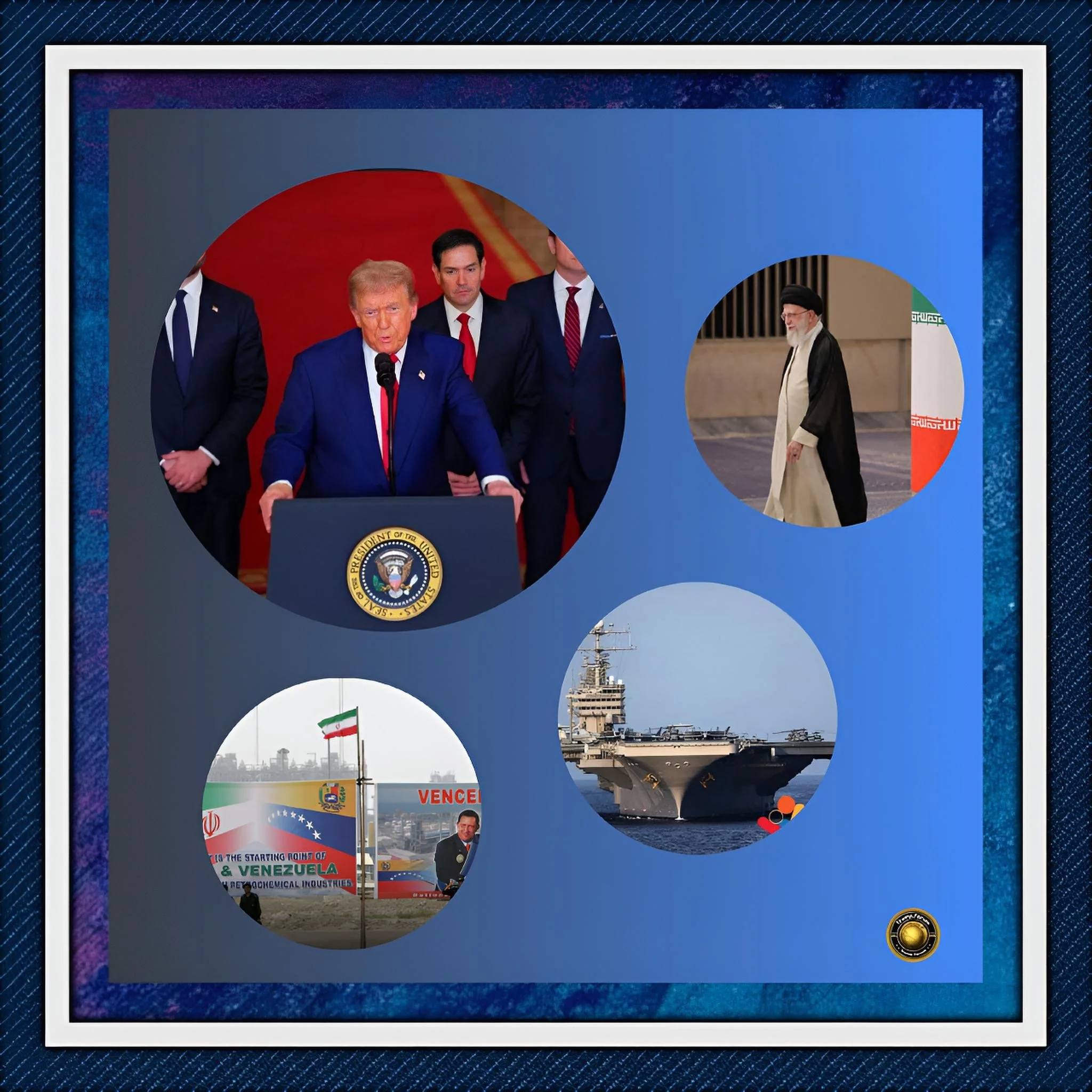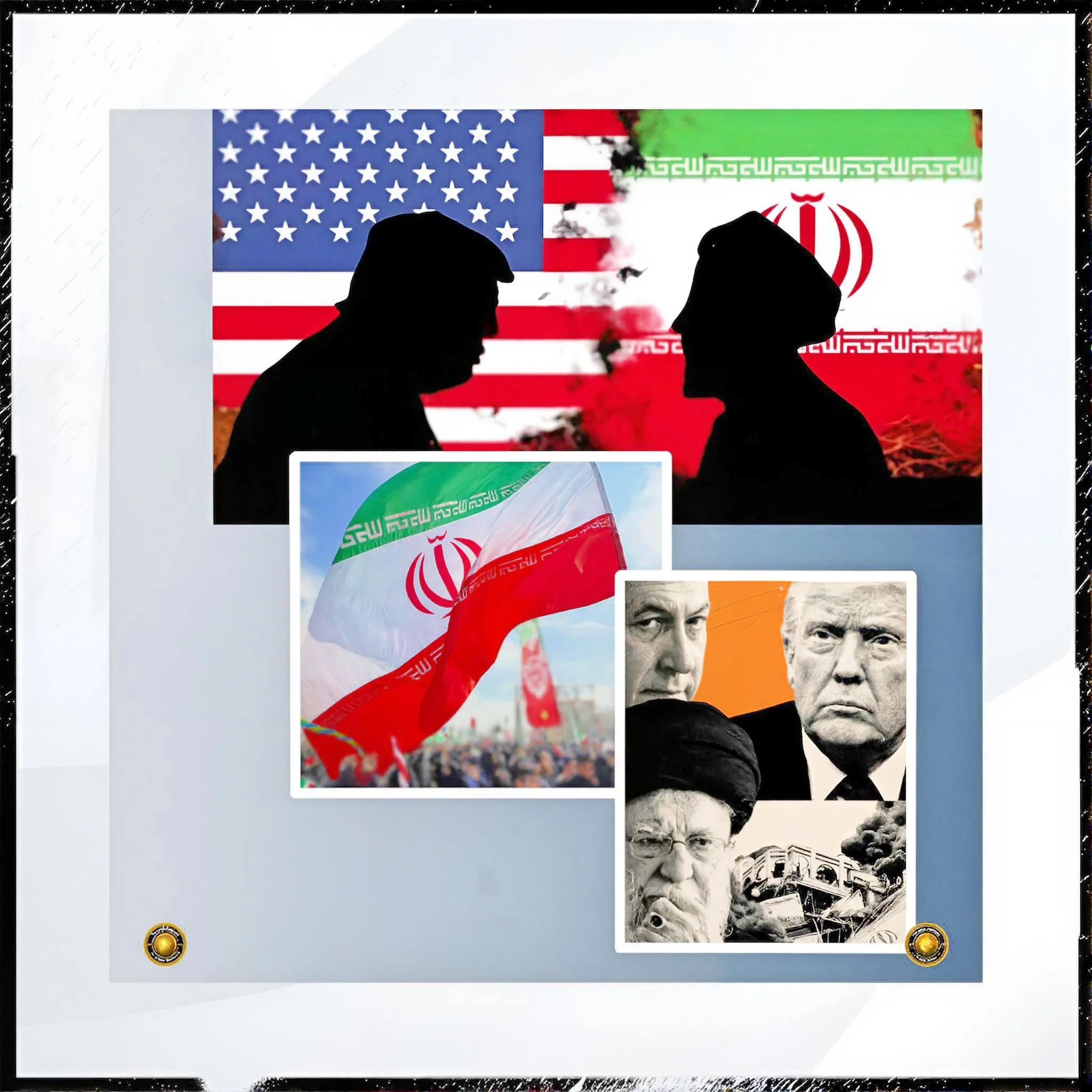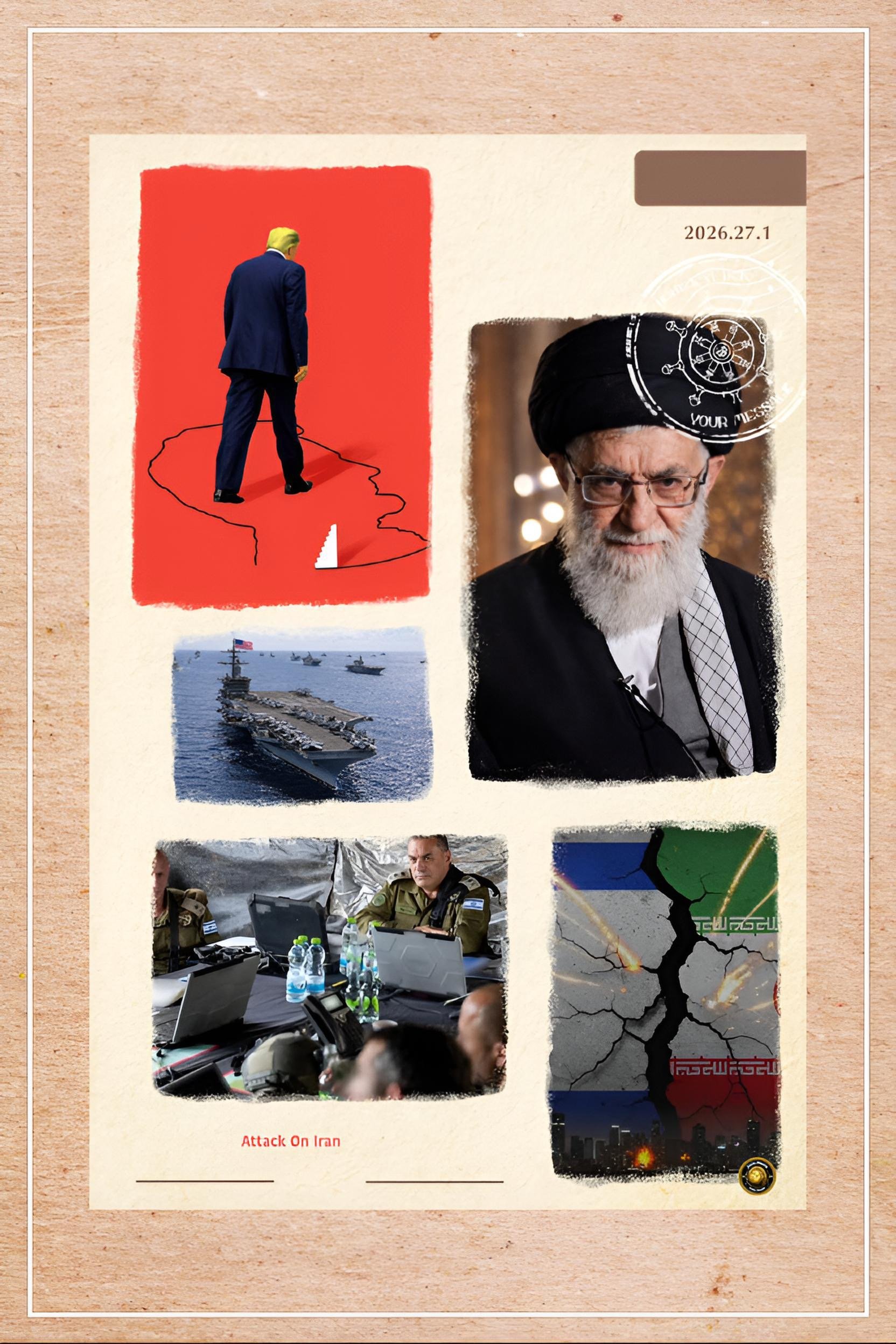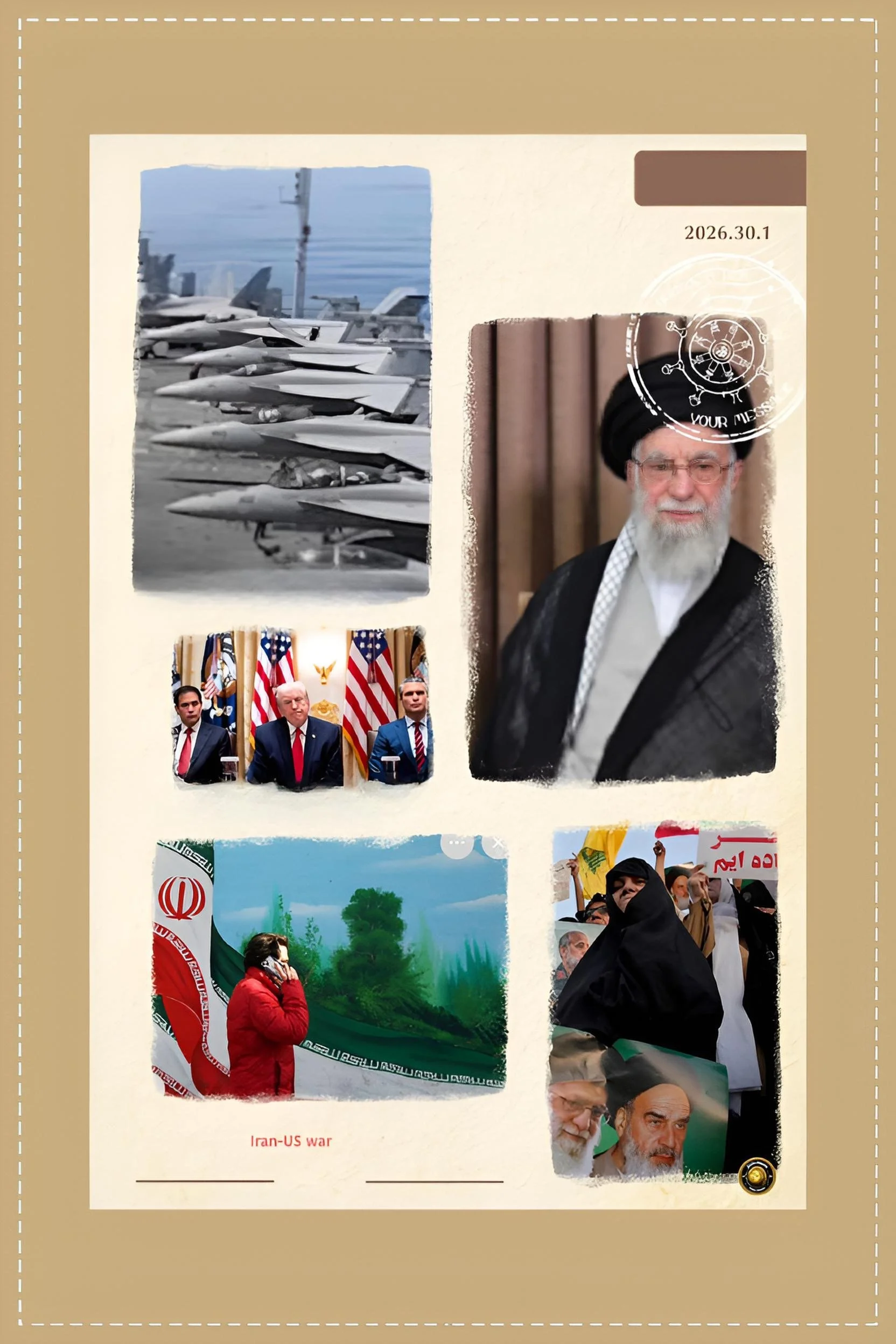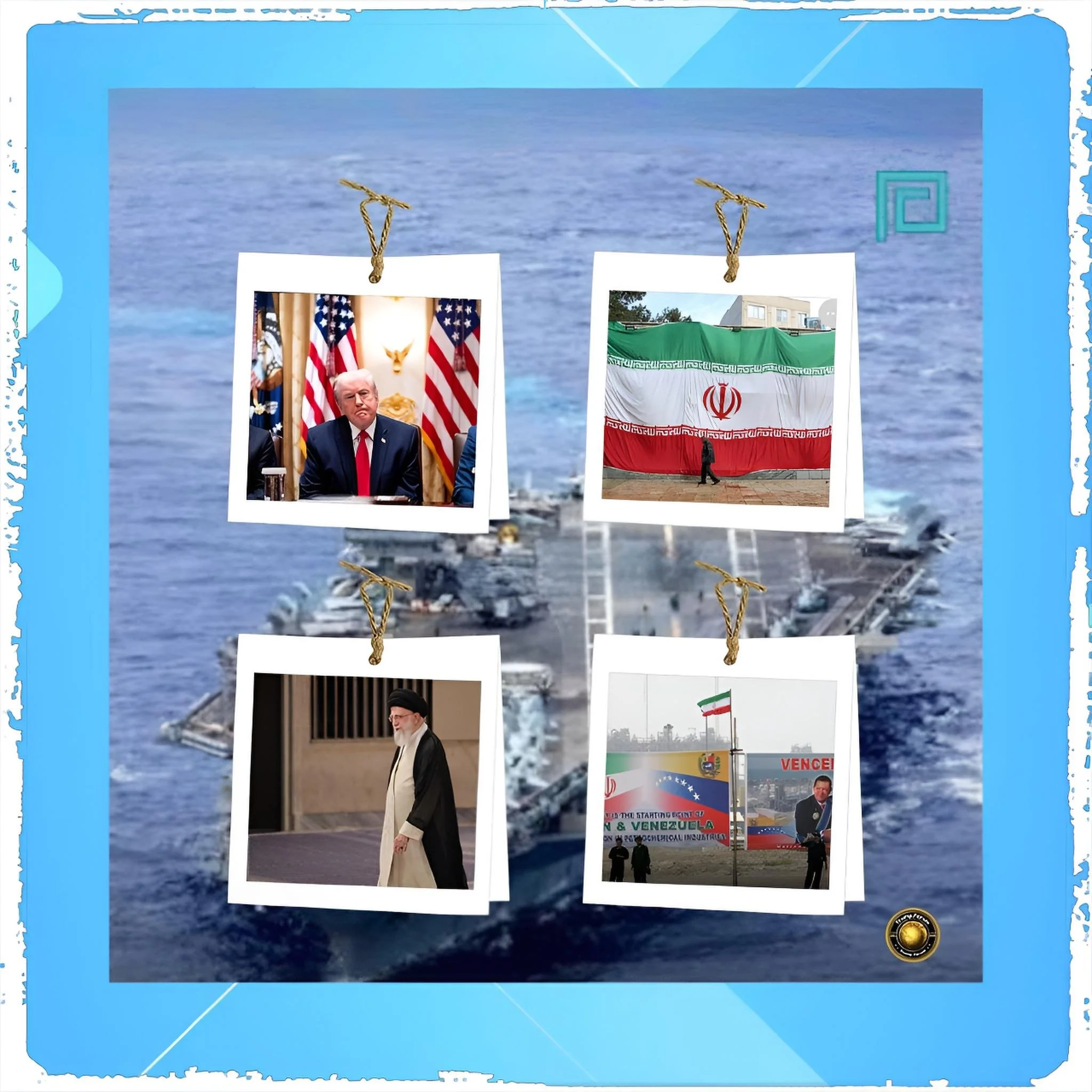
America's Incoherent Iran Strategy: Between Nuclear Containment and Regime Overthrow
Executive Summary
The Trump administration's contemporary Iran strategy embodies a fundamental contradiction that threatens to produce strategic consequences far exceeding the calculus of its architects.
As of January 2026, the administration simultaneously pursues three incompatible objectives: compelling Iranian capitulation on nuclear and ballistic missile programs through negotiations, preparing military operations to degrade Iran's nuclear capacity further, and contemplating regime change operations that could destabilize the Middle East for decades.
The June 2025 US strikes on Iranian nuclear facilities, conducted jointly with Israel, failed to achieve the stated objective of obliterating Iran's nuclear program. Rather than destroying the program, the strikes demonstrated capacity limitations while accelerating Iranian reconstitution efforts.
Meanwhile, the designation of JD Vance as the administration's likely successor and the Venezuela precedent reveal an experimental approach to foreign intervention that prioritizes resource extraction over political stability—a model the Middle East cannot absorb without catastrophic consequences.
Introduction
The United States faces a recurrent dilemma in its relationship with Iran that transcends the current administration's tenure.
Since the Islamic Revolution of 1979, successive American governments have struggled to define whether Iran represents an obstacle to be managed through containment, deterrence, and negotiation, or an adversary requiring regime change to achieve fundamental regional transformation.
The question resurfaces with particular urgency in early 2026, amid Iranian domestic turmoil, the visible degradation of the Iranian-led "Axis of Resistance," and an American president who has historically combined diplomatic overtures with unpredictable military escalation.
The current strategic environment differs substantially from the Cold War paradigm or even the post-2015 nuclear agreement framework. Iran's nuclear program has advanced beyond the technical thresholds established by the Joint Comprehensive Plan of Action (JCPOA), with the Islamic Republic enriching uranium to 60% purity—a technical threshold that signifies weaponization capability even if weapons themselves have not been assembled.
Iran's breakout time to weapons-grade material has contracted to 1 to 2 weeks, a fact universally acknowledged across Western and Israeli intelligence agencies. Simultaneously, Iran's regional military infrastructure has been substantially degraded through 12 days of Israeli and limited American military operations in June 2025, the loss of critical proxies in Gaza and Lebanon, and the unexpected collapse of the Assad regime in Syria in December 2024—a development that eliminated one of Iran's most consequential regional allies.
Against this backdrop, the Trump administration has indicated that it possesses no clear succession plan for Iran in the event of Khamenei's death or incapacitation, while simultaneously considering military operations explicitly designed to create conditions for regime change.
This analytical gap—between means and ends, between rhetoric and planning—represents the fundamental vulnerability of American strategy toward Iran.
History and Current Status of the Iran Question
The nuclear dimension of Iran policy has dominated American strategic discourse since the early 2000s, when revelations of Iran's undeclared nuclear activities precipitated a 20-year negotiation process interrupted by the Trump administration's unilateral withdrawal from the JCPOA in 2018.
That decision, taken despite Iran's documented compliance with the agreement and over the objections of American allies, reset the trajectory of Iranian nuclear development. Within 3 years of American withdrawal, Iran had resumed enrichment to 20% purity; within 5 years, it had achieved 60% purity.
By February 2025, Iran possessed over 400 kilograms of uranium enriched to 60% purity—enough material for 4 nuclear weapons should it be further enriched to weapons-grade concentration.
The Trump administration's approach to this escalation has combined military strikes with intermittent negotiation.
Beginning in April 2025, the administration engaged in 5 rounds of talks mediated by Oman, during which American negotiators presented demands for the permanent cessation of uranium enrichment, restrictions on ballistic missile development, and an end to Iranian support for regional proxy forces.
These negotiations effectively concluded following Israel's surprise offensive in early June 2025.
The June military operations proceeded through a well-coordinated but incompletely planned campaign. Israeli forces struck Iranian nuclear sites, military command infrastructure, and senior commanders on June 13, 2025.
The United States followed with strikes on June 21-22, deploying 14 Massive Ordnance Penetrator bunker-busting bombs against the Fordow fuel enrichment plant and Tomahawk cruise missiles against additional targets. Administration officials, most prominently President Trump himself, claimed these strikes had "obliterated" Iran's nuclear program.
This characterization proved to be inaccurate.
Intelligence assessments conducted in the weeks following the strikes revealed a more complicated reality. Of the 3 major nuclear sites targeted—Fordow, Natanz, and Isfahan—only Fordow sustained damage severe enough to warrant the description "largely destroyed."
The facility will require 1 to 2 years for substantial reconstitution. Natanz and Isfahan sustained significant damage to aboveground infrastructure but preserved critical underground facilities. Centrifuges survived the strikes at both locations.
The 960 pounds of highly enriched uranium mentioned in administration communications was largely buried beneath debris rather than destroyed.
Satellite imagery from subsequent months documented Iranian efforts to assess whether critical nuclear materials survived, suggesting that portions of the uranium stockpile remained intact and accessible.
Current Status of Iranian Nuclear Reconstruction
As of late January 2026, Iran has undertaken a systematic reconstruction program designed to harden its nuclear infrastructure against future strikes while pursuing incremental advancement toward higher enrichment levels.
Satellite imagery analyzed by the Foundation for Defense of Democracies and other open-source intelligence organizations reveals 3 principal lines of effort.
First, at the Taleghan 2 site within the Parchin military complex, Iran has undertaken reconstruction of facilities destroyed by Israeli strikes in October 2024. The construction is nearly complete and includes a reinforced concrete sarcophagus designed to provide protection against future bunker-busting ordnance.
The facility was previously used for nuclear weapons experiments related to neutron initiators and, more recently, for the manufacture of high explosives used in nuclear detonations. While it remains unclear whether Taleghan 2 will serve nuclear weapons development or conventional weapons purposes, the accelerated pace of reconstruction and hardening suggests an intention to preserve optionality regarding nuclear weaponization.
Second, at the Natanz Pilot Fuel Enrichment Plant, Iran has erected privacy covers over the bombed facilities, apparently to assess whether key assets including stockpiles of highly enriched uranium survived the strikes. Excavation work continues at a deeply buried facility designated "Pickaxe Mountain" located near the Natanz complex.
This site was not targeted during the June 2025 strikes and is believed by Western intelligence agencies to be designed to host a secret enrichment plant capable of operating covertly. The facility would be substantially more difficult to target than above-ground installations.
Third, at the Esfahan uranium conversion complex, Iran has undertaken debris removal and facility fortification. While the site sustained significant damage, particularly to uranium metal conversion facilities essential for weapons manufacturing, Iranian engineers are working to salvage equipment and determine what can be recovered.
Concurrently, Iran has announced that it is no longer bound by the restrictions of the JCPOA following the formal expiration of the agreement on October 18, 2025. Iran has suspended cooperation with the International Atomic Energy Agency, claiming that the agency failed to condemn Israeli and American strikes on nuclear facilities.
Key Developments
The Succession Question and Military Uncertainty
A critical element distinguishing the current Iran strategy from predecessors is the explicit acknowledgment by multiple American officials that the United States possesses no clear plan for Iran's political future in the event of Khamenei's death or regime collapse.
Secretary of State Marco Rubio has conceded that "there is no clear successor to Khamenei," while intelligence analysts note the absence of a designated heir apparent who would command the legitimacy required to maintain regime cohesion.
Khamenei himself, now 86 years old, has undertaken succession planning that reveals internal regime concerns about continuity. Intelligence sources indicate that Khamenei has designated potential successors including clerics Sadeq Larijani, Alireza Arafi, and Hassan Khomeini, grandson of the Islamic Revolution's founder.
Notably, Khamenei has excluded his own son, Mojtaba Khamenei, from the official succession framework—a decision apparently designed to avoid allegations of dynastic succession that might damage regime legitimacy.
Beyond official succession mechanisms, classified intelligence assessments suggest that Khamenei has developed contingency planning for regime collapse.
According to reporting from British intelligence sources, Khamenei has prepared a "Plan B" to flee Iran for Moscow, where he would seek asylum under Russian protection.
The plan apparently involves evacuation of up to 20 family members and close associates, mirroring the flight of Syrian President Bashar al-Assad to Russia following the collapse of his government in December 2024.
This contingency arrangement suggests that even Khamenei himself views the political situation as potentially untenable should external military pressure and internal unrest combine.
The vacuum created by Khamenei's potential removal presents a scenario that alarms Arab allies far more than it motivates American planners.
Arab regional experts note that absent a clear successor backed by legitimacy and institutional authority, power would likely devolve to the Islamic Revolutionary Guard Corps (IRGC)—the military institution that has maintained regime cohesion through the June 2025 military confrontation and the subsequent waves of domestic protest.
An IRGC-led successor regime would almost certainly prove more hardline and more resistant to nuclear compromise than the current structure, where at least the Foreign Ministry maintains a negotiating channel with the United States and moderate elements within the regime retain some policy influence.
The American Strategic Dilemma
The Trump administration's approach to Iran comprises 3 distinct, incompletely reconciled strategic options. First, the administration maintains diplomatic channels and has indicated willingness to negotiate a new nuclear agreement.
Special envoy Steve Witkoff maintains communications with Iranian Foreign Minister Abbas Araghchi through intermediaries, though substantive progress has not been evident for months.
The administration's negotiating position demands Iranian abandonment of uranium enrichment (a demand Iran will not accept), acceptance of restrictions on ballistic missiles (which Iran views as essential deterrent capacity), and an end to support for regional proxy forces (a cornerstone of Iranian regional strategy).
Second, the administration has prepared military options ranging from limited strikes on specific nuclear facilities to broader operations designed to destroy Iranian air defenses, degrade ballistic missile capabilities, and eliminate political and military leadership.
President Trump has publicly warned that any future American military action against Iran would be "significantly worse" than the June 2025 strikes. The USS Abraham Lincoln Carrier Strike Group has been deployed to the region, and classified assessments indicate that 6 to 9 additional nuclear and military sites could be targeted in a sustained campaign.
Defense Secretary Pete Hegseth has characterized the Pentagon as "ready to execute whatever this president expects."
Third, the administration appears to have contemplated regime change operations without developing political objectives or transition planning that would address the inevitable power vacuum.
The contemplated tactics include covert deployment of American commandos to sabotage nuclear facilities, targeted strikes against IRGC leadership designed to inspire domestic protests, and psychological operations intended to exacerbate internal divisions within the regime.
Yet none of these tactical options is coupled with a coherent vision for post-Khamenei Iran or a strategy to manage the regional consequences of regime collapse.
The Trump administration's Venezuela operation, culminating in the capture of President Nicolás Maduro in January 2026 and the appointment of interim president Delcy Rodríguez, provides insight into the administration's theoretical approach to managing regime transitions.
In Venezuela, the administration pursued what it characterizes as a "remote intervention" model—military action to remove the leader, followed by economic leverage (through oil sales proceeds) to shape the behavior of successor institutions without substantial American administrative presence. Venezuela's oil resources provided the economic leverage necessary for this approach.
Iran presents a fundamentally different challenge. While Iran possesses substantial petroleum resources, the administration's ability to seize direct economic leverage is substantially constrained by the integration of Iran's economy with Russia and China.
Moreover, the regional consequences of Iranian regime collapse extend far beyond Venezuela's hemispheric significance.
The potential for sectarian conflict, proliferation of advanced weapons systems to non-state actors, regional great-power competition, and the emergence of ungoverned spaces capable of hosting extremist organizations far exceeds the strategic stakes in Venezuela.
Israel's Role and Divergent Strategic Interests
The coordination between the United States and Israel regarding Iran has deepened substantially since the October 2023 Hamas attacks on Israel.
Israel possesses what analysts characterize as "the most advanced human intelligence system related to Iran—not only in the Middle East, but globally," according to assessments by Israeli intelligence officials.
This intelligence advantage has provided the foundation for the precision of Israeli strikes in June 2025 and ongoing Israeli targeting of Iranian military facilities.
However, growing evidence suggests that Israeli and American strategic objectives toward Iran are not entirely aligned. Israel's primary interest is preventing Iranian acquisition of nuclear weapons—an objective that could theoretically be achieved through strict international monitoring, intrusive IAEA inspections, and the maintenance of Israeli preemptive strike capability.
Some Israeli analysts have suggested that a weakened Iran, constrained in its nuclear program but politically stable, might serve Israeli interests as effectively as regime change.
Such an Iran would pose no immediate nuclear threat while potentially remaining internally divided and strategically compromised—unable to pursue aggressive regional expansion but also unable to collapse into the kind of state failure that would produce ungoverned spaces and weapons proliferation.
By contrast, some elements within the Trump administration appear to view regime change as a desirable objective independent of nuclear considerations.
The administration's rhetoric regarding "creating conditions for regime change" and "inspiring renewed protests" suggests a vision that transcends narrow nonproliferation objectives.
This divergence in strategic ends, if it persists, could produce friction between American and Israeli decision-makers regarding the scope, timing, and objectives of military operations.
Cause and Effect
How Past Interventions Shape Current Calculations
The precedents of Iraq (2003), Libya (2011), and Afghanistan (2001) loom over contemporary strategic planning, whether explicitly acknowledged or implicitly understood.
Each of these interventions succeeded in the narrow objective of regime removal but failed catastrophically in the broader objective of political stabilization and democratic transition.
In Iraq, the United States succeeded in removing Saddam Hussein's government through rapid military operations.
The subsequent decision to disband the Iraqi military and undertake "de-Ba'athification"—the removal of all government officials associated with the Ba'ath Party—created a governance vacuum. Hundreds of thousands of trained military officers and security personnel, suddenly unemployed and politically marginalized, formed the organizational nucleus of the insurgency that would convulse Iraq for over a decade.
The marginalization of the Sunni Arab population, which had dominated Ba'athist institutions, generated grievances that fueled sectarian conflict when Shia-dominated successor governments monopolized state resources.
This sectarian dynamic ultimately created conditions for the emergence of the Islamic State of Iraq and Syria (ISIS), whose territorial state in 2014-2017 represented the most consequential terrorist organization the world has experienced in the 21st century.
The Iraq intervention, undertaken to prevent weapons of mass destruction, contributed to the emergence of a far more destabilizing terrorist organization.
In Libya, NATO military operations in 2011 removed Muammar Gaddafi's regime under the auspices of the "Responsibility to Protect" doctrine.
However, the international coalition provided no postwar stabilization planning. The collapse of central authority created a vacuum filled by competing militia groups, Islamist organizations, and criminal networks.
Libya descended into prolonged civil conflict, fractured into rival governments, and became a transhipment point for weapons trafficking and human smuggling that destabilized neighboring countries and affected European security. A country that had possessed the highest human development index in Africa before the intervention became a failed state.
Afghanistan witnessed American intervention beginning in 2001, followed by 20 years of nation-building efforts and over 2.4 trillion dollars in expenditures.
The United States succeeded in removing the Taliban from power but failed fundamentally in sustaining alternative governance.
The decision to underfund diplomacy and political development in favor of military operations created conditions where the Taliban could reconstitute.
The withdrawal of American forces in 2021 triggered the rapid collapse of the Afghan government and military, demonstrating that institutions built entirely on American military support possessed no independent capacity for survival.
These three cases share a common pattern: initial military success followed by political failure, extended instability, and outcomes that either replicated or exceeded the humanitarian costs of the original conflict.
None of these interventions produced liberal democracy or stable governance. All produced prolonged instability, regional spillover effects, and the emergence of new security challenges more severe than those that preceded the intervention.
The Iran case presents a more complex scenario than any of these precedents because Iran possesses substantially greater state capacity, a coherent ideological system with genuine support among elements of the population, and integration into major-power security arrangements (particularly with Russia and China).
Yet the historical pattern suggests that regime change through military means, absent a coherent plan for political transition and regional stabilization, produces outcomes inferior to the status quo ante.
Latest Facts and Concerns
Regional Responses and Strategic Miscalculation
As of late January 2026, regional actors are responding to American military preparations with alarm rather than support. Saudi Arabia and the United Arab Emirates have both explicitly refused to permit American military operations from their territory.
Saudi Crown Prince Mohammed bin Salman assured Iranian President Masoud Pezeshkian that Saudi airspace would not be used for attacks against Iran.
These reversals are significant because the Reagan administration's 1987-1988 "Tanker War" with Iran depended substantially on Gulf Arab support, and Israeli military operations against Iraq (1981) and Syria (2007) enjoyed implicit Gulf Arab acquiescence.
The refusal of Gulf states to participate in American military operations against Iran reflects domestic political constraints.
Public opinion polling indicates that 77% of Arab respondents view the United States and Israel as primary threats to regional stability, compared with only 7% who identify Iran as the principal threat.
Arab governments that have moved toward normalization with Israel recognize that popular opposition to such moves could be dramatically inflamed by an American military campaign against Iran perceived as serving Israeli interests.
Furthermore, Arab states recognize that Iran, despite its military degradation since June 2025, retains substantial capacity to impose costs on Gulf infrastructure. Iranian ballistic missiles and drones could target oil and gas installations across the Gulf, container shipping in critical waterways, and American military bases hosted in Qatar, Bahrain, and Kuwait.
The economic consequences of such attacks—disruption of global energy supplies and potential closure of the Strait of Hormuz—would impose costs on the global economy extending far beyond the Middle East.
The Iraqi government, while maintaining formal cooperation with American forces, has similarly expressed concern about being drawn into an escalating Iran conflict.
The Popular Mobilization Forces (PMF), an Iraqi militia group with documented ties to Iran, has largely exercised restraint since October 2023, but analysts recognize that a major American military campaign against Iran could trigger PMF mobilization, potentially destabilizing the fragile political equilibrium in Iraq.
Turkey and Pakistan, through President Erdoğan and other officials, have offered mediation initiatives designed to de-escalate American-Iranian tensions.
These initiatives, while not necessarily reflecting deep commitment to diplomatic settlement, indicate that even regional actors traditionally aligned with American interests view continued escalation as strategically counterproductive.
The administration's failure to develop coherent post-regime-change planning has also generated concern among American allies regarding the administration's broader strategic competence.
The European Union, while remaining aligned with American nonproliferation objectives, has declined to endorse military operations against Iran. European capitals, remembering the Iraq precedent, appear skeptical that military action will produce favorable political outcomes.
Future Steps
The Calculus of Military Decision-Making
The Trump administration faces a decision point regarding Iran that will likely arise within the 6 to 12 months following the publication of this analysis. Several scenarios appear plausible.
In the most constrained scenario, the administration would maintain diplomatic channels with Iran while relying on the threat of future military operations to encourage Iranian compliance with American negotiating demands.
This approach acknowledges that Iran will not voluntarily abandon uranium enrichment and thus focuses instead on limiting Iranian missile development and proxy support.
The advantage of this approach is that it avoids the catastrophic risks associated with military escalation while maintaining American strategic leverage. The disadvantage is that it leaves Iran in possession of highly enriched uranium and weapons-grade enrichment capability, a situation the current administration views as intolerable.
In a second scenario, the administration would conduct limited military strikes designed to set back Iranian nuclear facilities further without attempting to trigger regime change.
Targets might include the Pickaxe Mountain facility, facilities associated with ballistic missile production, and uranium conversion plants. Israel has reportedly advocated for this approach, viewing it as preventing Iranian nuclear acquisition while preserving existing strategic stability.
The advantage of this approach is that it maintains pressure on Iran's nuclear program while avoiding the political risks of regime-change operations. The disadvantage is that it would likely prompt Iranian retaliation and escalate the cycle of military action and counteraction.
In a third scenario, the administration would pursue the implicit regime-change objective through a combination of military strikes against IRGC leadership, covert operations against nuclear and military facilities, and information operations designed to amplify internal protest. This approach would reflect the administration's Venezuela precedent, in which military action removed the leader and economic pressure shaped successor behavior.
The catastrophic disadvantage of this approach is that Iran, unlike Venezuela, possesses the military capacity to impose substantial costs on American forces and regional allies, while the political vacuum created by regime change could produce outcomes far worse than the current trajectory.
The absence of American planning for post-Khamenei Iran means that this scenario would likely result in IRGC consolidation of power—producing a more hardline regime less amenable to nuclear compromise than the current structure.
Conclusion
Strategic Coherence and the Path Forward
The Trump administration's Iran strategy suffers from a fundamental incoherence between its stated objectives and its apparent means.
The administration simultaneously demands Iranian nuclear surrender while conducting military operations that make such surrender less likely; contemplates regime change while acknowledging the absence of succession planning; and pursues limited military objectives while considering operations sufficient to trigger political collapse.
The historical precedents of Iraq, Libya, and Afghanistan provide little ground for confidence that regime change through military means will produce outcomes consistent with American strategic interests.
Each of these interventions succeeded militarily but failed politically, producing prolonged instability, regional spillover effects, and the emergence of successor challenges more severe than those preceding the intervention. Iran, with greater state capacity, more coherent ideological structures, and integration into major-power security arrangements, presents conditions more likely to produce catastrophic outcomes than any of these predecessors.
The alternative—accepting Iranian nuclear threshold status while pursuing diplomatic arrangements that limit missiles and proxy activity, maintaining deterrent capacity through continued force presence and demonstrated willingness to strike, and focusing on internal Iranian political evolution—requires intellectual humility regarding American capacity to shape outcomes through military means. It requires recognition that Iranian nuclear weapons, while deeply undesirable, represent a constraint that can be managed through deterrence and ongoing intelligence operations rather than a condition that can be reversed through military action.
The decision point regarding Iran will likely determine not merely the trajectory of American Middle Eastern policy but also the credibility of American strategic planning across the global system. A military campaign that succeeds tactically but fails politically—repeating the Iraq pattern—would damage American strategic credibility for generations.
By contrast, a strategy that frankly acknowledges the constraints on American military power and focuses on managing rather than eliminating Iranian power would restore coherence between means and ends.
The current trajectory suggests the administration is sliding toward the Iraq precedent absent deliberate strategic recalibration.