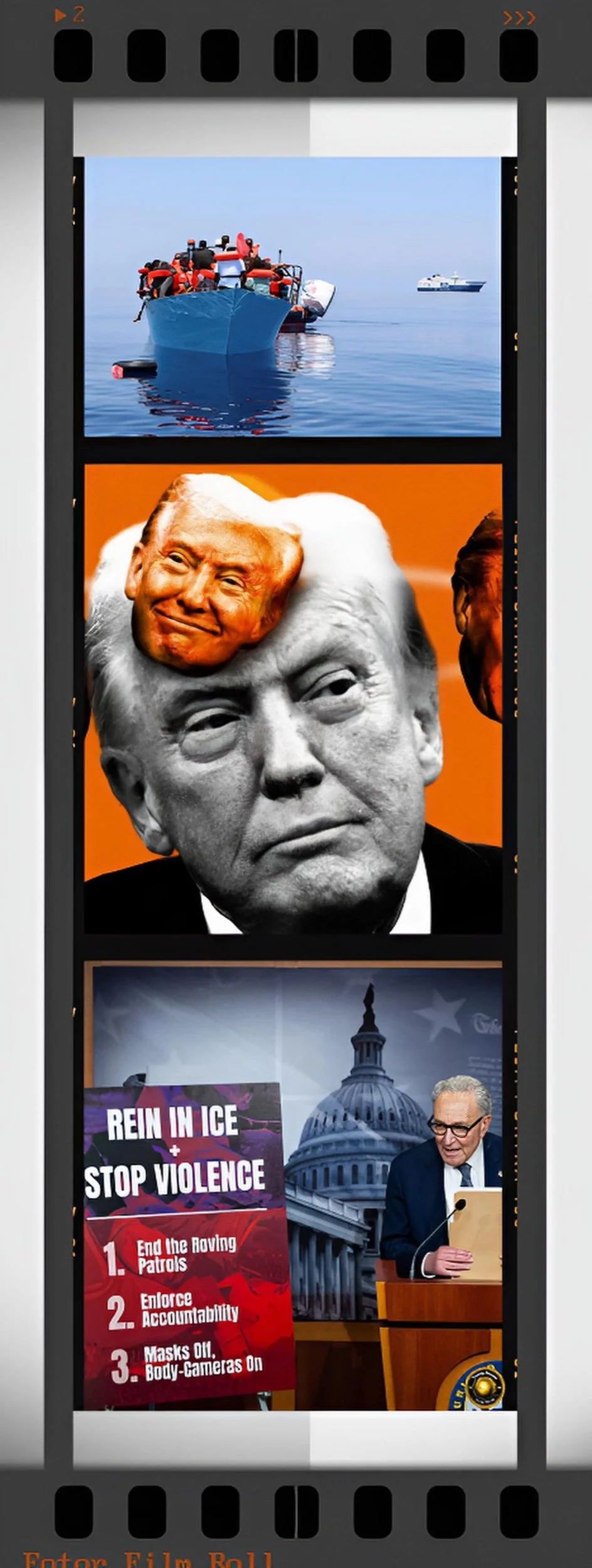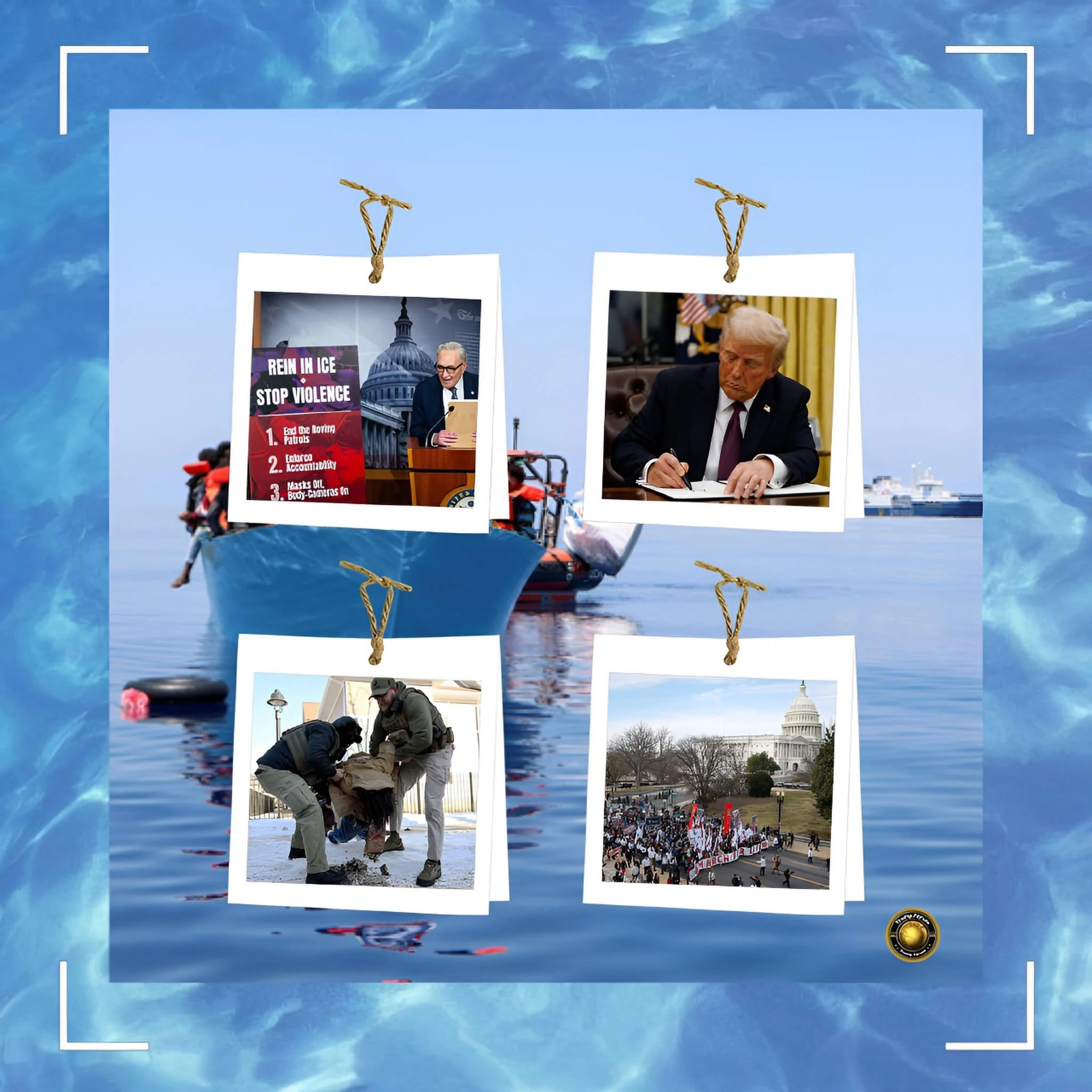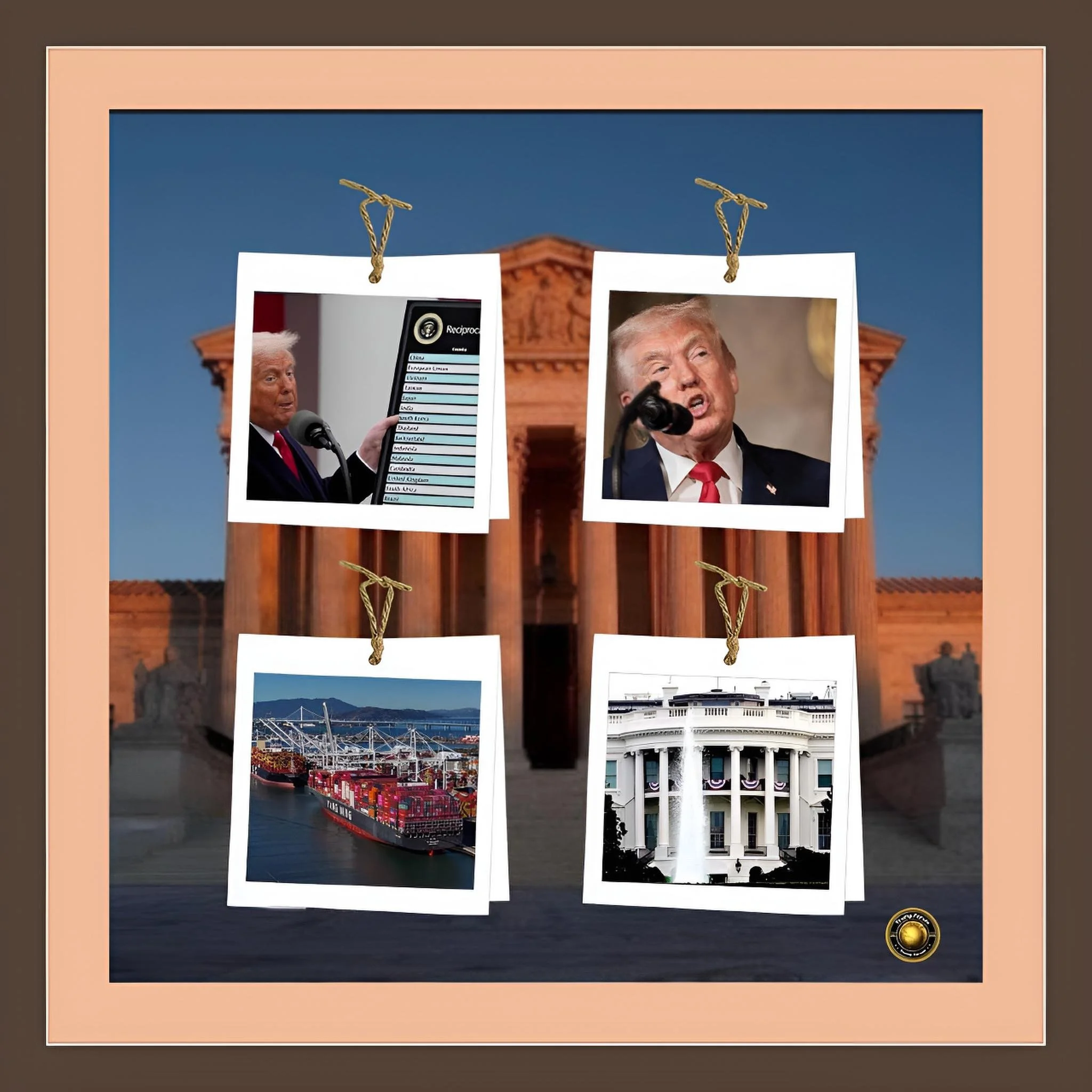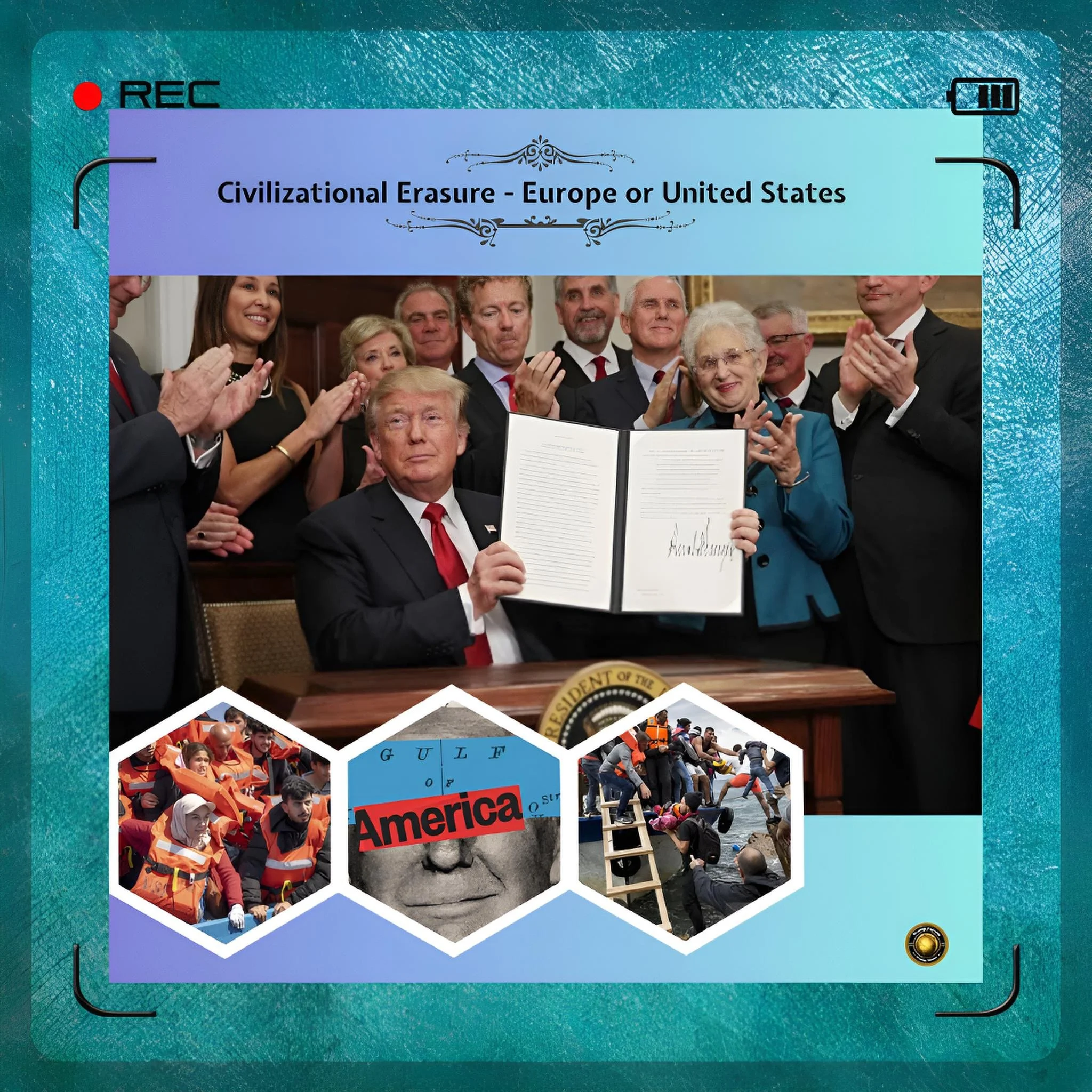
The Real Civilizational Erasure Is Happening in America: Executive Power Without Limits Is Destroying What Makes the West Different
Executive Summary
Many politicians say Europe's immigration and cultural changes are destroying Western civilization. But they are wrong. The real threat to Western civilization is happening in America right now.
What makes Western civilization different? It is not religion or ethnicity or culture. Many civilizations have those things. What makes the West unique is something much simpler: the idea that power has limits. The idea that even the leader cannot do whatever he wants. The idea that courts can overrule the president. The idea that Congress controls the money. The idea that laws apply equally to everyone, including those in power.
This idea started with Magna Carta in 1215. A King of England wanted to raise taxes. The nobles said no. They made the king agree to limits on his power. Since then, the West has slowly built a system where power is limited by law, by courts, by separate branches of government, and by the Constitution.
Now, this system is breaking down. President Trump is expanding executive power in ways that no American president has done before. He is withholding money Congress gave to federal agencies. He is ignoring court orders. He is using the Justice Department to punish enemies and help allies. He is firing inspectors general who are supposed to watch for corruption. He is attacking law firms and media outlets that criticize him.
If this continues, America will no longer be a democracy. It will become like Hungary or Russia—countries that still have elections but where the leader controls everything. The real erasure of Western civilization is not happening in Europe. It is happening in America, through the destruction of limits on executive power.
Introduction
What Makes the West Western
Most people think Western civilization means Christianity, or Capitalism, or a certain way of life. But there are Christian civilizations in Africa, the Middle East, and Asia. There is capitalism in China and Russia. Cultural traditions exist everywhere.
What is actually unique about the West is smaller and more specific: the idea that power should be limited by law.
In most societies throughout history, whoever held power could use that power however they wanted. A king could take property, punish people without trial, declare war whenever he wanted. The people had no protection because the leader was not bound by law.
But starting 800 years ago, the West developed a different idea. The idea that even the leader is bound by law. That there are rules the leader cannot break. That if the leader tries to break those rules, other institutions—courts, legislatures, other officials—can stop him.
Magna Carta in 1215 said: the king cannot raise taxes without the consent of nobles. A king is not above the law. Later, the English Bill of Rights said: nobody can be imprisoned without trial. Parliament, not the king, decides about money and laws.
By the time America was founded, this idea was central. The Framers of the Constitution designed a system with 3 separate branches of government. The president cannot spend money without Congress. Congress cannot make war without authorization from the president acting as commander. Courts can overrule both branches. It is a system designed so that no single person can grab all power.
This system created prosperity, democracy, and freedom. It is what made America stable and successful.
History
How Power Expanded Slowly, Then Suddenly
For 200 years, American presidents mostly respected the limits on their power. Then, starting in the Cold War, presidents began claiming more and more emergency power. They said they needed to wage nuclear deterrence, to conduct covert intelligence operations, to fight communism. The president's power grew.
But it grew slowly, and Congress sometimes pushed back. The Impoundment Control Act of 1974 said: if Congress appropriates money, the president must spend it. Congress cannot just refuse to spend money Congress decided to spend. That is the power of the purse, and it belongs to Congress.
Presidents also mostly respected court orders. If a court said "you must do this" or "you cannot do that," presidents obeyed. Even if they disagreed, they obeyed. Presidents understood that if they ignored courts, democracy would break down.
In Trump's second term, all of this changed. Trump is expanding executive power faster and further than any president in modern times.
Key Developments
The Rules Are Breaking
Here are the main things Trump's administration is doing:
First: withholding Congressional money. Congress approves the federal budget every year. Congress says: spend X amount on schools, Y amount on border security, Z amount on Medicare. The president is supposed to spend the money Congress approved. Trump is refusing. He has withheld about 3 trillion $ that Congress appropriated. He says the money was being wasted or that he disagreed with how it was being spent. But Congress decided how the money should be spent, not the president. Courts told him to spend the money. He is slowly obeying, but he is showing that the Impoundment Control Act is not a real limit.
Second: ignoring court orders. When courts tell the president to do something or not do something, the president is supposed to obey. But Trump's administration has ignored or delayed compliance with court orders about 33 percent of the time. The courts have issued orders, but Trump's people have said: "We will appeal" or "We will delay" or "We will find a way around this." Judges have threatened to hold Trump administration officials in contempt of court, but most have not done it. Courts used to have power to force the president to obey. That power is weakening.
Third: weaponizing the Justice Department. The president is supposed to enforce laws fairly, treating everyone the same. But Trump has fired federal prosecutors he did not trust. He has appointed prosecutors who are loyal to him. Cases against Trump allies are being dropped. Cases against Trump opponents are being pursued. The Justice Department is no longer independent. It is now a tool that the president uses against his enemies.
Fourth: removing inspectors general. Inspectors general are officials whose job is to watch for corruption and waste inside federal agencies. They report to Congress and the public about what the government is doing wrong. Trump has removed or is removing these officials. Now agencies have no internal watchdog. Nobody is independent enough to report corruption or abuse.
Fifth: attacking law firms, media, and universities. Trump has attacked law firms that defend immigrants or support diversity initiatives. He has prosecuted journalists for reporting on protests. He has threatened universities over their policies. In the past, the government did not attack these institutions for how they operated. Now it is. The president is using power to punish organizations that criticize him or that do things he dislikes.
Sixth: unprecedented executive orders. Trump is issuing executive orders faster than any president in history. He is even issuing more than Franklin D. Roosevelt during the Great Depression and World War II, when America was in genuine emergency. Executive orders can do some things, but they are supposed to be used for emergencies. Trump uses them for everything. He is governing by decree instead of by legislation.
Latest Facts and Concerns
The biggest concern is that there is no institutional check stopping any of this. When Trump withholds Congressional money, courts tell him to spend it, but he delays. When courts issue orders, Trump violates them, but nobody enforces the orders with serious punishment. When Trump fires inspectors general, Congress protests but takes no action. When Trump removes prosecutors, the Justice Department leadership says it is about ending "weaponization," but everyone knows it is about loyalty.
The Supreme Court made this worse. In a case called Trump v. United States, the Court said the president has "absolute immunity" for acts within his "core constitutional authority." The Court did not clearly explain what "core constitutional authority" means. The Court said the president cannot be prosecuted for directing the Justice Department regarding investigations and prosecutions. This means a president can now tell prosecutors: "Investigate my enemy" and the president cannot be prosecuted for it.
Republican senators and congresspeople have said that Congress already gave away so much power to the president that it is hard to take it back. Democrats are calling for impeachment or constitutional amendments, but Republicans control Congress. Without Republican votes, nothing can happen.
Public trust in institutions is collapsing. Pew Research found that 65 percent of Americans have low trust in federal institutions. Courts are being attacked. The Justice Department is seen as political. Career civil servants are being fired for disloyalty. The system designed to limit power is breaking down because the limits are being ignored and not enforced.
Cause and Effect
How Democracies Die
When a leader starts breaking institutional limits, what happens? Scholars who study this call it "democratic backsliding." Here is how it works:
First stage: The president claims emergency power or says certain things are his responsibility alone. Congress and courts challenge him. If Congress and courts enforce limits, the president stops. If Congress and courts do not enforce limits, the president continues and expands.
Second stage: The president tests further. He withholds money. He directs law enforcement. He removes officials. If there are no serious consequences, he continues.
Third stage: The president becomes bolder. He attacks institutions that could constrain him. He fires inspectors general. He removes prosecutors. He attacks courts and media.
Fourth stage: Opposition becomes marginalized. Media that criticizes the president is attacked. Prosecutors who opposed the president are gone. Courts are too weak to enforce orders. Civil society—law firms, universities, nonprofits—is intimidated.
End stage: A system that looks like democracy but is not. Elections still happen, but the incumbent always wins because the information environment is controlled, opposition is marginalized, and courts cannot overturn election results.
This happened in Hungary under Viktor Orbán. It happened in Poland under Jarosław Kaczyński. It happened in Russia under Putin. It happened in Turkey under Erdoğan. It can happen in America.
Future Steps
Can Democracy Recover?
Three things could happen:
Congress could reassert authority
Republicans could break with Trump and pass legislation limiting executive power. They could impeach and remove Trump. They could refuse to approve his appointments. But so far, Republicans have mostly supported Trump. This seems unlikely.
Courts could enforce limits
The Supreme Court could overturn Trump v. United States. Lower courts could impose serious penalties on Trump administration officials who violate court orders. But the current Supreme Court is conservative and unlikely to limit Trump. Lower courts are under pressure from higher courts to defer to the president.
The erosion continues until America becomes an electoral autocracy
Elections happen, but the leader controls the media, the police, the courts. The incumbent always wins.
Which path America takes depends on whether Congress and courts are willing to reassert limits on power. If they are not, then the system that made America prosperous and free—the system of limited power—will be gone.
Conclusion
Trump's supporters say they are defending Western civilization against threats from immigration and cultural change. But the real threat to Western civilization is happening right now. It is the expansion of executive power without limits. It is the breakdown of the rule of law. It is the transformation of the Justice Department into a political weapon. It is the removal of officials whose job is to watch for corruption.
Western civilization is not threatened by immigrants living under law. It is threatened by the erasure of the limits on power that make law possible.
For 800 years, the West built the idea that power has limits. That idea—more than anything else—is what made the West different and successful.
If that idea dies in America, then the real civilizational erasure will have occurred. Not in Europe, but in the country that was supposed to be democracy's greatest success story.