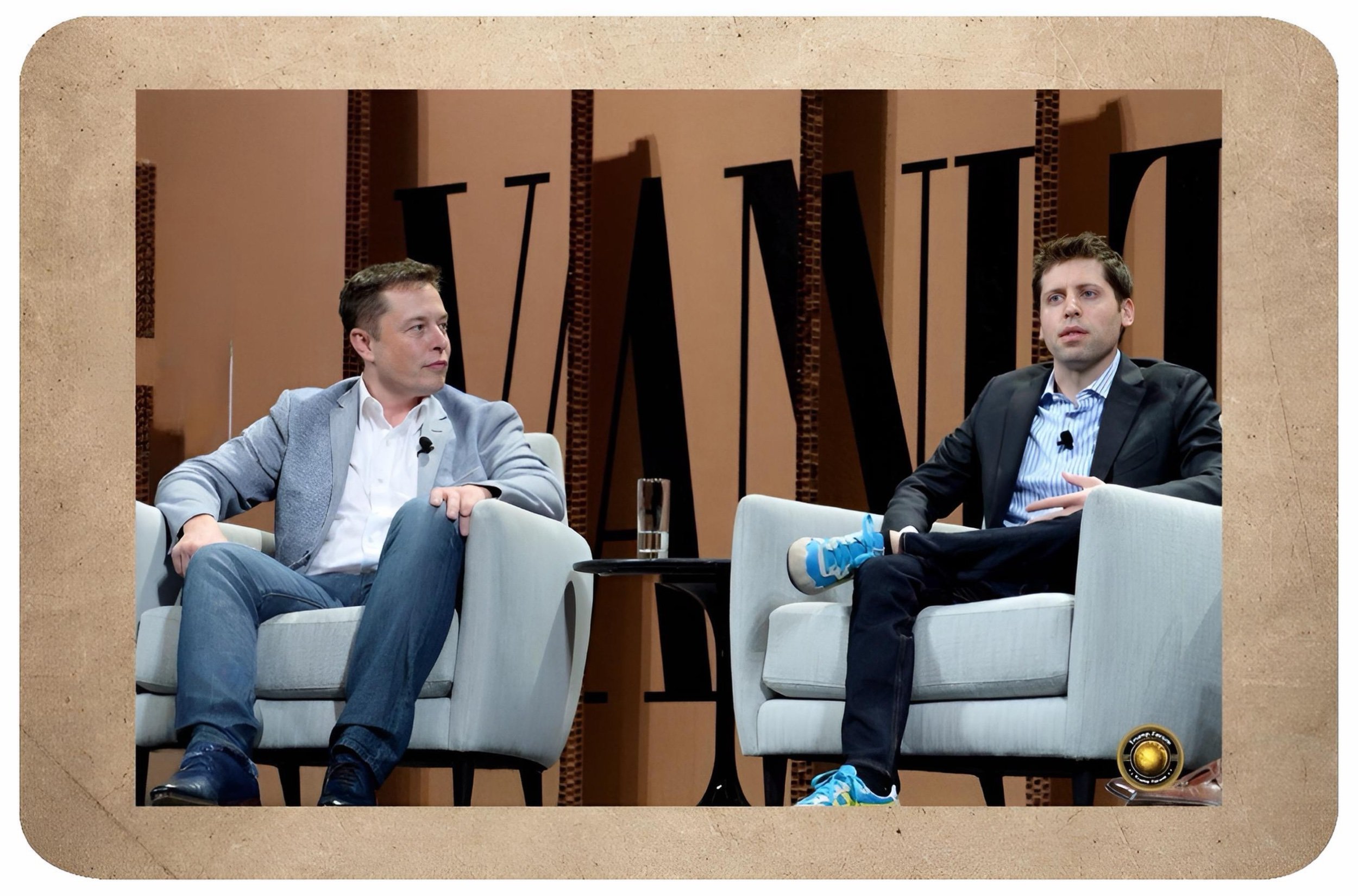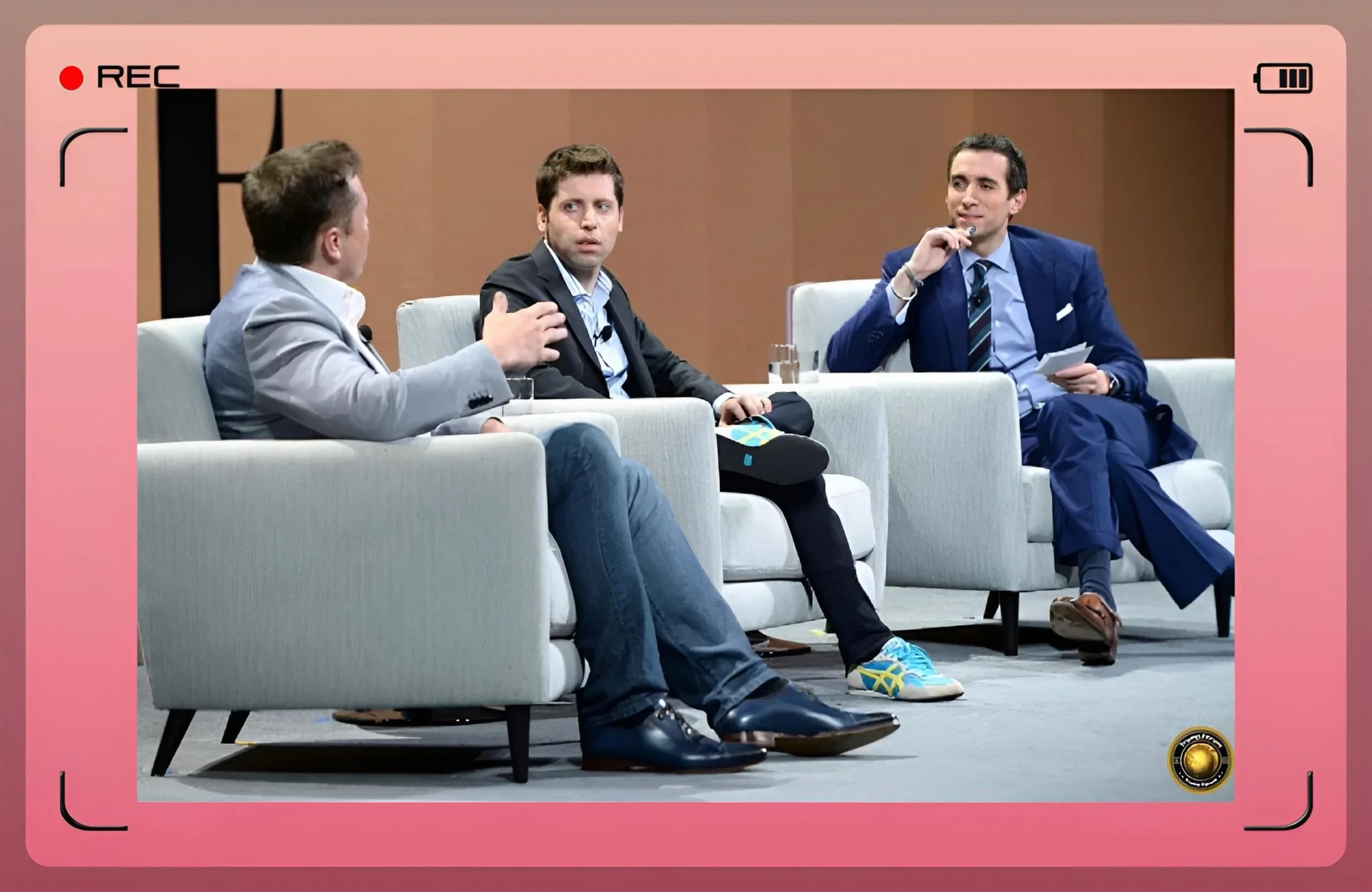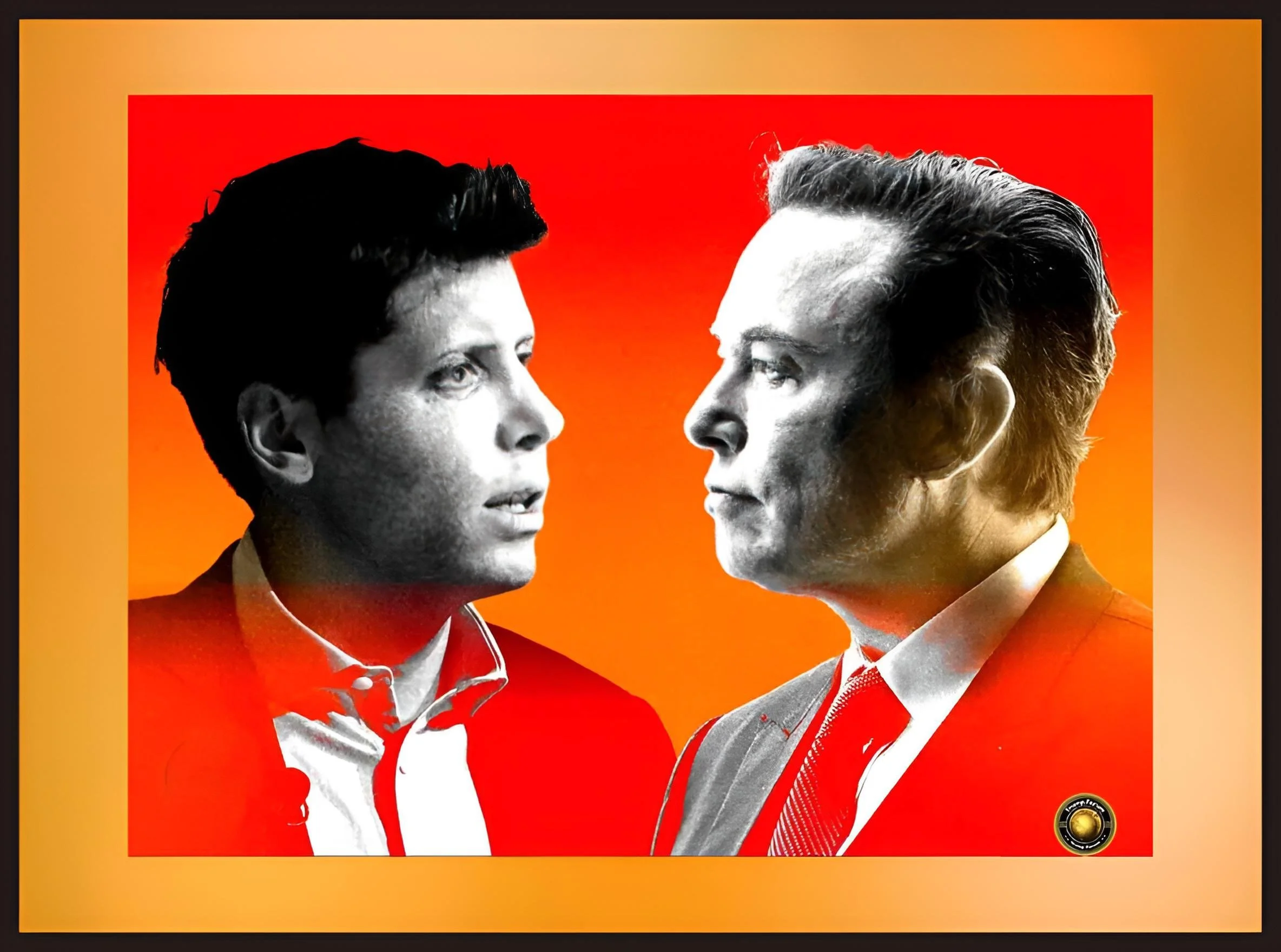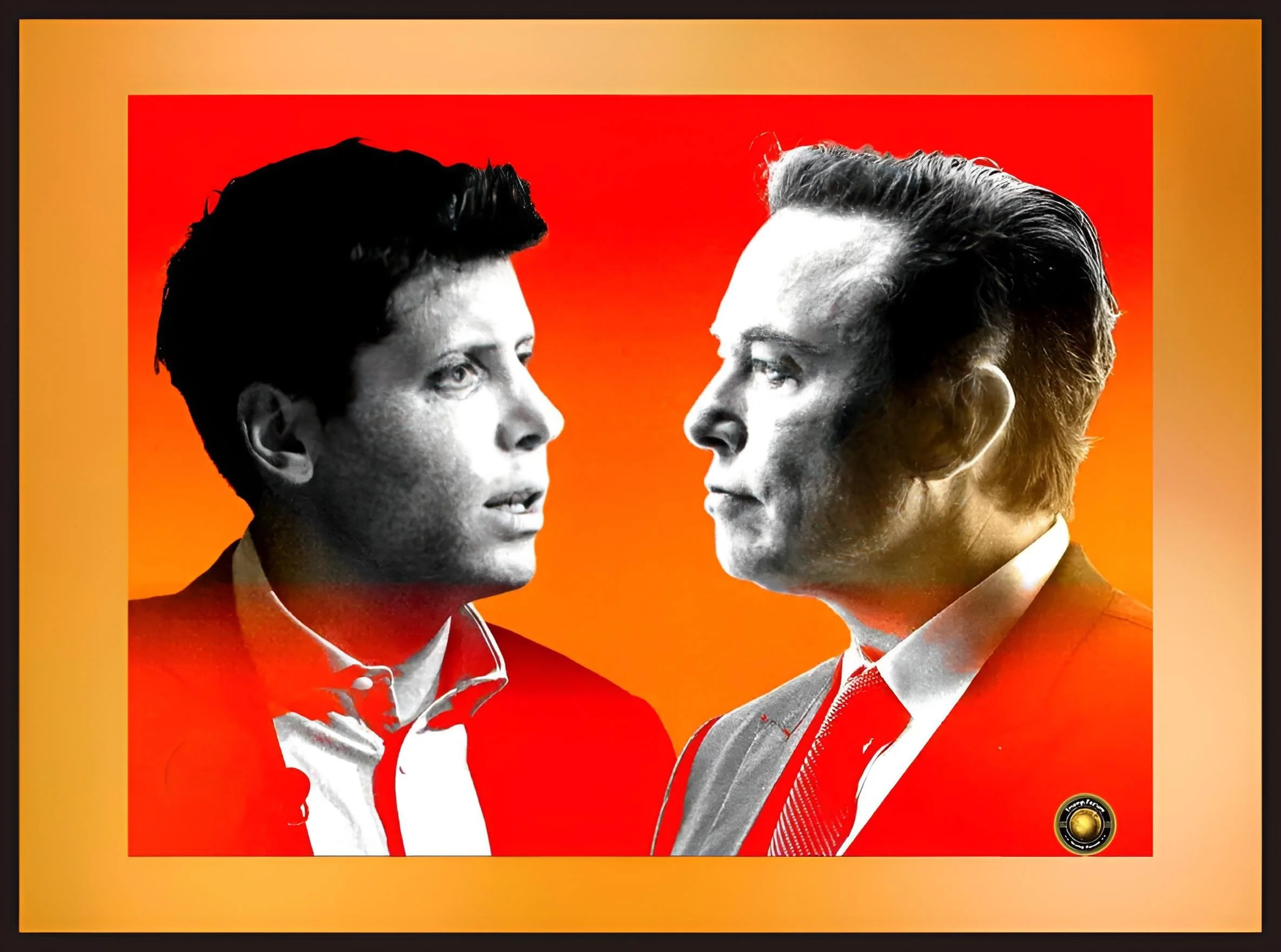
Capitalist Imperatives Unmasked: The Musk-OpenAI Litigation as a Window into Silicon Valley's Amoral Drift
Executive Summary
The protracted legal confrontation between Elon Musk and OpenAI, adjudicated in federal court, crystallizes a fundamental contradiction inherent to contemporary artificial intelligence enterprises: the irreconcilable tension between prosocial governance frameworks and the inexorable logic of capitalist accumulation.
When Musk co-founded OpenAI in 2015 as a nonprofit research institution, the founders articulated a mission predicated on ensuring that artificial general intelligence would benefit humanity in its entirety, unfettered by profit-seeking imperatives that might incentivize the development of dangerous technologies for pecuniary gain.
Yet within a decade, the organization underwent a metamorphosis into a hybrid structure dominated by for-profit mechanisms, ultimately yielding a $500 billion valuation that has enriched Microsoft and other investors whilst marginalizing the nonprofit's initial moral mission.
Federal Judge Yvonne Gonzalez Rogers determined in January 2026 that sufficient evidentiary foundations existed to permit Musk's fraud allegations to proceed to jury trial, scheduled for April through May 2026 in Oakland, California.
The lawsuit, demanding compensation ranging from $79 billion to $134 billion, represents not merely a dispute over contractual obligations but rather a categorical indictment of whether technology's most powerful entrepreneurs can systematically dismantle founding principles with impunity.
Introduction and Historical Context
The emergence of OpenAI in December 2015 occurred within a geopolitical and technological milieu wherein concerns regarding concentrated AI development proliferated among technologists, academics, and policy intellectuals.
The founders—including Musk, Sam Altman, Greg Brockman, Dario Amodei, and others—deliberately structured the organization as a nonprofit research laboratory rather than a profit-maximizing corporation.
This architectural choice reflected a considered philosophical position: that artificial general intelligence development, given its potentially civilization-altering implications, necessitated governance arrangements insulated from shareholder pressure to monetize dangerous innovations.
Musk contributed approximately $38 million to OpenAI's initial capitalization, representing approximately 60% of the organization's seed funding, and leveraged his formidable network to recruit preeminent AI researchers and secure essential partnerships.
The stated objective transcended conventional venture capital aspirations; it sought, in Altman's 2017 formulation, to ensure accountability "to humanity as a whole" rather than to shareholders demanding returns.
This positioning distinguished OpenAI from profit-driven competitors including Google, Meta, and Amazon, which pursued AI development constrained principally by reputational considerations and regulatory apprehension rather than structural governance impediments to commercialization.
Inflection Point and Institutional Transformation
The ideological consensus sustaining OpenAI's nonprofit posture fractured between 2017 and 2018. Documentary evidence unsealed in January 2026 illuminated the trajectory toward for-profit restructuring that Musk now alleges constituted fraud.
In November 2017, Greg Brockman recorded in his personal diary an observation of remarkable candor: "I cannot believe that we committed to nonprofit if three months later we're doing b-corp then it was a lie." The same entry articulated an alternative motivation, transparently financial in character: "We've been thinking that maybe we should just flip to a for profit. Making the money for us sounds great and all."
These contemporaneous utterances, preserved in Brockman's private journals and subsequently subpoenaed for judicial review, functioned as the evidentiary linchpin permitting the federal judiciary to conclude that Musk's claims possessed sufficient factual foundations to justify jury adjudication.
The underlying calculus driving the organizational transformation reflected what corporate governance scholars term "amoral drift"—the systematic erosion of prosocial corporate missions when confronted with competitive market pressures and capital requirements.
OpenAI's leadership recognized that developing frontier artificial intelligence models necessitated computational infrastructure, researcher compensation, and operational expenditures far exceeding what philanthropic donations and grants could finance.
Competitors including Google DeepMind and Microsoft's AI divisions commanded vastly greater financial resources.
To remain technologically competitive, OpenAI required capital infusions that venture capitalists would supply only if permitted to extract extraordinary returns. The nonprofit structure, by definition, constrained such profit extraction; hence the migration toward hybrid organizational arrangements featuring for-profit subsidiaries controlled nominally by the nonprofit parent.
Musk departed OpenAI in 2018, citing irreconcilable disagreements regarding organizational direction and managerial authority. He subsequently founded xAI, a competitor artificial intelligence enterprise now valued at $230 billion, which advanced the proposition that AI development could proceed profitably without the governance complications that plagued OpenAI.
This departure positioned Musk outside OpenAI's subsequent institutional evolution, yet his financial and reputational contributions to the organization's foundational success generated what he now argues constitutes a legal entitlement to proportionate participation in the enterprise's valorization.
The Microsoft Partnership and Contractual Sophistication
The relationship between OpenAI and Microsoft, formalized beginning approximately 2019 and intensifying through subsequent years, constituted the essential mechanism by which profit-driven capitalism infiltrated the nonprofit's governance apparatus.
Microsoft invested approximately $1 billion in OpenAI's for-profit subsidiary and subsequently secured rights to deploy OpenAI's technologies—particularly the GPT family of large language models—across Microsoft's commercial product portfolio.
By 2025, Microsoft's stake in OpenAI's newly reorganized for-profit entity appreciated to approximately $135 billion, representing approximately 27% ownership on a fully diluted basis. This staggering valorization occurred whilst the nonprofit maintained nominal control over the for-profit company; yet control divorced from capital extraction represents an increasingly hollow governance concession.
The nonprofit's capacity to prevent profit maximization becomes circumscribed when the for-profit subsidiary commands the technological assets, consumer relationships, and revenue streams requisite for existential sustainability.
Federal Judge Gonzalez Rogers confronted the central interpretive dilemma animating the litigation: whether agreements executed in the nonprofit's founding moment, predicated upon the organization's perpetual commitment to nonprofit status, remained contractually binding upon the organization subsequent to structural transformation.
The judge indicated that this question—seemingly straightforward in formulation—would require jury resolution, as it implicated competing factual narratives regarding the founders' contemporaneous intent and the reasonableness of Musk's reliance upon representations regarding perpetual nonprofit operation.
Key Developments in the Litigation and Evidentiary Disclosure
The unsealing of over 100 discovery documents in January 2026 illuminated the internal deliberations, email correspondences, and personal reflections of OpenAI's leadership during the critical period when the organization transitioned toward for-profit structures.
These records revealed communications between Sam Altman and Elon Musk dating to 2015 and 2016, demonstrating Altman's persistent efforts to attract capital investment. In one exchange, Altman informed Musk that he had negotiated a $50 million capital contribution from cloud infrastructure providers, signaling early intentions to develop commercial revenue streams.
These communications undermined OpenAI's subsequent assertions that Musk remained oblivious to the organization's trajectory toward monetization.
Microsoft CEO Satya Nadella's correspondence, similarly unsealed, demonstrated the corporation's deliberate and protracted strategy to position itself as OpenAI's indispensable infrastructure provider and principal stakeholder.
Nadella's communications indicated that Microsoft designed its Azure cloud infrastructure specifically to serve OpenAI's requirements for large-scale model training, thereby creating contractual and technological lock-in effects that would cement the partnership.
This careful institutional positioning rendered OpenAI increasingly dependent upon Microsoft's infrastructure and capital infusions, which generated downstream incentives to accommodate Microsoft's commercial interests and profit maximization objectives.
Federal Judge Gonzalez Rogers, presiding over preliminary motions to dismiss the litigation, concluded that sufficient evidence existed—albeit circumstantial—to permit a jury to conclude that Musk had been fraudulently deceived regarding OpenAI's commitment to perpetual nonprofit status. She noted that, whilst alternative interpretations of the evidence might exonerate Altman and Brockman, the documentary record contained contradictions and ambiguities that precluded judicial resolution absent jury factfinding.
The judge's determination constituted a significant preliminary victory for Musk's litigation strategy, as it foreclosed OpenAI's most straightforward avenue to defeat the claim without jury trial.
Causality and Systemic Dynamics
The Profit Motive's Irresistible Logic
The Musk-OpenAI litigation illuminates a systemic dynamic insufficiently acknowledged in contemporary technology discourse: the near-impossibility of sustaining prosocial institutional missions within capitalist frameworks absent draconian structural constraints.
Scholars of corporate governance, including Harvard Law's Oliver Hart and Luigi Zingales, have documented empirically the phenomenon of "amoral drift," whereby organizations established with explicit social missions progressively prioritize profit maximization as market competition and capital requirements exert pressure upon leadership cohorts.
This pattern has replicated across numerous institutional contexts, from healthcare organizations to educational enterprises to environmental nonprofits, suggesting not individual moral failures but rather systemic incentive structures that systematically subordinate prosocial objectives to capitalist accumulation logics.
OpenAI's particular trajectory exemplifies this dynamic with exceptional clarity. The organization faced a genuine dilemma: could it pursue frontier artificial intelligence research competitively against better-capitalized competitors whilst maintaining nonprofit governance structures? The answer, as organizational history unfolded, proved unambiguously negative.
Capital markets functioned efficiently to allocate resources toward for-profit competitors and organizations willing to promise investors extraordinary returns. Nonprofits, constrained by legal prohibitions on profit distribution to founders and investors, could not mobilize venture capital at the scale requisite for technological competition.
Hence, rather than nonprofit governance structures enabling ethical AI development, those structures functioned as competitive liabilities. OpenAI's evolution toward for-profit dominance represented not a deviant anomaly but rather a rational organizational adaptation to capitalism's structural imperatives.
The documentary evidence unsealed in the litigation accentuates this dynamic. Brockman's diary entries, rather than demonstrating premeditated fraud, articulate the psychological tension experienced by organizational leadership confronting a binary choice: maintain nonprofit structures and technological mediocrity, or embrace profit-driven arrangements and competitive parity with better-capitalized rivals.
Brockman’s characterization of the transition as "a lie" likely reflected not strategic deception but rather personal anguish regarding the organization's abandonment of its founding philosophical commitments. Yet from the perspective of capitalist logic, such emotional ambivalence proves irrelevant; market pressures inexorably subordinate institutional mission to economic necessity.
Comparative Analysis
The Anthropic Counternarrative and Its Limitations
The emergence of Anthropic, founded in 2021 by former OpenAI researchers including Dario and Daniela Amodei, has been frequently positioned as an alternative model demonstrating the feasibility of combining AI safety emphasis with commercial viability.
Anthropic adopted a public benefit corporation structure from inception, explicitly embedding social mission within its legal and governance frameworks.
The enterprise generated $100 million in annual revenue through enterprise customer relationships, achieving substantial business success without the corporate drama and founder conflicts that characterized OpenAI's trajectory. This apparent success has prompted some observers to suggest that profit-driven capitalism and AI safety need not prove incompatible.
Yet scrutiny of Anthropic's actual business model and governance structures reveals that its distinction from OpenAI reflects strategic choices rather than fundamental institutional advantages.
Anthropic's enterprise focus, generating 85% of revenue from business customers rather than mass-market consumer applications, reduced pressure toward continuous feature proliferation and viral adoption metrics that characterized OpenAI's consumer strategy.
This strategic positioning toward less visible, less politically contentious applications permitted Anthropic to maintain greater distance from public controversy and regulatory scrutiny.
Furthermore, Anthropic's private equity capitalization, whilst substantial, has remained proportionally smaller than OpenAI's capital base, thereby reducing the scale of profit-extraction pressures and shareholder-return expectations.
In effect, Anthropic has sustained its social mission not through structural immunity to capitalist pressures but rather through temporary competitive positioning and strategic choices that competitors with different incentive structures may prove unwilling to replicate indefinitely.
The Future Implications and Remaining Uncertainties
The April 2026 trial will require 12 jurors to adjudicate competing narratives regarding Musk's entitlement to damages aggregating potentially $134 billion.
The jury's task encompasses multiple distinct factual and legal questions: whether Musk reasonably relied upon representations regarding OpenAI's perpetual nonprofit status; whether Altman and Brockman deliberately deceived him regarding organizational trajectory; whether the statute of limitations governing fraud claims permits judicial consideration of actions initiated prior to August 2021; and whether damages calculations based upon Musk's proportionate ownership stake in OpenAI's current valuation reflect legitimate economic principles.
Each factual finding admits of reasonable disagreement, suggesting the litigation's outcome remains genuinely uncertain despite the judge's preliminary ruling.
The broader implications transcend the particular financial outcome. If juries prove willing to enforce founding commitments regarding nonprofit status against organizational leadership, such verdicts would generate precedent militating against subsequent transitions toward for-profit domination.
Conversely, if OpenAI prevails, organizational leadership would obtain implicit judicial validation of the proposition that capitalist imperatives override founding nonprofit commitments once capital requirements exceed philanthropic availability.
This latter outcome would suggest that all nonprofit AI institutions, however explicitly committed to social mission at inception, face inexorable pressures toward for-profit transformation.
Conclusion
The Musk-OpenAI litigation distills into juridical form a categorical question regarding capitalism's compatibility with institutional commitment to prosocial objectives.
The unsealed documentary evidence demonstrates that OpenAI's founders confronted genuine pressures toward monetization and that individual organizational members experienced profound moral ambivalence regarding the transition.
Yet from the perspective of systemic analysis, such individual psychological states prove largely irrelevant; capitalist structures generate incentives and constraints that systematically subordinate prosocial missions to profit maximization.
The question confronting jurors shall not be whether specific individuals exhibited moral corruption but rather whether institutional structures themselves can withstand capitalism's relentless logic.
The trial's resolution, whatever its outcome, will clarify whether contemporary legal frameworks can enforce founding commitments to prosocial missions or whether such commitments remain merely aspirational utterances, perpetually subordinate to the imperatives of capitalist accumulation.