European Strategic Recalibration: Conditional Reengagement with Belarus as a Counterweight to Russian Integration
Introduction
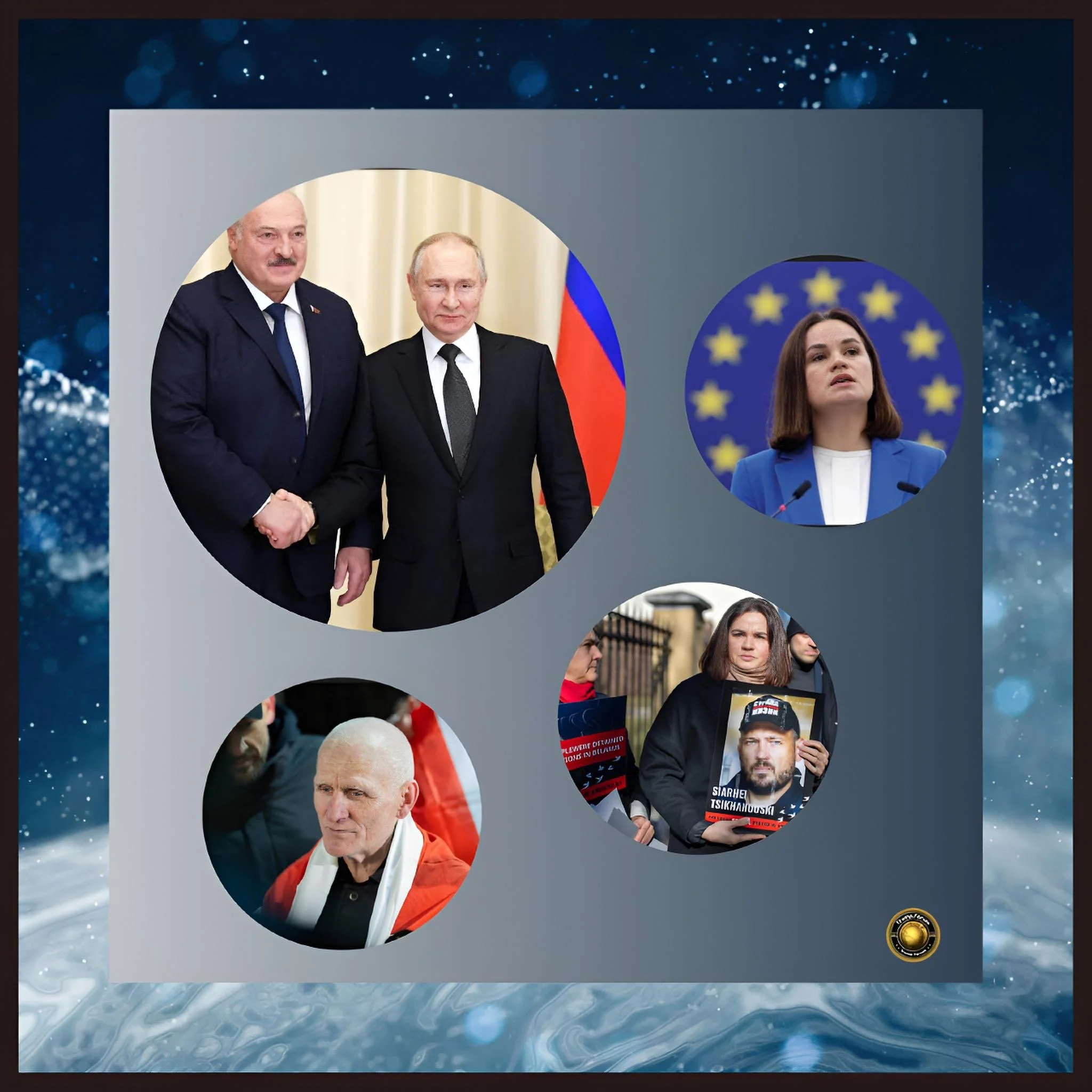
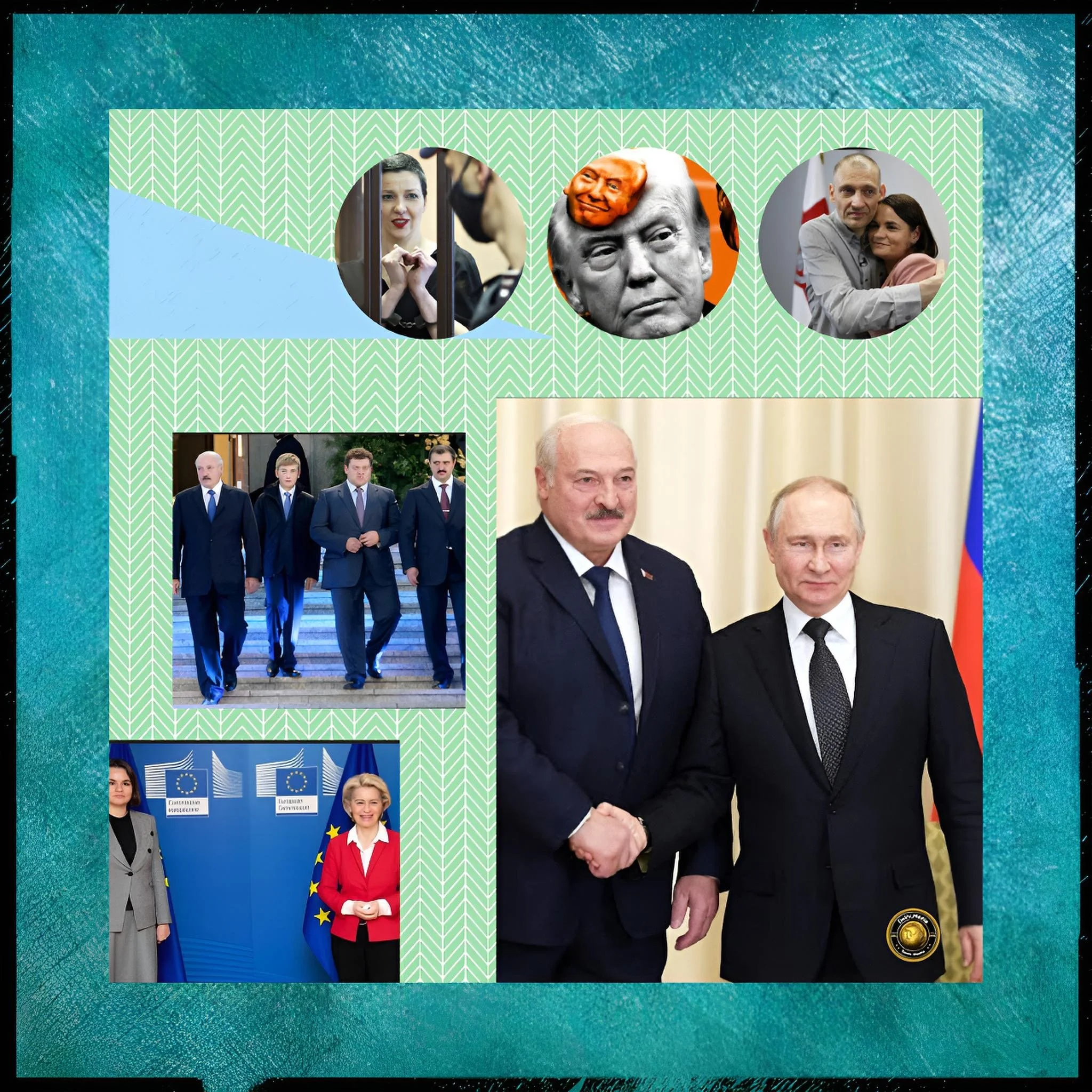
The geopolitical rupture precipitated by the Trump administration's diplomatic overture to the Lukashenko regime in 2025 has catalyzed an urgent reassessment of European policy toward Belarus.
The sequential release of 52 political prisoners in September and 123 detainees in December, negotiated by US Special Envoy John Coale in exchange for selective sanctions abatement on Belarus's potash sector, represents a fundamental departure from the Western sanctions consensus that has governed transatlantic relations with Minsk since the regime's violent suppression of the 2020 presidential uprising.
This policy divergence between Washington and Brussels—wherein the United States has executed targeted, reversible sanctions relief while the European Union has substantially expanded its restrictive measures through the 19th sanctions package in October 2025—demands a sophisticated analytical framework to evaluate the optimal European response.
The Strategic Architecture of Belarusian Dependence and Leverage Asymmetry
To assess the plausibility of European reengagement predicated on conditionality, one must first comprehend the profound structural asymmetry characterizing Belarus's positioning within the Russian-dominated regional architecture.
Contemporary Belarus exhibits an unprecedented degree of economic enmeshment with Moscow, spanning multiple critical dimensions: 55 to 60 percent of Belarusian imports originate from Russia, of which approximately 80 percent constitute intermediate goods indispensable for industrial production.
The Kremlin's mechanisms of logistics control extend this dependency to a staggering proportionality wherein Moscow effectively regulates up to 90% of Belarusian exports and roughly 80% of imports.
This commercial suffocation would manifest as catastrophic absent sustained Russian financial transfers, which now constitute approximately 3% of Belarus's gross domestic product through mechanisms nominally termed "gratuitous revenues," including reverse excise taxation and other governmental transfers.
The external debt servicing architecture reveals parallel subordination: approximately 65% of Belarus's $17 billion external debt remains owed directly to Russia or Kremlin-controlled entities including the Eurasian Fund for Stabilization and Development.
Simultaneously, the military-strategic integration between Moscow and Minsk has reached unprecedented consolidation.
The deployment of Russian tactical nuclear weapons to Belarus, formalized in mid-2023, combined with the December 2024 announcement of Oreshnik intermediate-range ballistic missile deployment, represents an existential securitization of the alliance relationship.
The new military doctrine adopted by Belarus in 2024 explicitly designates the West as the principal adversary and institutionalizes expanded joint military infrastructure.
This doctrinal repositioning—coupled with the permanent stationing of approximately 9,000 Russian troops on Belarusian territory—has effectively dissolved the vestiges of Belarusian military autonomy.
The Taxonomy of Coercive Instruments and Differentiated European Leverage
The European Union possesses substantially more consequential instruments of economic statecraft than the United States.
While Washington has confined itself to sectoral relief on potash and civil aviation, the European Union maintains comprehensive sanctions architecture encompassing potash (nominally designated a "key revenue source" constituting 8.7% of national exports), timber products, petroleum derivatives, banking sector restrictions, and dual-use technology prohibitions.
Potash represents particularly strategic leverage: as the second-largest Belarusian export commodity and representing 18 percent of global market share, sanctions-induced suppression of potash production has forced the cessation of operations at more than 50% of domestic mines.
Consequently, Belarus's global potash exports have contracted from 10.3 million tonnes in 2019 and 11.8 million tonnes in 2020 to approximately 5.1 million tonnes in 2021, with further deterioration in subsequent years. Unlike Washington's fluid sanctioning apparatus, European restrictions strategically target the regime's revenue base in sectors where circumvention mechanisms remain suboptimal.
The Epistemological Problem of Regime Transformation versus Transactional Bargaining
Critical ambiguity surrounds whether the sequential prisoner releases constitute genuine indicative indicators of incipient regime behavioral modification or represent sophisticated transactional maneuvers designed to extract maximum international concessions while preserving the repressive apparatus intact.
The empirical record suggests the latter interpretation commands greater evidentiary support. The regime has continued identifying and imprisoning new political detainees at a pace exceeding releases: between June and September 2025, when the Trump administration orchestrated the liberation of 52 political prisoners, the regime concurrently incarcerated 131 additional political detainees—precisely double the released cohort.
Between 1,100 and 1,400 political prisoners remain in detention according to human rights organization Viasna, with the organization acknowledging that "several hundred" additional political prisoners exist without identification due to circumscribed informational access.
The regime's deliberate opacity regarding detainee classification exemplifies what scholars term "institutionalized deniability," wherein the regime simultaneously engineers prisoner releases for international consumption while perpetuating mass, unacknowledged incarceration.
Ales Bialiatski, the Nobel Peace Prize laureate released in December 2025 after years of politically motivated imprisonment, articulated this epistemological challenge with particular acuity. He warned against interpreting prisoner releases as indicative of systemic reform, cautioning that the regime could sustain indefinite cycles of releases and arrests while incrementally escalating demands for sanctions abatement.
This dynamic—wherein repression itself becomes transmogrified into a bargaining mechanism—presents a structural incentive problem: each sanction-for-prisoner exchange reinforces the regime's calculus that detention functions as a monetizable asset rather than an aberration requiring remediation.
The Case for Calibrated Conditionality: Reversibility and Verification Mechanisms
The framework for European reengagement propounded by Chatham House and strategic analysts sympathetic to conditional engagement argues that the European Union, precisely because of its superior leverage position, possesses the capacity to structure engagement modalities that circumvent the moral hazard attending bilateral prisoner releases.
This approach emphasizes graduated, reversible concessions commencing with comparatively inconsequential measures: restoration of diplomatic visits, unfreezing of diplomatic contacts, tactical visa sanctions abatement for civil society figures, and facilitation of access to European athletic competitions.
Such measures operate upon Lukashenko's demonstrated susceptibility to symbolic legitimation gestures—recognition from the international community that augments regime prestige without materially strengthening the Kremlin's strategic position.
This framework further stipulates that sanctions relief contingent upon sectoral restrictions must remain conditioned upon irreversible behavioral transformations. Specifically, the regime must not merely implement single tranches of prisoner releases but must commit to categorical cessation of politically motivated arrest procedures.
The EU should establish verification mechanisms ensuring that any sanctions abatement in potash or timber sectors remains contingent upon ongoing observance of these conditions, with explicit delineation of automaticity for sanctions reimposition upon breach.
Critically, reengagement should remain temporally bounded to the Ukraine war's continuation, with explicit prohibition on sanctions relief that could indirectly augment the Kremlin's war-fighting capacity through enhancement of Belarusian financial surpluses directed toward Russian military procurement.
The Counterargument: Structural Constraints on Regime Modification and the Preservation of European Leverage
The Atlantic Council and human rights advocacy organizations opposed to reengagement argue that conditional engagement mechanisms rest upon assumptions about Lukashenko's behavioral malleability that contradicts empirical realities.
These critics contend that Lukashenko's singular viable survival strategy depends upon absolute subordination to the Kremlin, rendering marginal sanctions relief insufficient to incentivize political deviation.
The regime leader confronts an existential dependence upon Putin for regime perpetuation: absent Russian economic subsidization, military support, and deployment of security apparatus personnel, the Lukashenko regime would face imminent domestic instability.
Consequently, the incentive structures emanating from conditional European engagement remain incommensurable with the existential security guarantees provided by unqualified Russian alliance.
From this perspective, the regime's prisoner releases represent calculated extraction of sanctions relief through demonstrations of apparent tractability rather than indicators of genuinely shifting priorities. The regime's simultaneous continuation of new political arrests reveals the underlying constancy of repressive operations masked by prisoner releases orchestrated for international audiences.
Moreover, relinquishing Europe's most consequential leverage—the sectoral sanctions on potash and timber that strike at the regime's revenue base—would diminish future capacity for negotiation without commensurate assurances of systemic modification.
The Polish, Lithuanian, and Latvian governments, which directly experience Belarusian hybrid warfare through instrumentalized migration movements and information warfare, exhibit particularly pronounced skepticism toward reengagement. These NATO and EU members view Belarus not as a potentially retrievable actor but as an irredeemably compromised proxy through which Russia prosecutes asymmetric operations against the alliance.
Poland's 2025 resistance to EU migration burden-sharing mechanisms and Lithuania's 2023 renunciation of cross-border cooperation agreements reflect deeper conviction that meaningful dialogue with the Lukashenko regime remains categorically impossible during Russian aggression.
The Projection of Post-War Pathways and Long-Term European Interests
Beyond immediate tactical considerations, the reengagement debate encompasses conflicting assessments of Belarus's optimal post-war positioning and long-term European security interests.
The strategic case for measured engagement contends that sustained isolation forecloses opportunities to support future democratic transitions and solidifies Belarus's permanent incorporation into the Russian sphere. If the regime ultimately undergoes succession or systemic transformation—either through internal instability or external pressure following Russian military defeat—the restoration of Western engagement platforms would facilitate smoother trajectories toward democratic reconstitution.
Conversely, permanent Western disengagement risks producing societal resentment among the Belarusian population, potentially delegitimizing democratic movements as excessively dependent upon external patronage.
The counterargument emphasizes that premature sanctions relief strengthens the regime's immediate capacity to sustain repressive apparatus and reinforces Lukashenko's conviction that Western pressure mechanisms lack credibility.
FAF analysis suggests that maintaining coercive instruments until the Ukraine war concludes preserves options for post-war engagement while preventing the diffusion of signals that repression can be efficiently monetized through judicious prisoner releases.
The temporal trajectory of the Belarusian economy presents an additional variable. The regime has benefited substantially from wartime demand dynamics and Russian financial coupling, experiencing approximately 4% growth in 2024.
However, forward projections suggest this growth trajectory faces imminent deceleration.
The International Monetary Fund and World Bank have warned of weakened 2026 growth amid persistent sanctions, deepening Russian dependency, and limited medium-term recovery prospects.
This economic stagnation may intensify Lukashenko's receptiveness to sanctions relief, rendering the 2026 interval a potentially critical negotiation window where European leverage appears maximal.
Synthesizing Frameworks: A Differentiated EU Strategy
The optimal European posture appears to encompass elements of both frameworks under a unified strategy of calibrated, differentiated conditionality.
The European Union should explicitly adopt a "reciprocal incrementalism" framework wherein initial concessions remain genuinely inconsequential while establishing clear, verifiable thresholds for subsequent sanctions abatement.
The following taxonomy of graduated measures should structure engagement:
Tier One (Immediate, Non-Binding)
Restoration of diplomatic communications, organizational of track-two dialogues with regime technocrats and civil society representatives, modest visa relief for civil society figures and academics, and restoration of limited educational exchange programs. These measures impose no meaningful cost upon European security while signaling receptiveness to improved relations.
Tier Two (Conditional upon Observable Behavioral Change)
Suspension of travel bans for non-security apparatus officials, restoration of access to European athletic competitions for Belarusian athletes, and targeted removal of sectoral sanctions on timber products. Implementation of this tier should remain contingent upon verifiable cessation of new political arrests over a defined interval (6-12 months) and adherence to international human rights monitoring mechanisms.
Tier Three (Strategic Sanctions Relief)
Abatement of potash restrictions and banking sector sanctions should remain off the table until the Ukraine war concludes, establishing explicit temporal boundaries on when transformative concessions become negotiable. This sequencing prevents inadvertent augmentation of Russian war-fighting capacity.
Throughout this framework, all measures should retain explicit reversibility mechanisms, with unambiguous consequences for regime non-compliance.
The European Union should formalize these conditions through explicit council directives, preventing incremental sanctions erosion through administrative acquiescence.
Conclusion
Managing Ambiguity in Conditions of Radical Uncertainty
The question of European reengagement with Belarus cannot be divorced from the broader trajectory of Russian-Ukrainian conflict and its resolution mechanisms. The regime's demonstrated capacity to extract prisoner concessions while sustaining arrest operations suggests that transactional bargaining will persist regardless of Western strategic orientation.
The optimal European response recognizes this structural reality while preserving coercive instruments for post-war scenarios where leverage may prove determinative for Belarus's future political orientation.
A strategy of differentiated conditionality, commencing with symbolically meaningful but materially inconsequential concessions while maintaining reservations regarding transformative sanctions relief, permits the European Union to signal receptiveness to Belarusian reintegration while preserving strategic leverage for genuinely consequential negotiations.
Such an approach accommodates neither unrealistic expectations of regime transformation nor permanent foreclosure of future engagement pathways, instead embracing the epistemological humility appropriate to managing Belarus's trajectory during an interval of geopolitical radical uncertainty.