The Paradox of Constrained Power: How Coalition Governance Disciplines Economic Reform in Modi's India
Executive Summary
Prime Minister Narendra Modi entered his third consecutive term in 2024 under unprecedented political constraints. The Bharatiya Janata Party secured only 240 of 543 parliamentary seats, necessitating coalition governance with regional parties for the first time since 2014.
This apparent diminishment of executive authority produced an unexpected governance outcome: the adoption of sweeping economic reforms and a recalibration toward pragmatic rather than ideologically driven policymaking. Simultaneously, the Trump administration's imposition of reciprocal tariffs, peaking at 50% on Indian exports, created external pressure that reinforced the government's pivot toward structural economic reform.
This convergence of internal coalition constraints and external tariff shocks has compelled Modi's administration to prioritize economic effectiveness over ideological extension, resulting in 2025 becoming what analysts term a "big bang" reform year that fundamentally reshaped India's tax architecture, labor regulations, and business compliance frameworks.
Introduction
The paradox at the heart of contemporary Indian governance presents a significant departure from conventional political theory. Customarily, democratic theory posits that coalition governments experience reduced decision-making capacity, policy paralysis, and competitive veto power among competing factions.
Yet India's recent political trajectory suggests an inverse relationship: the removal of Modi's supermajority, rather than weakening governance capacity in economically consequential domains, has paradoxically strengthened policy implementation in areas critical to sustained economic growth. The implications extend beyond domestic political economy.
As global protectionism intensifies and regional powers reassess their international positioning, India's experience illuminates how institutional constraints, when properly navigated, can produce more durable and economically sustainable policy architecture than single-party dominance.
The 2024 Election and the Dissolution of Absolute Authority
The June 2024 general election delivered a political earthquake that transformed India's ruling structure.
The BJP's performance fell dramatically short of both historical precedent and internal projections. Having targeted 400 seats for its National Democratic Alliance (NDA) coalition, the alliance instead secured only 293 seats, with the BJP itself winning merely 240—a loss of 63 seats compared to 2019.
This represented the first instance since 2014 that Modi required coalition partners to maintain parliamentary majority.
The electoral outcome reflected substantive voter dissatisfaction.
Contrary to the BJP's campaign framing emphasizing economic growth and nationalist accomplishment, electoral analysis reveals that voters weighted unemployment, inflation, and governance quality as primary determinants of voting behavior.
Regional variations proved particularly instructive. The BJP's performance deteriorated markedly in Uttar Pradesh—India's largest and most electorally consequential state—signaling that even the heartland of BJP electoral strength had become contested terrain.
The resurgence of caste-based political mobilization, combined with opposition success in amplifying economic discontent, demonstrated that India's electorate possessed capacity for sophisticated discrimination between growth metrics and lived economic experience.
History and Context
The Coalition Arithmetic
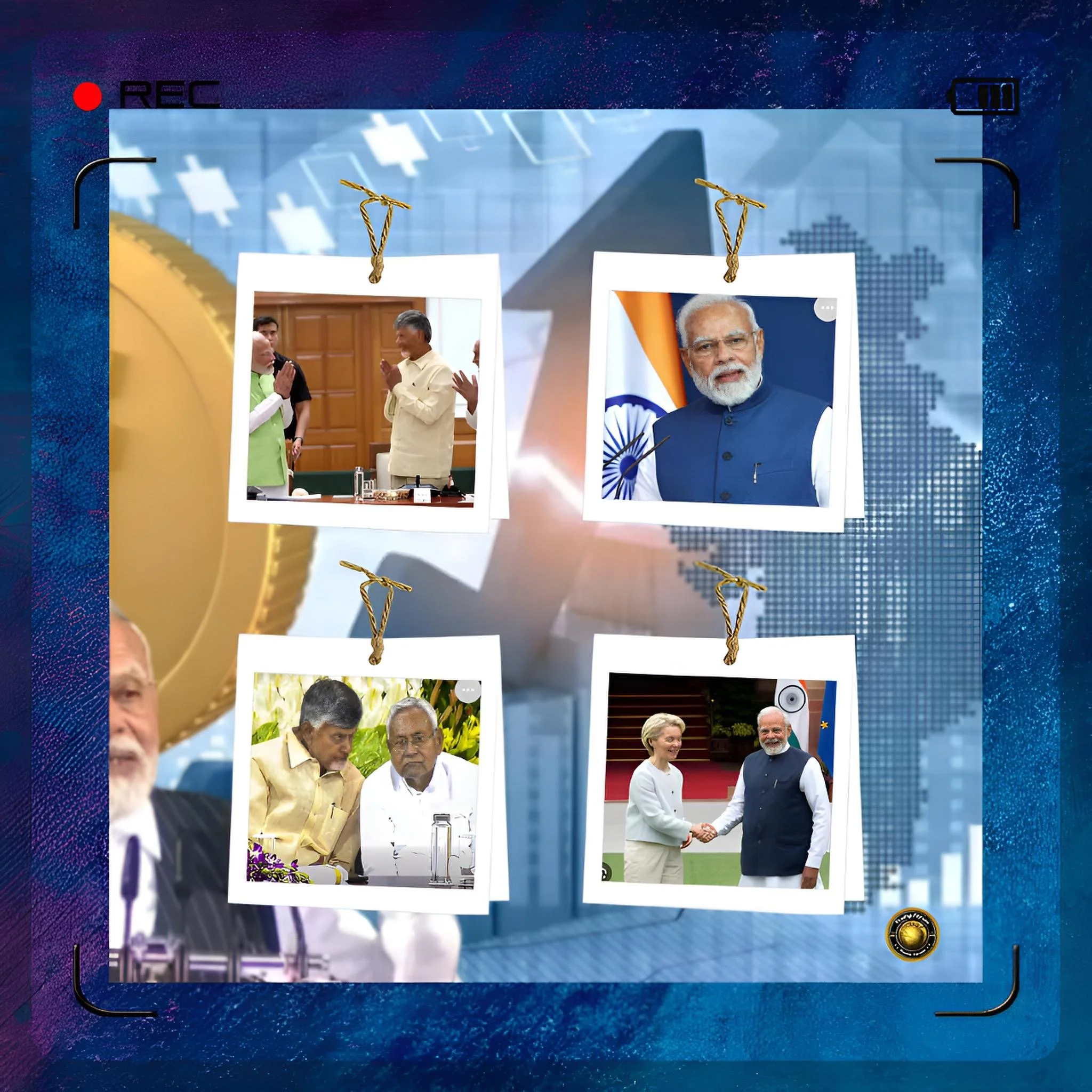
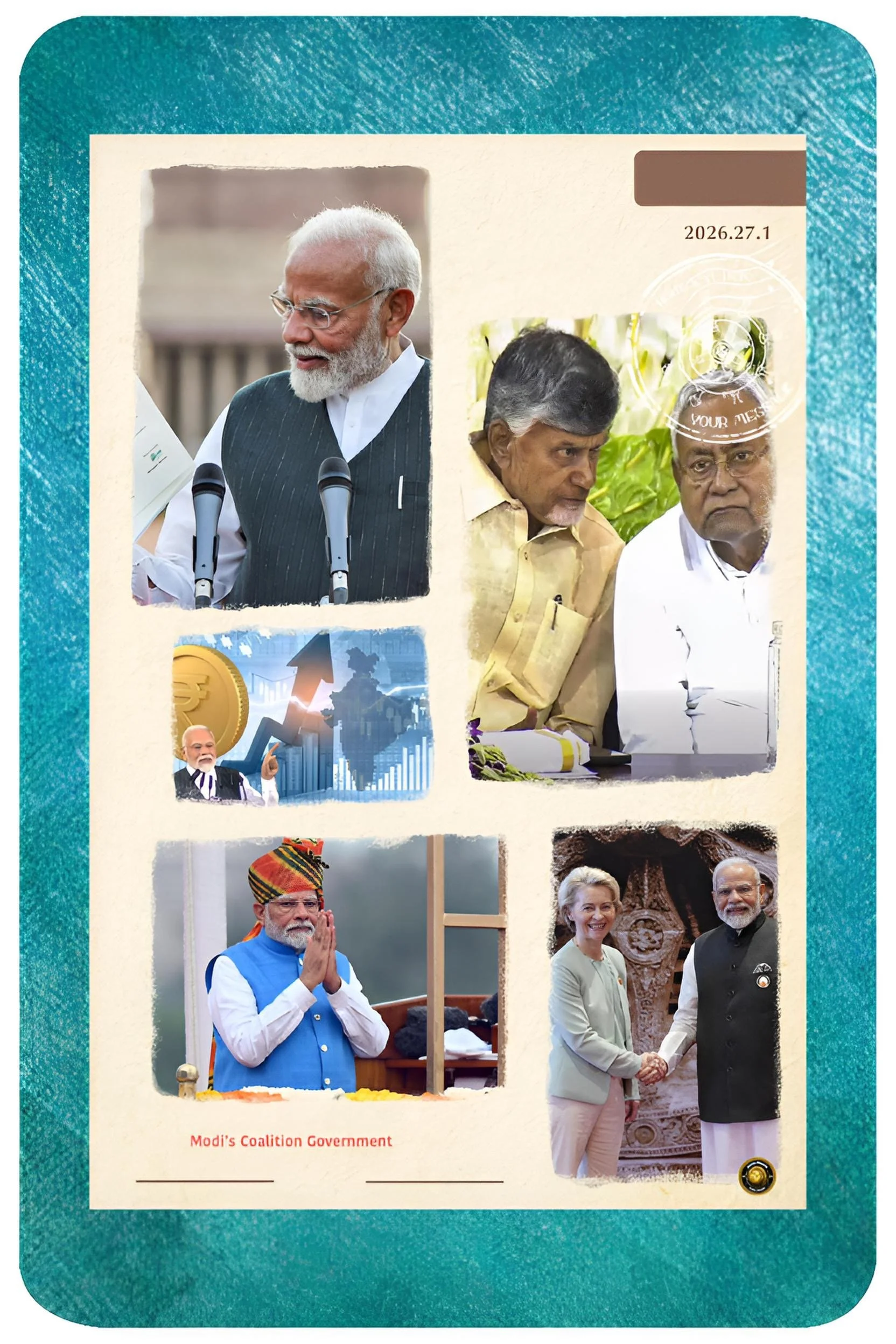
Modi's coalition relies on two critical regional parties. The Telugu Desam Party (TDP), led by Andhra Pradesh Chief Minister Chandrababu Naidu, commands 16 Lok Sabha seats.
The Janata Dal (United), led by Bihar Chief Minister Nitish Kumar, holds 12 seats.
Combined, these partners provide the 53 additional seats necessary to secure the 272-seat majority threshold.
Politically, this configuration created unprecedented leverage for regional parties. Both Naidu and Kumar possess extensive experience with coalition politics and demonstrated historical willingness to extract maximum concessions in exchange for legislative support.
Structurally, this represents discontinuity with Modi's previous governing arrangements. During 2014-2019 and 2019-2024, Modi governed with clear BJP majorities, enabling centralized decision-making with minimal deference to coalition partners. The BJP's previous coalition partners—notably the Shiv Sena and Shiromani Akali Dal—had defected or weakened, reducing their negotiating capacity.
By contrast, the 2024 outcome revived coalition politics as a consequential governance constraint.
The immediate aftermath of the June 2024 results witnessed aggressive coalition partner demands. Both TDP and JD(U) insisted upon Special Category Status for their respective states—Andhra Pradesh and Bihar—a designation that provides 90% central funding for developmental schemes compared to 60-75 % for ordinary states.
The demand carried historical weight. Chandrababu Naidu had previously withdrawn from the NDA in 2018, citing what he characterized as central government betrayal in denying Special Category Status despite assurances offered following Andhra Pradesh's 2014 bifurcation.
Similarly, Nitish Kumar had conditionally committed support contingent upon fiscal concessions addressing Bihar's developmental gaps.
Yet observed coalition dynamics revealed a more subtle reality than initial conflict narratives suggested. Rather than systematic obstruction of legislative initiatives, coalition partners ultimately proved permissive regarding BJP economic policy priorities.
By December 2025, careful parliamentary analysis demonstrated that the BJP-led government had successfully navigated coalition constraints and preserved central control over legislative agenda, despite theoretical vulnerability to coalition partner veto.
This pattern suggests that coalition dynamics, rather than imposing rigid constraints on all policy domains, selectively constrained ideologically driven initiatives while permitting economic modernization to proceed.
The Trump Tariff Shock and the Recalibration of Strategic Calculation
The election's internal political consequences intersected with a dramatic external shock in August 2025. The Trump administration, beginning with 10% reciprocal tariffs in April, escalated duties to 50% on Indian exports by August 2025.
Most provocatively, the administration imposed an additional 25% punitive tariff specifically targeting India's substantial Russian oil purchases, a critical component of India's energy security strategy.
This represented not merely trade policy but attempted coercion regarding India's geopolitical alignment.
The tariff impact manifested with immediate statistical clarity. India's merchandise exports to the United States, standing at $8.4 billion at the fiscal year's commencement, contracted to $6.88 billion by December 2025.
Between May and November 2025, Indian exports to America declined 21% in aggregate.
These figures acquired political significance beyond their macroeconomic implications. The tariffs directly threatened employment in labor-intensive sectors—textiles, garments, refined petroleum products—constituencies politically consequential for Modi's coalition partners.
Andhra Pradesh and Bihar both possessed significant textile manufacturing sectors and petroleum refining capacity, creating direct political incentive for JD(U) and TDP to demand government action.
However, the tariff shock also functioned as justification for reforms that internal political considerations alone might have rendered vulnerable to obstruction.
Facing external pressure, Modi's administration could frame economically consequential but domestically contested reforms as necessary adaptations to global competitive conditions rather than ideological preferences.
The coalition partners, confronted simultaneously with voter pressure in their constituencies and central government argument that only structural economic efficiency could offset tariff disadvantage, acquiesced to reform trajectories they might otherwise have contested.
Key Developments
The 2025 Reform Sequence
The 2025 economic reform agenda demonstrated striking comprehensiveness. Rather than incremental adjustment, the government pursued what economists termed "big bang" reform—coordinated policy transformation across multiple structural domains simultaneously.
Taxation constituted the primary reform domain. The government simplified the Goods and Services Tax (GST) system, reducing the previous complexity of multiple slabs to a clean two-slab structure: 5-18%.
This simplification possessed profound consequences for both compliance burden and revenue transparency.
Previous iterations of GST included rates of 5, 12, 18, and 28%, with substantial disputes regarding appropriate classification for numerous commodity categories. The bifurcation of this structure reduced litigation, accelerated refund mechanisms, and lowered compliance costs for small and medium enterprises.
Critically, the reform benefited labor-intensive sectors—precisely those constituencies most vulnerable to Trump tariff pressure—by reducing embedded taxation and improving price competitiveness.
Simultaneously, the Modi government enacted an entirely new Income Tax Act, replacing the 1961 statute burdened with over 4,000 amendments accumulated across six decades.
The modernized framework rationalized exemptions, reduced litigation risk, and strengthened digital administration. Previous revenue-raising efforts had foundered repeatedly on compliance complexity; the simplified framework reduced litigious confrontation and improved voluntary compliance.
Labor market reform constituted the second major domain. The government activated four consolidated labor codes, consolidating 29 existing statutory provisions into cohesive frameworks addressing wages, industrial relations, social security, and occupational safety.
This reform initiative had languished since initial legislative proposal in 2020, opposed by trade unions, state governments, and left-wing parties.
The activation in 2025 remained politically sensitive, yet proceeded with minimal parliamentary obstruction. The labor codes possessed direct manufacturing relevance: by raising thresholds for regulatory exemptions and simplifying compliance documentation, they reduced the cost premium of formal sector employment relative to informal arrangements, theoretically encouraging formalization and reducing labor market segmentation.
Capital market liberalization constituted the third reform domain. The government permitted 100 percent foreign direct investment in insurance and pension sectors, previously capped at 49% and 26%!respectively.
Simultaneously, the government authorized private sector participation in nuclear power generation, terminating decades-long state monopoly in this strategic sector. These reforms signaled reorientation away from state-centric capital allocation toward market-driven mechanisms. The insurance and pension liberalization directly targeted India's massive unfunded retirement liabilities; by permitting foreign capital, the government acknowledged demographic necessity and fiscal constraint on public provision.
Beyond taxation and sectoral liberalization, the government implemented what came to be termed the "Jan Vishwas" (Citizen Trust) reforms, decriminalizing over 200 minor offenses previously subject to criminal prosecution.
Outdated statutory provisions previously employed for harassment purposes—inappropriate labeling specifications, minor documentation errors—were removed from criminal liability, retaining civil remedies where substantive injury occurred. This reform addressed a long-standing complaint from manufacturing sectors regarding arbitrary enforcement and harassment by bureaucratic agencies.
The reform sequence demonstrated internal coherence. Rather than disaggregated policy interventions, the reforms addressed systemic friction across the manufacturing value chain. Simplified taxation reduced the complexity of cost calculation.
Labor codes reduced the regulatory uncertainty of workforce expansion. Business compliance reforms reduced bureaucratic arbitrariness. Together, these constituted a comprehensive reconfiguration of manufacturing incentives, attempting to render India more attractive as an alternative to China-centric production networks in a context where Western firms pursued "China+1" supply chain diversification.
Coalition Dynamics and Reform Feasibility: The Constraint as Enabler
The empirical paradox requires explanation. Coalition governance conventionally implies reduced policy effectiveness. Yet these reforms proceeded with minimal parliamentary obstruction despite involving contentious redistribution of regulatory burdens, labor market adjustment costs, and foreign capital access. Why did coalition constraints permit rather than prevent economically efficient reform?
The mechanism operated through two channels. First, coalition constraints explicitly prevented Modi from pursuing ideologically driven initiatives that possessed limited economic logic but substantial appeal to the party's political base. The uniform civil code—establishing single personal law across all religious communities—remained infeasible under coalition governance.
Simultaneous elections—requiring constitutional amendment and imposing uneven costs on different constituencies—faced sufficient JD(U) opposition that pursuit became politically impractical.
The National Register of Citizens, controversial among Muslim minorities and resource-intensive in implementation, was shelved.
By blocking these ideologically consequential but economically peripheral initiatives, coalition constraints permitted reallocation of political capital toward growth-relevant reforms.
Coalition partners proved willing to accept controversial labor market liberalization and capital market opening because the government, unable to pursue religious nationalism, demonstrated commitment to substantive economic delivery. In previous terms, Modi's government had pursued divisive cultural policies (notably the 2016 currency demonetization and 2020 agricultural reform legislation that provoked sustained farmer protests) while delaying economically consequential reforms. Coalition governance inverted this priority ordering.
Second, external pressure from Trump tariffs provided coalition partners with defensible justification for accepting reforms bearing concentrated costs on specific constituencies. Labor codes, while broadly beneficial for manufacturing competitiveness, imposed costs on informal sector workers and small enterprises utilizing casual labor.
Previously, such concentrated cost-bearing would have generated coalition partner obstruction.
However, facing simultaneous pressure from employment loss in tariff-affected sectors, coalition partners accepted the labor codes as necessary adjustment to competitive tariff conditions. The government framed structural reform not as ideological preference but as competitive necessity imposed by global economic conditions.
The historical precedent reinforced this pattern. Atal Behari Vajpayee, leading an earlier BJP-dominated coalition government from 1998 to 2004, had pursued comparably ambitious economic reforms: privatization of state enterprises, foreign investment liberalization, infrastructure development, and partial agricultural reform.
Vajpayee's reputation as a consensus-builder permitted coalition formation and maintenance despite controversial economic policies. Modi, initially characterized as domineering and unwilling to accommodate dissent, appeared forced by electoral constraint to adopt more consensual governing style analogous to Vajpayee's precedent.
Yet this explanation requires qualification. Committee analysis of parliamentary proceedings through 2025 demonstrated that coalition partners ultimately exercised limited effective veto power over legislation Modi prioritized.
The Waqf Amendment Bill—addressing property rights in religious endowments and generating fierce opposition from Muslim organizations and the broader opposition—proceeded despite JD(U) concerns, securing 288 Lok Sabha votes and 128 Rajya Sabha votes.
Environmental and forest bills proceeded despite concerns from regional allies. The constraint operated selectively: preventing ideologically consequential but economically marginal initiatives while permitting economically consequential structural reforms.
This selectivity suggests deeper political calculation. Coalition partners, confronting constituent demand for economic opportunity, recognized that economic delivery constituted more credible political claim than obstruction of environmental regulation or religious property law.
The TDP and JD(U) faced assembly elections in their respective states—Bihar's 2025 assembly elections and future Andhra Pradesh contests.
Economic growth, employment, and manufacturing investment acquisition represented more persuasive electoral claims than obstruction of parliamentary legislation addressing issues with limited constituent salience. Coalition partners effectively traded ideological veto for economic delivery.
Latest Facts and Contemporary Concerns
The Reconfigured Strategic Environment
By January 2026, multiple contemporary developments illuminated the reformed political economy.
On January 27, 2026, India and the European Union finalized a comprehensive free trade agreement, representing strategic hedging against American tariff dependency.
The agreement involved mutual tariff reduction, particularly benefiting Indian textiles, garment exports, and refined petroleum products—the sectors most severely damaged by American 50% tariffs.
The EU agreement represented implicit acknowledgment that India could no longer depend upon exclusive American market access; diversification became strategic imperative.
Simultaneously, November 2025 data revealed incipient export recovery despite sustained American tariff regime. India's merchandise exports to the United States rose from October's $6.3 billion to November's $7.0 billion, suggesting that while absolute export volumes remained below pre-tariff levels, export growth had resumed.
Electronics exports experienced particularly robust expansion, rising nearly 39% in November 2025 as semiconductor manufacturing capacity, supported by government incentive schemes, began operational production.
Domestic consumption, following GST simplification and income tax relief, demonstrated resilience. The government provided income tax relief for individuals earning below $13,124 annually, and simplified income tax filing procedures.
Initial reports suggested record festive season consumption—with Diwali season 2025 generating approximately $65.95 billion in retail sales.
This consumption stimulus, while potentially generating inflation risk, provided confidence that domestic demand could partially offset export compression from tariff effects.
The political economy reconfiguration manifested in state-level electoral outcomes. In Maharashtra and Bihar elections during late 2025, the NDA coalition achieved decisive victories, suggesting that the coalition's economic narrative retained electoral credibility.
These victories provided Modi with political breathing space to pursue additional contentious reforms without immediate coalition vulnerability risk. The causality between economic reform and electoral validation remains contested among analysts, yet the temporal proximity suggested that coalition partners perceived political benefit from association with reform narrative.
However, tensions remained latent. The coalition's stability depended on continued economic growth and external validation through tariff negotiation or alternative market access.
Should American tariffs remain indefinitely at 50% levels while alternative markets failed to compensate, coalition partner incentive to maintain support would diminish. Regional parties possess capacity to withdraw and form alternative coalitions; indeed, India's political history includes multiple instances of coalition collapse following loss of incentive compatibility.
The Modi government's vulnerability remains conditional on sustained economic performance and continued external pressure that validates necessity of coalition compromise.
Additionally, tensions between ideological and pragmatic governance frameworks remained incompletely resolved. While coalition constraints prevented pursuit of uniform civil code or national register of citizens, the government continued pursuing subtler forms of cultural nationalism through control of educational curricula, regulatory pressure on minority-associated institutions, and executive discretion in sensitive jurisdictional matters.
Coalition governance provided brake but not complete prohibition on ideologically driven policy; the restraint remained partial rather than absolute.
Cause and Effect Analysis
Mechanisms of Constrained Governance
The relationship between electoral constraint, external pressure, and economic reform exhibits multiple causative pathways requiring analytical disaggregation.
First, coalition formation imposed direct constraint on Modi's ability to pursue ideologically cohesive governance. The Tamil Nadu-based AIADMK, a potential ally, maintained distance from the coalition.
The Shiv Sena, previously an NDA stalwart, had fragmented and partly aligned with opposition. The consequent reliance upon JD(U) and TDP—parties with secular orientations and regional welfare state traditions—created institutional brake on majoritarian cultural policies.
This constraint operated mechanistically: without coalition partners' willingness to risk electoral consequences, Modi lacked simple parliamentary majority. While party discipline ordinarily permits prime ministers with supermajority to override backbench dissent, coalitional mathematics eliminate this option.
Second, electoral defeat created psychological reorientation regarding Modi's political brand. Prior to 2024, Modi maintained image of perpetual electoral winner, never having experienced election loss.
The 2024 outcome, while constituting electoral victory, represented clear diminishment of the mandate Modi had anticipated. Political consultants and strategic advisors recognized that this narrative rupture required counter-positioning.
Economic reform and governance delivery offered more persuasive response than pursuit of divisive cultural policies that had demonstrably contributed to electoral underperformance. The psychological impact of electoral constraint influenced strategic decision-making.
Third, tariff shock created exogenous justification for economic reform that might otherwise have generated coalition partner obstruction. Labor code activation, traditionally opposed by unions and peripheral-state governments, became defensible as competitive necessity imposed by tariff disadvantage.
Foreign investment liberalization, potentially contended as threatening domestic industries, became acceptable as requirement for technology transfer and manufacturing competitiveness. The tariff shock externalized reform pressure; rather than centralized government preference, reforms appeared as response to global competitive conditions. This rhetorical repositioning reduced coalition partner political cost of accepting reforms.
Fourth, state-level electoral victories in Maharashtra and Bihar created positive feedback loop. The coalition's electoral success in major assembly contests, occurring subsequent to reform announcements, suggested that economic reform narrative possessed voter appeal. Coalition partners observed that their association with growth-oriented policy generated electoral benefit.
This observation incentivized continued coalition maintenance and acceptance of additional economically consequential reforms. Electoral validation functioned as coalition cement.
The causal architecture reveals complex interaction between institutional constraint, external pressure, internal political calculation, and electoral feedback. No single variable possessed complete causative force; rather, the convergence of multiple factors produced policy trajectory that none independently could have generated.
Future Trajectories and Implementation Risks
The sustainability of Modi's reformed governance approach depends upon several contingent factors. First, tariff negotiation outcomes with the Trump administration remain uncertain. The government has expressed hope that bilateral trade negotiation could reduce American tariffs from 50% to 15% levels.
Should such negotiation succeed, external pressure justifying coalition compromise would diminish. Conversely, if American tariffs remain indefinitely at current levels, external pressure would sustain but risk generating frustration sufficient to destabilize coalition arrangements.
Second, implementation quality of 2025 reforms determines economic impact and hence electoral sustainability. Labor codes possess potential to improve manufacturing productivity but equally could generate informal sector worker exploitation absent rigorous enforcement.
GST simplification could enhance compliance but alternatively might generate revenue shortfall if simplified structure fails to accommodate legitimate sectoral variation.
The distance between policy intention and implementation outcome constitutes enduring vulnerability. India's bureaucratic capacity for complex implementation remains contested among development economists; numerous well-intentioned reform initiatives have foundered at implementation stage.
Third, global economic conditions and geopolitical developments create exogenous uncertainty. Should global recession materialize, Indian exports would face demand compression independent of tariff rates.
Conversely, accelerating Indian integration into non-Chinese manufacturing networks through "China+1" supply chain strategies could dramatically accelerate export growth. Geopolitical confrontation between American and Chinese power centers, while destabilizing for global commerce, could enhance India's value as alternative manufacturing location.
These possibilities remain highly contingent on developments beyond Indian government control.
Fourth, coalition stability depends upon continued incentive compatibility among partners. Should JD(U) or TDP perceive that continued coalition participation generates electoral costs in their state constituencies, coalition dissolution becomes feasible.
Such perception could arise from tariff-induced unemployment in partner states, fiscal transfers to partner states proving insufficient, or emergence of alternative coalitional opportunities offering superior terms.
Indian coalition politics historically demonstrates remarkable fluidity; coalition arrangements lasting six months previously were considered durable. Modi's coalition exhibits no particular structural advantage preventing re-alignment.
The Broader Implications: Democracy, Constraint, and Governance
The Indian experience illuminates broader theoretical questions regarding the relationship between democratic constraint and governance effectiveness.
Western democratic theory, influenced by presidential systems and single-party parliamentary dominance, conventionally assumes that concentrated authority improves policy implementation. Coalition government appears as unfortunate necessity for minority governments, requiring compromise that impedes decisive action.
Yet the Modi experience suggests more nuanced relationship. Constraint, paradoxically, can enhance certain forms of governance effectiveness by preventing pursuit of policies bearing high redistributive costs to benefit concentrated interests.
Modi's first two terms, operating with a supermajority, demonstrated the capacity to implement controversial policies, including currency demonetization and agricultural reform legislation.
Both initiatives generated massive opposition and implementation complications. Coalition constraint might have prevented these controversial initiatives; whether their prevention would have improved aggregate welfare remains contested.
More relevantly, constraint forced explicit coalition bargaining regarding distribution of benefits and costs from reform. Labor codes, while economically efficient, concentrate costs on informal sector workers. Coalition governance, by requiring negotiation with partners representing diverse constituencies, potentially embeds greater attention to distributional consequences than would occur under single-party dominance.
The government, unable to impose preferences unilaterally, must structure reforms to ensure coalition partner constituencies perceive net benefit. This distributive discipline potentially produces more durable policy architecture than reforms imposed through supermajority power.
This observation does not suggest that coalition governance invariably produces superior outcomes.
Rather, it suggests that relationship between democratic constraint and governance effectiveness exhibits complexity insufficient to warrant blanket assertions regarding single-party superiority. Context-specific factors—institutional capacity, coalition partner preferences, external pressure conditions—determine whether constraint enhances or impedes governance effectiveness.
Conclusion
Prime Minister Modi's third term commenced under unprecedented political constraint. Electoral defeat, depriving him of single-party majority, forced coalition governance with regional parties. Simultaneously, American tariff policy imposed external pressure justifying economic reform as competitive necessity.
This convergence of internal constraint and external pressure produced unexpected governance outcome: comprehensive economic reform and explicit subordination of ideologically driven initiatives to growth-oriented pragmatism.
The 2025 reform agenda—GST simplification, labor code activation, capital market liberalization, and business compliance reduction—demonstrates that constraint, properly navigated, need not paralyze governance.
Rather, constraint can redirect political capital toward economically consequential initiatives while preventing pursuit of divisive policies bearing limited economic logic. Coalition governance, by requiring explicit negotiation regarding distribution of reform benefits and costs, potentially embeds greater attention to distributive consequences than would occur under unconstrained single-party dominance.
However, sustainability of this reformed governance approach remains contingent upon multiple uncertain factors: tariff negotiation outcomes, implementation quality, global economic conditions, and coalition stability.
The Indian experience provides instructive case study regarding relationship between democratic constraint and governance effectiveness, but does not permit confident prediction of future trajectory.
For the Modi government specifically, the path forward involves preserving coalition compromise on economic reform while resisting temptation to pursue ideologically driven initiatives that precipitated electoral constraint.
For broader democratic theory, the Indian case suggests that simple dichotomy between constraint and effectiveness obscures more nuanced relationship wherein particular forms of constraint can enhance specific governance dimensions.
Future scholarship and policy analysis would benefit from examining these contingent relationships, rather than asserting universal superiority of concentrated authority or distributed power.