How Coalition Government Made Modi a Better Leader: India's Surprising Governance Story
Summary
The Unexpected Turn of Fortune
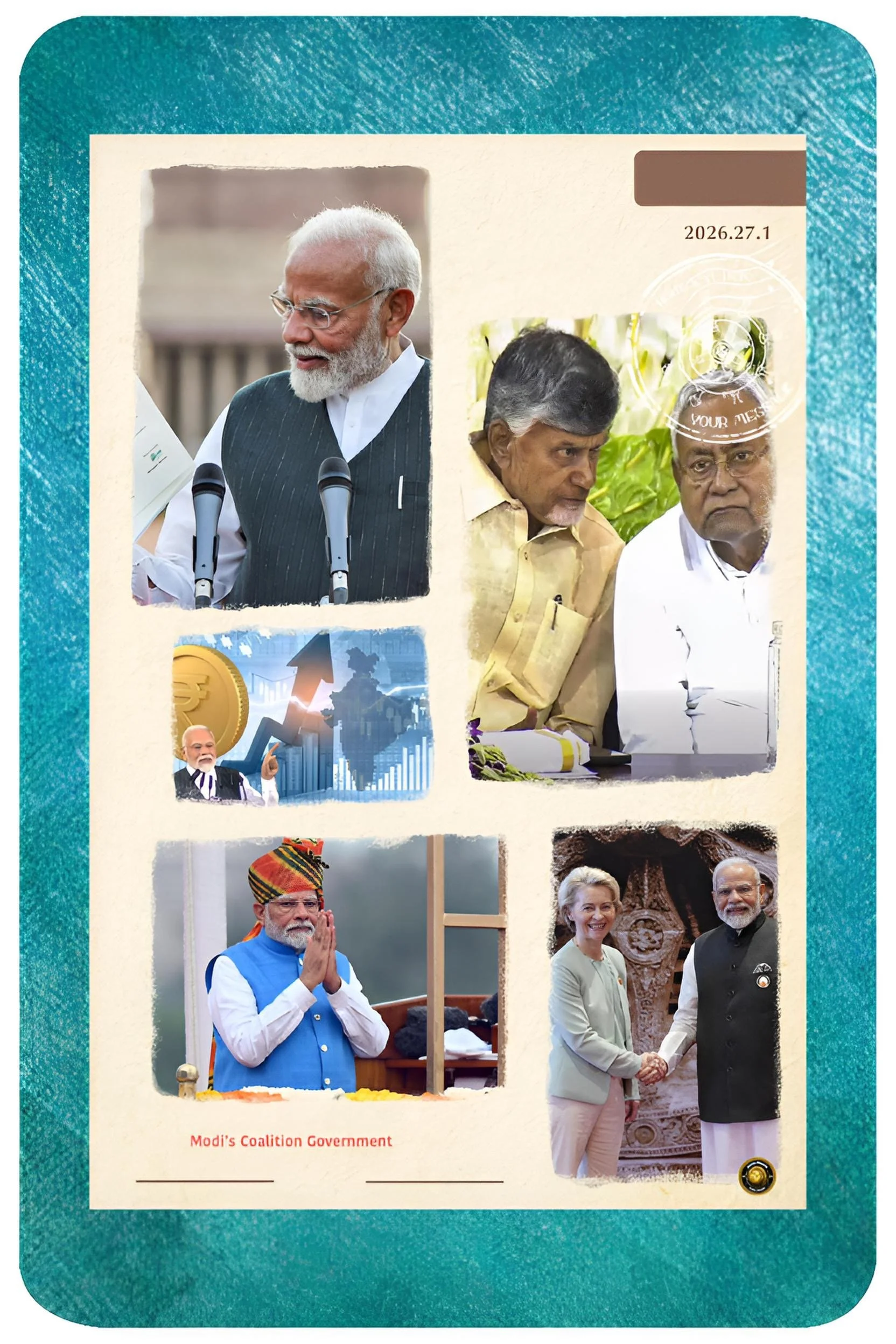
When India's election results came out in June 2024, Prime Minister Narendra Modi faced an unusual situation. His political party, the Bharatiya Janata Party (BJP), had won elections before and governed alone. This time was different.
The BJP won 240 seats out of 543 in the parliament, which meant they needed help from other parties to pass laws and run the country.
For the first time in ten years, Modi could not do exactly what he wanted. He had to talk to other leaders, negotiate with them, and give them things they wanted in return for their support.
This might sound like a weakness.
But something interesting happened. Instead of weakening India's government, losing his complete power actually made Modi govern better. He started focusing more on fixing the economy and less on cultural and religious issues that divided people.
The year 2025 became one of the most productive years for economic change India has experienced in recent times. This happened because Modi, unable to push through the divisive policies his party wanted, had to focus on practical measures that improved people's lives.
What Changed After the Election Loss
Think of it like a sports team. When a team has a superstar who can do everything alone, sometimes that player takes risky chances and ignores advice from teammates. But when the team has salary limits and needs other players to win, the superstar must play smarter and pass the ball more. That is what happened to Modi.
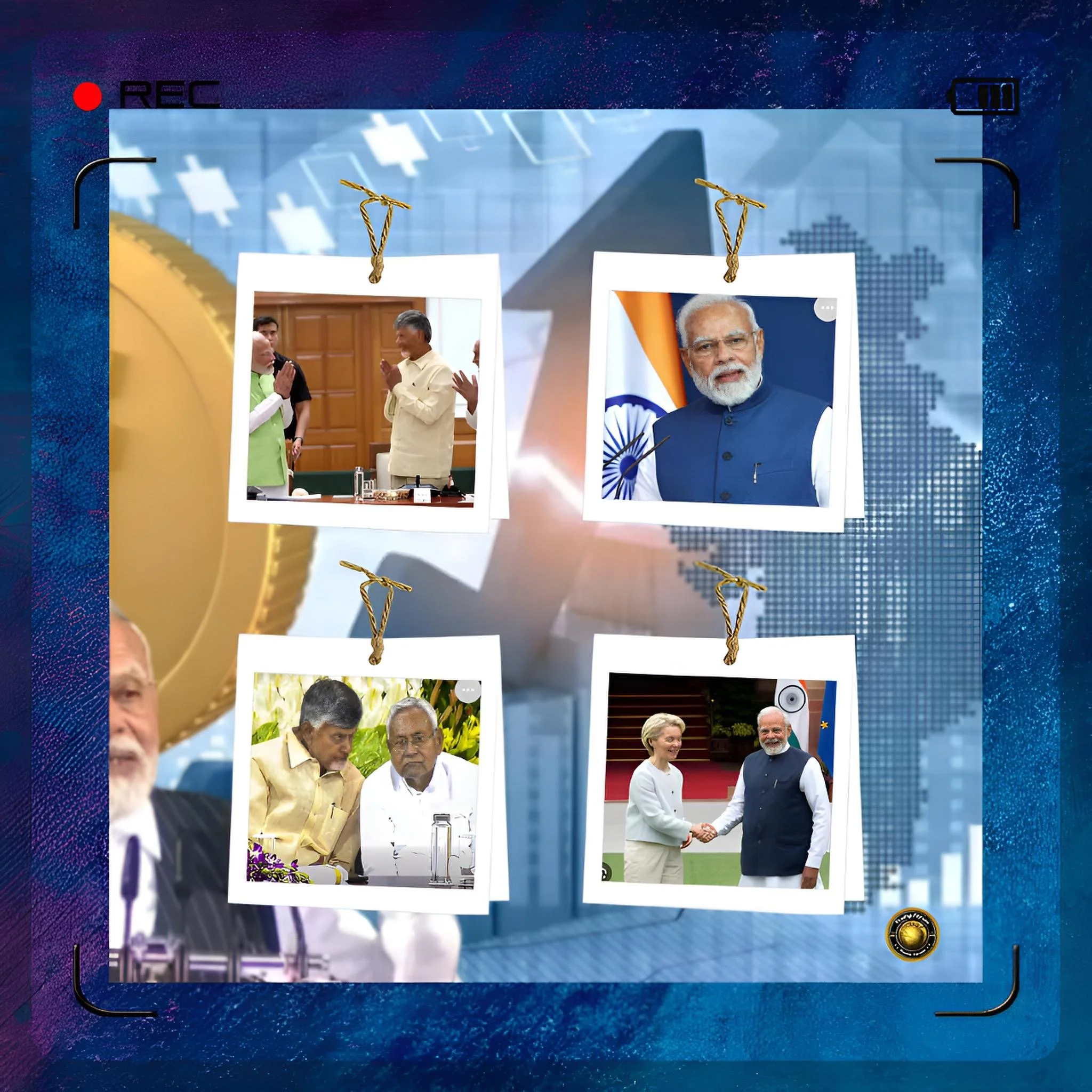
The other political leaders who now hold the keys to government are Chandrababu Naidu, who runs Andhra Pradesh, and Nitish Kumar, who runs Bihar. They said: " We will help you, but you have to give us special money for our states and listen to what we want. They were not interested in Modi's plans to change religious laws or control how other religions work. Instead, they wanted their states to have better roads, factories, and jobs for their people.
When Modi could not push these divisive religious changes through alone, something innovative happened. He put all his energy into economic reforms that helped factories, workers, and businesses. It is easier to sell to people the idea that everyone benefits from a simplified tax system than to sell the idea that religious laws should change.
The Trump Tariff Problem That Forced Action
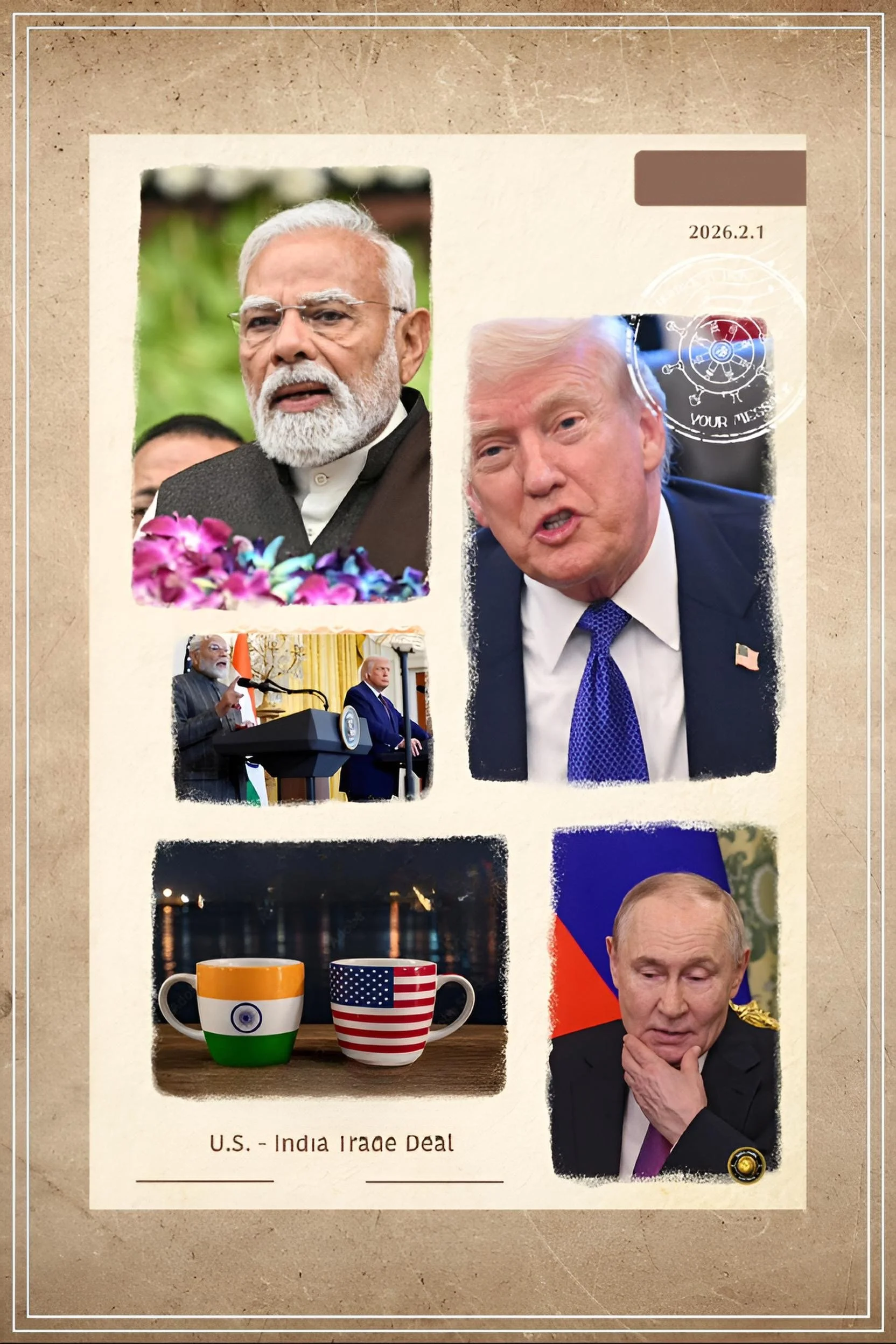
Then, in August 2025, American President Donald Trump imposed a 50% tax on Indian goods entering the United States. This was like putting a heavy fine on Indian exports. If an Indian company wanted to sell something to America, they suddenly had to add 50% more cost. At the same time, Trump put an extra 25% tax specifically on Indian oil from Russia, trying to force India to stop buying Russian crude.
India's exports to America fell from $ 8.4 billion to $6.88 billion in just a few months.
Thousands of workers in textile factories, clothing companies, and oil refineries faced job losses. Naidu and Kumar, who had factories in their states, came under pressure from voters asking why their jobs were disappearing. They went to Modi and said, "We need you to do something about this."
Modi realized he could use this crisis to make reforms everyone actually needed, but nobody wanted to do because they were difficult. He could tell Naidu and Kumar, "Look, American tariffs are destroying your states. We need to make Indian factories so efficient and productive that they can compete even with these high tariffs. That means we need to change the rules that make business difficult."
The Big Economic Reforms of 2025
So, Modi's government began making significant changes. Let me explain what they did in simple terms.
First, they fixed the tax system. India's tax system was like a maze. Different products had different tax rates that made no sense. A piece of candy might have one rate, but another food might have a different rate.
Companies spent millions of rupees hiring consultants to determine which tax rate applied to their products. The government simplified all of this. They reduced the tax rates to just two simple levels: 5% for basics and 18% for everything else.
Second, they updated the entire income tax law. The old law was written in 1961 and had been changed 4,000 times. Imagine a building that has been renovated 4,000 times with different contractors adding things without planning. That is what the tax code was like. They created an entirely new income tax law that is simpler and makes sense.
Third, they changed labor laws. India had 29 different labor laws written at other times.
Companies did not understand the rules.
The government combined all 29 laws into 4 simple codes.
This made it easier for factories to hire workers and grow without worrying about breaking some forgotten rule from 1975.
Fourth, they allowed foreign companies to own insurance companies and pension companies without restrictions.
Before, foreign investors could only own up to 49%. They also allowed private companies to build nuclear power plants, something only the government could do before. These changes said to the world: we are opening our market and want your money and technology to help us grow.
Why Coalition Government Made These Reforms Possible
Here is the important part. Under his majority, Modi could have pushed through laws that changed religious practices and systems.
These are things his party wanted very much. But Naidu and Kumar would not agree to these things because their voters did not want them. So Modi could not do those things.
Because he could not do those divisive things, Modi focused completely on economic changes that everyone could agree helped the country. These changes are not controversial because they help businesses grow, create jobs, and make life easier for regular people buying goods. Even Naidu and Kumar could sell these changes to their voters as helping their states become richer.
It is like when two people disagree about politics but agree they want to fix a broken car.
They cannot fix the car if they waste time arguing about politics. But once they stop arguing and focus on the car, they get it fixed very fast.
The Results and What It Means
By late 2025, India's exports started recovering even under the tariff pressure. Electronics exports rose 39% . Indian factories started making computer chips.
The government signed a big trade agreement with the European Union to sell more goods there instead of just America. During the festival season in 2025, Indians spent record amounts of money shopping, showing that the economy was still strong.
Modi's coalition won important state elections in late 2025, suggesting that people liked what the government was doing. Naidu and Kumar saw political benefit from being part of a government delivering reforms and economic growth.
The Larger Lesson
The odd thing about Modi losing his complete power is that it made him govern better in practical, economic ways. When leaders must negotiate and compromise, they cannot just push through unpopular ideas. They have to find things that most people agree help the country. Economic growth and making it easier to do business are things almost everyone agrees help people.
This does not mean coalition government is always better. It depends on what the coalition partners want and whether external pressures like tariffs push in the same direction as the reforms. But in Modi's case, the combination of losing his majority, needing to negotiate with partners who wanted economic growth, and facing American tariffs that made economic competitiveness urgent—all of this forced him to be a more practical, less ideological leader.
The challenge ahead is whether these reforms will actually work when people implement them, whether other countries will buy Indian goods, and whether coalition partners will stay together.
But for 2025, constraint and crisis together created governance that focused on making the economy stronger and people's lives easier, rather than pursuing the divisive cultural changes Modi had wanted to make when he had complete power.