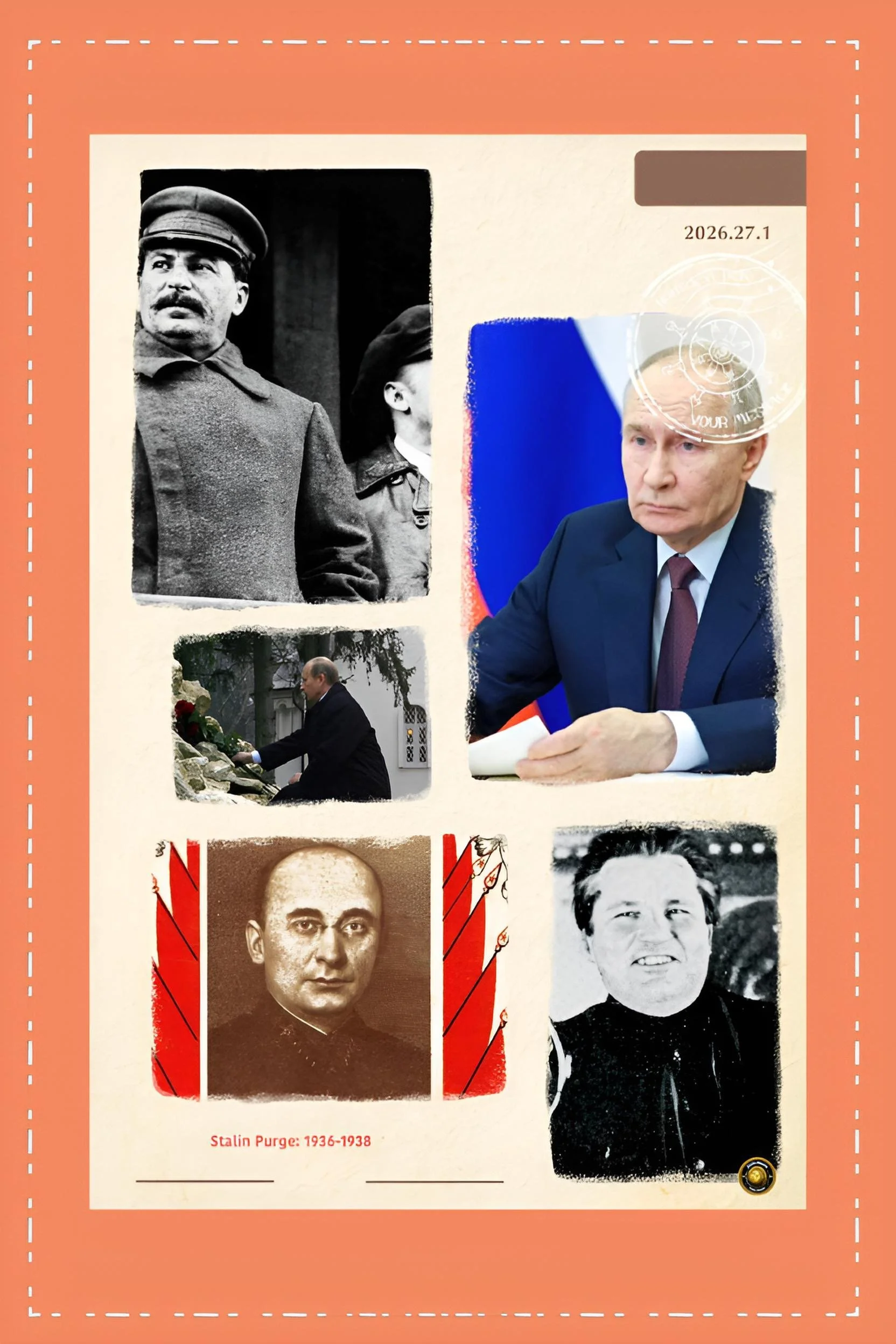
Stalin's Purges: How Fear Destroyed the Soviet Union and What It Teaches Us Today
Executive Summary
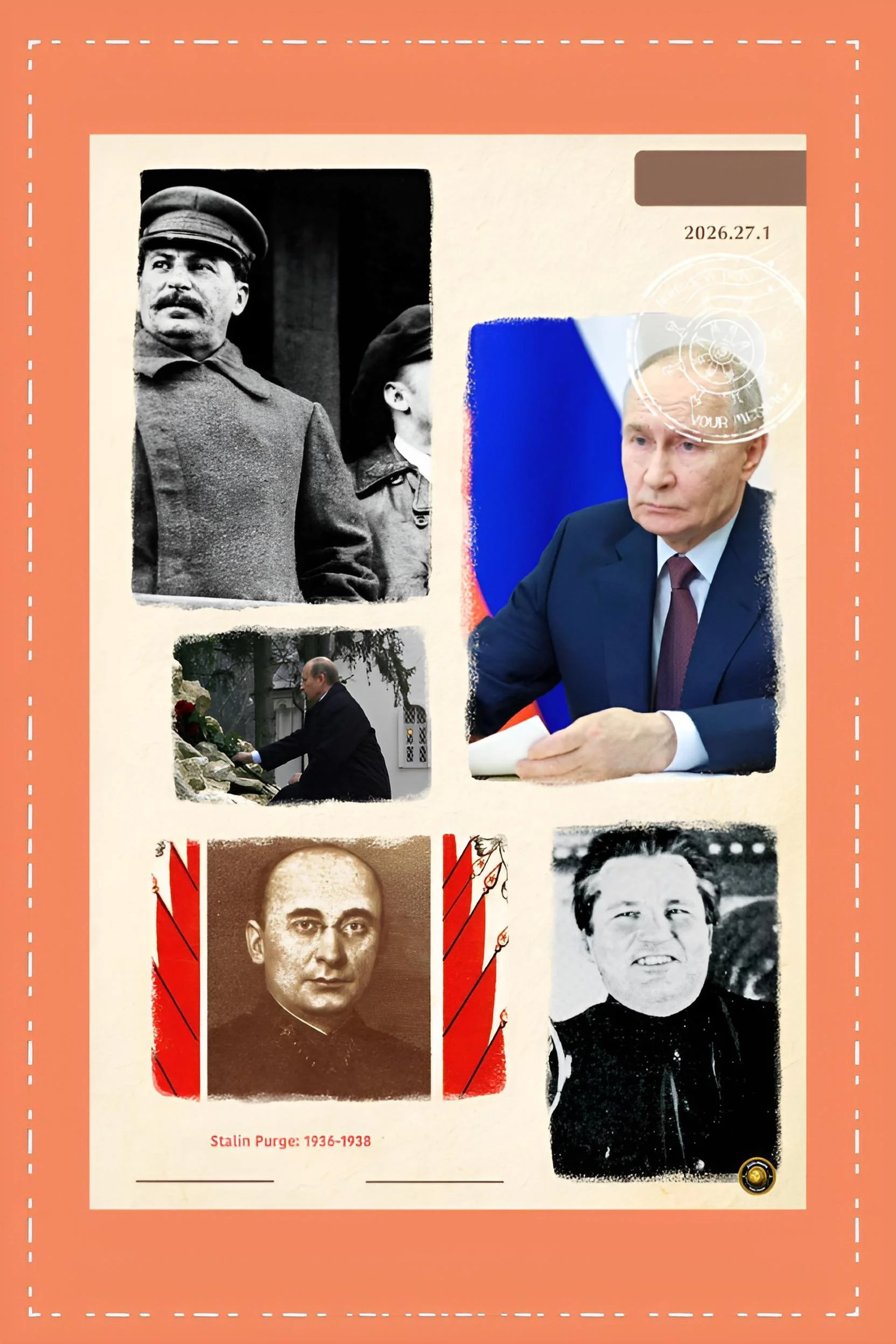
Between 1936 and 1938, Joseph Stalin, the leader of the Soviet Union, ordered the arrest and execution of millions of people. These killings became known as the Great Purge or Great Terror. An estimated 700,000 to 1.2 million people were executed, and millions more were sent to labor camps where many died. What makes this tragedy important for understanding politics today is what it reveals about how power works in authoritarian states. Stalin's purges actually made his country weaker, not stronger. By killing experienced military officers, government officials, and skilled workers, Stalin removed exactly the people his country needed most. When Nazi Germany attacked in 1941, the Soviet Union was militarily unprepared partly because Stalin had destroyed his own military leadership years earlier. This historical lesson applies to countries today: when leaders purge their own governments out of paranoia, they damage their nation's ability to survive challenges and compete internationally.
Introduction
Why Stalin Felt Threatened
Joseph Stalin took control of the Soviet Union after Vladimir Lenin died in 1924. For several years, Stalin fought against other Communist leaders who wanted different approaches to running the country. By 1930, Stalin had defeated his main rivals and controlled the party. You might think Stalin would feel secure at that point. However, he did not.
Stalin ordered his government to collect all the country's grain from peasants to feed city workers and fund factory construction. This policy caused a massive famine from 1930 to 1933, especially in Ukraine. Millions of people starved. Many Communist Party members disagreed with this policy but could not speak up because Stalin controlled the party apparatus. These silent critics worried Stalin. He was afraid that old Bolshevik revolutionaries—the veterans who had fought alongside Lenin—might one day challenge his authority.
Stalin knew that many party members resented his policies. Even though nobody openly opposed him, Stalin imagined constant threats. This combination of actual dissatisfaction and Stalin's exaggerated fear of conspiracies created dangerous conditions. All Stalin needed was a single incident to justify a massive campaign against his enemies.
The Catalyst: Kirov's Assassination and the Opening of Terror
On December 1, 1934, Sergei Kirov, an important Communist Party leader in the city of Leningrad, was shot and killed by a party member named Leonid Nikolayev. Kirov was popular within the Communist Party. Some historians believe that Stalin himself ordered the killing, though this remains debated among scholars. What is absolutely clear is that Stalin used this assassination to launch a campaign of violence that would kill millions.
Stalin personally investigated Kirov's death and decided that a large conspiracy was responsible. He blamed old Bolsheviks who had once opposed him, particularly followers of Leon Trotsky (a famous revolutionary who had been pushed out of power and exiled). Stalin claimed these opposition figures had organized Kirov's murder as part of a plot to overthrow him. Most historians today believe Stalin exaggerated or invented much of this conspiracy.
The Soviet secret police, called the NKVD, received new powers to arrest and execute people with minimal legal procedures. What followed was the systematic destruction of an entire generation of Soviet leadership. The government held three famous public trials in Moscow (1936, 1937, and 1938) where prominent old Bolsheviks confessed to fantastic crimes including espionage for Nazi Germany, plans to assassinate Stalin, and schemes to sabotage Soviet industry. These confessions were almost entirely false, extracted through torture, threats against defendants' families, and psychological manipulation.
How the Terror Machine Worked
The Great Purge operated through a systematic process. The secret police received instructions from Moscow establishing quotas—specific numbers of people who should be arrested and executed. For example, officials in one region might be told they must arrest and execute exactly 500 people, or they themselves would be punished for failing to protect the nation from enemies.
When regions completed their quotas quickly, Moscow simply demanded higher numbers. This created perverse incentives. Secret police officials competed with each other to meet quotas. Local Communist Party leaders accused their rivals of being spies or saboteurs. Anyone could denounce anyone else, knowing that the person denounced would likely be arrested. To save themselves from suspicion, ordinary citizens were forced to denounce coworkers, neighbors, and even family members. A husband might accuse his wife of treason. A daughter might report her father. A factory worker might denounce his supervisor.
The actual trials were conducted by special courts called troikas, consisting of local party officials, secret police representatives, and prosecutors. These courts made decisions in minutes—sometimes examining a case for just five minutes before sentencing someone to death. Torture was standard. The secret police would beat prisoners, deprive them of sleep, and threaten to arrest their families. Under this torture, innocent people would confess to crimes they never committed and identify other "conspirators" to try to stop the pain.
These false confessions would then trigger new arrests. If a tortured prisoner said he had conspired with ten other people, those ten would be arrested, tortured, and likely name ten more each. The system grew exponentially, like a mathematical formula where each victim implicated multiple additional victims. The only limit was the secret police's physical capacity to conduct interrogations and carry out executions.
The scale became staggering. Under one major operation called Operation 00447, authorities intended to execute 76,000 people. Regional officials requested and received permission to increase quotas. Over sixteen months, approximately 387,000 people were executed under this single operation alone. When you add all the other operations, show trials, and executions, the total reached approximately 800,000 executions, making it one of the deadliest periods of violence in human history—all conducted by a government against its own population.
The Destruction of the Military
The most strategically catastrophic consequence of Stalin's purges was what happened to the Soviet military. Stalin was paranoid about the possibility that powerful generals might challenge his authority. During 1937 and 1938, he ordered the execution of approximately 35,000 military officers. This represented roughly half of all Soviet military officers. Among the highest-ranking commanders, the destruction was nearly total. Thirteen of the fifteen top Army commanders were either executed or imprisoned. Fourteen of eighteen top government ministers faced the same fate.
Marshal Mikhail Tukhachevsky exemplified this tragedy. Tukhachevsky was considered the most brilliant military strategist in the Soviet Union. He had innovative ideas about modern warfare and had studied military technology carefully. Because he was so talented and respected, Stalin saw him as a potential rival. Stalin had Tukhachevsky arrested in 1937. Secret police tortured him, obtained a confession to imaginary crimes, and executed him along with seven other leading generals after trials lasting only a few hours.
The consequences appeared immediately. In 1939 and 1940, the Soviet Union fought a war against Finland. The Soviet Union had far more soldiers and weapons, yet the Finns fought effectively and inflicted massive casualties. Soviet military performance was poor because the remaining officers lacked experience and confidence. They were afraid to make decisions without specific permission from above because any independent action could be interpreted as disloyalty.
When Nazi Germany invaded the Soviet Union on June 22, 1941, the German army achieved shocking early victories. In the first months, the Germans destroyed entire Soviet armies, captured hundreds of thousands of soldiers, and advanced deep into Soviet territory. These victories reflected German military skill but also the weakness that Stalin had created by eliminating his experienced commanders. The Soviet Union nearly lost the war in 1941 and 1942, and historians debate whether it would have survived without its vast manpower reserves and the industrial production from factories built during earlier Five-Year Plans.
How Fear Broke Everything
Beyond the military, the purges destroyed the trust and functioning of Soviet government and society. More than half of the Communist Party's Central Committee members were purged. Experienced government officials, factory managers, engineers, and other specialists were arrested and often executed.
The atmosphere of fear was everywhere. People could be arrested at any time for almost any reason. A worker might be accused of "wrecking"—deliberately sabotaging production to help capitalism. A teacher might be reported for making a critical comment about the government. A family member might inform on you to save themselves. Nobody could trust anyone completely.
This fear made Soviet government and economy work poorly. Factory managers became afraid to try new methods or take risks because any failure could be interpreted as sabotage. Innovative thinking stopped. People focused on following orders exactly and showing absolute loyalty to Stalin. Creativity and problem-solving were dangerous.
The atmosphere of fear also changed how Stalin's advisors behaved. Communist Party officials stopped disagreeing with Stalin in meetings. Nobody would suggest alternative approaches because disagreement could be considered disloyalty, punishable by death. Stalin surrounded himself with yes-men—people who would tell him only what he wanted to hear. This meant Stalin made decisions based on false information about what was actually happening in his country.
The Show Trials: Theater for the State
The public trials in Moscow were carefully staged events designed to convince people that large conspiracies against Stalin were real. The three most famous trials were held in August 1936, January 1937, and March 1938. Famous old Bolsheviks confessed to plotting with Nazi Germany, Polish intelligence, and exiled Trotskyists to overthrow Stalin and restore capitalism.
These confessions were almost entirely false. The defendants had been tortured for weeks or months before trial. Secret police told them that if they confessed publicly, their lives and families would be spared. Then after the trials, Stalin broke his promises and executed the defendants and often their families anyway.
The trials served propaganda purposes. They provided legal appearance to the broader violence. Ordinary Soviet citizens, reading newspaper accounts or listening to radio broadcasts, might believe that large terrorist conspiracies truly existed and that Stalin was protecting the nation. The trials also sent a message: if even famous old revolutionaries who had made the revolution were traitors, then anyone could be an enemy.
The trials showed Stalin's paranoia. The imaginary conspiracies were absurd. Old Bolsheviks confessed to meeting Nazi German spies in Switzerland and receiving instructions to murder Soviet leaders. Many of the accusations made no logical sense. Yet the trials proceeded with serious procedure and verdicts of guilty.
Consequences: Making the Soviet Union Weaker When It Needed Strength
The timing of the purges proved strategically disastrous. The years 1936 to 1938 were precisely when Nazi Germany under Adolf Hitler was growing stronger and more aggressive. Hitler had taken power in 1933 and was rebuilding German military strength for war. A strong Soviet Union with experienced military leadership could have deterred German aggression or fought more effectively if war came.
Instead, Stalin weakened his own country at the worst possible moment. When France was considering whether the Soviet Union could be a reliable military ally against Germany, the purges gave the impression that Stalin was either paranoid and unstable or that the Soviet Union was in deep internal crisis. French confidence in Soviet reliability decreased. British and French democracies did not form an anti-German alliance with the Soviet Union.
Soviet negotiating position became weak. In 1939, Stalin signed the Nazi-Soviet Nonaggression Pact, an agreement that Germany would not attack the Soviet Union. This pact benefited Germany by giving Hitler a free hand in Western Europe without fear of Soviet intervention. Stalin believed this agreement protected Soviet security. It did not. Hitler broke the pact in 1941 and invaded the Soviet Union. Stalin, isolated by years of purges from advisors willing to tell him uncomfortable truths, initially refused to believe intelligence warnings that Germany was preparing an invasion.
Inside the Soviet Union, the purges had damaged economic productivity. Factories became afraid to increase production or take risks. The transportation system worked poorly because officials were arrested. Schools and universities were disrupted. The cultural and intellectual life of the Soviet Union contracted as artists, writers, and scientists became afraid to create anything that could be interpreted as political criticism.
Modern Lessons: How Today's Dictators Use the Same Methods
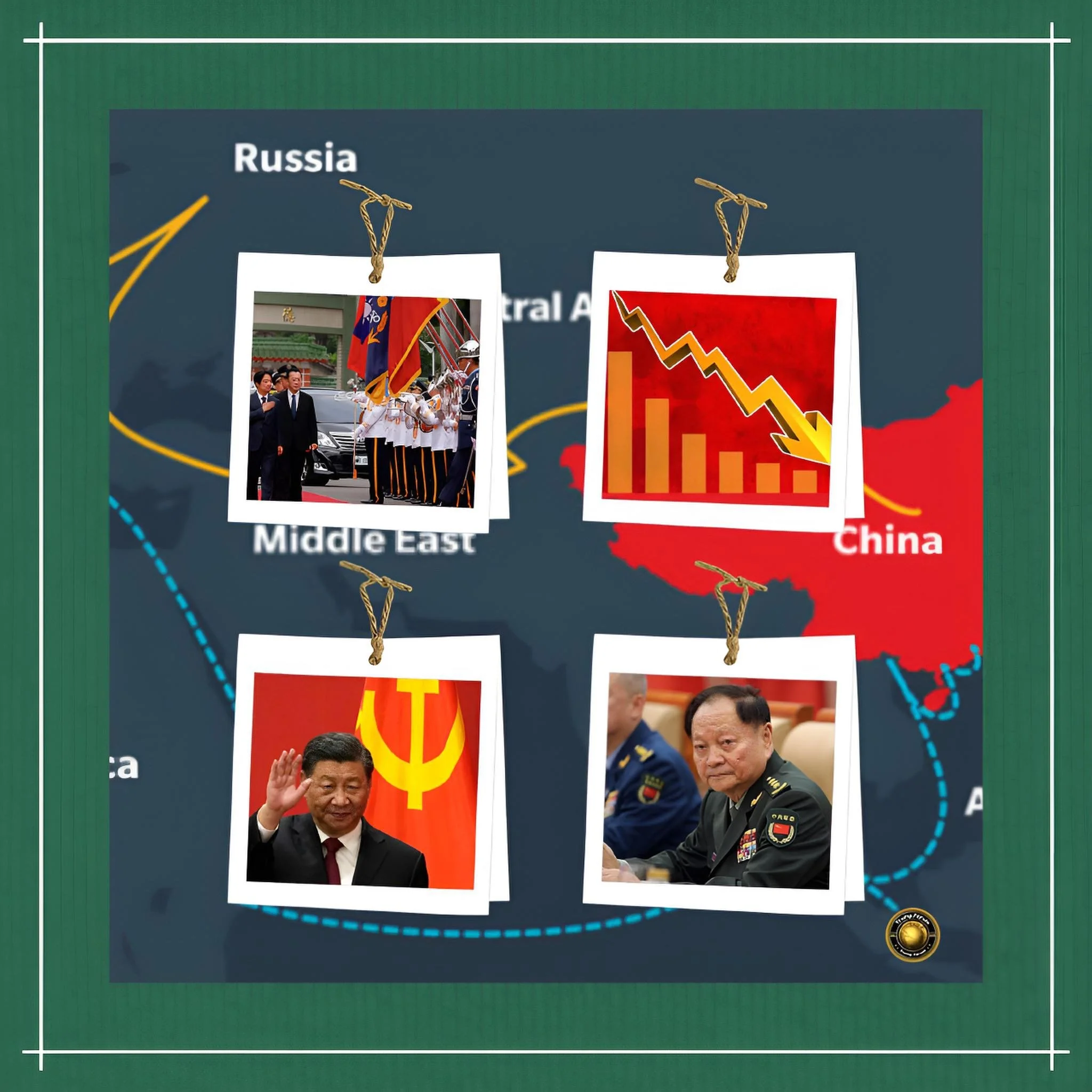
The history of Stalin's purges remains relevant today because modern authoritarian leaders in China, Russia, and other countries use similar methods to control their governments. Understanding what happened in the Soviet Union helps us understand what is happening in these countries now.
China's leader Xi Jinping launched what he calls an anti-corruption campaign in 2012. Like Stalin's purges, this campaign has eliminated hundreds of thousands of officials and military officers. Many were probably corrupt, but many others were eliminated because they might become political rivals or because they belonged to factions competing with Xi for power. The result has been that experienced government administrators and military officers have been removed, creating similar problems that the Soviet Union experienced: government becoming less effective, military becoming more focused on loyalty to Xi personally rather than on actual military competence, and increasing fear within the bureaucracy.
Russia's leader Vladimir Putin has not conducted purges on Stalin's scale, but he has eliminated or exiled political rivals, imprisoned journalists and opposition figures, and assassinated critics. These actions serve similar purposes: consolidating personal power and eliminating perceived threats. Yet Russia's government, like other modern authoritarian systems, lacks the institutional structures that allowed the Soviet Union to survive despite Stalin's terror. This makes modern authoritarian governments potentially more fragile.
Scholars who study dictatorships have discovered an important pattern: purges signal weakness, not strength. When a leader is confident and secure, he does not need constant purges. When purges become frequent and intense, it usually means the leader feels threatened and insecure. Modern dictators like Xi and Putin carry out purges because they worry about their hold on power. The purges actually create more instability by eliminating competent officials, destroying trust within government, and making officials uncertain whether the leader will honor his promises to reward loyalty.
A particular danger appears when authoritarian leaders ruling weakened governments face external military threats. Weakened by internal purges and lacking experienced advisors willing to tell uncomfortable truths, these leaders can make catastrophic mistakes. Russia's invasion of Ukraine in 2022 offers an example. Putin apparently expected Ukraine to collapse quickly. Instead, Ukrainian military resistance proved strong. Putin, isolated and surrounded by yes-men, had miscalculated because experienced military and intelligence advisors had been eliminated or feared contradicting him.
The Cycle: Bad Governance Creates More Purges, Which Creates Worse Governance
A dangerous cycle appears in authoritarian systems ruled by paranoid leaders. When government performs poorly—corruption increases, economy slows, military experiences setbacks—the leader blames officials for sabotage rather than blaming his own policies. So he launches purges to eliminate the "saboteurs." These purges remove experienced officials, making governance even worse. Problems mount. The leader, feeling increasingly threatened, launches more purges. The cycle accelerates. Government becomes increasingly dysfunctional. The regime becomes increasingly fragile.
Scholars call this pattern the "Stalin logic." It describes how purges and governance failure reinforce each other in a vicious cycle. The more a paranoid dictator purges, the worse governance becomes. The worse governance becomes, the more the dictator purges. Eventually, the regime either transforms into less repressive government, collapses from internal decay, or launches dangerous external military adventure to distract from internal problems.
Understanding this pattern helps explain modern geopolitics. China faces economic slowdown after decades of rapid growth. Environmental problems mount. Youth unemployment rises. These problems create internal pressures on Xi's regime. The regime responds with more comprehensive control measures, more purges of rivals, more surveillance technology, and ideological campaigns about the "China Dream." Yet these measures, while consolidating Xi's personal power, make governance less effective. Officials become more risk-averse. Economic innovation slows. The cycle continues, carrying the potential for eventual regime crisis.
What Happened to the Soviet Union After Stalin
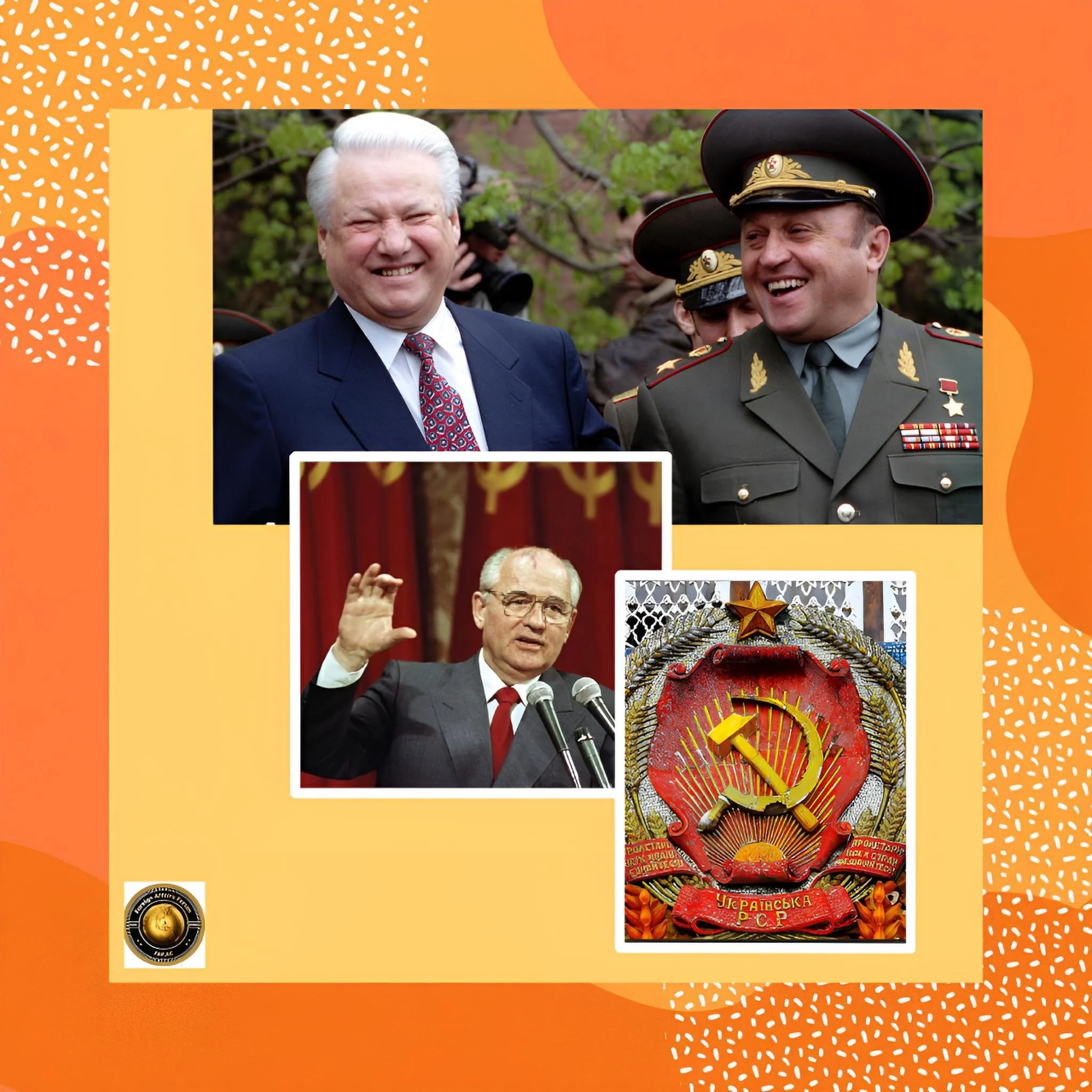
Stalin died in 1953. His successor, Nikita Khrushchev, was horrified by what he learned about the purges. In 1956, Khrushchev gave a famous secret speech to Communist Party leaders condemning Stalin as a murderer and describing his policies as disastrous. Khrushchev released many political prisoners from labor camps. He reduced repression. He attempted to rehabilitate the Soviet system by making it somewhat less terroristic, though it remained authoritarian.
However, the Soviet system never fully recovered from the purges. The destruction of experienced administrators, the culture of fear that Stalin had created, and the institutional weakness that resulted from years of terror left permanent damage. The Soviet Union survived World War II and became a superpower, but it faced chronic economic problems, technological lag behind the West, and eventually collapse in 1991.
Historians debate how much Stalin's purges contributed to Soviet collapse decades later. Some argue that the purges caused permanent institutional damage that the system never overcome. Others argue that other factors—the inefficiency of communist economic planning, the cost of military competition with the West, national resentment among non-Russian populations—mattered more. Probably all of these factors played roles. What is clear is that the purges caused enormous damage from which the Soviet system could not fully recover.
Future Steps: Warning Signs of Regime Instability
Modern geopolitical analysis suggests that authoritarian regimes undergoing intensive purges face increased probability of catastrophic miscalculation, internal collapse, or dangerous military adventurism. International observers should interpret increased purge activity as a warning sign of regime instability, not as evidence of regime strength.
When authoritarian leaders feel secure and confident, they do not purge extensively. When they purge extensively, it signals they feel threatened. This threat may come from external pressure (military competition, economic sanctions, isolation) or from internal challenges (elite dissidents, public discontent, succession uncertainty). Regimes responding to perceived threats through purges rather than institutional reform choose a path that typically leads to greater instability.
These regimes become particularly dangerous when external pressures mount while internal purges are occurring. A weakened regime facing military or economic challenges, led by a paranoid and isolated leader, may calculate that aggressive military action provides the only way to consolidate power and rally nationalist support. This dynamic partly explains Russia's invasion of Ukraine, despite the obvious costs and risks.
For countries competing with authoritarian regimes, understanding these patterns permits more accurate assessment of whether regimes appear stable or fragile. Intensive purging, far from signaling strength, reveals underlying instability that may lead to regime collapse, regime transformation, or dangerous external adventurism.
Conclusion
History's Warning
Stalin's Great Purge of 1936 to 1938 killed millions of people and destroyed much of what the Soviet Union had built. The purges were supposed to make Stalin's power secure and eliminate threats to Soviet security. Instead, the purges made the Soviet Union weaker, damaged government effectiveness, destroyed military leadership, and created a culture of fear that prevented rational decision-making.
When Nazi Germany attacked in 1941, the Soviet Union faced its greatest challenge in history. The country nearly lost the war partly because Stalin had spent years destroying his military leadership. The most talented and experienced commanders—the people the Soviet Union desperately needed—had been executed or imprisoned.
This history teaches us important lessons about how power works in authoritarian states. When leaders rely on purges and fear to maintain control, they damage their nations. Experienced advisors are eliminated. Officials become afraid to provide honest information. Innovation stops. Government becomes less effective. Military becomes less competent. The regime becomes less stable, not more stable.
These lessons apply today. Leaders like Xi Jinping in China and Vladimir Putin in Russia continue to use purges to control their governments. Like Stalin, they believe purges will consolidate their power and eliminate threats. Like Stalin, they are actually damaging their nations' abilities to compete internationally and govern effectively.
Understanding this pattern helps us see that authoritarian regimes appearing strong today may actually contain the seeds of their own instability. Intensive reliance on purges indicates that regimes feel threatened and insecure, not confident and strong. The more leaders rely on fear and purges, the weaker and more unstable their regimes become. This pattern, established during Stalin's terror in the 1930s, remains relevant for understanding geopolitics in the twenty-first century.