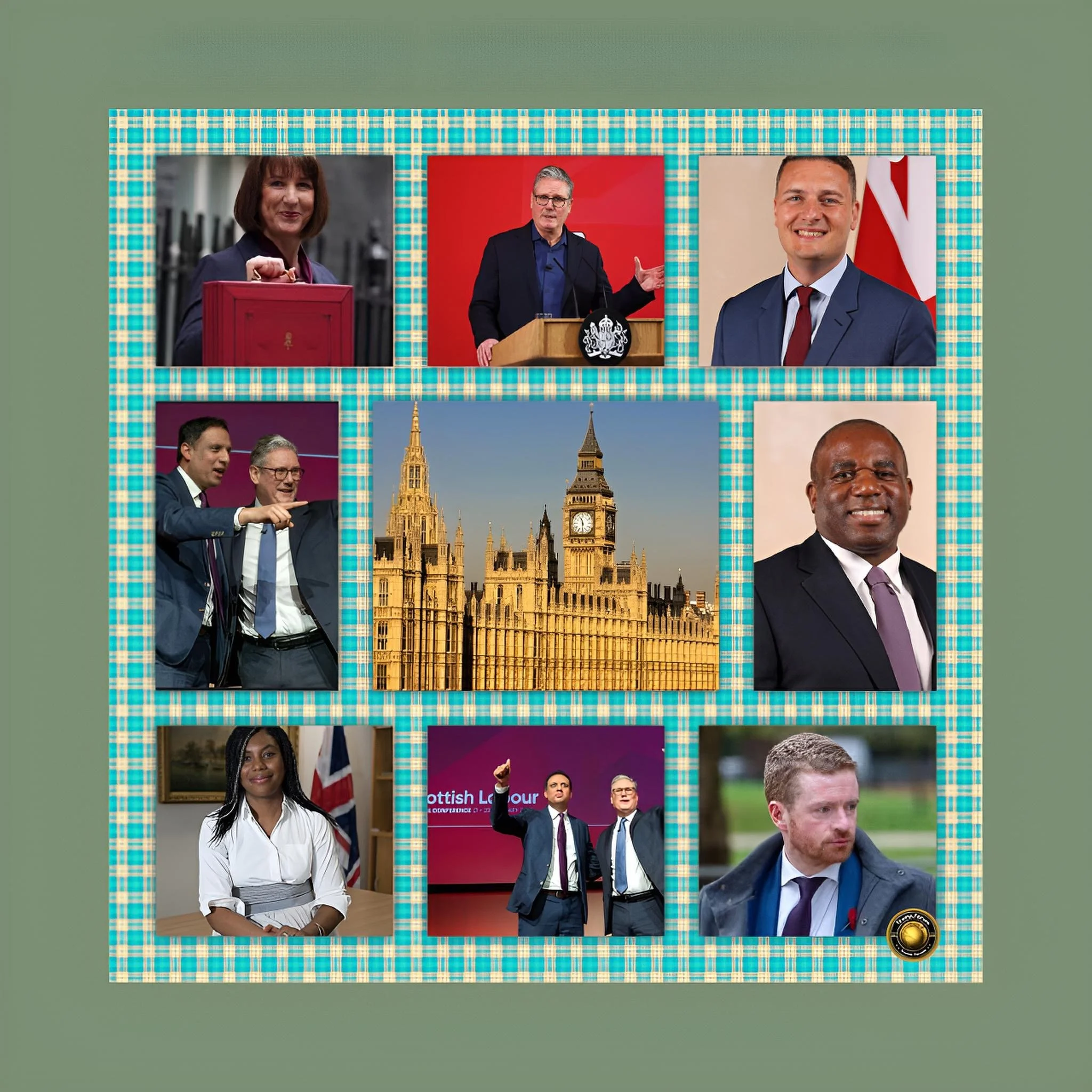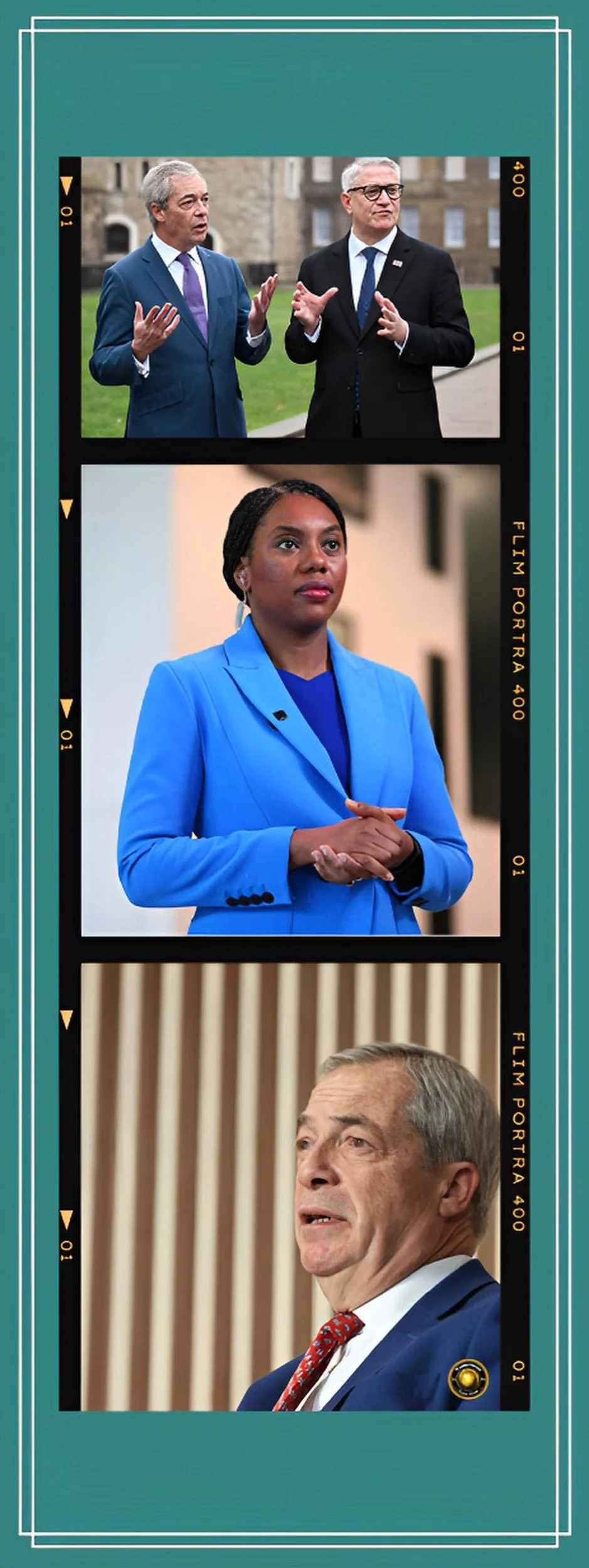
How Britain's Conservatives Could Make a Comeback: Why They Might Win the Next Election
Executive Summary
The British Conservative Party is in serious trouble. After losing the election in July 2024, the party is now weaker than it has been in generations.
Many people switched to voting for Nigel Farage's Reform UK party.
But something surprising is happening. Labour, the party now in government, is making big mistakes.
People are unhappy with rising costs of living, long waiting times at hospitals, and struggling economy. At the same time, Reform's popularity has stopped growing.
FAF explains how the Conservatives could unexpectedly come back into power by 2029, even though right now things look very bad for them.
The three main reasons a Conservative comeback is possible are: first, Reform has hit its limit at about 32 % support and is now declining; second, the Labour government is failing on the things voters care about most; and third, the way Britain's voting system works, combined with people voting tactically to keep Reform out, could actually help the Conservatives.
What Happened?
The Conservative Party's Recent History
The Conservatives lost power in July 2024 after a long period of failure.
Between 2010 and 2024, they governed for 14 years. During this time, people got poorer, not richer. The health service got worse, not better. And the party kept changing leaders because nothing they tried worked. After the 2024 election, voters showed they were fed up: they elected Labour in a landslide victory, and the Conservatives were left with only 121 seats in Parliament.
But something strange is now happening.
The Labour government promised to fix things and bring back competence. Yet 18 months into power, they are facing many of the same problems the Conservatives faced.
Money is tight. Public services are still struggling. And voters are increasingly dissatisfied. Meanwhile, the Conservative Party under new leader Kemi Badenoch is trying something different: she is admitting the party made mistakes, apologizing to voters, and explaining how the Conservatives will be different next time.
The Most Important Changes Happening Now
Four major things are changing the political landscape.
First, Nigel Farage's Reform UK looked unstoppable 6 months ago.
But it has stopped growing. In fact, it is now falling. Polls show Reform at about 29 %, down from a high of 32 %.
Expert analysts say 32% might be the most Reform can ever get. Why?
Because Reform voters are quite extreme in their views, and there are only so many people with those views.
Second, voters hate the Labour government now.
The Prime Minister, Keir Starmer, is unpopular as he has ever been. 9 out of 10 voters view him negatively. The government promised to improve living standards but instead people are actually becoming poorer.
Workers have £38 less to spend each month than a year ago. Hospitals are still struggling with long waiting lists even though the government spent £3 billion trying to fix them.
Third, the Conservatives have now explained what they actually believe in and what they would do if elected.
They want to get rid of stamp duty, a tax on buying houses, so younger people can afford to buy homes. They want to make electricity cheaper by allowing more oil and gas production. They want to reduce the size of government and focus on what government really needs to do. They want stricter rules on immigration and stronger borders. These are clear, different ideas from what Labour is doing.
Fourth, and this is really important, voters are now willing to change how they vote. Research shows that 61 % of people would vote differently to keep Reform out of power.
When you look at how this works across the country in hundreds of different areas, Reform could lose as many as 100 seats that current polls suggest they would win. Many of these seats would go to the Conservatives instead of Labour.
How the Conservatives Could Actually Come Back
The Step-by-Step Explanation
The reason a Conservative comeback is possible rests on a simple idea: voters will eventually choose between their favourite party and a party that seems dangerous or too extreme. Right now, 63 % of British voters are very worried about a Farage government.
If they have to choose between voting for Labour or voting Conservative, many would switch to Conservative just to keep Reform out.
This process would likely happen in three stages.
In the first stage, through 2026, the Conservatives need to show people that Badenoch's party is genuinely different from the old Conservative government that failed.
The local elections in May 2026 will be important. If Conservatives do better in these elections, it shows that people are starting to trust the party again. The party needs to communicate its new ideas clearly and avoid bad stories about infighting or scandal.
In the second stage, through 2026 to 2028, the Conservatives need to win voters back from three groups: people who usually vote Conservative but did not vote in 2024 because they were angry with the party; people who voted Labour but are now unhappy because their lives have not improved; and some people who switched to Reform but might return to the Conservatives if they think the Conservatives have a better chance of winning.
This stage depends a lot on how Labour performs. If Labour somehow stabilizes the economy, improves hospitals, and helps people's living standards go up, then the Conservatives cannot make a comeback. But right now, evidence suggests Labour will not achieve these things. So the Conservatives have an opportunity.
In the third stage, as the 2029 election approaches, voters will start voting tactically.
People worried about Reform will switch their votes to whoever is most likely to beat Reform in their area.
In many constituencies, that is the Conservative candidate. This pattern has already happened in recent elections: voters are willing to vote for a party they do not particularly like in order to stop a party they really do not want.
Real numbers from experts at More in Common suggest that if Conservatives get back up to 25 to 25 to 28 % of the vote, tactical voting could give them enough seats in Parliament to either be the largest party or even win a majority.
Why This Could Actually Happen
The Evidence and Mechanisms
Several things make this scenario realistic, not just hopeful thinking.
The first reality is voter dissatisfaction. Some polls show that only eighteen percent of Britons approve of Prime Minister Starmer's performance, while 75 % disapprove.
This is historic. For comparison, the previous Prime Minister, Rishi Sunak, had reached this level only once, briefly. This kind of dissatisfaction creates opportunity for opposition parties.
The second reality is that Reform has a ceiling. Although Reform seems very popular in polls, the people who would vote for Reform are quite specific types of voters with extreme views. Most British voters are not extreme.
This explains why Reform's support stopped growing at 32 %.
Experts call this the "Farage effect." Once you have captured all the very frustrated and angry voters, there are no more people to win. After that, you can only win voters by taking them from other parties or by getting new voters to go to polls. Neither of these is easy.
The third reality is that many Labour and Liberal Democrat voters would rather vote Conservative than see Reform in power. Recent research shows that 61 % of voters would change their vote to stop Reform winning in their local area.
This is extraordinary. It means that even though Reform polls highest, it loses many seats to other parties because of this tactical voting effect.
The fourth reality is that only one in five former Conservative voters say they will absolutely never vote Conservative again. This is the smallest "lost permanently" group of any party. About fifty-three percent of 2024 Conservative voters are still willing to consider voting Conservative. About 26 % have switched to Reform.
This suggests the party is not permanently destroyed—many voters are just punishing it, not rejecting it forever.
What Labour Is Doing Wrong
The Problems That Create Space for Conservatives
The real driver of a potential Conservative comeback is Labour's failures.
The government promised to raise living standards. Instead, real household income is falling. After three quarters of declining living standards, the average British family now has less money to spend each month than a year ago. When voters heard Labour promise to make their lives better, they believed them. Now they are poorer, they feel angrier, and they want change.
The government promised to fix the health service. Money was spent—three billion pounds specifically to reduce waiting times for hospital treatments. But waiting times got worse, not better. Millions of people still wait months for care. When the government says it will fix something and then fails, that damages trust more than if it had never promised to fix it.
The government promised economic growth and stability. Instead, growth is weak, inflation is still high, and young people cannot afford houses. The Prime Minister's own Chancellor had to admit that the government is struggling financially and has limited options.
When all these failures happen at once, voters start looking for an alternative. Reform got support because voters thought something radical was needed. But as they look more closely at Reform, they see an unstable party dependent on one man, Nigel Farage, with contradictory policies and inexperienced leaders.
The Conservatives, under Badenoch, are offering a third option: we made mistakes, we know we failed, but we are fixed now and we are a safer, more stable choice than the chaos of Reform.
What Could Stop the Conservatives
The Real Obstacles
This comeback scenario is not certain.
Several big obstacles could prevent it.
First, the Conservative Party still carries the damage of 14 years in government.
Voters remember: they controlled immigration policy but did not stop immigration. They controlled the economy but made people poorer. They controlled health policy but made hospitals worse. That memory does not disappear quickly. Simply saying "we are sorry" is not enough. The party needs to prove through actions that it is different.
Second, Reform voters are very committed. Unlike some voters who move between parties easily, Reform supporters have made a conscious choice to vote for something radical and new. Many of them are resistant to arguments that they should vote Conservative instead. They view the Conservatives as part of the old failed system. Persuading them to return requires demonstrating that the Conservatives can truly deliver the change they demand.
Third, the Conservatives' own recent defections are damaging. When Robert Jenrick, a prominent shadow secretary, defected to Reform, it showed that even senior Conservatives doubt the party's direction.
When Nadhim Zahawi, a former chancellor, also defected, it suggested that serious figures think Reform is the future, not the Conservatives. These defections make the comeback narrative harder to sell.
Fourth, if the Labour government suddenly improves public services, brings down inflation, or helps people's living standards improve, the Conservative opportunity disappears. Right now, this seems unlikely. But if it happens, the Conservatives are back to being the unpopular party that failed before.
The Path Forward
What Would Have to Happen?
If the Conservatives do make a comeback, here is what we would expect to see.
Between now and May 2026, the party would need to stabilize internally and avoid major scandals. The local elections in May 2026 would serve as the first real test. If Conservatives gain seats and improve their polling, it signals recovery is possible. If they lose more ground, the comeback scenario fails.
Between 2026 and 2028, the party would need to win back voters from Labour and from the ranks of abstainers (people who usually vote Conservative but did not in 2024).
This means explaining clearly why people should trust the Conservatives again. It means demonstrating competence through clear policy positions on housing, energy, and healthcare. It means showing that Badenoch is a serious leader with a serious plan.
From 2028 onward, as the election approaches, tactical voting would start to kick in. People who do not love the Conservatives but hate Reform would begin voting Conservative to stop Farage.
This is how first-past-the-post voting systems work: not everyone votes for who they most prefer, but many people vote for whoever can beat the candidate they most want to stop.
If all these things happened, Conservatives could reach somewhere between 25-28% of the national vote.
In most election systems, that would be too low to win. But Britain's voting system is different. Because Reform would lose votes to tactical voting more than any other party, the Conservatives could end up with substantially more seats than their polling numbers would suggest.
Conclusion
The Conservative Party looks finished right now but they have three years for a complete make-over of political ideology.
After losing power, suffering humiliation, watching prominent members defect to Reform, and facing an unpopular Labour government, many observers believe the Conservatives are in terminal decline.
But British political history shows that things can change quickly. The party that looked invincible can collapse. The party that looks collapsed can come back.
What matters is whether the opposition party can offer voters something better than what the government is delivering, and whether the opposition party can appear stable and competent enough to actually govern.
Right now, the Conservatives have a real opportunity. Labour is failing on the main issues voters care about: living standards, healthcare, and economic growth.
Reform has stopped growing and looks increasingly unstable. And Britain's voting system, combined with voters' willingness to vote tactically against Reform, creates asymmetries that favor the Conservatives.
The road from here to a Conservative victory in 2029 is difficult and uncertain. It requires a government failure that seems likely but not guaranteed. It requires Conservative discipline and renewal that is possible but not assured. It requires voter behavior that follows patterns observed before but is not inevitable.
Yet the scenario in which the Conservatives return to power is no longer the fantasy it appeared to be a year ago. It is a plausible outcome that could emerge if specific conditions align.
For voters concerned about where Britain is heading, for Conservative Party members who believe in the party's principles, and for analysts tracking British politics, the Conservative comeback scenario represents the most consequential political storyline to watch over the next three years.