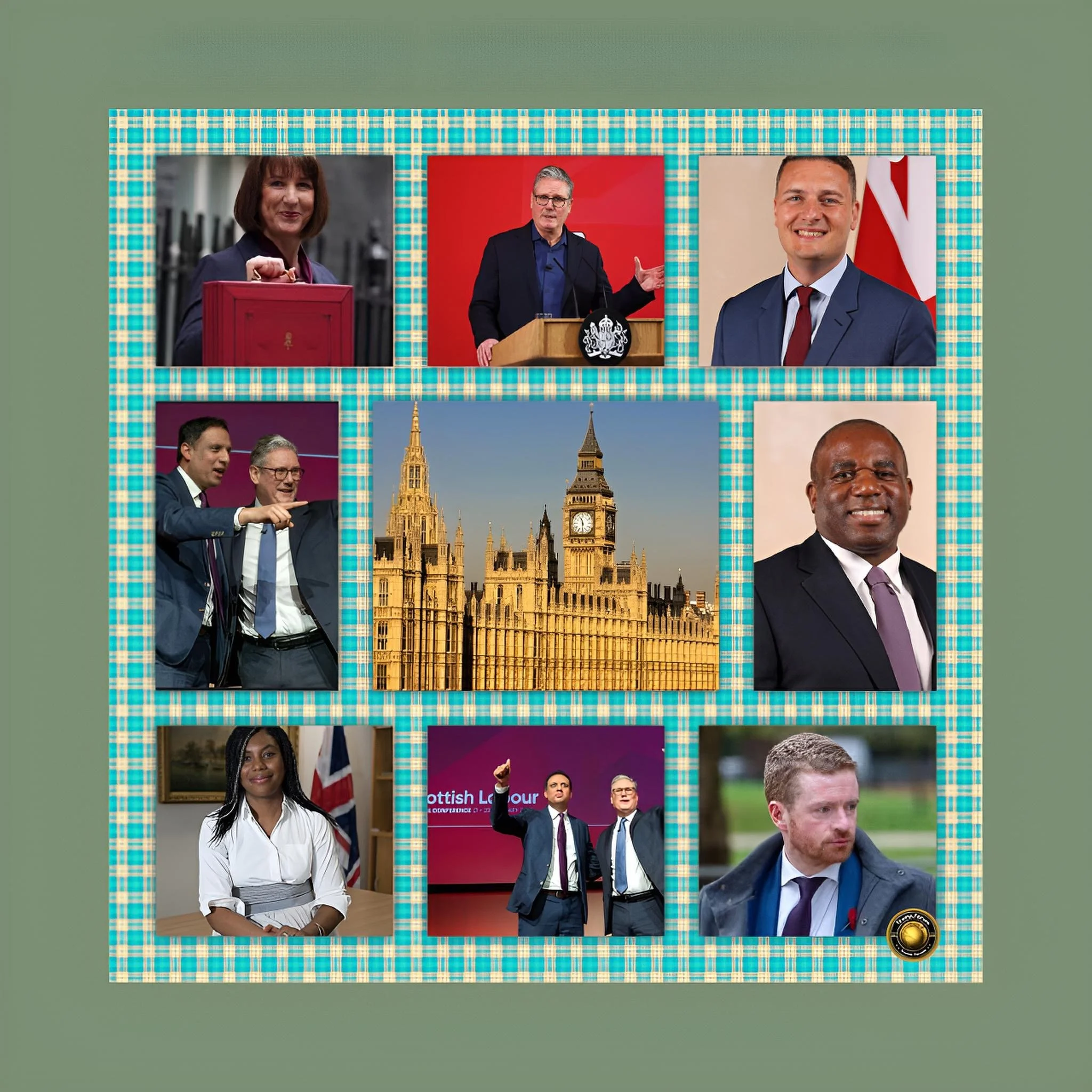
Starmer On The Edge As Leadership Authority Slowly Slips Away
Executive Summary
Britain’s Prime Minister Faces Growing Pressure From Inside Labour Party
Keir Starmer occupies Downing Street at a moment when formal authority no longer guarantees political durability.
Although Labour governs with a parliamentary mandate and the opposition remains weakened, the prime minister’s position is characterized less by consolidation than by exposure.
Recent resignations among senior aides have intensified scrutiny, but these events are best understood as manifestations of a deeper structural condition.
Starmer’s leadership rests on a mandate shaped by exhaustion rather than enthusiasm, by the rejection of prolonged disorder rather than the embrace of a clearly articulated future.
FAF article argues that Starmer’s persistent fragility arises from the interaction of four forces: the negative character of Labour’s electoral victory, the limits of technocratic centrism in an era of social and economic stress, unresolved elite distrust within Labour’s governing coalition, and a media environment that systematically penalizes managerial politics.
Together, these forces leave Starmer governing without the political capital required to absorb shocks or impose direction.
Whether his leadership endures will depend not on tactical recalibration alone, but on his capacity to redefine the purpose of governance and convert tolerance into commitment.
Introduction
Labour’s Power Without Passion Leaves Starmer Politically Exposed
In contemporary democracies, power has become increasingly detached from authority. Governments can win elections, pass budgets, and manage institutions while still appearing precarious, provisional, and reversible.
Starmer’s premiership illustrates this condition with particular clarity. He governs Britain at a time when citizens demand reassurance after years of turbulence, yet simultaneously expect visible renewal after prolonged decline. His leadership provides the former more convincingly than the latter.
The immediate context of debate about Starmer’s future is familiar. Senior advisers have resigned, internal criticism has surfaced in public, and media narratives increasingly frame the government as cautious to the point of drift. Yet these proximate developments obscure the more consequential question.
Why does a prime minister who has avoided major scandal, restored administrative order, and stabilized key economic indicators nonetheless appear permanently vulnerable?
This article situates Starmer’s predicament within the broader dynamics of post-crisis governance in advanced democracies. It contends that his difficulties are not primarily personal, nor reducible to factional intrigue or individual misjudgment.
Rather, they reflect the limitations of a leadership model designed to minimize risk and neutralize opposition in an environment that increasingly rewards clarity of purpose, emotional resonance, and visible transformation.
Starmer’s challenge is not that he lacks competence, but that competence alone has ceased to function as a sufficient basis for political authority.
History And Current Status
Keir’s political formation diverges sharply from the traditional trajectories of British prime ministers. He did not emerge from mass political movements, ideological currents, or long-standing party machines. Instead, his authority was forged within the institutional core of the British state.
As Director of Public Prosecutions, Starmer cultivated a public identity defined by procedural rigor, legal restraint, and institutional loyalty. These qualities later became central to his appeal within a Labour Party seeking rehabilitation after electoral catastrophe.
When Starmer assumed the Labour leadership in 2020, the party confronted not merely defeat but delegitimization. The Corbyn years had fractured Labour’s relationship with large segments of the electorate, strained ties with economic elites, and intensified internal factionalism.
Starmer’s project emerged as a corrective. He centralized authority, enforced message discipline, distanced the party from ideological radicalism, and emphasized national credibility.In opposition, this strategy proved effective. Labour ceased to frighten swing voters and regained institutional trust.
However, the nature of Labour’s return to power is critical to understanding Starmer’s current fragility. The party did not secure office through a groundswell of popular enthusiasm for its program.
Instead, it benefited from the cumulative collapse of Conservative credibility. Years of scandal, policy incoherence, and economic mismanagement exhausted public patience. Labour won power by default as much as by design.
This distinction matters. Electoral victories rooted in rejection rather than affirmation tend to produce shallow mandates. They confer office without supplying the emotional capital required to govern assertively.
Starmer entered Downing Street with authority derived from absence: the absence of chaos, the absence of extremism, the absence of drama. What he did not inherit was a unifying vision capable of mobilizing sustained support.
As Prime Minister, Starmer adopted a governing posture consistent with these origins. His administration emphasized fiscal restraint, administrative competence, and predictability.
These priorities reassured markets, stabilized relations with institutions, and restored a degree of international confidence.
Yet they also delayed the delivery of tangible improvements in everyday life. Over time, the gap between restored order and lived experience widened, leaving the government increasingly exposed to dissatisfaction.
Key Developments
The resignations of Morgan McSweeney and Tim Allan crystallized anxieties that had been accumulating within and around Starmer’s leadership. McSweeney was widely regarded as the architect of Labour’s internal discipline and electoral strategy, enforcing coherence and suppressing factional conflict.
Allan shaped the communicative framework that projected seriousness and restraint. Their departures did not merely remove experienced operatives; they punctured the perception of a tightly controlled governing center.
The political reaction to these resignations proved more consequential than the resignations themselves.
Senior Labour figures, particularly those holding devolved or regional authority, began to articulate doubts publicly.
Anas Sarwar’s call for leadership change marked a threshold moment. It signaled that internal disquiet had crossed from private concern into open challenge. Such interventions are rare in a party culture historically inclined toward internal containment.
Attention quickly turned to the presence of established figures from Labour’s earlier governing era, notably Peter Mandelson. Mandelson’s role became a focal point not because of his direct influence, but because of his symbolic resonance.
For critics, his visibility reinforced the perception that Starmer’s government represented elite continuity rather than generational renewal. Whether this perception is empirically justified is secondary to its political effect.
Symbols matter in moments of fragility, and Mandelson functions as a symbol of restoration politics in an era that increasingly demands rupture.
Latest Facts And Concerns
Public opinion data through early 2026 reveals a persistent asymmetry. Labour retains an electoral advantage over its principal rivals, largely because the opposition has failed to regain credibility.
Yet Starmer’s personal approval ratings remain modest. Voters consistently describe him as capable but remote, serious but uninspiring. Confidence in his technical competence coexists with uncertainty about his intentions.
Economic indicators tell a similarly mixed story. Inflationary pressures have eased, financial volatility has diminished, and fiscal credibility has been restored.
These are not trivial achievements after years of turbulence. Yet real incomes have not recovered from cumulative losses incurred since 2020.
Public services remain under severe strain, and housing affordability continues to deteriorate. For many households, stability has not translated into improvement.
Within Labour, unease centers less on ideology than on process. MPs report limited influence over policy formation. Regional leaders express frustration with centralization and message control.
Younger politicians perceive blocked pathways to advancement, reinforcing the impression of a leadership cadre drawn from a narrow and familiar pool. These dynamics feed a broader narrative of stagnation.
Cause And Effect Analysis
The structural origins of Starmer’s vulnerability lie in the architecture of his leadership strategy. It was designed for opposition rather than governance.
In opposition, minimizing risk, suppressing internal conflict, and projecting seriousness are rational strategies. In government, the same traits constrain initiative and dampen momentum.
Risk aversion limits policy ambition. Limited ambition reduces the government’s capacity to generate enthusiasm.
The absence of enthusiasm weakens internal loyalty, encouraging dissent that further reinforces caution. This feedback loop produces a leadership that appears increasingly defensive, even as it retains formal authority.
The lack of a clearly articulated governing philosophy intensifies this dynamic. Without a unifying narrative, individual policy initiatives appear fragmented and technocratic.
Without ideological coherence, internal disagreements lack a shared framework for resolution. Governance becomes managerial rather than directional, procedural rather than purposive.
Starmer’s positioning within Labour exacerbates these effects. By distancing himself from both the party’s recent radicalism and its earlier centrist orthodoxy, he occupies an ambiguous middle ground. This reduces open rebellion but prevents the formation of a committed ideological constituency. He governs a coalition bound by caution rather than conviction.
The contemporary media environment amplifies these vulnerabilities. Managerial competence rarely generates sustained attention, while internal discord and symbolic conflict dominate coverage.
In such an environment, the resignation of advisers or public dissent by allies acquires disproportionate significance. Narrative momentum shifts toward instability regardless of substantive performance.
Future Steps
Starmer confronts a narrowing range of strategic options. One path involves persistence.
This would mean maintaining caution, prioritizing economic stability, and betting that gradual improvement will eventually consolidate legitimacy. This strategy assumes that voters will reward patience and competence over time. Recent democratic experience suggests that such patience is increasingly rare.
An alternative path requires redefining the purpose of governance. This would involve articulating a clear account of national renewal that extends beyond crisis management. Industrial strategy, public service reconstruction, and democratic reform offer potential foundations for such a narrative. However, articulation alone will not suffice.
A credible shift would require changes in personnel and decision-making processes that signal genuine renewal rather than rhetorical adjustment.
Internally, Starmer must choose between governing through control or consent. Continued centralization may preserve short-term order but risks deepening alienation. Broader inclusion introduces uncertainty but offers the possibility of rebuilding trust and loyalty.
Leadership durability depends on transforming passive tolerance into active belief.
Conclusion
Why Stability Alone Is No Longer Enough For Starmer’s Government
Sir Keir Starmer remains on the brink because his premiership embodies the unresolved tensions of contemporary democratic governance. He governs competently in a society that demands meaning, cautiously in a moment that rewards conviction.
The recent crises surrounding his leadership did not emerge suddenly; they are the logical consequence of a model that prioritizes stability without articulating transformation.
Whether Starmer endures will depend less on managing dissent than on redefining the purpose of his authority. Power sustained by exhaustion can hold office, but it rarely sustains leadership.