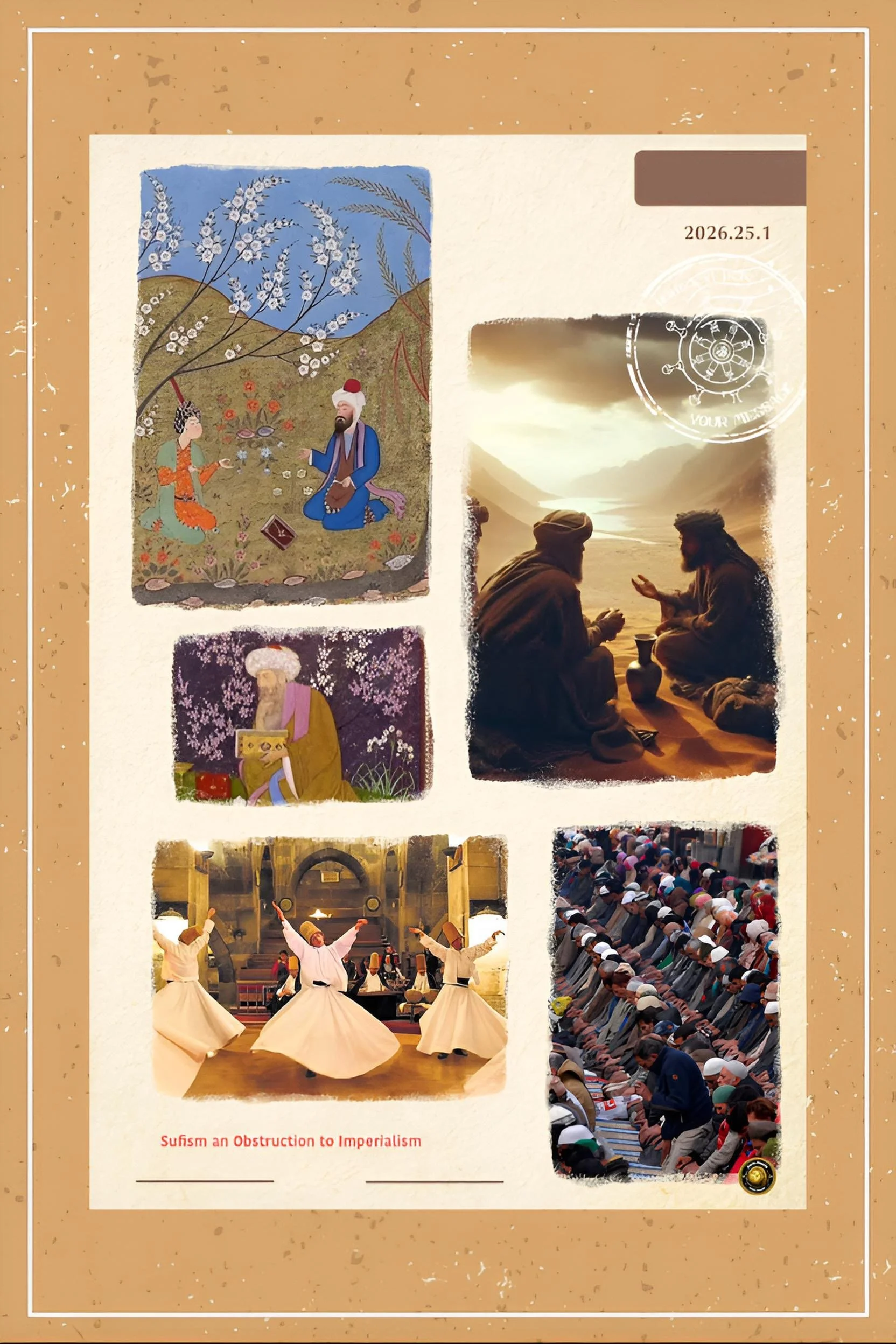
The Sacred Rebellion: How Sufism Became the Unlikely Weapon Against Imperial Power and Religious Extremism
Summary
The Paradox of Power and Spirit
Empires rise through conquest and fall through exhaustion, but Sufism has always risen through inward victory.
At first glance, it seems paradoxical that a movement rooted in humility, devotion, and inner illumination could stand against armies, tyrants, and hardened clerics.
Yet across the Islamic world — from North Africa to South Asia, from Ottoman capitals to Soviet prisons — the mystics of Sufism challenged both imperial arrogance and religious brutality, not with weapons but with sanctity, poetry, and love.
Sufism, the mystical dimension of Islam, emerged in the 8th and 9th centuries as a response to the growing materialism of empire and the ossification of religious institutions.
The early Sufis — ascetics, poets, wanderers — sought purification of the self (tazkiyah al‑nafs) and direct experience of the Divine (maʿrifa).
Their rebellion was spiritual, but its political implications were profound. In a world dominated by caliphs, sultans, and jurists, Sufism reaffirmed that truth transcends authority.
Where empires demanded obedience, the Sufi path demanded sincerity; where dogma imposed fear, mysticism invoked ishq— divine love.
Over time, this ethos forged a tradition of resistance unlike any other: a “sacred rebellion” that endured across centuries, shaping Islamic civilization and offering a moral alternative to tyranny and extremism alike.
The Birth of a Mystical Conscience
The first centuries of Islamic history witnessed explosive territorial expansion — the Abbasid, Umayyad, and later Ottoman realms stretched from Spain to China.
Yet as political power consolidated, the early community’s spiritual intensity waned. Courtly luxury and bureaucratic orthodoxy replaced prophetic simplicity. Amid this transformation, figures such as Hasan al‑Basri and Rabia al‑Adawiyya emerged as voices of conscience.
Rabia, the saint of divine love, defied the religiosity of fear. “I do not worship You for fear of Hell,” she is said to have prayed, “but because You are worthy of worship.”
Her devotion rejected the transactional piety favored by clerics aligned with power.
By placing love above law, she initiated a revolution of perception: to serve God was to transcend fear — and therefore, to transcend those who ruled through it.
In Baghdad, al‑Hallaj — the mystic who declared Ana al‑Haqq (I am the Truth) — pushed this defiance further. His execution in 922 CE symbolized the clash between mystical illumination and legalist authoritarianism.
The state deemed his words blasphemy; his followers saw martyrdom. Al‑Hallaj’s death established a pattern repeated across history: the mystic’s confrontation with empire is existential, not political.
By claiming access to divine truth independent of institutions, Sufis threaten the monopoly of the powerful.
The Sufi Order and the Politics of Love
By the 12th century, Sufism had evolved from isolated mystics into organized brotherhoods (ṭuruq).
Orders such as the Qadiriyya, Chishtiyya, Naqshbandiyya, Shadhiliyya, and Mevleviyya institutionalized spiritual discipline through lodges (khanqahs, zawiyas, dargahs).
Yet unlike orthodox madrasas, these institutions were open to all — peasants, artisans, women, and marginalized communities.
Their democratic ethos disrupted social hierarchies: every soul, regardless of birth or learning, could seek divine proximity. The sheikh was not a priest but a guide, and discipleship meant equality in humility.
Through poetry, music, and fellowship, Sufi orders spread Islam not by conquest but by compassion.
In South Asia, Chishti masters such as Moinuddin Chishti and Nizamuddin Auliya embraced Hindus and Muslims alike, preaching a message of love beyond creed: Love all and exclude none.
This inclusiveness subverted both imperial hierarchies and sectarian identities. The Sufis’ shrines became sanctuaries of mercy amid political cruelty.
The Empire’s Ambivalence
Empires, whether caliphal or colonial, oscillated between patronizing and persecuting the Sufis. Rulers often sought their blessings to legitimize authority, yet feared their independence.
The Ottomans institutionalized several Sufi orders, while simultaneously monitoring their influence. The Mamluks endowed Sufi lodges but censored heterodox teachings. The very flexibility that allowed Sufism to transcend borders also made it politically unpredictable.
Under colonial rule, this tension intensified. European imperialisms misread Sufism as superstition — yet they quickly recognized its mobilizing power.
The British in India, the French in North Africa, and the Russians in Central Asia all confronted uprisings animated by Sufi networks. Unlike secular reformers or nationalist elites, Sufi leaders could unite tribes and classes under a moral vision of freedom.
Their legitimacy was spiritual, not bureaucratic, which made them both resilient and uncontrollable.
North Africa: The Mystic as Warrior
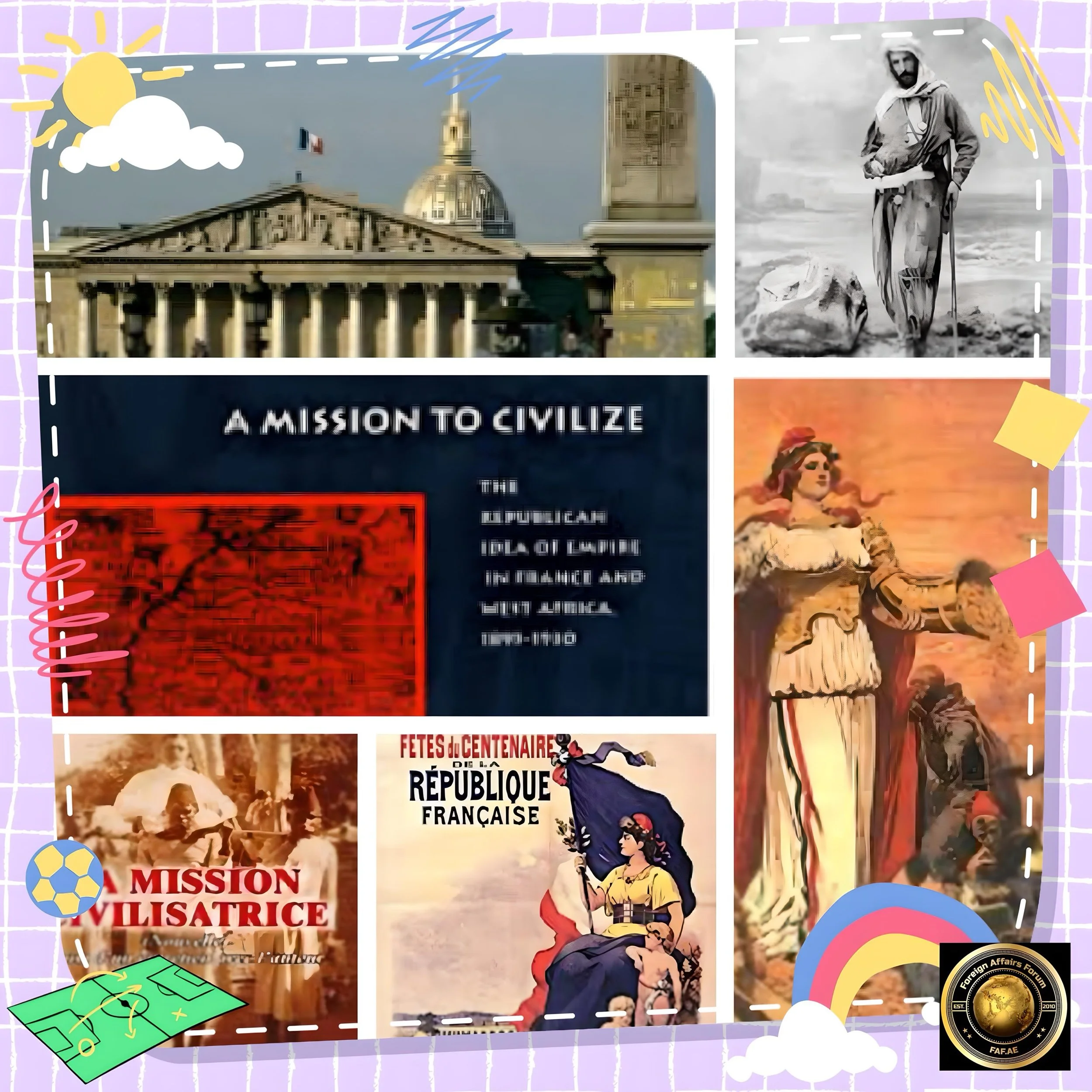
Perhaps nowhere was Sufism’s sacred rebellion more visible than in North Africa. When French armies invaded Algeria in 1830, resistance coalesced around Emir Abd al‑Qadir — a scholar of the Qadiriyya order.
His mastery of Qur’anic learning and mystical thought enabled him to forge a disciplined army grounded in ethics as well as valor. To his followers, war was not vengeance but a defense of dignity. To his captors, he was an enigma: a warrior‑saint who treated prisoners with mercy and condemned cruelty on both sides.
Even after defeat, Abd al‑Qadir’s example haunted colonial authorities. His later years in exile, spent protecting Christians during sectarian violence in Damascus, demonstrated that Sufism’s rebellion was moral before it was political. Resistance meant resisting hatred itself.
Across the Sahara, other Sufi orders — the Sanusiyya in Libya, the Tijaniyya in West Africa — carried forward similar struggles. Their lodges functioned as both spiritual centers and networks of solidarity, binding scattered communities into moral polities capable of defying European domination.
Colonial administrators learned quickly: to control a land, one must co‑opt or destroy its Sufi saints.
South Asia: Love Against the Raj and the Zealot
In South Asia, the story was equally complex. The Chishti and Qadiri orders had long symbolized tolerance and pluralism. Yet by the 19th century, British rule exploited religious divisions to maintain control. In response, Sufi thinkers such as Shah Waliullah and later poets like Allama Iqbal reframed mysticism as the soul of resistance.
Iqbal, though a modernist, drew heavily from Rumi’s Sufi philosophy. He envisioned self‑realization (khudi) as a form of divine empowerment — a rebirth of spiritual sovereignty that rejected both colonial servitude and rigid orthodoxy. For Iqbal, the “mystic of the East” was the antidote to Western materialism and clerical stagnation alike.
At the grassroots, Sufi shrines continued to embody cultural resilience. During the independence struggles, dargahs provided safe havens for meetings, charity, and interfaith cooperation. Yet after partition, a new threat emerged — not from empire but from within. Puritanical movements such as the Deobandis and Wahhabis denounced shrine culture as innovation (bid‘ah), launching campaigns against what they saw as heresy.
Thus, Sufism found itself battling two fronts: the remnants of imperialism and the rise of religious extremism.
The Soviet and Post‑Soviet Experience: Mysticism Under Surveillance
When the Bolsheviks seized Central Asia, they viewed Sufi brotherhoods as relics of feudalism. Soviet authorities closed lodges, killed sheikhs, and replaced spiritual guidance with atheist reeducation. Yet underground Sufi circles persisted — disguised as family gatherings or folk traditions.
In Chechnya and Dagestan, the Naqshbandiyya became the vessel of cultural survival. Its discreet rituals maintained a moral order even as public worship was outlawed.
Ironically, when Soviet control waned, these same networks became vehicles of both peace and conflict. Some Naqshbandi leaders joined national liberation movements; others, reacting to modern political Islam, sought to restore spiritual balance against rising militancy.
Their endurance testified to a deeper truth: mystical traditions, precisely because they operate within the heart rather than through institutions, cannot be eradicated by police or propaganda.
The Mystical Mind Versus the Totalitarian State
What makes Sufism subversive to all forms of absolutism — whether imperial, colonial, or theocratic — is its anthropology of freedom.
A true Sufi sees no authority greater than divine love. The sheikh’s guidance is voluntary, the disciple’s journey interior. Such an orientation renders authoritarian control morally illegitimate. The mystic’s allegiance lies with *al‑Haqq* (Truth), not the party, the caliph, or the cleric.
Totalitarianism, by contrast, thrives on uniformity. It demands total submission to ideology and hierarchy. In mystical terms, it seeks to replace God with the ruler’s will.
Hence, from Baghdad to Moscow, mystics have been treated as heretics or traitors — not because they conspire politically, but because they expose the falsehood underlying all coercive power: that fear can substitute for faith.
The Mystical Aesthetic as Resistance
Sufism’s rebellion is not limited to politics; it manifests equally in art and culture. The poetry of Rumi, Hafiz, Bulleh Shah, and Yunus Emre dissolves boundaries between man and God, Muslim and non‑Muslim.
Through rhythm and metaphor, these poets declare that divine beauty pervades all existence — a message inherently hostile to both imperial racism and religious sectarianism.
Consider the samā‘ (ecstatic music and dance) of the Mevlevi order. To authoritarian puritans, it is blasphemy; to imperial rulers, frivolity. Yet for the mystic, the whirling dervish embodies cosmic order — motion as worship, unity in multiplicity. Art becomes the language of insurrection. By sanctifying joy and embodiment, Sufism challenges any power that thrives on despair.
Similarly, Sufi architecture — the luminous domes of Sindh, the mosaics of Fez, the simplicity of Khartoum’s zawiyas — testify to a theology of light. Each shrine is a site of encounter, erasing divisions of gender, class, and race.
To colonial eyes, these spaces appeared chaotic; to devotees, they were microcosms of divine mercy. Thus, even sacred aesthetics became an arena of rebellion — a visual and sonic protest against domination.
The Clash with Modern Extremism
The twentieth and twenty‑first centuries brought a new adversary: ideological extremism masquerading as purity. From Wahhabism in Arabia to militant groups across South Asia and the Middle East, a rigid literalism began recasting Islam into a theology of power.
These movements, often nourished by geopolitical interests, rejected centuries of mystical thought. Shrines were bombed, saints defamed, devotees massacred.
Yet this assault only reaffirmed Sufism’s enduring relevance.
In Pakistan, following successive militant attacks on shrines such as Sehwan Sharif and Data Darbar, thousands returned to dance and sing defiantly. “You can destroy the walls,” a devotee told reporters, “but not the song.”
In Africa, orders like the Mouridiyya in Senegal became pillars of social cohesion against the chaos of extremist recruitment.
Their message — work as worship, faith as joy — offered youth a purpose deeper than ideology. In Egypt, the annual mawlid festivals still draw millions, blending devotion with folk celebration, unsettling the puritans who wish religion confined to austerity and fear.
Sufism’s resistance to extremism lies not in counter‑violence but in spiritual abundance. It undermines terror by affirming beauty.
The West and the Misreading of Sufism
In recent decades, Western audiences have rediscovered Sufism through Rumi’s poetry, often stripped of Islamic context. While this popularization broadened appreciation for universal love, it also risked neutralizing Sufism’s political edge.
The mystic reduced to a self‑help guru loses the radical depth that made Sufism dangerous to both empire and orthodoxy.
Historically, Western empires alternated between suppressing and romanticizing mysticism. The British in India feared shrines as rallying points for rebellion, yet Victorian Orientalists simultaneously exoticized Sufi poetry as evidence of Islam’s “soft side.”
This contradiction persists: governments praise Sufism as moderate Islam while ignoring the social justice it demands. True Sufism cannot be instrumentalized as counter‑extremism policy; it is a moral vision, not a security tool.
To understand Sufism as rebellion is to see it not as escapism but as ethical insurgency — a refusal to let power define truth.
Sufism’s Ethical Politics
At its core, the Sufi vision translates spirituality into an ethics of humility. The polished heart (qalb salīm) becomes the measure of civilization. Power devoid of compassion leads to tyranny; knowledge without love leads to fanaticism. Hence the repeated Sufi emphasis on adab — the grace of conduct.
Governance, in this moral framework, is legitimate only when it mirrors divine attributes: justice, mercy, generosity.
Throughout history, Sufi leaders mediated tribal disputes, protected minorities, and distributed alms regardless of religion. The authority of the saint derived not from coercion but from service.
Even in contemporary contexts, this ethic survives in networks of charity and education run by Sufi communities across Turkey, Pakistan, and Africa.
Their quiet governance embodies an alternative political imagination: spiritual accountability instead of bureaucratic domination.
Gender and the Inner Revolution
Sufism also unsettled patriarchal power. Women saints — from Rabia in Basra to Aisha al‑Manubiyya in Tunis and Bibi Fatima Sam in Delhi — held positions of esteem denied by orthodox jurisprudence. Their sanctity derived from direct communion with God, not lineage or scholarship. In them, Sufism’s rebellion intersected with gender emancipation long before modern feminism.
Today, female spiritual leaders continue to carry this legacy. In Senegal, women lead Mouride congregations; in Kashmir and Turkey, female qawwals transform devotional music into acts of resistance against exclusion.
By sanctifying the feminine principle as a mirror of divine beauty, Sufism undermines the patriarchal basis of both imperial and extremist ideologies.
Sufi Ideas in Modern Political Thought
Modern Muslim intellectuals have revisited Sufi principles as philosophical resources for post‑colonial renewal.
Thinkers like Muhammad Iqbal, Abdolkarim Soroush, and Seyyed Hossein Nasr argue that the essence of Sufism — self‑purification, creativity, and divine presence — offers a foundation for ethical modernity distinct from Western secularism or Islamist theocracy.
Iqbal’s vision of khudi reframed mysticism as dynamic rather than passive. To annihilate the ego (fanaʾ) is not to efface individuality but to align it with cosmic purpose. Thus, freedom becomes sacred rather than profane.
Similarly, Soroush interprets mystical pluralism as a pathway to democratic tolerance: if truth manifests in infinite forms, coercion becomes impossible.
These interpretations reveal that the Sufi legacy still shapes Muslim responses to modernity — not as nostalgia but as living conscience.
The Digital Age and the New Mystics
In the twenty‑first century, technology has paradoxically revived Sufi influence. Online zawiyas, livestreamed dhikr circles, and viral renditions of devotional poetry attract global audiences disillusioned by materialism and polarization.
The modern seeker — in New York or Karachi — finds solace in the universal message of unity that transcends ideology.
However, this digitization carries risks. Without rigorous mentorship or community, mysticism can devolve into aesthetic consumption.
The challenge is to preserve Sufism’s disciplined interiority while harnessing its universal appeal. Some contemporary orders have adapted beautifully: using social media for education, ecological activism, and interfaith dialogue.
Their activism extends the sacred rebellion into cyberspace — transforming contemplation into compassion, even online.
Mysticism and Ecology: Rebellion Against Exploitation
A less discussed but increasingly vital dimension of Sufism’s rebellion is ecological. The Sufi worldview regards nature as a manifestation of divine names, not a resource to exploit.
The Qur’anic injunction of stewardship (khilāfah) becomes in Sufi metaphysics a call to intimacy with creation. To harm the earth is to wound the Beloved’s body.
In colonial economies built on extraction, this cosmic empathy is radical.
Contemporary Sufi communities in Indonesia, Turkey, and East Africa have revived traditional farming, tree planting, and sustainable craftwork as spiritual obligation.
Their ecological ethos directly confronts both imperial models of consumption and corporate greed.
Thus, Sufism reenters the global stage not as relic but as prophetic voice in the environmental crisis — the rebellion of reverence against destruction.
The Enduring Dialectic: Spirit and Power
From the deserts of Maghreb to the suburbs of Europe, from Mughal Delhi to modern Damascus, the pattern repeats: whenever political or religious authority hardens into domination, Sufism reawakens as conscience. Its method is paradoxical — withdrawal that transforms society, silence that shatters oppression, love that disarms fear. Because it operates through the individual heart, not the institution, it continually escapes capture.
Every empire fears Sufism’s secret: that human obedience is fragile when love becomes absolute. The emperor can command armies but not adoration; the cleric can legislate behavior but not faith.
The mystic renders them both powerless by relocating sovereignty within the soul.
The Sacred Rebellion Today
In a world fractured by polarities — between secular cynicism and religious fanaticism, between global capitalism and localized despair — Sufism offers a language of healing rooted in self‑knowledge.
Its rebellion today is not against a single empire but against the mechanization of spirit. The modern tyrants are not only rulers but systems that reduce human worth to productivity and identity to tribe.
Across continents, contemporary Sufi movements participate in humanitarian relief, interfaith dialogue, and peacebuilding. In war‑torn Syria, dervish communities shelter the displaced; in Bosnia, Sufi poetry revives trauma‑stricken youth; in the West, interspiritual groups translate mysticism into civic empathy.
Each act renews the sacred rebellion: to affirm unity where division profits the powerful.
The Theology of Love and the Politics of Mercy
At its heart, Sufism’s defiance is theological. It begins with an understanding of God not as sovereign despot but as infinite compassion (rahma). If existence itself springs from love, then cruelty is metaphysical rebellion.
The tyrant who inflicts suffering denies divine nature; the extremist who kills in God’s name commits the ultimate heresy. Thus, the Sufi’s political act is to love — relentlessly, even when persecuted.
The dhikr, the rhythmic remembrance of God, becomes both worship and resistance. Each repetition of the divine name dissolves the egoic illusions that sustain domination.
The social implication is vast: a community that remembers the Infinite cannot be enslaved by the finite. The sacred rebellion is therefore interior revolution — the transformation of fear into faith.
Conclusion
The Path Beyond Empire
History shows that Sufism’s power lies precisely in its refusal of power.
Empires rule bodies; mysticism liberates souls.
Extremists impose uniformity; Sufi love sanctifies diversity.
Without armies or ideologies, Sufism reshaped entire civilizations through the quiet authority of experience — the testimony that truth can be lived.
Today, as humanity confronts new empires of technology, surveillance, and economic domination, the lessons of the mystics remain urgent.
The rebellion they modeled was never about overthrowing rulers alone but about dethroning the ego — personal and collective — that sustains oppression.
To follow their path is to rediscover that the most radical act is not destruction but remembrance: remembering that every heart is a sanctuary, that every human being is a mirror of the Divine, and that no empire, no extremism, can endure where love becomes law.
Thus ends the story of the sacred rebellion — not a chronicle of war, but of awakening. Its weapon is the heart, its territory the soul, its victory the renewal of compassion in a world starved of it.