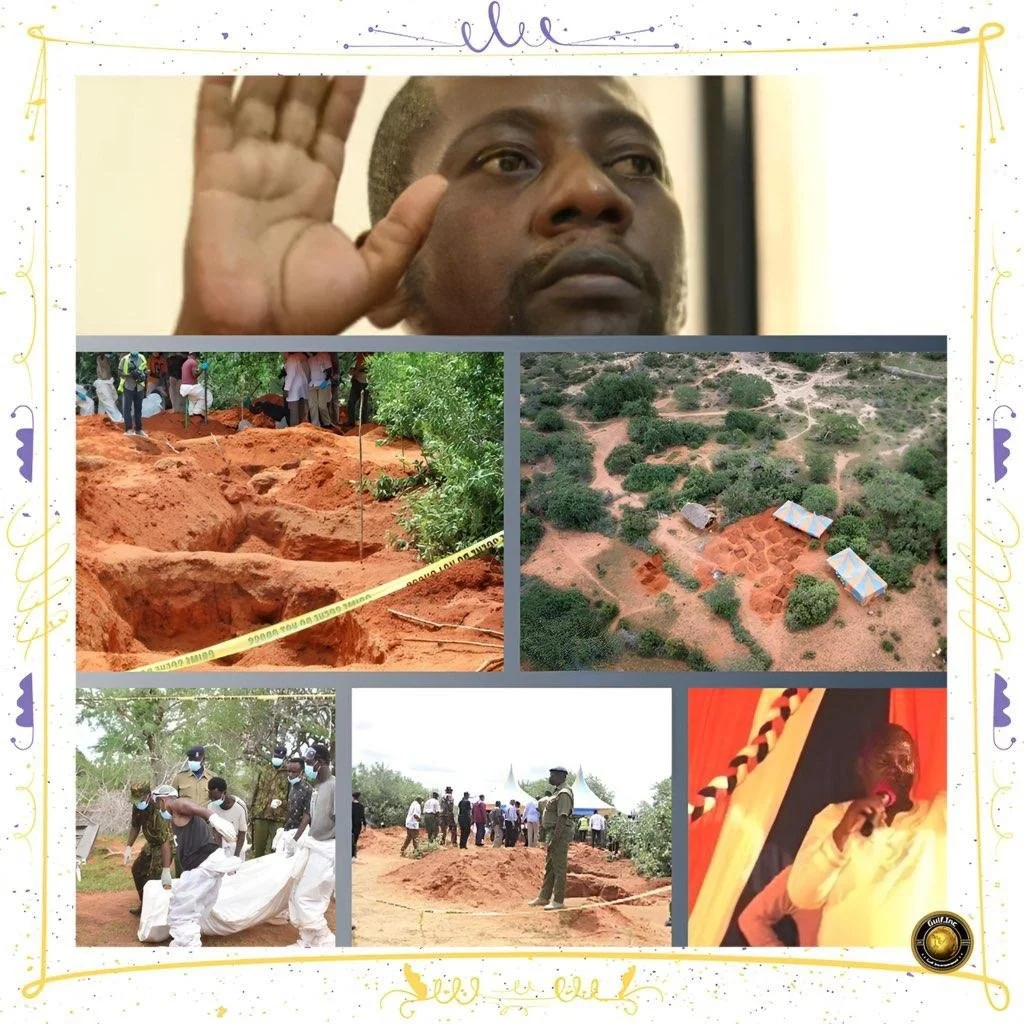
The Shakahola Cult Tragedy: Kenya - A Critical Analysis of Religious Extremism, African Neglect, and Geopolitical Implications
Introduction
The Shakahola Forest Massacre represents one of the most devastating cult-related tragedies in modern history, with over 430 bodies recovered from shallow graves in Kenya’s coastal forest.
This catastrophic event, orchestrated by self-proclaimed pastor Paul Nthenge Mackenzie of the Good News International Church, has exposed critical vulnerabilities in Kenya’s regulatory framework while highlighting the systematic global neglect of African crises amid competing international priorities.
The tragedy unfolded against a backdrop of mounting global conflicts—from the Russia-Ukraine war to the Israel-Gaza crisis and escalating U.S.-China trade tensions—that have consistently overshadowed African humanitarian emergencies, perpetuating a dangerous cycle of international indifference toward the continent’s most pressing security challenges.
Historical Context and Formation of the Good News International Church
The origins of the Shakahola tragedy trace back to 2003 when Paul Nthenge Mackenzie, a former taxi driver, established the Good News International Ministries following his departure from mainstream transportation work.
Initially operating as a conventional evangelical church, the organization gradually evolved into what scholars and authorities now classify as an apocalyptic Christian cult with distinctly anti-Western ideologies.
Mackenzie’s theological framework drew heavily from the End-Time Message of William Branham, a controversial American evangelist whose teachings have been linked to various forms of religious radicalization across multiple continents.
From its inception, Mackenzie’s ministry demonstrated concerning patterns of social isolation and theological extremism.
The church condemned fundamental aspects of modern society, including formal education, healthcare, sports, and government identification systems, characterizing these institutions as “evils of western life” and “tools of Satan”.
Mackenzie positioned himself as a divine intermediary capable of direct communication with God, a claim that proved instrumental in consolidating his psychological control over followers.
This messianic complex aligned with established patterns of cult leadership psychology, wherein narcissistic leaders exploit followers’ vulnerabilities through promises of exclusive spiritual salvation.
The church’s anti-establishment rhetoric extended to its condemnation of international organizations, with Mackenzie regularly denouncing the United States, United Nations, and Catholic Church as manifestations of satanic influence.
These teachings reflected broader patterns of religious extremism identified in academic literature, where groups develop insular worldviews that position mainstream society as fundamentally corrupt and threatening.
By 2010, Mackenzie’s sermons had evolved to explicitly focus on “end times” messages, instructing followers to withdraw from conventional society in preparation for an imminent apocalypse.
Early Warning Signs and Regulatory Failures
The transformation of Mackenzie’s church from mainstream evangelicalism to dangerous extremism occurred gradually but with clear warning indicators that Kenyan authorities repeatedly failed to address adequately.
By 2017, Mackenzie faced his first arrest on radicalization charges, specifically related to his instructions for followers to withdraw children from schools and avoid medical facilities.
These charges represented an early recognition by law enforcement of the dangerous trajectory of his teachings, yet subsequent prosecutorial failures allowed him to continue operating with minimal oversight.
In 2018, authorities arrested Mackenzie again on charges of inciting civil disobedience and distributing radicalization materials, following reports that multiple children had died after being denied medical care on his instructions.
Despite mounting evidence of his dangerous influence, prosecutorial inadequacies and systemic weaknesses in Kenya’s judicial system permitted his continued freedom.
A pattern emerged wherein Mackenzie would face arrest, receive minimal punishment, and return to his activities with renewed determination to advance his extremist agenda.
The regulatory failures extended beyond individual prosecutorial decisions to encompass broader systemic inadequacies in Kenya’s approach to religious oversight.
Unlike countries such as Rwanda, which implemented strict controls requiring theological degrees for religious leaders and maintaining financial oversight of religious institutions, Kenya’s regulatory framework remained permissive and largely ineffective.
This regulatory vacuum allowed Mackenzie to exploit constitutional provisions for religious freedom while systematically violating the fundamental rights of his followers.
The Shakahola Forest Operation and Path to Tragedy
Establishment of the Forest Compound
Following his 2019 arrest and subsequent release, Mackenzie announced the closure of his formal church operations and initiated what he termed his “forest operation” in the remote Shakahola Forest of Kilifi County.
This transition marked a critical escalation in his control mechanisms, as he required followers to purchase plots of forest land for approximately $80 each, effectively monetizing their commitment to his apocalyptic vision.
The geographical isolation served multiple purposes: it eliminated external oversight, prevented family interventions, and created conditions conducive to the comprehensive psychological manipulation that characterizes destructive cults.
The forest operation attracted over 1,000 residents organized into approximately 300 families, creating a substantial isolated community entirely dependent on Mackenzie’s authority.
This demographic concentration represented individuals from diverse professional backgrounds, including flight attendants, social workers, and paramilitary police officers, demonstrating the cross-sectoral appeal of Mackenzie’s message and the sophisticated nature of his recruitment strategies.
The diversity of his following challenges simplistic explanations of cult membership based on educational or socioeconomic factors, highlighting instead the psychological vulnerabilities that transcend social boundaries.
Academic research on cult psychology demonstrates that successful cult leaders exploit universal human needs for belonging, purpose, and meaning, particularly targeting individuals experiencing life transitions, trauma, or social isolation.
Mackenzie’s recruitment strategies aligned perfectly with these established patterns, offering displaced urban residents a sense of community and spiritual purpose while gradually isolating them from external support networks.
The forest environment facilitated what psychologists term “thought-stopping techniques,” where environmental control and social pressure combine to undermine individual critical thinking capacities.
Implementation of Control Mechanisms
Within the Shakahola forest community, Mackenzie implemented comprehensive control mechanisms that align with academic frameworks for understanding cult manipulation.
Hassan’s BITE model (behavioral, information, thought, and emotion control) provides a useful analytical framework for understanding Mackenzie’s systematic approach to follower domination.
Behavioral control manifested through strict regulation of daily routines, dietary restrictions, and mandatory participation in group activities designed to reinforce dependency on his authority.
Information control operated through the elimination of external media sources, prohibition of communication with outside family members, and the creation of an enclosed information ecosystem where only Mackenzie’s interpretations of reality were permitted.
This isolation prevented followers from accessing alternative perspectives that might challenge his authority or provide contrary information about the consequences of his instructions.
Survivors’ testimonies reveal the systematic nature of this information control, with followers reporting complete dependence on Mackenzie for all understanding of external events and spiritual guidance.
Thought control mechanisms included the implementation of repetitive rituals, mandatory group prayers, and the continuous reinforcement of apocalyptic narratives that positioned questioning or doubt as spiritual weakness.
Mackenzie’s theological framework required absolute faith in his divine communications, with any expression of doubt or concern labeled as satanic influence requiring additional spiritual purification through fasting and isolation.
These techniques align with established academic understanding of how cult leaders systematically dismantle followers’ autonomous decision-making capacities through psychological manipulation.
The Final Phase: Mass Starvation and Discovery
The January 2023 Fasting Order
In January 2023, Mackenzie issued his final and most devastating instruction to followers: a comprehensive fasting regime designed to facilitate their spiritual transition to meet Jesus Christ.
This order represented the culmination of years of psychological preparation, during which followers had been conditioned to view suffering and deprivation as spiritual purification.
The systematic nature of the starvation plan revealed the calculated cruelty underlying Mackenzie’s operation, with specific instructions for the sequential deaths of children first, followed by unmarried individuals, women, men, and finally church leaders.
Court affidavits obtained by investigators reveal the horrifying details of Mackenzie’s instructions, including explicit orders for mothers to cease breastfeeding infants to accelerate their deaths.
Survivors’ testimonies describe witnessing parents actively preventing their children from accessing food or water, believing they were facilitating their spiritual salvation.
These accounts demonstrate the complete psychological control Mackenzie had achieved over his followers, leading parents to participate in actions that contradicted fundamental biological and emotional instincts.
The implementation of the mass starvation order occurred within a context of complete social isolation and information control that prevented intervention by external family members or authorities.
Mackenzie had successfully created conditions wherein followers viewed potential rescue attempts as satanic interference with their spiritual mission, leading some to actively resist efforts by concerned relatives and community leaders to provide assistance.
This resistance to external help represents a critical element of destructive cult psychology, where members’ identities become so thoroughly merged with the group ideology that survival itself becomes secondary to maintaining group loyalty.
Discovery and Initial Response
The Shakahola tragedy came to public attention in March 2023 when a concerned man reported to police that his wife and daughter had traveled from Nairobi to join Mackenzie’s community and failed to return.
This initial report triggered a police investigation that uncovered emaciated survivors and the first shallow graves containing victims of the starvation regime.
The discovery of fifteen initial survivors, four of whom died en route to medical facilities due to their critical condition, provided the first concrete evidence of the systematic nature of the abuse occurring within the forest community.
The initial police response revealed both the scale of the tragedy and the systematic nature of Mackenzie’s operation.
Officers discovered that surviving community members actively hindered rescue efforts, attempting to continue their fasting regime even after police intervention.
This resistance to assistance demonstrated the profound psychological control Mackenzie maintained over followers even after his arrest, highlighting the long-term therapeutic challenges facing survivors of such extreme psychological manipulation.
Some survivors required forcible medical intervention to prevent their continued participation in the starvation regime.
Over the subsequent weeks, police searches of the 800-acre forest property revealed an expanding network of shallow graves containing bodies in various states of decomposition.
The systematic nature of the burials, with some graves containing multiple family members and others specifically designated for children, revealed the organized character of the mass killing operation.
Investigators discovered evidence that some victims had been buried alive, while others showed signs of strangulation, beating, and organ removal, indicating that the deaths involved not only starvation but active violence against those who may have attempted to resist or escape.
Regional and International Responses
Kenyan Government and Civil Society Reaction
The Kenyan government’s response to the Shakahola discovery reflected both the severity of the crisis and the institutional weaknesses that enabled its occurrence.
President William Ruto characterized the tragedy as comparable to terrorism and declared it among the worst acts of barbarism in Kenya since decolonization.
This strong rhetorical response was accompanied by concrete policy initiatives, including the establishment of two investigative commissions: one focused specifically on understanding the Shakahola tragedy, and another tasked with comprehensive reform of religious institution regulation.
The government’s regulatory response involved designating the Good News International Ministries as an organized criminal group, marking a significant shift in how authorities classify dangerous religious organizations.
This designation enabled enhanced prosecutorial tools and reflected recognition that traditional religious freedom protections had been exploited to facilitate systematic human rights violations.
However, critics noted that these reactive measures highlighted the absence of proactive regulatory frameworks that might have prevented the tragedy through earlier intervention.
Kenyan civil society organizations, particularly the National Council of Churches of Kenya, responded with calls for comprehensive religious sector reform including mandatory theological education requirements for religious leaders and enhanced financial oversight of religious institutions.
These proposals aligned with successful regulatory models implemented in other African countries, such as Rwanda’s requirement for theological degrees and strict financial monitoring of religious organizations.
Catholic and other mainstream religious leaders condemned the abuse of religious freedom and called for enhanced scrutiny of fringe religious movements.
African Continental Response and Patterns
The African continental response to the Shakahola tragedy has been characterized by limited high-level political attention despite its significance as one of the continent’s deadliest cult-related incidents.
The African Union has not issued comprehensive statements addressing the tragedy or its implications for broader regional security, reflecting broader patterns of institutional focus on interstate conflicts rather than internal social vulnerabilities.
This limited response aligns with established patterns wherein African regional organizations prioritize traditional security threats over emerging forms of social violence and religious extremism.
However, academic and policy research institutions across Africa have engaged more substantively with the tragedy’s implications.
Research from institutions such as the Horn Institute has analyzed the convergence of cult activities with broader patterns of religious extremism affecting multiple African countries.
This scholarly attention has highlighted connections between the Shakahola case and other instances of destructive religious movements across the continent, including similar phenomena in Uganda, Nigeria, and the Democratic Republic of Congo.
The limited continental response reflects broader challenges in African institutional capacity for addressing non-traditional security threats.
While the African Union and regional economic communities have developed sophisticated frameworks for responding to interstate conflicts and political crises, they lack comparable mechanisms for addressing social phenomena such as destructive cults or religious extremism.
This institutional gap leaves individual member states largely responsible for developing domestic responses to threats that increasingly transcend national boundaries through digital communication and regional recruitment networks.
Scholarly Analysis and Academic Perspectives
Psychological and Sociological Dimensions
Academic analysis of the Shakahola tragedy has focused extensively on the psychological mechanisms that enabled Mackenzie’s comprehensive control over followers and the sociological conditions that facilitated the tragedy’s occurrence.
Research utilizing frameworks from cult psychology demonstrates how Mackenzie’s methods aligned with established patterns of psychological manipulation identified in destructive religious movements worldwide.
The systematic implementation of social isolation, information control, and graduated commitment techniques reflects sophisticated understanding of psychological vulnerability exploitation.
Scholarly analysis emphasizing gender dimensions of the tragedy has revealed disproportionate targeting of women and children, highlighting how patriarchal ideologies intersect with religious extremism to perpetuate violence.
Research indicates that women comprised a majority of victims, reflecting both targeted recruitment strategies and the systematic exploitation of gender-based vulnerabilities within patriarchal religious frameworks.
This gender analysis provides critical insights into how destructive cults exploit societal power imbalances to facilitate control and abuse.
Sociological analysis has examined the broader social conditions that enabled Mackenzie’s recruitment success, including urban displacement, economic uncertainty, and the erosion of traditional social support systems.
Research indicates that many followers were urban migrants seeking community and meaning in contexts of social disruption and economic marginalization.
This analysis suggests that addressing cult vulnerability requires comprehensive attention to underlying social conditions rather than merely enhanced religious regulation.
Religious Studies and Theological Analysis
Theological scholarship has analyzed Mackenzie’s doctrinal framework within broader contexts of Christian apocalypticism and millennial religious movements.
Research indicates that his teachings drew extensively from established apocalyptic traditions while incorporating distinctive anti-Western elements that resonated with post-colonial anxieties about foreign influence.
This theological analysis reveals how extremist religious leaders exploit legitimate cultural concerns about Western dominance to justify dangerous practices and social isolation.
Comparative religious studies research has situated the Shakahola case within broader patterns of destructive religious movements across multiple faith traditions and geographical contexts.
This comparative approach reveals common structural features of dangerous religious organizations, including charismatic leadership, social isolation, financial exploitation, and progressive escalation of demands on followers.
Such analysis provides valuable insights for developing prevention strategies that transcend specific religious or cultural contexts.
Academic research on religious freedom has examined how constitutional protections for religious practice can be exploited by destructive organizations while considering mechanisms for balancing religious liberty with protection of vulnerable populations.
This analysis reveals tensions between liberal democratic principles of religious freedom and the practical necessity of protecting citizens from religious abuse.
Scholarly recommendations emphasize the importance of regulatory frameworks that preserve legitimate religious freedom while providing mechanisms for intervention in cases of clear harm.
Political Science and Security Studies Analysis
Political science analysis of the Shakahola tragedy has examined its implications for state capacity, governance challenges, and regional security dynamics.
Research indicates that the tragedy reflects broader weaknesses in Kenyan state capacity for monitoring and regulating non-traditional security threats.
This analysis suggests that addressing religious extremism requires enhanced institutional capacity for early warning, intervention, and post-crisis response rather than merely reactive law enforcement measures.
Security studies research has analyzed the tragedy within broader contexts of violent extremism and radicalization in East Africa, highlighting connections between religious extremism and regional security challenges.
This analysis reveals how non-violent extremist groups can evolve into sources of mass violence through progressive radicalization processes that escape traditional security monitoring.
Such research emphasizes the importance of comprehensive approaches to preventing violent extremism that address ideological, social, and psychological dimensions of radicalization.
Geopolitical analysis has examined how international focus on higher-profile conflicts has diverted attention and resources away from addressing emerging security threats in Africa.
Research demonstrates systematic patterns of international neglect toward African security challenges, with media attention and humanitarian resources disproportionately allocated to conflicts in Europe and the Middle East.
This analysis reveals how global attention disparities contribute to the development of unaddressed security vulnerabilities that can escalate into major humanitarian crises.
Geopolitical Implications and International Neglect
The Pattern of African Marginalization
The international response to the Shakahola tragedy exemplifies broader patterns of systematic African marginalization in global media coverage, humanitarian assistance, and political attention.
Research demonstrates that African humanitarian crises require significantly higher casualty thresholds to generate international media coverage compared to similar events in Europe or North America, with African tragedies requiring approximately 45 times more deaths to receive equivalent attention.
This disparity reflects deeply embedded biases in international media systems and foreign policy prioritization that consistently undervalue African lives and crises.
The marginalization of African issues has intensified significantly since 2022, with the Russia-Ukraine war and subsequent Middle East conflicts absorbing disproportionate shares of international attention and humanitarian resources.
Analysis of humanitarian funding allocation demonstrates how resources have shifted dramatically away from African crises toward European and Middle Eastern conflicts, despite Africa hosting the majority of the world’s most severe humanitarian emergencies.
This resource diversion occurs at precisely the moment when African countries face mounting challenges from climate change, conflict, and governance crises.
European donors have simultaneously reduced their development assistance to Africa while increasing support for Ukraine and Middle East initiatives, creating what analysts term a “double burden” of reduced resources and diminished political attention.
Germany has reduced core development aid by over €4.8 billion between 2022 and 2025, while France and the United Kingdom have implemented similar cuts totaling over $1.9 billion.
These reductions move major donor countries further from UN aid targets precisely when African needs are escalating due to climate emergencies and conflict expansion.
The Overshadowing Effect of Global Conflicts
The systematic neglect of African issues reflects what scholars term the “overshadowing effect” of high-profile international conflicts that dominate media cycles and policy attention.
The Russia-Ukraine conflict has absorbed unprecedented levels of international attention and resources, with humanitarian appeals for Ukraine receiving near-complete funding within days of launch while African appeals routinely receive less than 50% of requested resources.
This disparity demonstrates how geopolitical proximity and strategic importance override humanitarian need in international resource allocation decisions.[ajenafrica +6]
Similarly, the Israel-Gaza conflict has commanded extensive international diplomatic attention and media coverage, with daily developments receiving front-page coverage while simultaneous crises in Sudan, Somalia, and the Democratic Republic of Congo remain largely invisible to international audiences.
The death toll from the ongoing Sudanese civil war exceeds that of Gaza by significant margins, yet receives minimal international attention or diplomatic intervention.
This selective attention pattern reflects the intersection of strategic interests, cultural proximity, and historical relationships that shape international priority-setting.
The escalating U.S.-China trade tensions and tariff disputes have further diverted policy attention away from African development and security issues toward great power competition dynamics.
American foreign policy under successive administrations has deprioritized Africa in favor of strategic competition with China and Russia, while simultaneously reducing development assistance and diplomatic engagement.
This strategic neglect occurs despite Africa’s growing demographic and economic importance and its critical role in global supply chains for strategic minerals and commodities.
Implications for African Security and Development
The systematic international neglect of African issues has profound implications for regional security, governance, and development trajectories.
Reduced international attention and resources limit African states’ capacity to address emerging security threats, including religious extremism, climate-related displacement, and transnational organized crime.
The Shakahola tragedy illustrates how insufficient attention to early warning signs and inadequate institutional capacity can enable preventable humanitarian disasters.
International neglect also undermines African diplomatic leverage and reduces incentives for good governance and democratic accountability.
When international partners consistently prioritize strategic relationships over governance standards, African leaders face reduced pressure to maintain democratic institutions and human rights protections.
This dynamic creates conditions conducive to the emergence of extremist movements that exploit governance failures and social grievances to recruit followers and expand influence.
The resource diversion away from African development assistance threatens long-term progress on poverty reduction, education, health systems, and infrastructure development that provide foundation for political stability and economic growth.
Academic research demonstrates strong correlations between development assistance effectiveness and political stability, suggesting that current funding cuts may contribute to increased instability and humanitarian crises in the medium term.
The Shakahola case illustrates how inadequate investment in education, social services, and economic opportunities creates vulnerabilities that extremist leaders can exploit.
Contemporary Developments and Ongoing Concerns
Continued Discovery of Victims
The Shakahola investigation continues to reveal new evidence of the tragedy’s scope and systematic nature, with additional bodies discovered as recently as August 2025.
These recent discoveries in Kwa Binzaro village, located near the original Shakahola site, suggest that Mackenzie’s network of influence and the geographic scope of the killings may have been more extensive than initially understood.
The recovery of 32 additional bodies and over 100 body parts from shallow graves indicates that comprehensive mapping of the tragedy’s full extent remains incomplete.
Investigation findings suggest that cult activities may have continued even after Mackenzie’s arrest, with evidence indicating that some of his lieutenants remained active and continued implementing his deadly instructions.
Reports from investigation sources suggest that a former soldier associated with the cult continued operations in the forest area, raising concerns about the persistence of the organization’s networks and ideology.
This ongoing activity demonstrates the challenge of completely dismantling destructive cult organizations and the importance of comprehensive approaches that address both leadership and follower networks.
The discovery of fresh graves containing recently buried victims suggests that some aspects of the cult’s operations may have persisted beyond the initial police intervention, highlighting inadequacies in the initial response and the difficulty of completely eradicating extremist networks.
Forensic analysis indicates that some victims found in recent excavations died after Mackenzie’s arrest, suggesting either continued autonomous implementation of his instructions by followers or ongoing leadership from within prison.
These developments underscore the persistent nature of cult psychology and the challenges of rehabilitation for surviving members.
Legal Proceedings and Justice Challenges
The legal proceedings against Mackenzie and 94 co-defendants represent one of the most complex cult-related prosecutions in African legal history, encompassing charges of terrorism, murder, manslaughter, child torture, and organized criminal activity.
The scope of the prosecution reflects both the systematic nature of the crimes and the challenge of developing appropriate legal frameworks for addressing cult-related mass violence.
Prosecutors have indicated plans to call over 400 witnesses, highlighting the extensive nature of the evidence and the complexity of establishing criminal responsibility across the cult’s hierarchy.
The trial proceedings have revealed disturbing details about the systematic nature of the abuse, including testimony from child survivors describing burial rituals characterized as “weddings” where followers celebrated victims’ deaths as spiritual unions with Jesus Christ.
These testimonies provide critical insights into the psychological mechanisms used to normalize extreme violence and the systematic indoctrination that enabled parents to participate in their children’s deaths.
The evidence demonstrates how cult leaders exploit religious symbolism to reframe horrific violence as spiritual triumph.
Challenges in the prosecution include the difficulty of establishing individual criminal responsibility within systems of systematic psychological manipulation and the complexity of addressing both leadership and follower culpability.
Legal scholars note that traditional criminal law frameworks struggle to address cases involving extensive psychological manipulation where victims become participants in their own destruction.
The prosecution must balance recognition of followers’ victimization with accountability for actions that resulted in mass death, particularly in cases involving parents who participated in killing their own children.
Policy Reform and Prevention Initiatives
The Kenyan government’s response to the Shakahola tragedy has included comprehensive policy reform initiatives designed to prevent similar incidents through enhanced religious oversight and improved early warning systems.
The presidential commission established to investigate the tragedy has recommended significant reforms to religious institution regulation, including mandatory theological education requirements for religious leaders and enhanced financial oversight of religious organizations.
These recommendations align with international best practices for religious regulation that balance religious freedom with public safety protection.
Implementation of recommended reforms faces significant challenges, including resistance from religious organizations concerned about restrictions on religious freedom and practical difficulties in monitoring the thousands of religious institutions operating across Kenya.
The reform process must navigate complex constitutional protections for religious freedom while establishing mechanisms for identifying and intervening in dangerous religious practices.
Academic analysis suggests that effective regulation requires sophisticated approaches that distinguish between legitimate religious diversity and harmful extremist practices.
International cooperation on prevention initiatives has been limited, reflecting broader patterns of reduced international engagement with African governance and security challenges.
While some regional organizations have expressed interest in developing shared frameworks for addressing religious extremism, concrete cooperation mechanisms remain underdeveloped.
The lack of comprehensive international support for prevention initiatives demonstrates how systematic neglect of African issues extends beyond crisis response to encompass prevention and capacity-building efforts.
Conclusion
The Shakahola Forest Massacre represents a convergence of multiple systemic failures: inadequate religious regulation, insufficient early warning systems, prosecutorial weaknesses, and fundamental breakdowns in social protection mechanisms that enabled a charismatic extremist leader to orchestrate one of history’s deadliest cult tragedies.
The systematic nature of the abuse, involving over 430 confirmed deaths including approximately 200 children, demonstrates how religious freedom protections can be exploited by extremist leaders to facilitate mass violence when adequate oversight mechanisms are absent.
The tragedy’s occurrence within contexts of systematic international neglect of African crises reveals how global attention disparities contribute to the development of unaddressed vulnerabilities that can escalate into preventable humanitarian disasters.
While international media and diplomatic attention focus intensively on conflicts in Ukraine, Gaza, and U.S.-China trade disputes, African countries face mounting security challenges with diminished resources and political support from traditional international partners.
This pattern of neglect creates conditions wherein emerging threats can develop unchecked until they reach crisis proportions.
The intersection of domestic governance weaknesses with international neglect creates particularly dangerous conditions for the emergence of extremist movements that exploit social vulnerabilities, governance failures, and cultural anxieties to recruit followers and advance dangerous ideologies.
The Shakahola case demonstrates how these factors can combine to enable systematic violence that claims hundreds of lives while remaining largely invisible to international attention until after the most severe consequences have occurred.
Moving forward, addressing the root causes underlying tragedies like Shakahola requires comprehensive approaches that combine enhanced domestic governance capacity with sustained international engagement and support for African institutional development.
The systematic international neglect of African issues must be recognized as a contributing factor to regional instability and humanitarian crisis development, requiring fundamental recalibration of global priority-setting and resource allocation mechanisms.
Without such changes, Africa will likely continue experiencing preventable humanitarian disasters while international attention remains focused elsewhere, perpetuating dangerous cycles of neglect and crisis that ultimately threaten global security and stability.