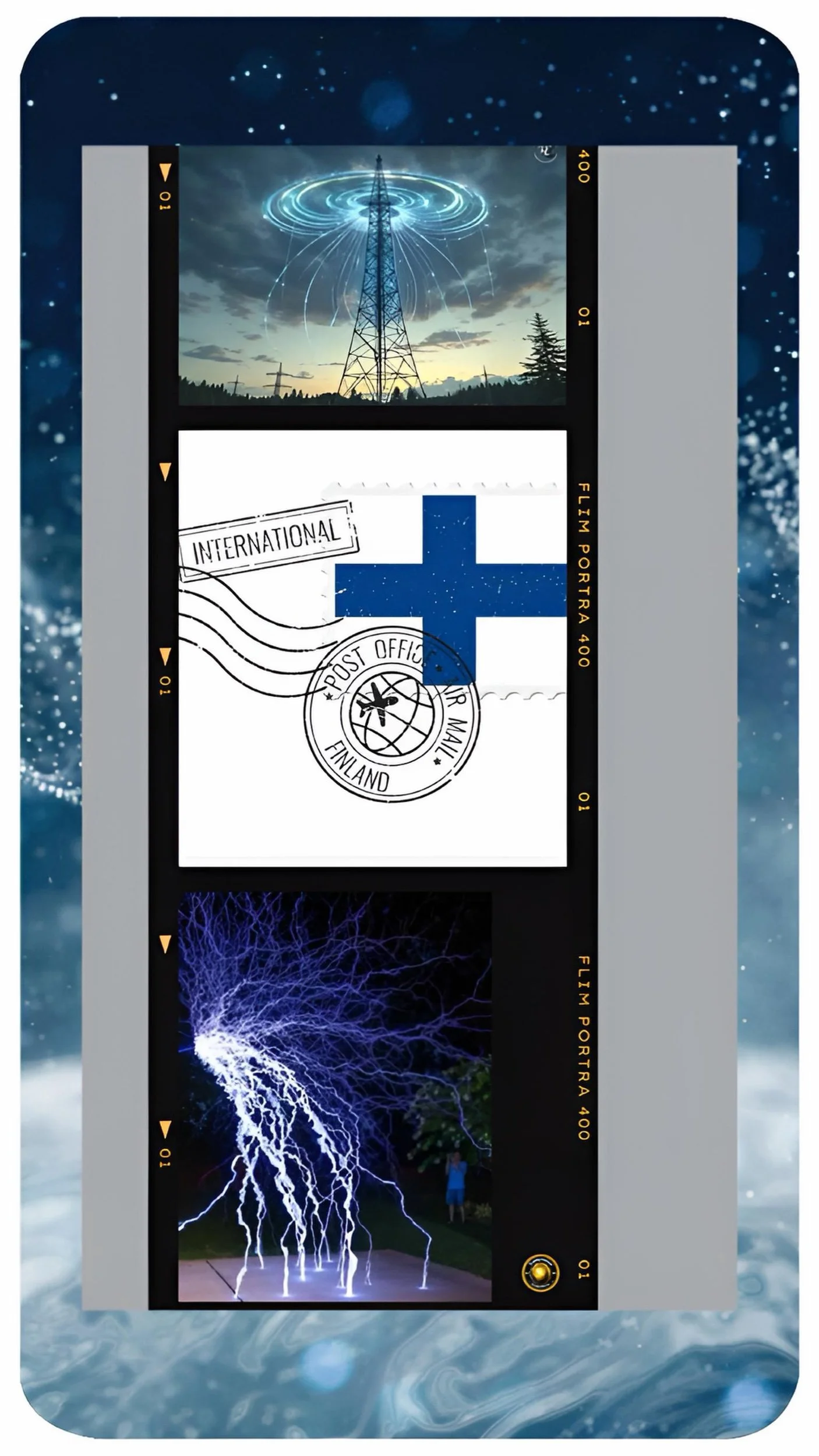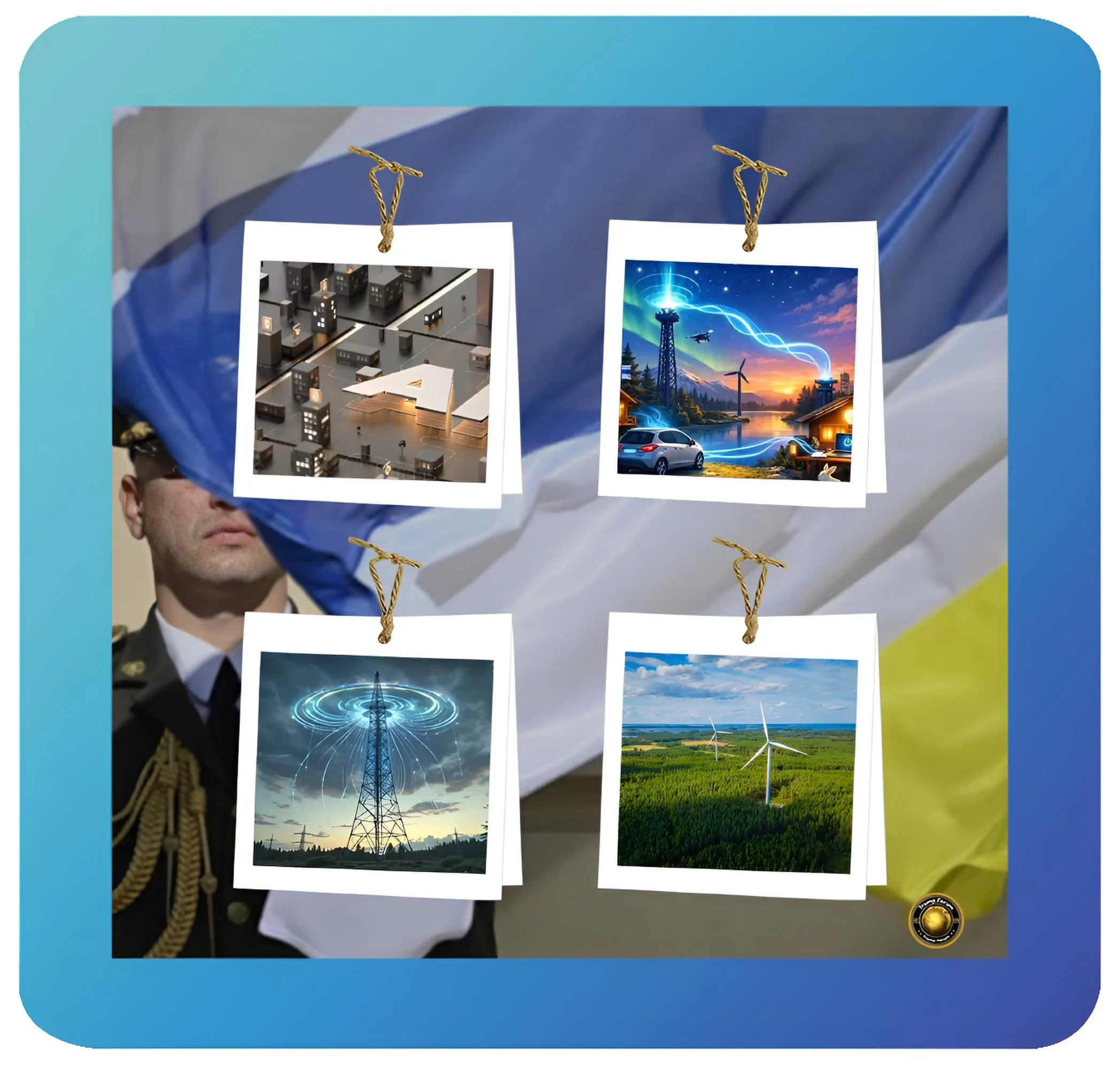
Finland’s Silent Revolution: When Electricity Flows Through Air
Executive summary
From Copper Cables to Invisible Currents
Finland’s current experiments with transmitting electricity through air center on three main technical pathways: long‑range resonant magnetic fields, sound‑guided “acoustic” channels, and optical or radio‑frequency power‑by‑light and RF harvesting systems.
Together, these approaches aim to decouple energy delivery from fixed wiring, with envisioned applications ranging from smart‑city sensors and industrial equipment to drones and electric vehicles.
At the same time, Finland’s initiatives remain constrained by efficiency losses over distance, safety regulations for high‑intensity fields, and unresolved questions about economic viability versus conventional grid upgrades.
Introduction
Why Finland Wants Power to Behave Like Wi‑Fi
Finland’s wireless electricity experiments are not occurring in a vacuum; they build on more than a century of interest in non‑contact power transfer, from near‑field inductive charging to speculative long‑range microwave links.
What distinguishes the present Finnish wave is the coordinated application of advanced materials, superconducting components, beamforming algorithms and AI‑driven optimization to convert previously impractical concepts into controlled, efficient prototypes.
This positioning aligns with Finland’s broader strategy of leveraging high‑tech niches—telecommunications, quantum research, and clean‑tech—to punch above its demographic weight in global innovation.
History and current status
From Lab Benches to Wireless Testbeds in the North
Engineers at Aalto University had already been working on long‑distance wireless charging before the recent media surge, optimizing how transmitting and receiving antennas interact to improve efficiency over several meters.
Subsequent efforts, involving VTT Technical Research Centre of Finland and Aalto teams, reportedly achieved multi‑kilowatt transmission across open space with more than 90 % end‑to‑end efficiency using high‑frequency resonant magnetic fields and superconducting receivers.
In parallel, Finnish universities such as Helsinki and Oulu have demonstrated air‑borne power transfer using ultrasonic sound waves, lasers and controlled radio‑frequency fields, positioning these as proof‑of‑concept platforms for future wireless energy infrastructures.
Current status can be characterized as a multi‑track portfolio of laboratory demonstrations and early pilots rather than a single national system.
Resonant magnetic platforms are focused on multi‑kilowatt, multi‑meter transfers, with roadmaps toward 100 kW and tens of meters by around 2027.
Acoustic and laser‑based setups are mainly aimed at low‑power but high‑precision contexts, including medical implants, hazardous industrial environments and remote sensors, where galvanic isolation and contactless operation are at a premium.
Key technical developments
Acoustic Wires, Magnetic Beams and AI‑Shaped Energy
The first notable development is the refinement of resonant magnetic coupling using high‑frequency fields and superconducting receiver coils, which allow tight focusing of energy with minimal stray emissions.
Reports suggest that Finnish teams have achieved several kilowatts of transfer over a span of meters with efficiency above 90 % and negligible electromagnetic interference outside the intended path, a threshold that makes industrial and mobility use‑cases plausible rather than purely speculative.
A second development is the use of ultrasonic sound waves to create “invisible pathways” in air, guiding sparks or plasma channels along a controlled route so electricity can be steered without solid conductors.
This acoustic control, when combined with lasers and RF fields, enables hybrid schemes: sound shapes the path, light delivers power, and RF harvesting recovers ambient energy, each tuned for different power levels and distances.
A third development involves AI‑driven optimization of electromagnetic fields and beam paths, where neural networks and reinforcement learning algorithms dynamically adapt transmission patterns to maximize efficiency and safety, particularly for mobile receivers in smart‑city or robotics scenarios.
Latest facts and emerging concerns
Breakthroughs, Hype and the Hidden Risks of Airborne Power
Recent media and social‑media reports emphasize that Finnish scientists have “successfully transmitted electricity through air without wires” using ultrasonic and laser configurations, but these demonstrations appear to involve relatively low absolute power compared to grid‑scale needs.
Meanwhile, long‑range resonant magnetic prototypes have achieved higher power levels but only over modest distances, with research roadmaps rather than deployed infrastructure for wider coverage.
Industry analyses also note that projected markets for AI‑driven wireless power could reach tens of billions of dollars by 2030, though these figures aggregate global activity and not Finland alone.
Concerns cluster around three themes: physical limits, safety, and governance.
First, attenuation and beam‑spreading impose hard constraints, making truly lossless or planetary‑scale wireless power unrealistic and limiting practical systems to defined zones or line‑of‑sight corridors.
Second, sustained exposure to intense acoustic, RF or optical fields raises questions about human health, interference with medical devices, and impacts on animals, even if current prototypes remain within established regulatory limits.
Third, governance challenges include spectrum management, liability for misdirected beams, cybersecurity for AI‑controlled systems, and equitable access if wireless power is monetized through proprietary platforms.
Cause‑and‑effect analysis
How Cable‑Free Electricity Could Reshape Machines, Cities and Grids
The immediate cause driving Finland’s experiments is the convergence of three pressures: the proliferation of IoT sensors, electrification of mobility and industry, and the mounting costs of installing and maintaining dense wired infrastructure in harsh environments.
As devices multiply and become more distributed—from drones and autonomous vehicles to offshore installations and remote sensing nodes—cabled power solutions become both logistically cumbersome and economically inefficient, particularly in the Nordic context of long distances and demanding weather.
This encourages exploration of modalities where energy can be beamed, harvested or shared dynamically, in parallel with data networks.
The effects of Finland’s initiatives can be considered at three nested levels.
At the micro level, effective wireless power can extend device lifetimes, eliminate batteries in low‑power sensors, and enable continuous operation of mobile platforms such as drones, thereby reshaping industrial workflows and maintenance regimes.
At the meso level, localized wireless “power zones” could change how factories, ports, mines and smart‑city districts are designed, breaking the link between spatial layout and cable routing and allowing more fluid reconfiguration of equipment.
At the macro level, if scaled and standardized, such technologies could partially unbundle the relationship between power generation sites and consumption points, enabling modular micro‑grids where wireless segments bridge otherwise costly gaps in the distribution network.
Future steps and strategic outlook
From Demo Rooms to Industrial Reality: Finland’s Next Wireless Moves
Over the next several years, Finland’s wireless power work is likely to proceed along an incremental, sector‑specific path rather than an abrupt replacement of traditional grids.
Research roadmaps already point to scaling resonant magnetic systems from multi‑kilowatt to 100 kW transmissions over tens of meters by around 2027, with eventual megawatt‑scale applications under consideration.
Pilot deployments are probable in controlled environments such as manufacturing lines, logistics hubs, ports, underground mines or offshore platforms, where safety can be tightly managed and the value of cable‑free operation is highest.
Concurrently, low‑power applications—wireless sensor networks, medical implants, consumer wearables, and smart‑building devices—will likely adopt acoustic, optical and RF harvesting modalities where milliwatt to watt‑scale delivery is sufficient.
Policy development at the EU and national level, including the interaction between AI regulations and energy infrastructure rules, will shape which architectures are permitted, how risk is allocated, and whether open standards or proprietary ecosystems predominate.
For Finland, a plausible strategic outcome is a hybrid landscape in which conventional wired grids carry bulk power, while wireless systems create flexible “last‑meter” or “last‑tens‑of‑meters” layers around critical industries and urban cores.
Conclusion
A World of Power Without Plugs—or Just a Niche Technology?
Finland’s push to transmit electricity without wires represents an ambitious but bounded attempt to reimagine the spatial and technical organization of power systems for an era of pervasive electrification and autonomy.
The most credible near‑term impact lies not in fully replacing copper grids but in creating targeted wireless “bubbles” of energy around devices, vehicles and industrial zones where cables are least efficient or most hazardous.
Whether these experiments mature into globally influential models will depend on sustained technical progress, stringent safety governance, and demonstrable economic advantages over incremental improvements to the existing grid.