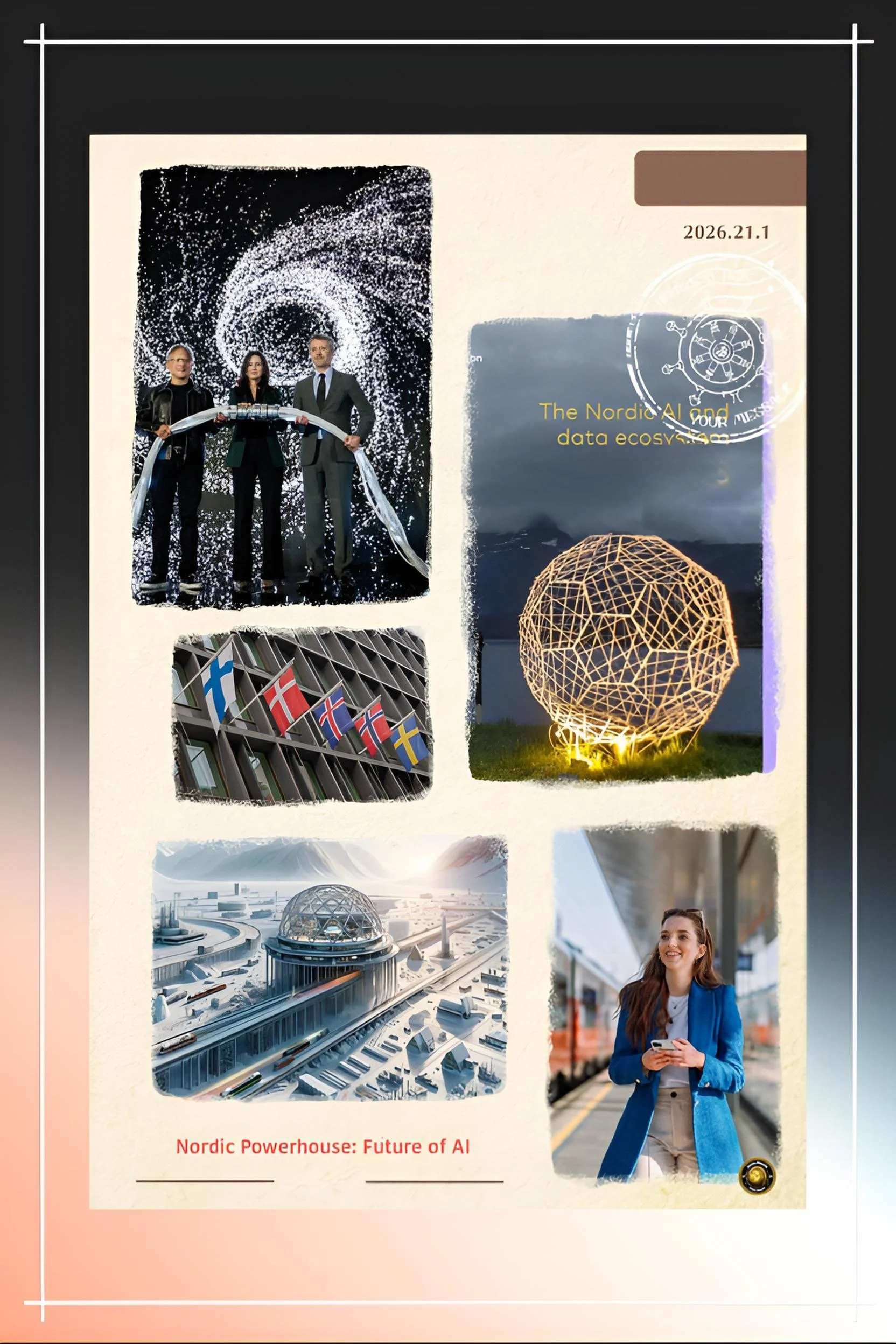
Arctic Powerhouse: Why Nordic Grids Will Dominate AI's Energy Future
Executive summary
Cold Climates, Hot Innovation
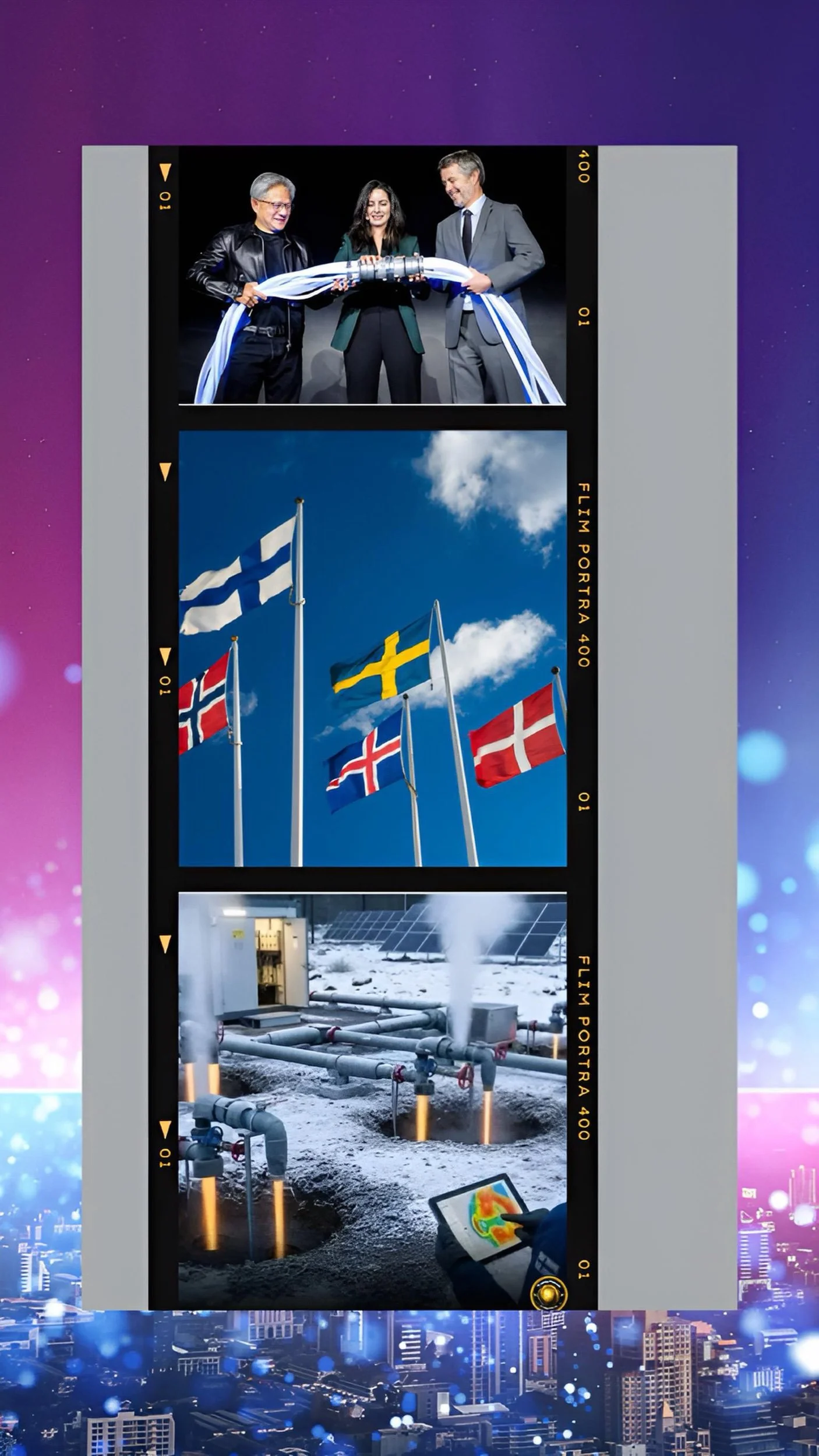
The Nordic region—Finland, Sweden, Norway, and Denmark—has emerged as the premier location for artificial intelligence infrastructure development, leveraging abundant renewable energy, naturally cool climates, and advanced grid planning to overcome the formidable electricity and water challenges that constrain AI expansion elsewhere.
While Finland's wireless electricity transmission experiments garner attention, the region's true strategic advantage lies in coordinated grid modernization: modular data center campuses with direct liquid cooling, heat recovery systems supplying district heating networks, power purchase agreements guaranteeing renewable capacity expansion, and unprecedented public-private partnerships integrating AI infrastructure with national decarbonization goals.
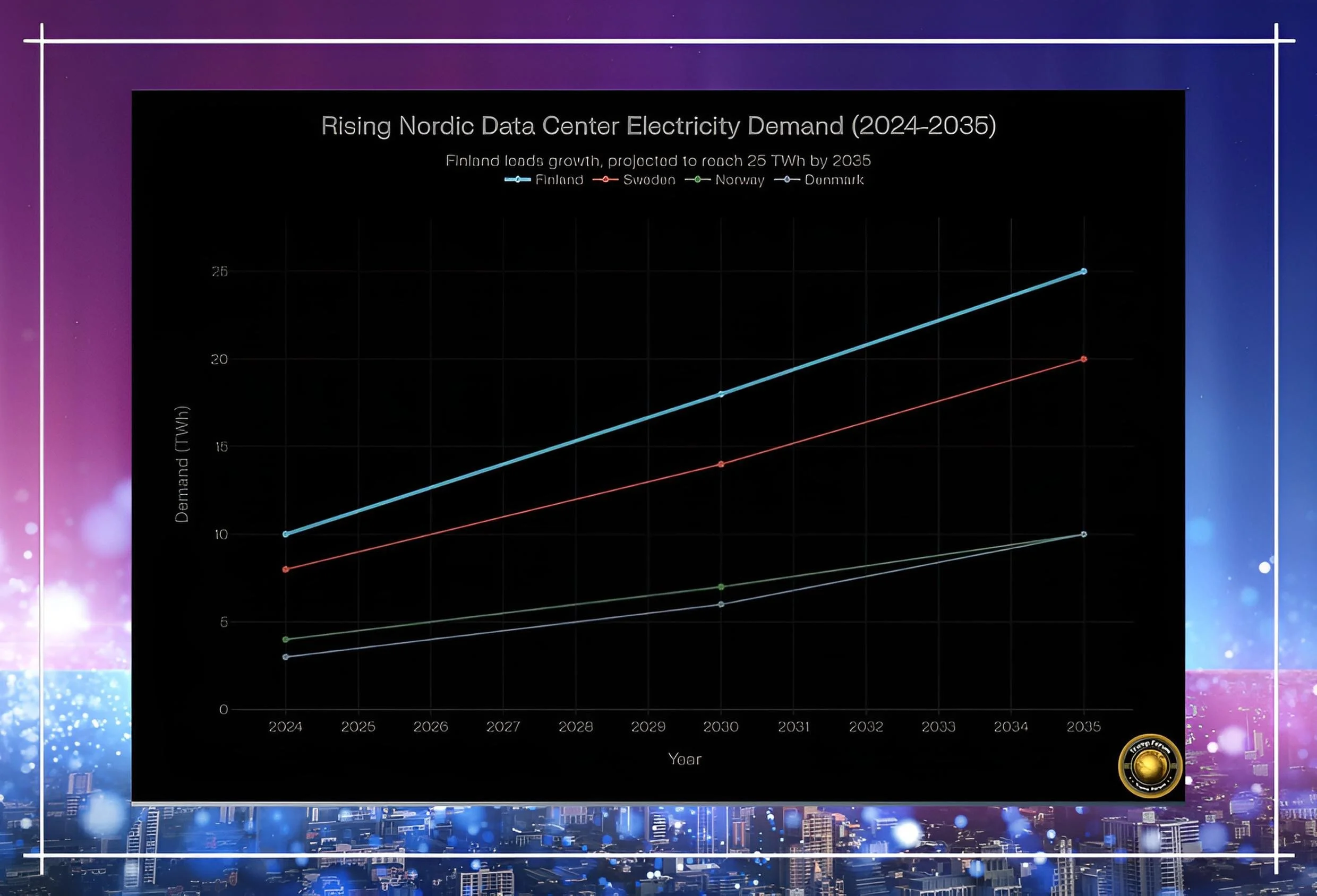
Electricity demand from Nordic data centers is projected to increase from 25 terawatt-hours in 2024 to 65 terawatt-hours by 2035, representing a 160% growth that the region plans to meet through a combination of nuclear expansion, offshore wind acceleration, and demand-side flexibility enabled by AI itself.
Water challenges are similarly addressed through closed-loop cooling systems and waste heat recovery that deliver 20,000 megawatt-hours annually to residential heating networks, equivalent to powering 2,500 Finnish homes.
This integrated approach positions the Nordics not merely as AI consumers but as architects of the energy systems that will sustain the next technological epoch, while simultaneously advancing national climate objectives and regional energy security.
Introduction
When AI Demand Meets Renewable Abundance
The convergence of artificial intelligence with energy infrastructure represents one of the most consequential technological and economic transitions of the twenty-first century.
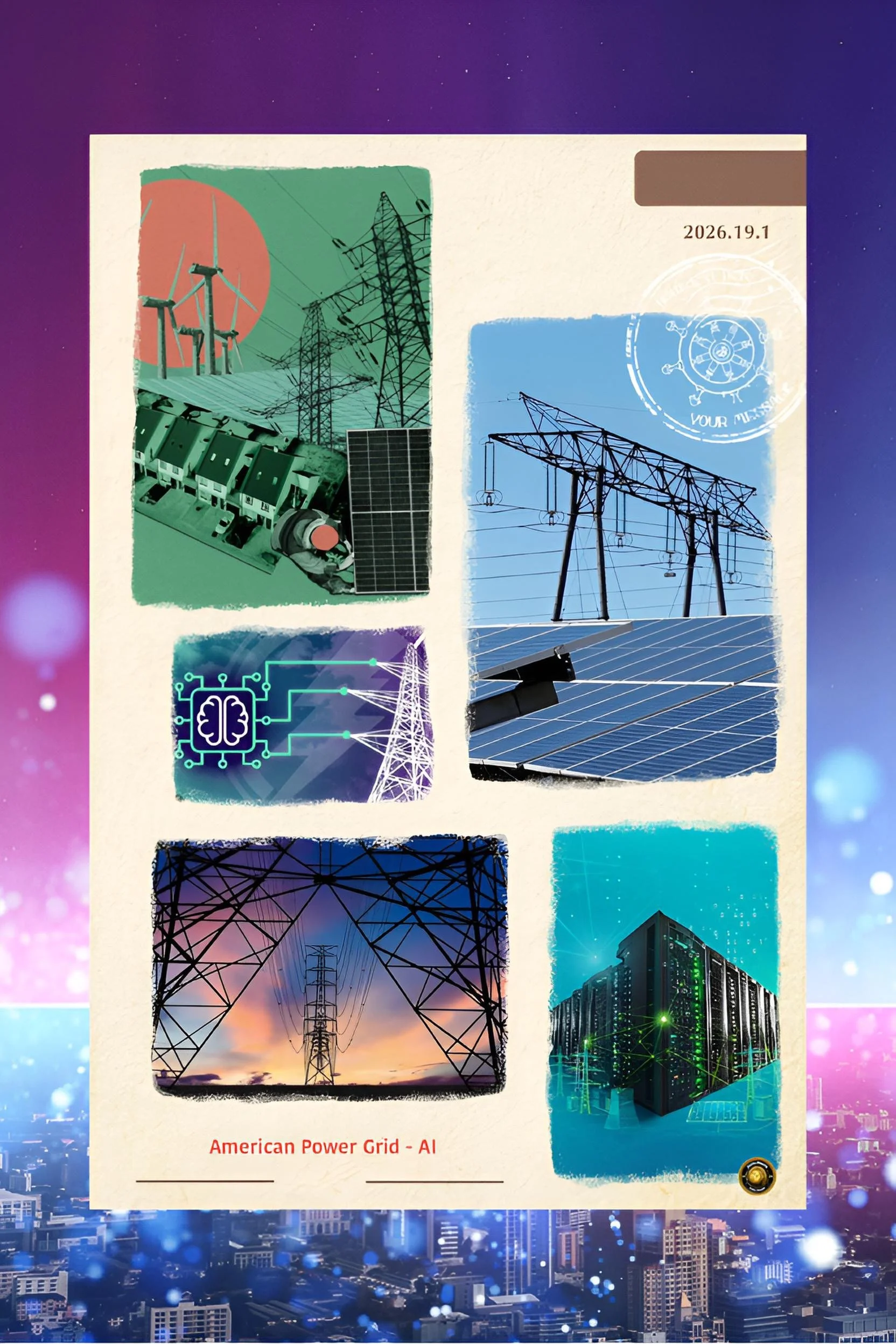
AI's computational demands impose unprecedented requirements on electrical grids: high-density power delivery, continuous availability, low-latency transmission, and thermal management at scale.
Conventional data center architectures, optimized for cloud computing and enterprise workloads, prove inadequate for training and inference of large language models and other frontier AI systems, which require power densities approaching one hundred kilowatts per rack and cooling capacities measured in megawatts.
The Nordic region confronts these challenges not as constraints but as opportunities for strategic differentiation.
Finland's pioneering wireless electricity transmission experiments, while innovative, constitute merely one facet of a comprehensive regional strategy that encompasses grid reinforcement, renewable capacity acceleration, advanced cooling architectures, and symbiotic integration of AI infrastructure with national energy systems.
This approach transforms potential bottlenecks—electricity scarcity, water consumption, grid congestion—into competitive advantages, positioning the Nordics as the preferred location for hyperscale AI development amid continental Europe’s grid constraints and regulatory uncertainty.
History and current status
From Hydro Dominance to AI Integration
The Nordic energy system has evolved through three distinct phases, each marked by strategic adaptation to technological and economic imperatives.
The first phase, spanning the postwar period through the 1980s, emphasized hydroelectric development and cross-border interconnection.
Norway's hydropower capacity reached 32 gigawatts by 1990, while Sweden and Finland developed complementary nuclear and thermal generation.
The 1990s Nordic Energy Market liberalization created the foundation for regional cooperation, with the establishment of Nord Pool as the world's first international electricity exchange.
This institutional architecture facilitated efficient resource allocation across hydro, nuclear, wind, and thermal assets, achieving system-wide reliability metrics superior to most advanced economies.
The current phase, commencing approximately 2015, represents a response to three simultaneous pressures: the decarbonization imperative, the electrification of transport and industry, and the surge in data center demand.
By 2024, Nordic data centers consumed twenty-five terawatt-hours annually, approximately 5% of total regional electricity consumption.
Projections indicate this figure will reach 65 terawatt-hours by 2035, driven primarily by AI workloads [chart:104].
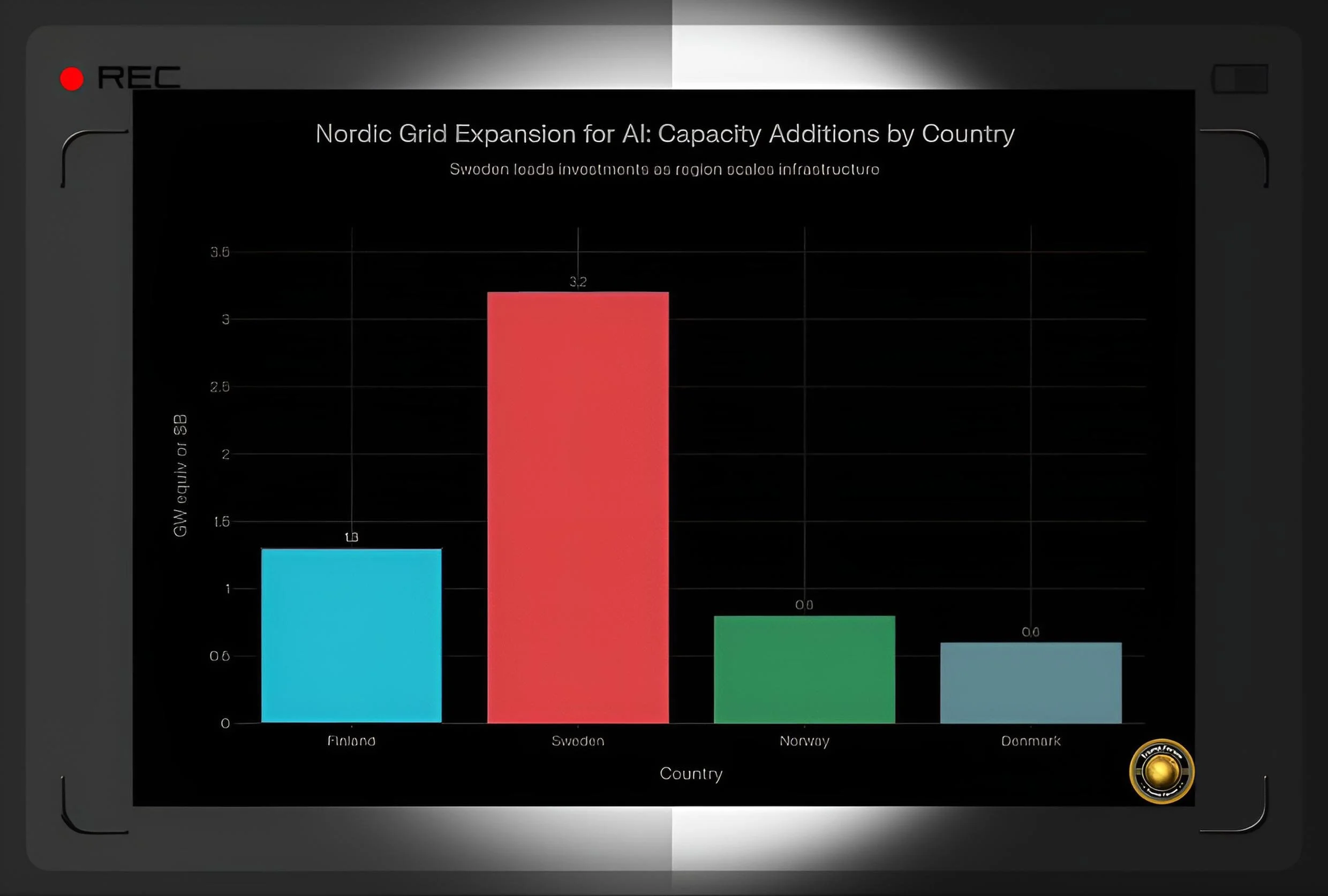
Finland leads this expansion with over twenty projects totaling 1.3 gigawatts of new capacity, including Nebius's expansion to seventy-five megawatts in Mäntsälä and PureDC's 500-megawatt AI campus in Seinäjoki backed by 700 megavolt-amperes of renewable access [chart:105].
Sweden hosts Microsoft's $3.2 billion investment across multiple sites, while Norway anticipates four- to five-fold growth in data center energy consumption.
Grid status varies by nation but exhibits common characteristics: high renewable penetration (Norway at 98 % hydro, Finland at 50 % nuclear/hydro/wind), robust interconnection (NordLink to Germany, Viking Link to UK), and proactive regulatory frameworks mandating power purchase agreements for new data center construction.
Water availability remains abundant but is managed through closed-loop systems and heat recovery, with Finnish facilities recovering 20,000 megawatt-hours annually for district heating.
Key developments
Liquid Cooling, Heat Recovery, Wireless Horizons
The first major development is the modular, high-density data center architecture optimized for AI workloads.
Traditional air-cooled facilities achieve power usage effectiveness (PUE) ratios of 1.4 to 1.6; Nordic AI campuses target 1.1 under high loads through direct liquid cooling (DLC) and free-air cooling enabled by sub-zero winter temperatures.
Nebius's Mäntsälä facility operates servers at 40 degrees Celsius inlet temperatures, yielding fifteen percent additional energy savings.
PureDC's Seinäjoki campus deploys repeatable 40-megawatt modules with DLC, facilitating rapid scaling while maintaining PUE below 1.2
A second development is the integration of heat recovery with district heating networks. Finnish data centers recover server waste heat—previously dissipated through cooling towers—for residential and commercial heating.
This symbiotic relationship transforms energy waste into community benefit, with Mäntsälä recovering energy equivalent to 2,500 households annually. Regulatory mandates increasingly require such integration as condition for permitting.
Third is the contractual framework linking data center expansion to renewable capacity development.
Finland mandates long-term power purchase agreements (PPAs) as prerequisite for construction, ensuring new demand is matched by incremental clean capacity.
Microsoft's Swedish investments include commitments to offshore wind development; Norway leverages hydro flexibility for demand response.
Finland's wireless transmission experiments complement these developments, demonstrating multi-kilowatt resonant magnetic coupling over meters and ultrasonic/laser hybrid systems for precision applications.
While not yet commercialized at grid scale, these technologies foreshadow "last-mile" wireless delivery within data center campuses and industrial AI zones.
Latest facts and emerging concerns
160% Demand Surge, Grid Bottlenecks
Current deployments underscore Nordic leadership.
Microsoft develops twelve new sites in Finland with district heating integration; Google invests one billion euros in Hamina expansion; XTX Markets targets 250 megawatts in Kajaani.
Sweden's Luleå hosts hyperscale facilities with PUE 1.1; Norway's Stavanger campus leverages hydro for 99.999 percent uptime.
Regional electricity demand from data centers will grow from 25 terawatt-hours (2024) to 65 terawatt-hours (2035), with Finland contributing 25 terawatt-hours [chart:104]
Concerns cluster around three axes.
First, grid congestion: Finland's transmission bottlenecks necessitate €13 billion investment, while Sweden faces 2028 capacity constraints.
Second, water consumption: AI training requires intensive cooling, though Nordic closed-loop systems mitigate this relative to evaporative alternatives.
Third, geopolitical risk: energy dependence on Russian gas (historically 10-20 %) and uranium supply chains creates vulnerability, though diversification is accelerating.
Cause-and-effect analysis
Computational Hunger Drives Energy Renaissance
The causal chain begins with AI's exponential computational demands, which impose power densities and availability requirements beyond conventional grid capacity.
This generates pressure on transmission infrastructure, manifesting as congestion and price volatility. Nordic states respond through targeted interventions: modular expansion matched to renewable PPAs addresses capacity; DLC and free cooling address thermal management; heat recovery addresses water efficiency.
These interventions generate positive externalities: local heating reduces fossil fuel dependence, AI-optimized grids enhance system flexibility, and hyperscale deployments create high-skill employment.
Feedback loops amplify effects. Successful Nordic deployments attract further investment, accelerating renewable buildout and grid reinforcement.
Conversely, delays in permitting or interconnection risk investor flight to less constrained regions.
Geopolitical factors introduce variance: energy price shocks catalyze diversification; supply chain resilience enhances competitiveness.
Future steps and strategic outlook
100 TWh by 2030, Global Export Model
Nordic strategies converge on three pillars.
First, regulatory harmonization: cross-border permitting frameworks and standardized PPA requirements.
Second, technological convergence: wireless transmission scaling, AI-driven grid optimization, advanced batteries for flexibility.
Third, international positioning: exportable models for temperate-zone AI infrastructure, bilateral renewable supply agreements.
By 2030, the region targets 100 terawatt-hours AI capacity with PUE below 1.1 and 90 % heat recovery. Long-term, integration with hydrogen production and carbon capture positions Nordics as AI-energy nexus.
Conclusion
The Blueprint for AI-Powered Energy Systems
Nordic grid strategies exemplify adaptive resilience: transforming AI's voracious demands into catalysts for energy innovation. Wireless transmission, modular campuses, and symbiotic heat recovery create competitive moat while advancing decarbonization.
Success hinges on execution amid geopolitical flux, but the blueprint offers replicable model for temperate economies confronting AI-energy convergence.