Electricity Through Air: How Finland Wants To Remove the Wire
Summary
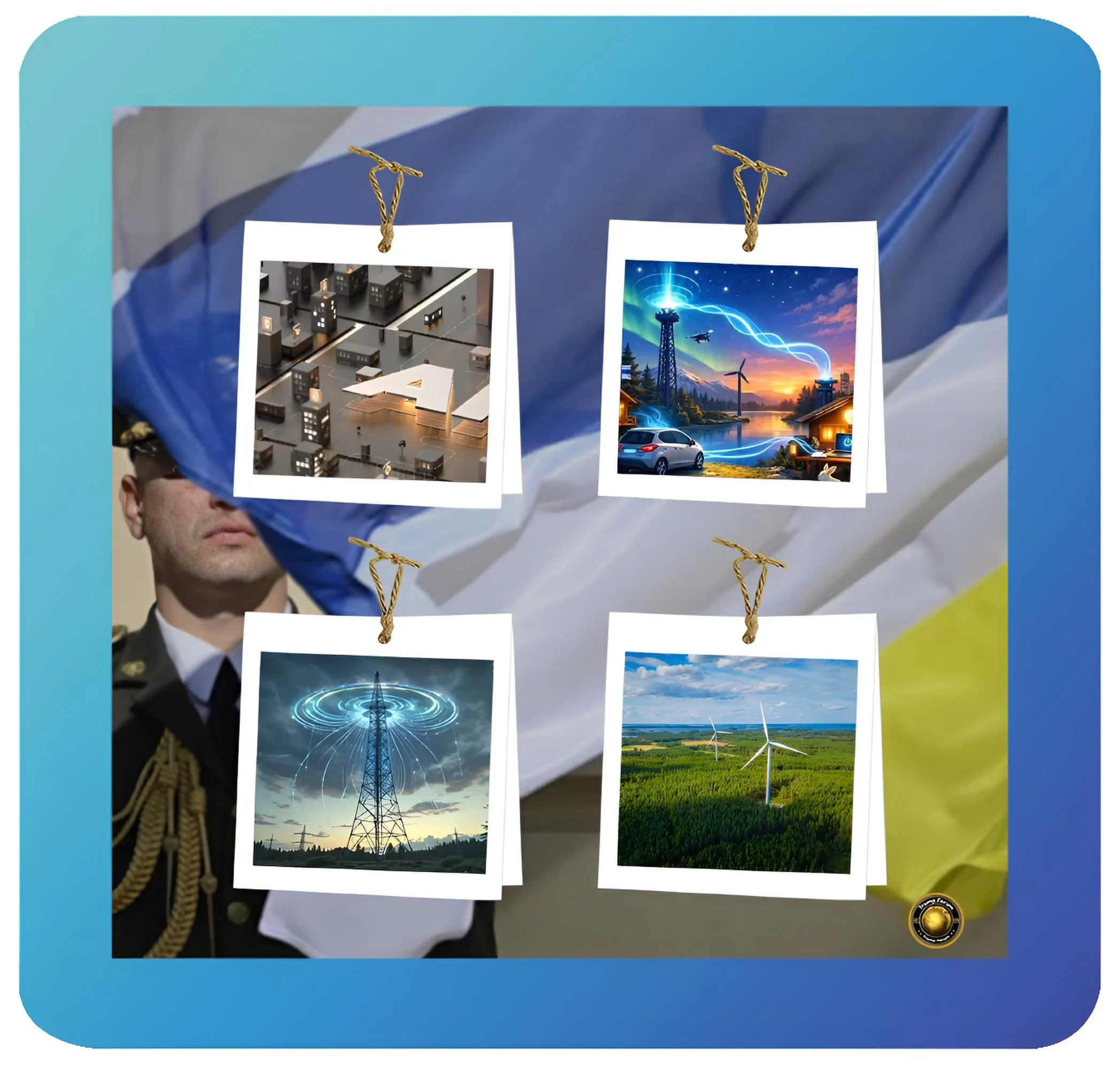
Electricity has almost always needed wires. Power plants send energy through long metal lines, then smaller cables bring it into homes, offices and factories. Now scientists and engineers in Finland are trying to change this basic picture.
They are asking a simple but bold question: what if electricity could move through air, the way Wi‑Fi moves data?
Their work is still at an early stage, but it is real and growing. Finnish teams are testing different ways to send power without a physical wire: strong magnetic fields, focused sound waves, laser light and radio waves that can be harvested from the air.
In this article, the ideas are explained in simple language, with clear examples of what these systems might do in everyday life.
One of the main approaches uses something called resonant magnetic fields.
This sounds complex, but the basic idea can be compared to two tuning forks. If you hit one tuning fork, another fork with the same natural tone will start to vibrate even if you do not touch it.
In Finland, engineers use coils of wire instead of tuning forks. One coil sends out a carefully shaped magnetic field; another coil with the right “tone” picks it up and turns it back into electricity.
According to reports about work at VTT Technical Research Centre of Finland and Aalto University, this method has already sent several kilowatts of power over a distance of a few meters, with more than 90 % of the power arriving at the receiver.
Several kilowatts is enough to run many home appliances at once, such as a kettle, a washing machine and a small heater.
In simple terms, this experiment shows that wireless power does not have to be only tiny trickles for small gadgets; it can also be strong enough for serious machines, at least inside a lab.
Another approach uses sound, especially very high‑frequency sound called ultrasound that humans cannot hear. Imagine a narrow, invisible “tube” of sound in the air.
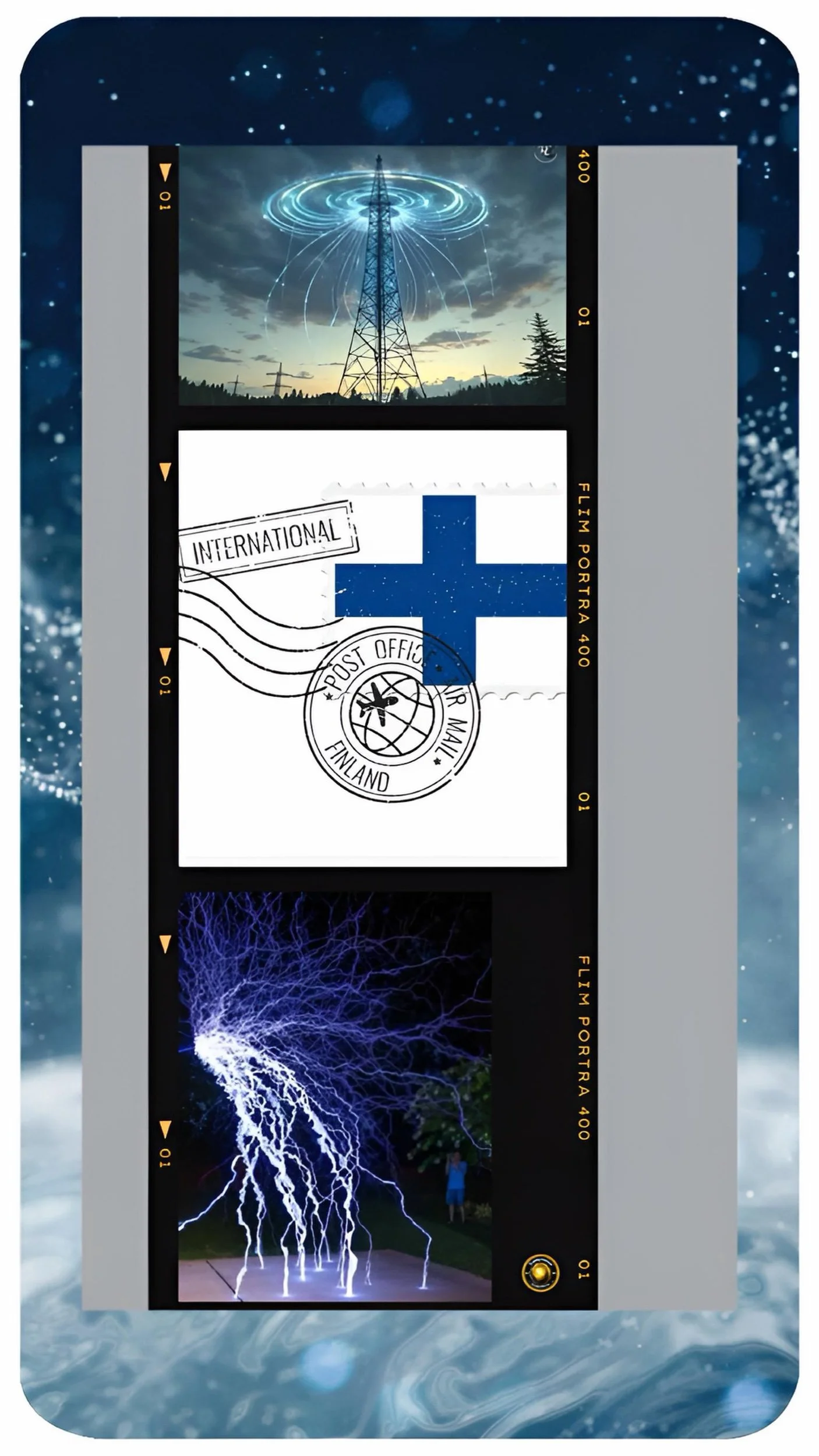
Finnish researchers have used intense ultrasound to guide electric sparks along a path, a bit like drawing a bright line through the air. If this can be controlled safely, it could create a kind of “acoustic wire” that carries a burst of energy from one point to another without metal.
An easy way to picture this is to think about a warehouse full of robots.
Today, each robot either carries a big battery or follows tracks that have power built into the floor.
Acoustics guidance
With acoustic guidance and other tricks, one could imagine a future warehouse where robots move freely while energy is sent to them through shaped sound and other fields from above.
Instead of plugging in, they simply pass through invisible “energy lanes” in the air.
Lasers guidance
In some Finnish‑linked projects, high‑powered laser beams send light to a special panel or receiver, which turns that light back into electricity. This is similar to how sunlight hits solar panels, but here the light comes as a focused beam from a transmitter instead of from the sun.
A key advantage is safety in dangerous environments.
For example, inside a nuclear power plant or a high‑voltage station, workers do not want exposed electrical contacts that could cause shocks or sparks.
A laser beam can move energy across open space; if someone steps in the way, the system can cut the beam quickly or lower the power.
A simple example would be a sensor placed deep inside a sealed, toxic tank.
Running a cable into the tank might create leaks or weak points. A laser system outside the tank could shine power through a small window to the sensor, which then reports pressure or temperature.
The power arrives with no wire through the tank wall and no need to change batteries.
Radio-frequency guidance
Radio‑frequency (RF) harvesting is smaller in scale but still important. Many modern devices already fill the air with radio waves—Wi‑Fi routers, mobile towers, television broadcasts and more.
Finnish projects are exploring tiny circuits that can collect a small part of this radio “fog” and turn it into electricity. The amount of power is usually very small, often only enough for simple sensors that measure temperature, humidity, motion or similar data.
Think of a large building with hundreds of sensors to watch for water leaks. Today, each sensor might use a coin‑cell battery that must be replaced every few years.
With RF harvesting, each sensor could live off the radio energy already in the building. Over time, this would save labor, reduce waste batteries, and make it easier to add more sensors wherever needed.
Putting these methods together, Finland is exploring a future where different kinds of wireless power share the same spaces.
Strong magnetic beams could handle heavy jobs over a few meters, like moving energy to machines on a factory floor or to charging pads built into roads.
Path Ahead
Lasers and acoustic paths could serve special tasks where safety, precision or isolation matter, such as in medical or high‑risk industrial sites. RF harvesting could quietly support a huge number of low‑power devices in homes and cities.
In many plans, these systems are guided by advanced software and artificial intelligence.
Programs use sensor data to decide where energy is needed at each moment and how best to shape the fields or beams.
If a drone enters a charging zone over a city street, the system can point power toward it; when it leaves, energy is redirected elsewhere.
This is similar to how a mobile network connects your phone to different towers as you move, but here the network is routing power, not just data.
Of course, there are limits and risks.
Physics makes it hard to send large amounts of power over long distances through the air with high efficiency. Fields weaken as they spread, and strong beams can create safety problems if they are not well controlled.
That is why most realistic Finnish visions talk about distances of a few to a few tens of meters, not hundreds of kilometers.
For bulk power—moving energy from wind farms or nuclear plants to cities—wires and cables will almost certainly remain the main tool.
Safety is another concern
Even if systems stay inside official exposure limits, people will ask whether long‑term contact with extra electromagnetic fields, strong ultrasound, or high‑intensity light is truly harmless.
Engineers will have to show, with clear measurements and tests, that these technologies will not interfere with heart implants, hearing aids, or other devices.
Animals and insects may also be affected by new types of fields, and this will need careful study.
There are also questions of control and fairness.
If wireless power becomes common in cities, who owns it?
Will only large companies be able to run it, or could communities and small firms build their own local systems?
Because many advanced versions use AI to steer beams, there is a risk that a few companies could own the software and set rules, similar to the way big platforms now shape online life.
Despite these issues, some near‑term applications look realistic. In a port, cranes and automated vehicles could receive power wirelessly in defined zones, cutting the need for thick cables that wear out under heavy use.
In mines, machines could work deeper underground with fewer physical lines that might be damaged by rock falls.
In hospitals, sensors and small devices might be powered without any plugs, making rooms easier to clean and reducing tripping hazards from wires. In homes, low‑power wireless charging could make “battery‑less” smart thermostats or light switches common.
Conclusion
In the end, Finland is not promising magic energy from nowhere.
Instead, it is testing ways to move the same electricity we know today, but in more flexible ways suited to a world of robots, sensors and mobile machines. Wires will not disappear, but if these projects succeed, they may become just one part of a richer and more adaptable system.
For ordinary people, the change might feel subtle at first: fewer chargers, fewer cables on floors, and more devices that “just work” when brought into a room.
Underneath, however, a quiet shift will be underway, as power lines slowly share their role with beams, fields and vibrations in the air.