Global Tariff Escalation: Retaliatory Measures Against U.S. Trade Policies and Their Economic Implications
Introduction
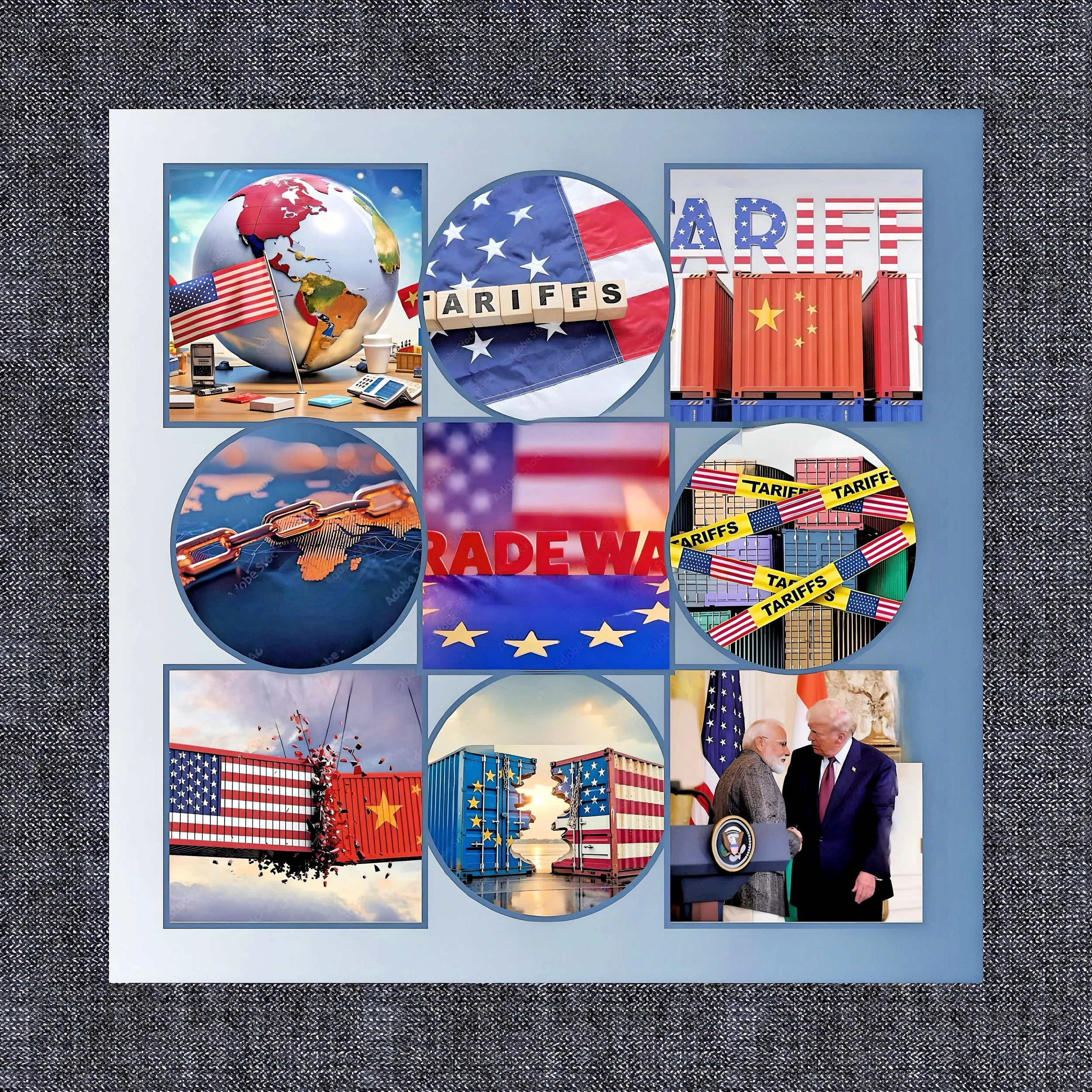
President Donald Trump’s March 2025 tariff measures—a 25% duty on most imports from Canada and Mexico and a 20% levy on Chinese goods—have triggered swift international retaliation, reshaping global trade dynamics and injecting uncertainty into the U.S. economy. This report analyzes the latest retaliatory actions by trading partners and their projected impacts on U.S. growth, inflation, and strategic alliances.
Latest Retaliatory Tariffs and Trade Measures
Canada’s $105 Billion Counter-Tariffs
On March 4, Canada implemented a 25% tariff on $20.3 billion worth of U.S. goods, including steel, aluminum, and agricultural products like pork and ethanol. After a 21-day comment period, a second tranche targeting $84.7 billion in machinery, plastics, and consumer goods will follow. These measures aim to pressure U.S. states reliant on cross-border trade, such as Michigan (automotive parts) and Iowa (agriculture).
Mexico’s Strategic Restraint and Contingency Plans
Unlike Canada, Mexico has delayed announcing specific countermeasures pending a March 6 call between Presidents Trump and Sheinbaum. However, Mexico’s planned retaliatory tariffs—expected by March 9—will likely target U.S. agricultural exports (corn, dairy) and energy equipment, leveraging its position as the second-largest buyer of U.S. gasoline.
China’s Targeted Agricultural Strikes
China imposed 10–15% tariffs on $13.9 billion of U.S. farm exports effective March 10, 2025, including:
15%
Chicken, wheat, corn, cotton
10%
Soybeans, pork, beef, seafood, dairy.
Concurrently, China suspended export permits for three U.S. soybean producers and launched antitrust probes against U.S. tech firms. These moves exploit vulnerabilities in Trump’s rural voter base ahead of the 2024 election cycle.
EU and India: Emerging Fronts
While the EU has not yet retaliated, Trump’s proposed 25% auto tariffs threaten $286.2 billion in EU exports (motor vehicles and parts). India, deemed “least vulnerable” in Asia due to lower U.S. export reliance (15% of GDP), faces reciprocal tariffs on pharmaceuticals and textiles starting April 2, risking $3.5 billion in annual exports.
Sector-Specific Impacts on the U.S. Economy
Automotive Sector Disruptions
The 25% tariffs on Canadian/Mexican auto parts—critical to North American supply chains—could increase vehicle production costs by 8–12%, forcing price hikes of $2,500–$4,000 per car.
With 40% of U.S. auto imports originating from Mexico, Ford and GM may idle plants in Ohio and Texas, risking 34,000 jobs.
Agriculture: Double Blow from Retaliation
Canada’s 25% tariff on U.S. pork and China’s 10% soybean levy compound existing pressures:
Soybean farmers
Prices could drop to $10.50/bushel (from $12.80 in 2024), eroding margins for 300,000 Midwest farms.
Dairy exports
Canada’s tariffs threaten $600 million in annual cheese and milk powder sales, devastating Wisconsin and New York producers.
Energy Markets and Inflation
The 10% tariff on Canadian energy (crude oil, LNG) risks spiking U.S. gas prices by $0.40/gallon in regions like the Northeast, which relies on Canadian imports for 45% of supply. Concurrently, China’s LNG tariffs could disrupt $14 billion in annual exports, pressuring shale producers in Texas and Pennsylvania.
Consumer Goods and Retail
A 20% tariff on Chinese electronics, footwear, and apparel—covering $550 billion in imports—may raise consumer prices by 6–9% for products like iPhones and sneakers. Walmart and Target face margin squeeze, potentially triggering layoffs in the logistics and retail sectors.
Macroeconomic Consequences
GDP Contraction and Job Losses
The Tax Foundation models a 0.5% GDP reduction in 2025 if tariffs persist, with:
Job losses
481,000 full-time equivalent jobs across manufacturing, agriculture, and retail.
Capital stock decline
$230 billion reduction in business investment due to uncertainty.
Inflationary Pressures
Goldman Sachs forecasts a 1.8% inflation spike in Q2 2025, driven by:
Energy
+12% gasoline, +9% electricity.
Food
+5.5% for poultry, +7% for dairy.
This could force the Federal Reserve to maintain elevated interest rates, stifling housing and credit markets.
Stock Market Volatility
The S&P 500 could shed 8–12% ($3.2–$4.8 trillion in market cap) as tariffs erode corporate profits.
Sectors with high import exposure—automobiles (-18%), semiconductors (-15%), and retail (-12%)—face the steepest declines.
Geopolitical Fallout
USMCA Erosion
Mexico’s retaliatory plans and Canada’s tariffs violate the USMCA spirit, risking the pact’s collapse. Automotive rules of origin (75% regional content) become untenable if parts face 25% duties.
China’s Strategic Pivot
By positioning itself as a “free trade defender,” China is courting EU and ASEAN nations with tariff reductions on EVs and solar panels, undermining U.S. influence.
India’s Diversification
India’s push for EU and Russia trade deals—covering pharmaceuticals and IT services—could reduce U.S. leverage despite nominal export exposure.
Conclusion
A Costly Trade Gambit
The global tariff backlash against U.S. policies risks stagflation—slowing growth (0.8% projected 2025 GDP) amid 5.5% inflation. While Trump’s measures aim to boost manufacturing and revenue, the collateral damage—farm bankruptcies, consumer price surges, and alliance fractures—outweighs short-term gains.
For sustainable resolution, the U.S. must
Negotiate sector exemptions
Protect auto and energy supply chains via USMCA carve-outs.
Expand agricultural subsidies
Offset losses from Chinese/Canadian tariffs via enhanced crop insurance.
Leverage strategic reserves
Release crude oil and LNG stocks to stabilize energy markets.
As former USTR official Wendy Cutler notes, “Tariffs are a blunt tool; precision is vital to avoid self-inflicted wounds.”
The coming weeks will test whether economic pragmatism can temper trade war escalation.