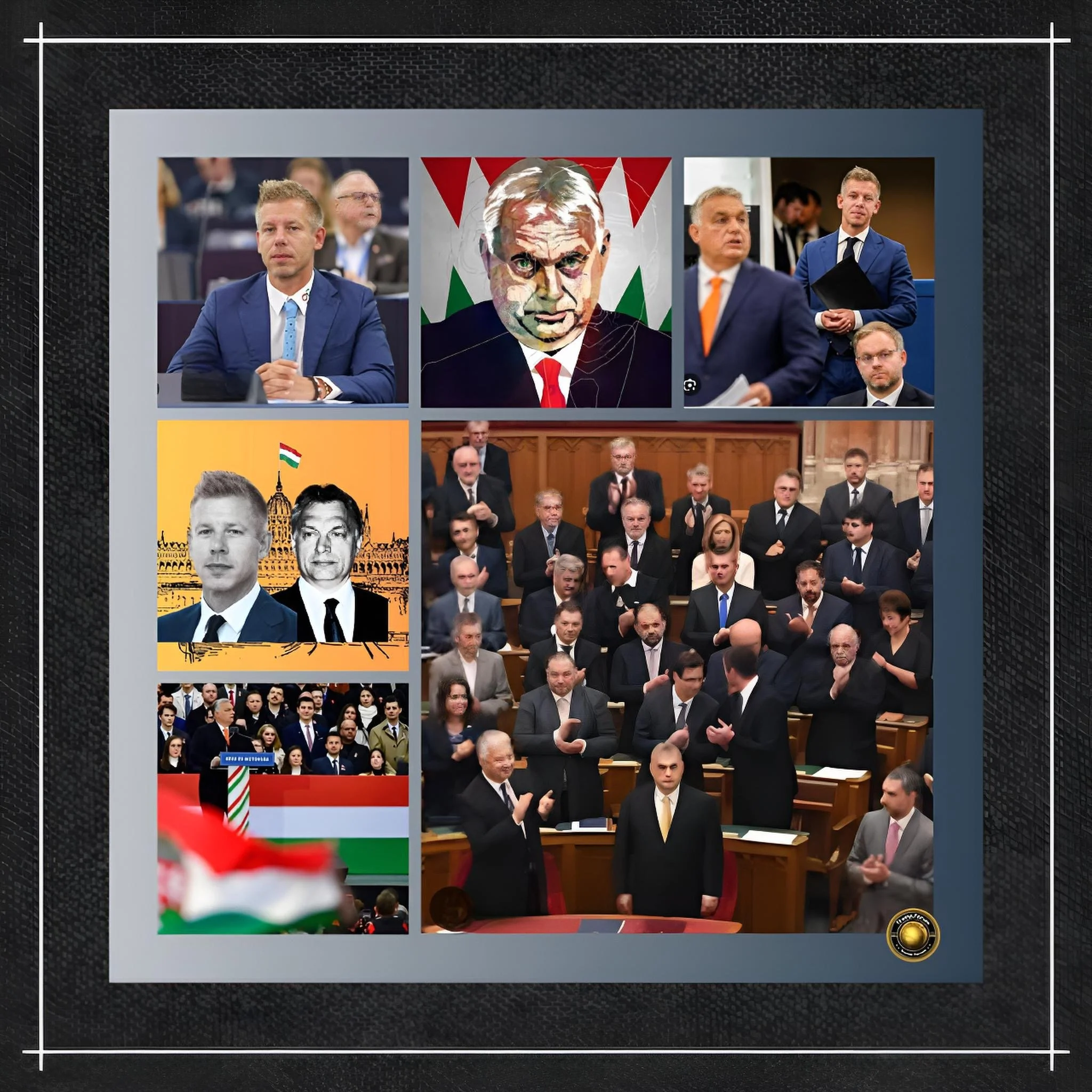
The End of Orbán’s Era? Hungary’s April Election and the Limits of Illiberal Power
Conclusion
A Captured State Faces an Unruly Electorate
Hungary's parliamentary election, scheduled for 12 April 2026, is the first since 2010 in which Viktor Orbán's hold on power is genuinely uncertain.
President Tamás Sulyok formally set the election date in mid-January 2026, opening a fifty-day campaign in which the newly ascendant Respect and Freedom Party (Tisztelet és Szabadság, Tisza), led by former Fidesz insider Péter Magyar, confronts the long-ruling Fidesz–KDNP alliance.
Independent polls from Medián and Idea now place Tisza roughly 10–12 percentage points ahead of Fidesz among likely voters, a reversal without precedent so close to a Hungarian election under Orbán.
Pro-government polling, by contrast, still reports a single-digit Fidesz lead, highlighting both methodological disputes and the polarized information environment. Whatever the precise margin, the pattern is clear: a centrist, pro-European, anti-corruption movement has, within two years, become Orbán's most serious challenger.
Yet the contest is being fought on a heavily tilted playing field. Over the past decade and a half, Fidesz used its two-thirds parliamentary supermajorities to redesign the constitution, neutralize institutional checks, capture large parts of the media, and reshape the electoral system in its favour.
Single-member districts are gerrymandered, "winner compensation" amplifies the largest party's seat bonus, and recent boundary changes have reduced opposition-leaning seats in Budapest while boosting pro-government regions.
At the same time, Hungary faces slowing growth after recession, the hangover from an inflation crisis that peaked above 25 percent in 2023, and the loss or freezing of more than €20 billion in European Union funds because of rule-of-law and corruption concerns. These pressures help explain why a former regime insider promising to "unlock EU money" and normalise relations with Brussels has gained traction.
The outcome will shape not only Hungary's domestic trajectory—whether the first sustained experiment in "illiberal democracy" inside the EU ends or consolidates—but also European debates over Ukraine, relations with Russia, and the leverage of EU conditionality.
From Post-Communist Poster Child to Europe's Illiberal Laboratory
Between 1990 and 2010, Hungary was widely viewed as a successful post-communist democracy. That reputation eroded rapidly after 2010, when Orbán's Fidesz–KDNP coalition won a two-thirds majority and used it to enact a new constitution and a battery of institutional reforms that concentrated power in the executive, weakened checks and balances, and curtailed media pluralism.
Orbán openly celebrated the construction of an "illiberal democracy," framed as a national alternative to Western liberalism.
Since then Fidesz has won four consecutive parliamentary elections (2010, 2014, 2018, 2022), each time converting bare or modest vote pluralities into constitutional supermajorities under a deliberately disproportionate electoral system.
Opposition parties fragmented, then attempted unity in 2022, and were decisively defeated. International observers documented structural advantages for the ruling party rather than classic ballot-box fraud: skewed districts, biased media, blurred lines between state and party, and extensive misuse of public resources for partisan campaigning.
For more than a decade, analysts of democratic backsliding cited Hungary as the paradigmatic case of competitive authoritarianism inside the European Union.
The 2026 election is therefore extraordinary because, for the first time, regime-engineered asymmetries coexist with a large and disciplined opposition force that has momentum, a recognizable leader, and a clear anti-corruption, pro-European narrative.
How Orbán Rewrote Hungary's Rules—and Why They Now Matter Less
Orbán's consolidation of power began with the 2010 landslide. Fidesz used its supermajority to pass a new Fundamental Law in 2011 without meaningful opposition or societal consultation, embedding a Christian-national ideological vision and re-engineering key institutions.
Subsequent constitutional and legal changes redefined the powers and composition of the Constitutional Court, curtailed its jurisdiction over fiscal matters, and allowed loyalists to occupy long-term posts. This hollowed out judicial review as an effective constraint on the government.
Overhauls of media law and regulatory structures enabled the government and allied oligarchs to build a dense pro-government media ecosystem, culminating in the creation of the KESMA foundation, which now controls hundreds of outlets.
The electoral system was reshaped by cutting the size of parliament, redrawing constituency boundaries, abolishing the two-round system, and introducing "winner compensation" that disproportionately rewards the largest party with additional list seats.
The combined effect was to turn Hungary into a formally pluralist system in which elections remained competitive but the conditions of competition were profoundly unequal. In 2014, 2018, and 2022, Fidesz secured around 45–54 percent of the vote yet consistently captured around two-thirds of parliamentary seats.
In parallel, Hungary's relationship with the EU deteriorated.
Concerns over judicial independence, corruption, academic freedom, and LGBT and asylum policies led to Article 7 procedures, infringement cases, and, eventually, the activation of the rule-of-law conditionality mechanism that froze tens of billions in cohesion, recovery, and structural funds.
By late 2025, civil-society monitors estimated that roughly €22–30 billion in EU funds remained blocked because the government had not fully implemented required reforms.
Economically, Hungary experienced robust pre-pandemic growth but then slid into recession in 2023, with GDP contracting, inflation surging above 25 percent, and real wages falling. Inflation fell back toward the central bank's 3 percent target in 2024–25, but the recovery was sluggish, fiscal deficits persisted, and growth underperformed both government targets and regional peers.
Politically, the 2022 election was meant to be the opposition's best chance. Six parties formed the United for Hungary coalition and held a primary to select a joint candidate, Péter Márki-Zay.
Orbán nonetheless secured 54 percent of the vote and 135 of 199 seats, another two-thirds majority, while the opposition won 56 seats.
The defeat discredited the old opposition leadership, leaving a vacuum that Péter Magyar would later fill.
The Magyar Shock: When a Regime Insider Turned on the System
The turning point came in early 2024 with a clemency scandal that led to the resignation of President Katalin Novák and Justice Minister Judit Varga, after revelations that pardons had been granted in a child-abuse-related case.
Péter Magyar, Varga's former husband and a well-connected figure in the Fidesz ecosystem, publicly broke with the government, denounced systemic corruption, and began drawing large crowds with sharp critiques of the "system of national cooperation" that Orbán had built.
Magyar quickly moved from moralising insider to political entrepreneur. Rather than creating a new party from scratch, he took over the dormant Respect and Freedom (Tisza) party, thereby sidestepping some bureaucratic hurdles, and turned it into his vehicle.
In the June 2024 European Parliament elections, Tisza—barely four months old as a political force—won roughly one-third of the vote and seven seats, emerging as the strongest opposition party and, in some tallies, the main challenger to Fidesz's still-plurality performance.
Subsequent surveys and academic analyses characterise Tisza as a centrist, anti-establishment party drawing heavily from disillusioned opposition voters, abstainers, and a smaller but non-negligible slice of former Fidesz or far-right voters. Its supporters are more pro-European, more liberal on cultural questions, and more supportive of Ukraine than the Fidesz base, while also exhibiting unusually low trust in institutions.
On the government side, Fidesz has continued to adjust the rules. Amendments in 2024 reduced the number of single-member districts in Budapest from eighteen to sixteen while increasing seats in surrounding Pest County, a change that favours rural, pro-government areas and diminishes the capital's weight.
FAF described this and earlier changes to district boundaries as gerrymandering designed to maximise the conversion of Fidesz votes into seats.
In January 2026, President Sulyok set 12 April as election day, and parties entered full campaign mode. Fidesz is presenting a renewed slate with roughly one-third new candidates, wrapped in a message of stability, national sovereignty, and resistance to "Brussels" on migration, Ukraine, and cultural issues. Orbán has mobilised an impressive roster of foreign hard-right endorsements in a global video appeal, underscoring his central role in transnational populist networks.
Magyar and Tisza, in turn, have framed the election as a referendum on corruption, economic stagnation, and Hungary's pariah status within the EU. They promise to join the European Public Prosecutor's Office, unblock frozen EU funds, restore judicial and media independence, and anchor Hungary more firmly in the EU and NATO while maintaining pragmatic, but not subservient, relations with Russia.
Polls, Gerrymanders, and Frozen Billions: The Election's Hard Numbers
As of mid-January 2026, independent polls depict a political landscape radically different from any previous election under Orbán. Surveys by Medián and Idea show Tisza leading Fidesz by around 10–12 percentage points among decided or likely voters, and by smaller but still notable margins in the general population. Approximately half of voters with a clear party preference say they would choose Tisza; Fidesz hovers around forty percent in these samples.
Hungarian and international commentary emphasises how unprecedented this deficit is for a governing party only three months before the vote, particularly given Fidesz's prior ability to outperform pre-election polls. At the same time, the pro-government Center for Fundamental Rights released a poll placing Fidesz–KDNP eight points ahead among "committed voters," highlighting the extent to which polling itself has become part of the political contest.
Key concerns cluster around several themes. First, structural bias. The electoral system's disproportionality, winner-compensation, and gerrymandered districts mean that a Tisza popular-vote lead does not translate mechanically into a parliamentary majority.
Past analyses suggest that Fidesz can secure a majority, or even a supermajority, with mid-to-high thirty-percent vote shares if the opposition is fragmented and district-level outcomes favour the ruling party. Conversely, an opposition party might need a decisive and geographically broad victory to obtain even a bare majority of seats.
Second, institutional capture. The ruling party retains pervasive influence over the public administration, media regulators, state-owned enterprises, and key judicial bodies, which raises fears about the fairness of campaign conditions, the impartiality of election management, and the post-election environment should power change hands.
Third, economic fragility. Although inflation has fallen back toward 3–4 percent and real wages are recovering, growth remains modest, and Hungary has underperformed both government forecasts and regional peers. Large pools of EU funding remain frozen or at risk of expiry because Budapest has not met rule-of-law and anti-corruption benchmarks, a situation that constrains fiscal space and dampens medium-term prospects.
Fourth, geopolitical positioning. Orbán's government has cultivated close ties with Moscow and Beijing, obstructed or diluted EU decisions on Russia sanctions and Ukraine aid, and framed itself as the champion of "peace" against alleged Western warmongering. A Tisza-led government would likely reverse these stances and seek rapid rehabilitation within the EU mainstream, altering regional dynamics and potentially EU policy toward Ukraine.
When Illiberalism Overreaches: Corruption, EU Sanctions, and the Birth of Tisza
Several interacting causal chains help explain why the 2026 election is uniquely competitive despite the durability of Orbán's regime.
The first chain runs from constitutional engineering to vulnerability through overreach. Fidesz's constitutional and legal redesign entrenched its power by weakening checks, controlling media narratives, and skewing electoral rules.
This enabled repeated supermajorities but also concentrated responsibility squarely in the ruling party for worsening governance outcomes: persistent corruption, misallocation of EU funds, politicised public administration, and deteriorating public services.
Over time, as performance faltered—especially during the inflation crisis and recession—voters had no credible way to attribute blame elsewhere. The very centralisation that once insulated Fidesz now magnifies the electoral cost of policy failure.
The second chain links EU conditionality to domestic discontent and opposition opportunity. The EU's decision to suspend or freeze large tranches of funding because of rule-of-law deficiencies directly constrained the Hungarian state's ability to finance investment and social programmes.
The government framed this as external persecution, but many citizens increasingly see the loss of funds as self-inflicted, driven by corruption and confrontational diplomacy. This perception created an opening for an opposition leader who could credibly promise to normalise relations with Brussels and unblock funds quickly.
Magyar has exploited this by making EU money and legal alignment central planks of his programme, effectively aligning domestic anti-corruption sentiment with external conditionality.
The third chain focuses on the opposition's recomposition. The 2022 experiment in broad opposition unity collapsed under the weight of internal ideological contradictions, organisational incoherence, and Fidesz's superior campaign machinery. Voters learned that "the united opposition" was not necessarily a viable government-in-waiting. Magyar's Tisza offers a different model: a single, relatively centrist anti-establishment party that distances itself from both Fidesz and the old opposition. Survey work shows that Tisza has vacuumed up a large share of former opposition supporters, tempted some prior non-voters into the electorate, and peeled off a modest minority of former Fidesz voters.
This recomposition reduces the fragmentation that Fidesz exploited under the one-round, plurality-boosting electoral rules, making an effective challenge more plausible.
The fourth chain concerns media and narrative control. Government-aligned media dominance and regulatory pressure have long constrained the opposition's ability to set agendas. Yet digital platforms and high-profile scandals—especially the clemency affair—created moments when even a captured media environment could not fully contain reputational damage. Magyar's background as a regime insider made his testimony about corruption and abuse of power particularly resonant, and viral online content partially circumvented traditional media filters. This demonstrates that even a highly asymmetric information ecosystem can be punctured when a credible defector emerges.
Finally, there is an international spillover effect. Orbán's alignment with global illiberal and far-right currents—his relationships with Donald Trump, Vladimir Putin, and a range of European populist leaders—has raised the symbolic stakes of Hungary's election in the eyes of domestic and foreign observers. For some Hungarian voters, endorsement by these figures is reassuring; for others, it confirms fears of isolation or moral compromise.
Magyar and his allies seek to leverage the latter sentiment by promising to "bring Hungary back to Europe," tying regime change to a broader civilisational choice between East-leaning illiberalism and West-anchored constitutional democracy.
Scenarios After April: Narrow Escape, Fragile Change, or Deepening Autocracy
In the short term, three broad electoral scenarios are conceivable.
First, Fidesz could engineer a narrow popular-vote loss but a seat-level victory, retaining a simple majority thanks to electoral disproportionality and geographic distribution. Such an outcome would likely deepen domestic polarisation, invite intensified EU scrutiny, and raise questions about the legitimacy of the institutional framework, even if legal standards were formally met.
Second, Tisza could win a clear plurality or even majority of votes but fall short of a parliamentary majority. In that case, complex coalition arithmetic would follow, involving smaller opposition parties and perhaps independents. Given Fidesz's institutional entrenchment, even a non-Fidesz government would face formidable obstacles in reversing constitutional changes, replacing loyalists, and governing effectively under a hostile presidency and bureaucracy.
Third, Tisza could achieve a sufficiently overwhelming victory to secure a governing majority despite system bias. Even then, it would confront the dilemma of how far and how fast to dismantle the illiberal framework without reproducing the same logic of unilateral majoritarian engineering it criticises. Debates about "transitional justice" for captured institutions, lustration of officials, and constitutional refoundation would become acute.
Beyond the election, several structural issues will shape Hungary's trajectory. The future of EU conditionality will depend on whether a new government meets rule-of-law benchmarks, whether Orbán (if re-elected) chooses to compromise or escalate, and how hard other member states push in defence of democratic standards.
Economic performance will be contingent on restoring investor confidence, reorienting industrial policy, and mitigating demographic and productivity challenges.
Hungary's foreign policy posture toward Russia, China, and Ukraine could shift dramatically under a Tisza-led administration, affecting EU unity and NATO's eastern flank.
Conclusion
Can the Ballot Box Undo an Illiberal Regime?
The 2026 Hungarian parliamentary election crystallises the central dilemmas of democratic resilience in an era of institutional capture. For sixteen years, Viktor Orbán has demonstrated how a determined governing party can, largely within the formal rules of a democratic system, reconfigure the constitutional order, undermine independent institutions, and convert electoral competition into a managed plebiscite. Yet his system has not been impermeable.
Economic mismanagement, corruption scandals, EU pressure, and the emergence of a credible insider-turned-opponent have combined to produce a moment in which regime change is conceivable even under biased rules.
Whether that possibility becomes reality will depend not only on voter preferences but on the interaction of electoral engineering, media dominance, international leverage, and the opposition's capacity to convert popular anger into organisational strength and credible governance plans.
A Tisza victory would open a complex period of attempted democratic reconstruction and re-Europeanisation, fraught with institutional and political risks. A renewed Fidesz mandate, especially if obtained against the backdrop of a Tisza popular-vote lead, would likely entrench Hungary's illiberal experiment further and intensify its collision course with EU norms.
In either case, Hungary's April vote is no longer a foregone conclusion. It is a rare test of whether entrenched competitive authoritarian regimes within the European Union can be displaced through elections alone, and of how far external conditionality and internal opposition can jointly shift the calculus of an illiberal incumbent.