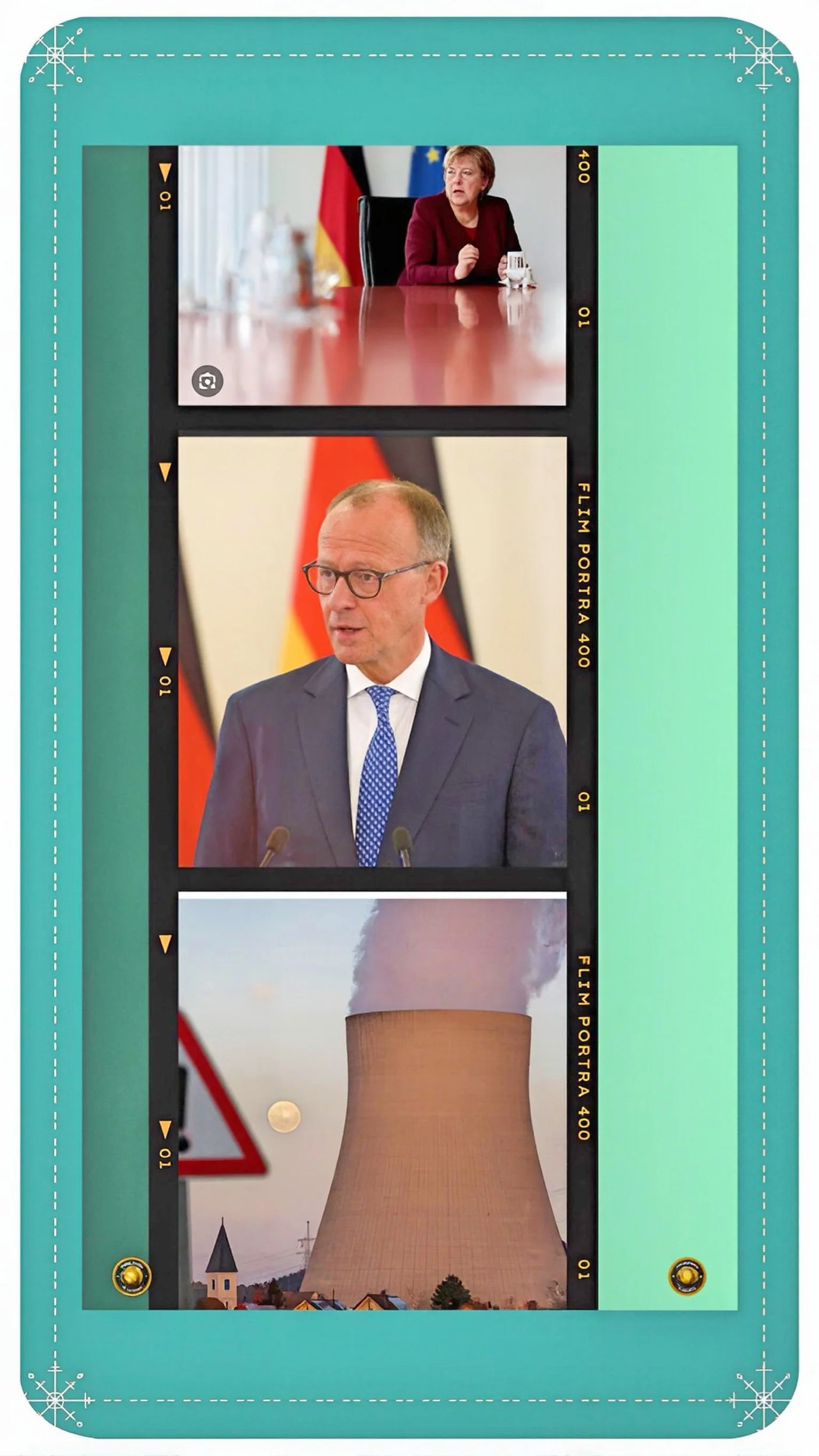
Germany's Nuclear Phase-Out: A Strategic Reassessment Under Chancellor Merz
Succinct Executive Synthesis
Nuclear Reversal: Germany's Belated Reckoning with Energy Policy Consequences
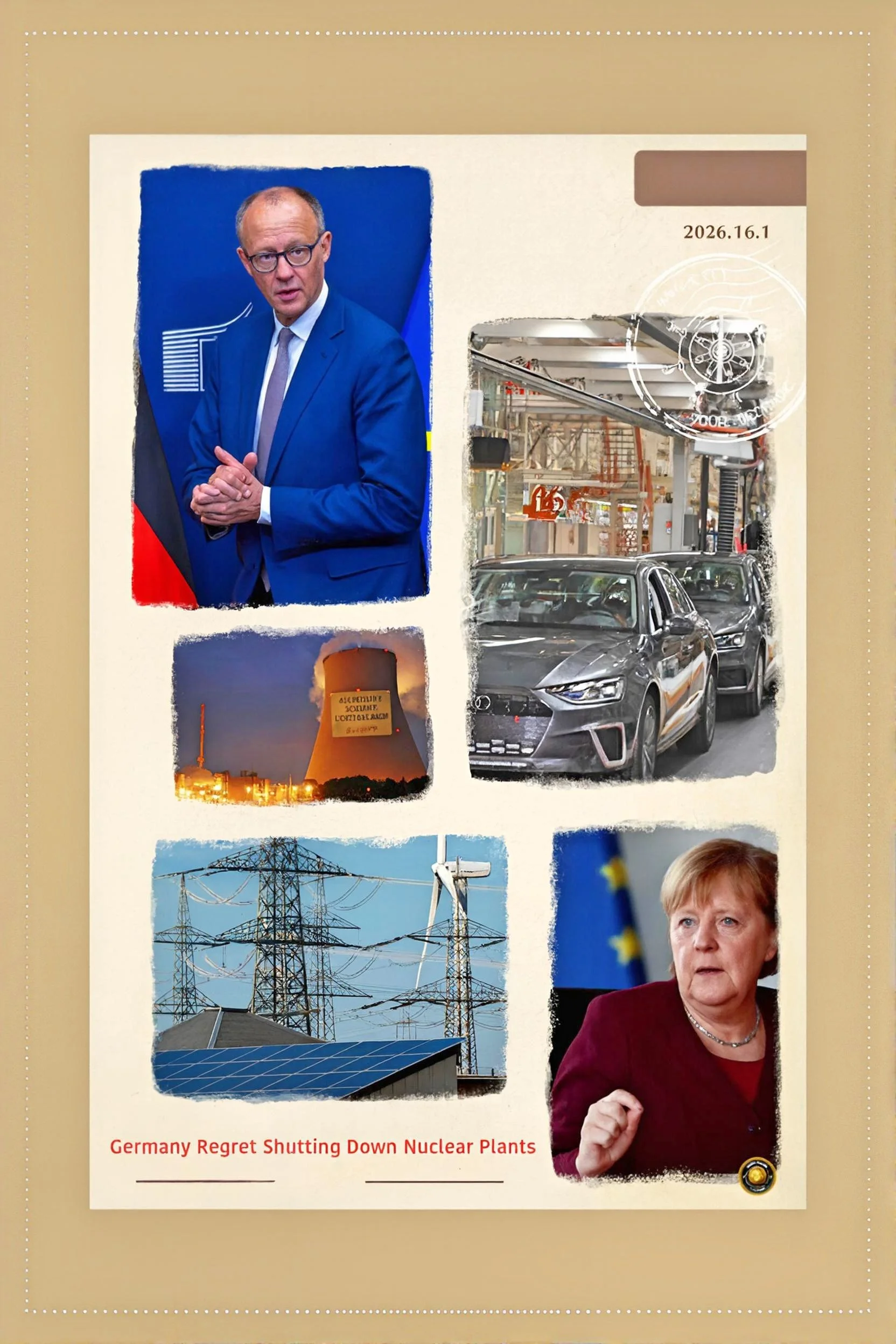
Chancellor Friedrich Merz of Germany has publicly declared the nation's nuclear phase-out decision "a serious strategic mistake," marking a fundamental shift in official policy rhetoric from his predecessors.
This assertion, made on January 14, 2026, reflects mounting evidence that the 2023 shutdown of Germany's final three nuclear reactors—Isar 2, Emsland, and Neckarwestheim 2—has precipitated substantial economic and energy security consequences.
Germany now maintains the highest nominal electricity prices within the European Union, reaching 38.35 euros per 100 kilowatt-hours during the first half of 2025, whilst simultaneously positioning itself as a net electricity importer despite commanding substantial renewable energy capacity.
Merz's government has secured European Commission approval for a 12 billion euro subsidy package targeting industrial relief and the construction of eight gigawatts of new gas-fired power plant capacity by 2031, underscoring the acknowledgment that renewable energy expansion alone cannot meet current baseload requirements.
Understanding the Contours of Historical Decision-Making
From Ambition to Crisis: Tracing Germany's Nuclear Policy Reversals Across Three Decades
Germany's nuclear energy trajectory encompasses multiple policy reversals reflective of shifting political preferences, public opinion, and catastrophic events abroad.
The genesis of anti-nuclear sentiment predates contemporary German politics, with the Energiewende concept originating within anti-nuclear activism during the 1980s. In 2002, the government established an initial timetable for complete nuclear decommissioning by 2022, embodying a commitment to transition exclusively toward renewable energy sources.
This trajectory altered fundamentally in 2009 when Chancellor Angela Merkel's administration, following electoral victory, extended operating licenses for seventeen nuclear reactors by approximately twelve years—an initiative commonly referenced as the "phase-out of the phase-out."
The transformative moment arrived on March 11, 2011, when the Fukushima Daiichi catastrophe unfolded in Japan. Within days, Merkel's government initiated a three-month nuclear moratorium, subsequently proposing that eight reactors cease operations immediately whilst remaining units continue functioning until 2022.
Over eighty percent of parliamentary representatives endorsed this accelerated exit strategy, with opposition emanating primarily from political factions advocating for even more expeditious decommissioning. The federal government commissioned both the Reactor Safety Commission and an Ethics Commission to evaluate nuclear safety protocols and societal consensus respectively.
Despite determinations that German facilities possessed superior safety provisions compared to Fukushima, the commission concluded that public risk perception had fundamentally transformed following the Japanese disaster.
The Energiewende in Contemporary Context
Renewable Dreams Confronting Baseload Realities: The Structural Limits of Germany's Energy Transition
Germany's energy transition represents an ambitious undertaking to replace fossil fuel and nuclear generation with renewable sources whilst simultaneously achieving substantial emissions reductions. Legislative frameworks passed in 2010 and subsequently refined established targets mandating eighty to ninety-five percent greenhouse gas reductions by 2050 relative to 1990 baseline levels.
The strategy encompassed rapid expansion of wind and solar installations, coupled with systematic closure of coal-fired facilities across a phased timeline extending to 2038. By 2023, renewable energy sources had achieved approximately 55 to 63 percent of gross electricity consumption, demonstrating measurable progress toward decarbonization objectives.
However, the structural challenge emerges from the intermittent nature of wind and solar generation.
The final three reactors, operating since the 1980s, contributed stable baseload power during periods of insufficient renewable output.
Their April 2023 shutdown created a substantial capacity void that the government initially presumed would be filled by continued coal generation and imported natural gas—a strategy predicated upon sustained access to Russian supply at competitive pricing.
The 2022 Russian invasion of Ukraine fundamentally disrupted this assumption, precipitating an extended energy crisis and prompting renewed discussions regarding the wisdom of terminal nuclear reactor decommissioning.
Quantifiable Energy and Economic Consequences
The Price of Idealism: Germany's Economic Crisis Following Nuclear Phase-Out
The cessation of nuclear power generation in April 2023 produced measurable consequences across multiple dimensions of Germany's energy infrastructure and economic competitiveness.
Prior to final decommissioning, Germany maintained a position as a net electricity exporter. Within the first year following reactor shutdown, the nation transitioned to net import status, purchasing approximately 22 terawatt-hours from neighboring nations, including France, Switzerland, and Belgium—ironically, jurisdictions deriving substantial proportions of their electrical supply from nuclear installations.
This reversal occurred despite substantial renewable capacity expansion, reflecting the fundamental mismatch between seasonal and diurnal renewable generation patterns and contemporary electricity demand requirements.
Household electricity pricing provides perhaps the most tangible manifestation of these energy policy consequences. As of the first half of 2025, German consumers confronted nominal electricity prices of 38.35 euros per 100 kilowatt-hours, representing the highest rate across the entire European Union.
This figure substantially exceeds pre-crisis baseline levels observed during 2021, when prices averaged 32.8 cents per kilowatt-hour. Whilst wholesale prices have declined from their 2023 crisis peak of 47 cents per kilowatt-hour, structural factors including elevated grid fees—constituting approximately 27.6 percent of residential rates—continue elevating consumer burdens relative to peer jurisdictions.
Industrial competitiveness concerns have precipitated tangible relocation decisions. A 2024 survey conducted by Germany's Chambers of Industry and Commerce revealed that 37 percent of industrial enterprises contemplate either reducing domestic production capacity or relocating operations to jurisdictions offering lower-cost energy supplies.
Among energy-intensive industries including chemical production, steel manufacturing, and glass fabrication, this proportion rises to approximately 45 percent.
The federal government responded through implementation of an industrial electricity price mechanism, establishing a target of approximately 0.05 euros per kilowatt-hour for eligible energy-intensive sectors, commencing January 2026, financed through a time-limited 3.1 billion euro subsidy.
Governmental Strategic Realignment and Prospective Trajectories
Pragmatism Ascendant: Merz Government's Recognition of Energy Policy Failures and Transitional Strategy
Merz's January 2026 statement acknowledging the nuclear phase-out as strategically mistaken reflects broader governmental reassessment of energy transition priorities.
Nevertheless, his administration has declined to pursue immediate reactor restart initiatives, citing both technical complexities associated with extended decommissioning processes and persistent public skepticism regarding nuclear energy.
Instead, the government has pivoted toward a pragmatic strategy combining accelerated renewable deployment with transitional reliance upon natural gas infrastructure.
The European Commission's approval, announced January 14, 2026, of a 12 billion euro state aid package constitutes a pivotal governmental commitment.
This authorization encompasses provisions for tendering eight gigawatts of conventional gas-fired capacity alongside four gigawatts designated for low-carbon technologies and hydrogen-capable installations, with operational commencement anticipated by 2031.
The subsidy distribution allocates 7.5 billion euros toward direct support for small and medium-sized enterprises whilst directing 4.5 billion euros toward expanded emissions compensation mechanisms for energy-intensive industrial sectors.
This approach implicitly acknowledges that renewable energy expansion, despite achieving over 55 percent of 2024 generation, remains insufficient to eliminate reliance upon dispatchable generation sources during periods of atmospheric stagnation—conditions commonly occurring during winter months when renewable output declines precipitously.
Simultaneously, the Merz administration has expressed openness toward technological developments in small modular reactor configurations, though this orientation reflects aspirational positioning rather than imminent policy implementation.
European strategic initiatives targeting early-2030s deployment of SMR technology have garnered increasing governmental support, with the European Commission preparing a comprehensive SMR strategy for publication during the first half of 2026.
Germany, despite historical prominence in nuclear engineering, currently occupies a peripheral position within this emerging technological domain, a circumstance the administration seeks to address through regulatory framework clarifications and potential participation in collaborative development initiatives.
Examining Causal Mechanisms and Policy Contradictions
Political Emotionalism Versus Technical Evidence: Understanding Germany's Nuclear Reversal Cycles
The reversal trajectory from 2009's lifetime extension through 2011's accelerated phase-out to 2023's complete decommissioning and contemporary reassessment illuminates fundamental tensions within democratic decision-making frameworks confronting complex technical and environmental considerations.
The 2011 Fukushima response, whilst emotionally comprehensible given proximate catastrophic imagery, occurred simultaneously with Baden-Württemberg electoral contests wherein the Green Party achieved unprecedented political success.
Political analysis suggests that governmental repositioning reflected electoral vulnerabilities rather than technical evidence, as authorized safety commissions had concluded that German nuclear infrastructure incorporated safety provisions exceeding those present at the Japanese facility.
Public opinion surveys demonstrate that majorities consistently supported nuclear phase-out objectives across the twenty-three-year trajectory preceding complete decommissioning.
This sustained public endorsement reflected genuine concerns regarding long-term waste disposal obligations, proliferation risks, and technological catastrophe potential. However, the 2024-2025 reassessment period evidences shifting public perspectives, with contemporary polling indicating that approximately 67 percent of respondents acknowledge the phase-out as strategically misguided, notwithstanding sustained commitment to renewable energy expansion.
This transformation in attitudes correlates precisely with observable economic consequences including industrial relocation threats, elevated household electricity expenses, and net import dependency status reversing decades of export positioning.
Prospective Trajectories and Structural Constraint
The Temporal Paradox: Germany's Conflicting Commitments to Coal and Baseload Capacity Requirements
Germany's prospective energy infrastructure development confronts multiple structural constraints limiting immediate policy reversals.
The three decommissioned reactors—Isar 2, Neckarwestheim 2, and Emsland—have undergone extensive defueling procedures rendering restart technically feasible but requiring multi-year restoration timelines estimated between eighteen and thirty-six months for complete operational restoration.
Additionally, residual public opposition and constitutional protections established through the 2011 Atomic Energy Act amendment create substantial political impediments to unilateral restart initiatives.
These considerations suggest that any nuclear energy reintegration would likely proceed through alternative mechanisms including small modular reactor development or deepened Franco-German energy cooperation permitting electricity imports from French nuclear installations.
The governmental commitment to coal phase-out completion by 2038 at latest simultaneously with coal currently providing essential dispatchable capacity creates temporal pressures necessitating rapid alternative capacity deployment.
Grid operator analyses indicate that Germany requires approximately 21 gigawatts of new controllable generation capacity—conventionally supplied through natural gas infrastructure—to enable complete coal cessation whilst maintaining supply security.
The 8 gigawatt gas plant authorization represents partial fulfillment of these requirements, with additional capacity expansion contingent upon technological advancement in hydrogen-capable installations and accelerated renewable supplementation.
Concluding Perspectives and Strategic Implications
How Germany's Energy Crisis Reshapes Global Energy Transition Frameworks
Chancellor Merz's characterization of Germany's nuclear phase-out as "a serious strategic mistake" reflects confrontation with quantifiable economic and energy security consequences that prior governmental administrations deflected through policy obfuscation and incremental adjustments.
The acknowledgment represents neither a commitment toward immediate reactor restart nor a reversal of renewable energy expansion commitments, but rather a candid assessment that exclusive dependence upon intermittent renewable sources, supplemented by imported conventional electricity, has proven economically deleterious and strategically untenable.
The prospective trajectory emphasizes pragmatic energy infrastructure development prioritizing supply security, industrial competitiveness maintenance, and gradual emissions reduction whilst acknowledging the technical and political limitations constraining immediate policy reversals.
The strategic framework embraces transitional natural gas deployment coupled with investigative positioning regarding emerging small modular reactor technologies. This approach implicitly concedes that technological solutions to decarbonization require longer developmental horizons than initial policy frameworks presumed, necessitating intermediate generation methodologies that contemporary ideological commitments resist acknowledging.
Germany's energy transition experience exemplifies the complexities attending decisions integrating technical, economic, political, and social considerations operating across decadal timescales. Technological transitions of such magnitude require sustained institutional commitment transcending electoral cycles and political realignment pressures.
The phase-out experience suggests that future policymaking frameworks should incorporate greater technical humility regarding technological transitions and more systematic accommodation of structural adjustment costs distributed across affected constituencies.
These lessons extend beyond German context, resonating across jurisdictions similarly positioned to undertake comprehensive energy infrastructure transformations.