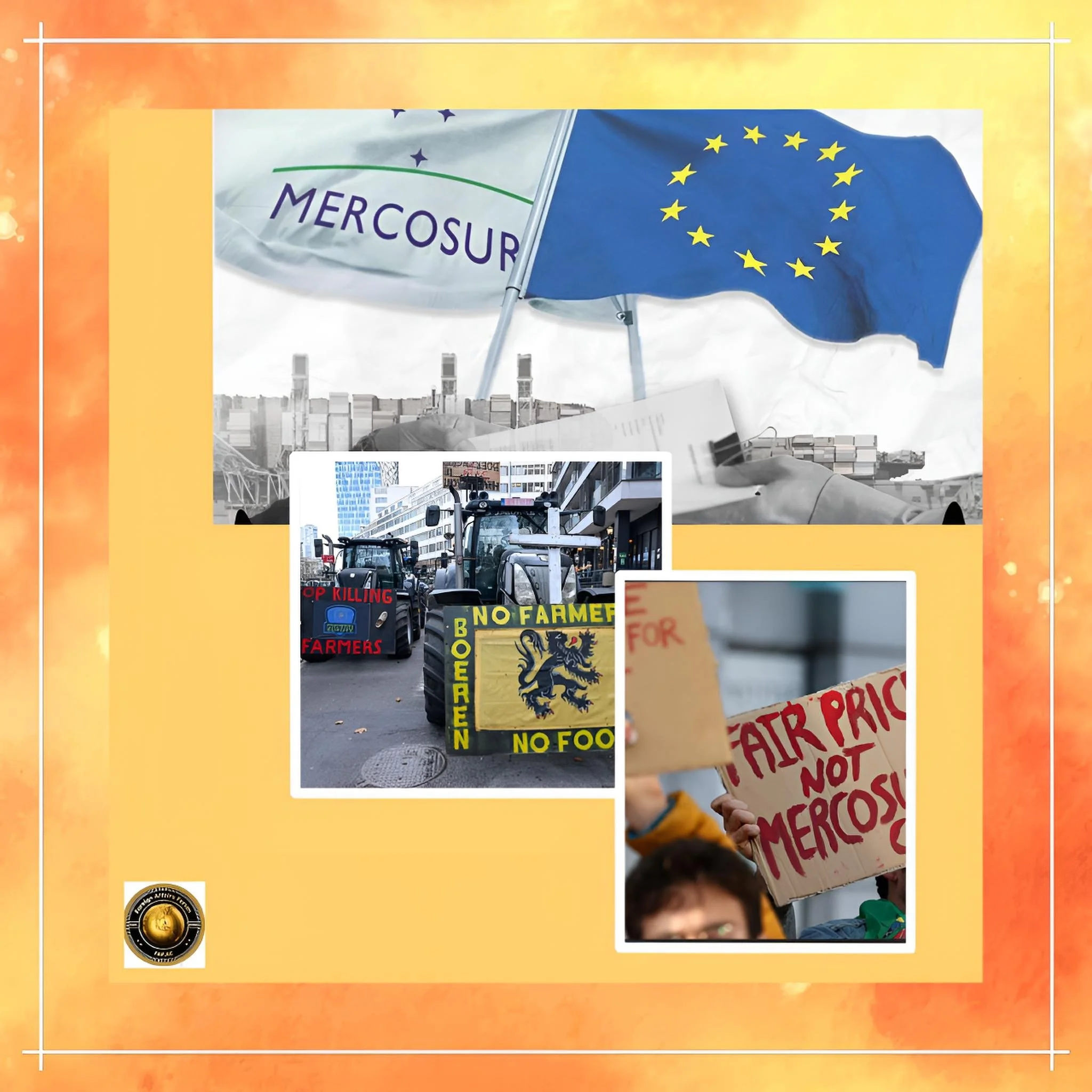
The Hidden Cost of Mercosur: How European Farmers Are Being Sacrificed for Politics - Part III
Introduction
The Deal Nobody Wanted Except the Governments
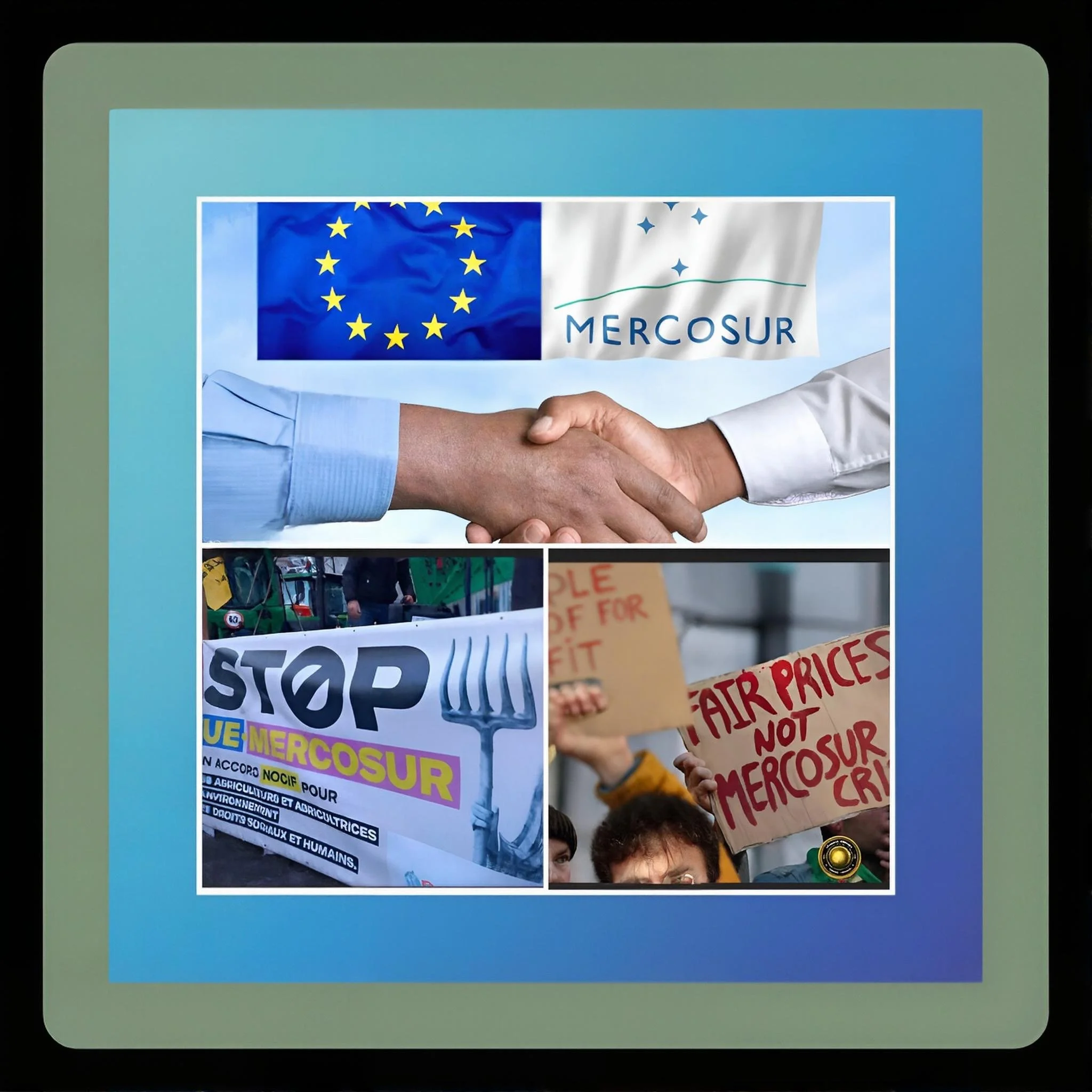
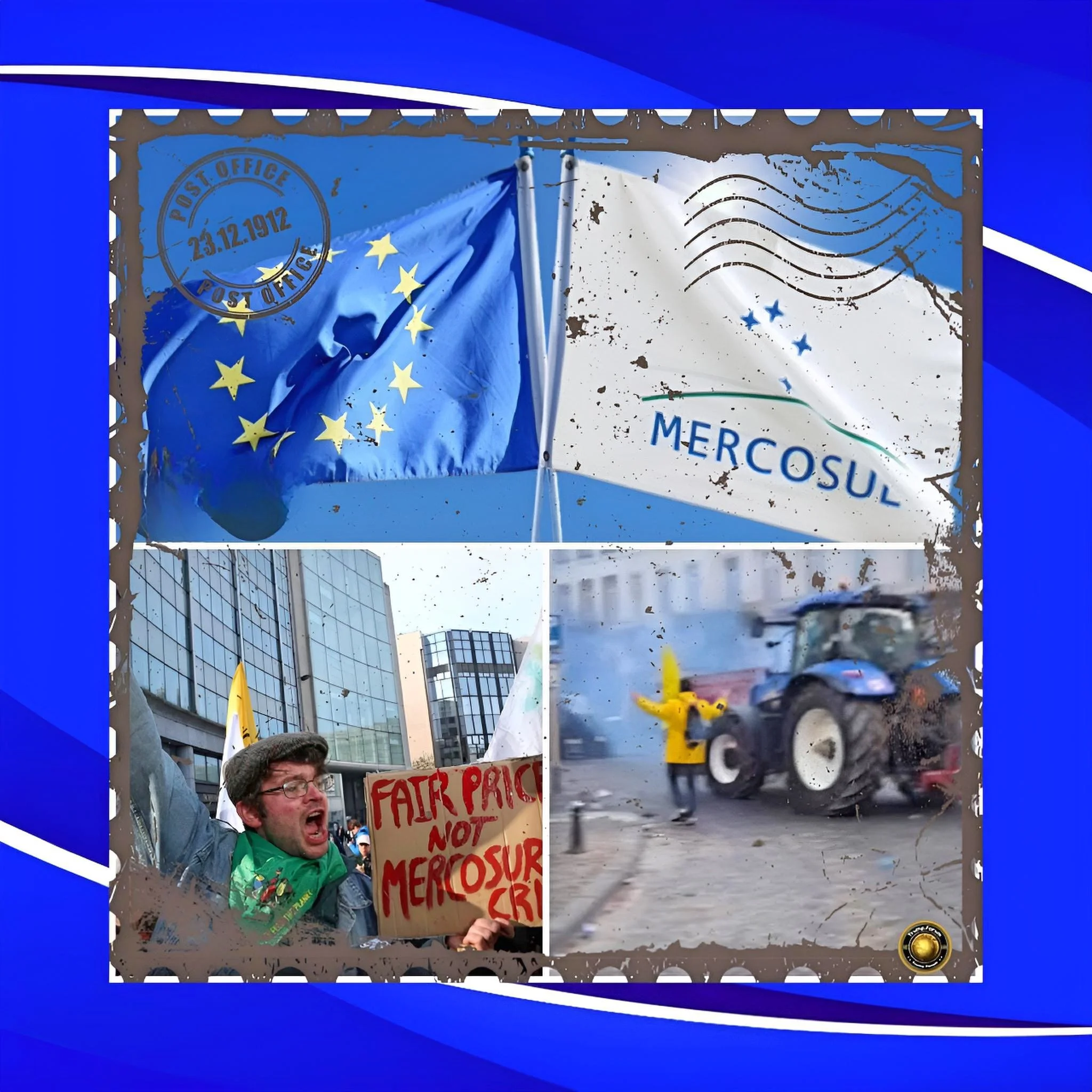
Europe's governments voted in favor of the Mercosur trade deal on January 9, 2026. But farmers didn't want it. The Irish livestock sector didn't like it. French farmers didn't want it. Even many European politicians secretly opposed it.
So why did it pass? Because American geopolitical pressure and corporate lobbying mattered more than farmer survival.
The Simple Problem
European farmers follow strict rules: limits on pesticides, requirements for animal welfare, environmental protections, and labour standards. These rules cost money. But South American farmers don't follow these same rules. Their products are cheaper. Now those cheap products can enter Europe with minimal tariffs.
The result? European farmers lose market share to cheaper competitors. Many will go out of business.
Ireland's economy depends on beef farming. Thousands of Irish beef producers face the prospect of ruin as Brazilian beef floods European markets. The EU allows 99,000 tonnes of Brazilian beef annually, with only a 7.5% tariff instead of the usual 40%. That's enough to devastate Irish producers.
Polish dairy farmers face similar threats. German grain producers will face competition from cheaper Mercosur imports. The damage spreads across European agriculture.
The Fake Protection
The EU promised a "safeguard clause" to protect farmers. But experts doubt it will actually work. The trigger threshold requires either a 10% increase in import volume or a 10% price drop. But agricultural prices naturally fluctuate that much annually. The threshold is too high.
Even if the safeguard triggers, investigations take months. By then, damage is done. Restaurant chains have switched to Brazilian beef. Supermarkets have rearranged supply chains. Restoring tariffs later won't recover lost customers.
The €45 billion compensation fund sounds impressive, but it won't prevent market destruction. Money doesn't rebuild farmer livelihoods once markets collapse.
The Environmental Disaster
The deal creates economic incentive for deforestation. Brazilian ranchers will convert more of the Amazon rainforest into cattle pasture because European markets now offer better profits. Scientists warn that the Amazon is approaching a tipping point. Losing 20-25% of the forest triggers irreversible climate collapse.
Europe claims to fight deforestation through strict regulations. But this trade deal simultaneously incentivises exactly the opposite. The contradiction is indefensible, but it is acknowledged by no one in European government.
Brazilian chicken washed with chlorine, banned in Europe, may enter European supermarkets. Brazilian beef containing banned hormones has already reached Irish consumers. The deal weakens European food safety standards.
Why Europe Did This
Two reasons make European governments support the deal despite farmer opposition:
First, geopolitical panic. When America captured Venezuela's president on January 3, 2026, European leaders worried about American dominance over Latin America. They rushed to approve Mercosur to prove Europe still influences the region.
Second, corporate lobbying. German automotive companies want Mercosur market access. Spanish businesses see opportunities. These corporate interests outweighed farmer survival.
What Happens Next
The European Parliament votes in April or May. Votes are expected to be extremely close—within 15-20 votes of passing. Parliament could reject the entire deal.
But even if Parliament approves it, the Commission plans to provisionally implement trade provisions immediately. Farmers will face market competition before the deal is even officially ratified.
Conclusion
The Message to Farmers
The Mercosur deal sends a clear message: your livelihoods matter less than geopolitical strategy and corporate profits. The compensatory payments are tokens acknowledging this sacrifice.
For European farmers, the next few years will determine survival. For the Amazon rainforest, it means the pressure to deforest intensifies. For European consumers, it means food produced under lower environmental and labour standards will fill supermarkets.
This is what happens when governments prioritise abstract geopolitical competition over the people their policies actually affect.