Artic supremacy and imperial ambition-America’s pursuit of Greenland in the 21st century - Part I
Executive Summary
The Trump administration's renewed assertion that the United States must acquire Greenland represents a convergence of geopolitical calculation, resource scarcity management, and the reassertion of hegemonic control over the Western Hemisphere.
FAF analysis examines the multifaceted motivations underlying American interest in the Danish semi-autonomous territory—encompassing strategic Arctic positioning, the imperative to counterbalance Chinese dominance in critical mineral supply chains, emerging shipping infrastructure opportunities, and presidential ambitions centred on territorial expansion.
FAF examination of historical precedent, contemporary geopolitical realignment, and the substantive obstacles confronting such an acquisition, this article demonstrates that whilst the strategic rationale possesses legitimate strategic dimensions, the pursuit itself reflects a nineteenth-century imperial logic transposed into twenty-first-century power politics.
The Strategic Imperative: Beyond Rhetorical Positioning
A Territory of Unprecedented Geopolitical Consequence
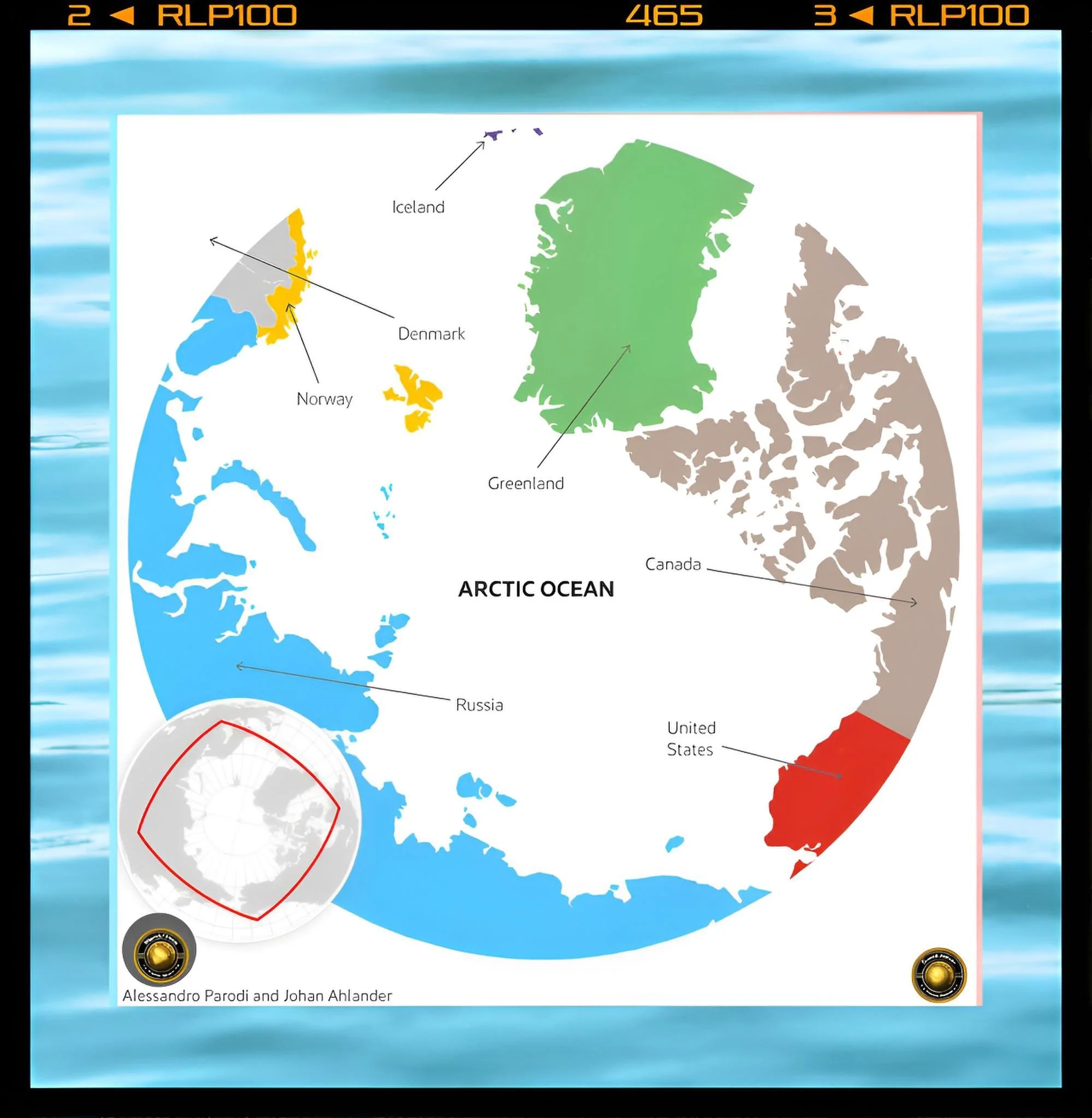
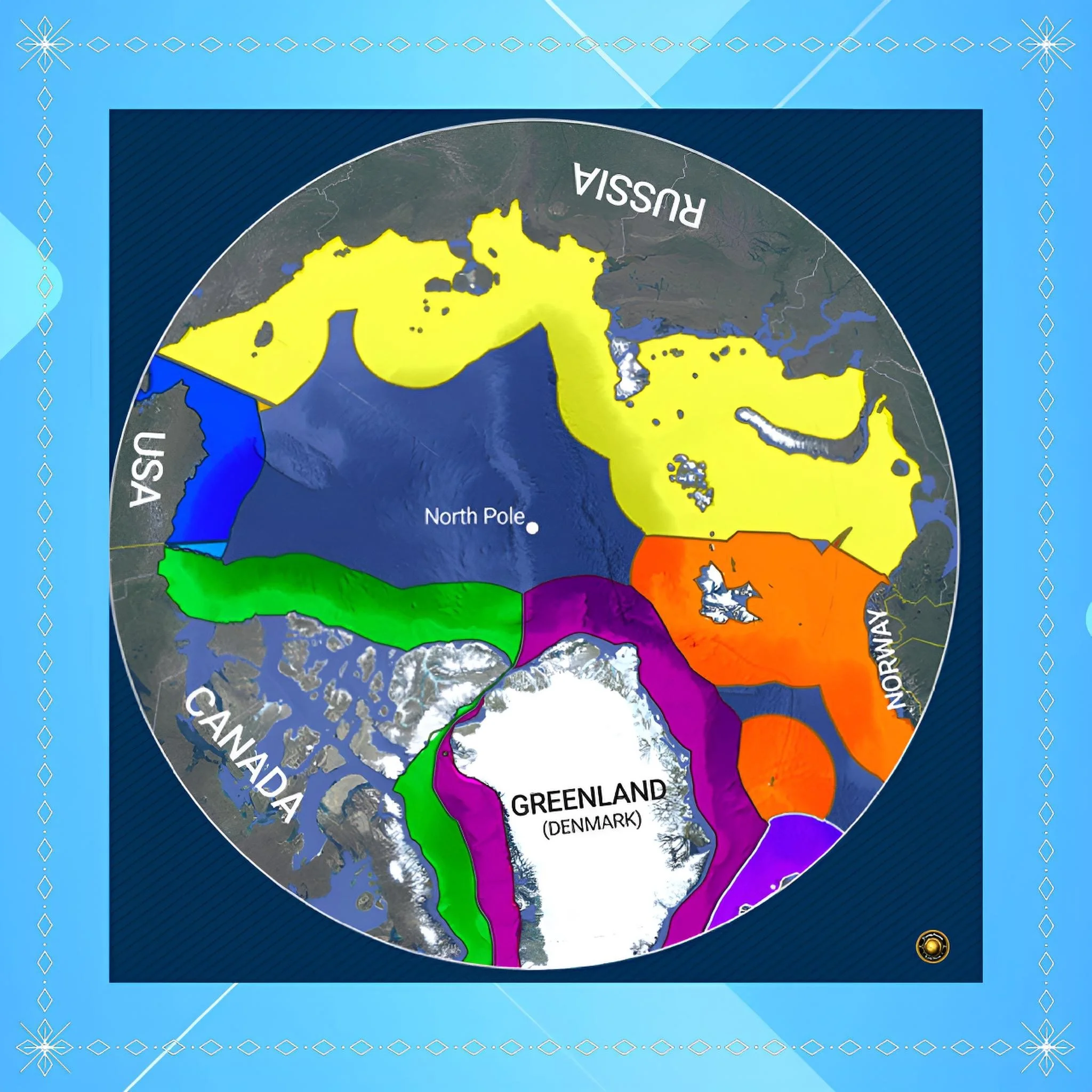
Greenland occupies a position of extraordinary strategic significance within the contemporary global security architecture. The island's geographical placement astride the Greenland-Iceland-United Kingdom (GIUK) gap—that maritime corridor connecting Arctic waters with the Atlantic Ocean—renders it a critical chokepoint for naval operations, particularly concerning Russian submarine access to Atlantic shipping lanes.
Throughout the Cold War, containing the Soviet Northern Fleet constituted a primary strategic objective for American defence planners, and the topographical realities that rendered Greenland indispensable then remain operative today.
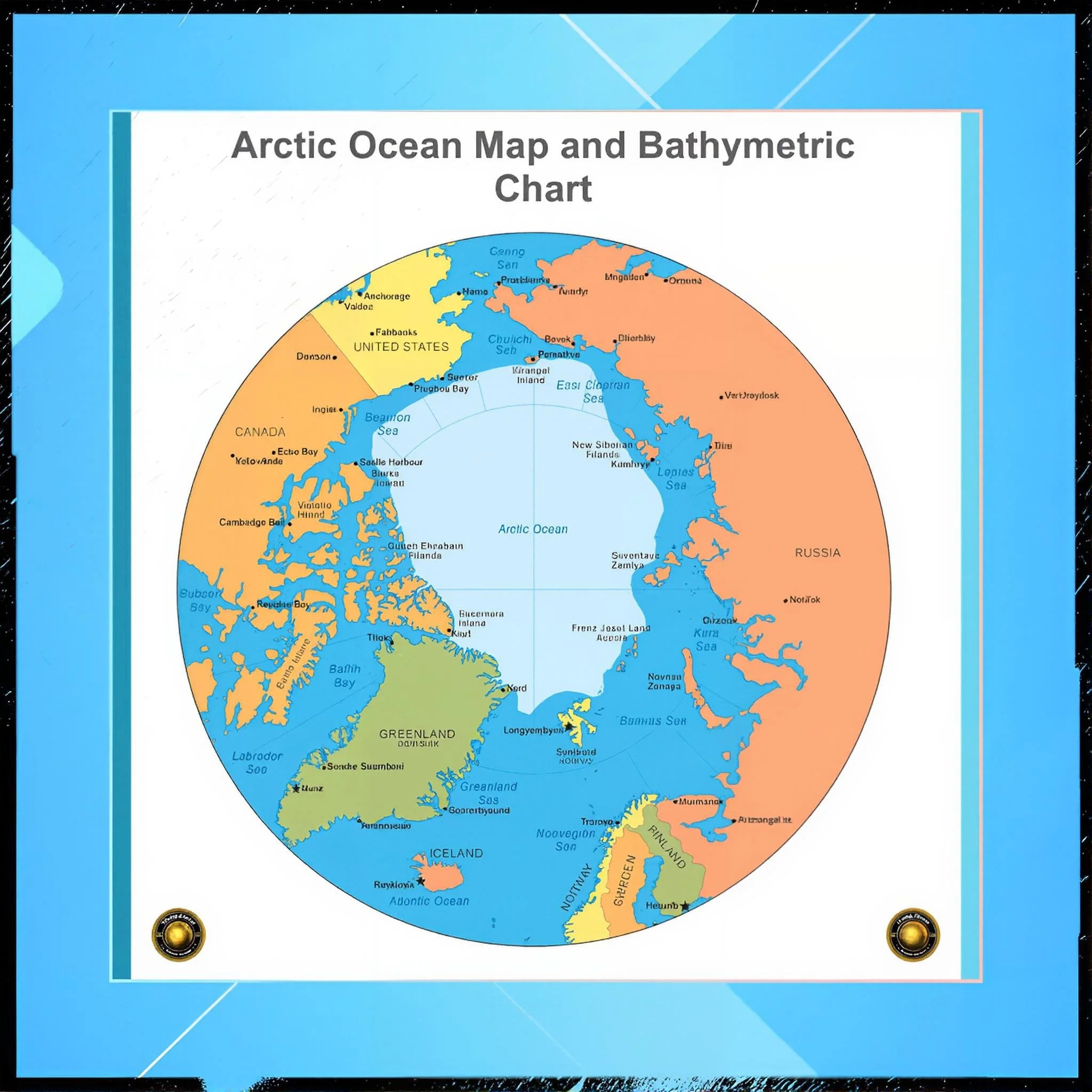
The acceleration of Arctic ice melt consequent to anthropogenic climate change has catalysed a fundamental reconfiguration of the strategic landscape. Two potential trans-Arctic shipping routes—the Northwest Passage and the Northern Sea Route—are progressively becoming viable conduits for commercial and military navigation.
These routes promise transit times reduced by fourteen to twenty days in comparison to traditional Suez and Panama Canal passages, thereby transforming Greenland from a peripheral strategic asset into a potential hub for power projection, logistical support, and hemispheric dominance.
Greenland's military utility extends beyond passive geographic advantage. The establishment of advanced missile-interception platforms, integrated into a "Golden Dome" defence architecture envisioned by the Trump administration, would position the United States to monitor and potentially neutralise threats originating from European or Asian theatres.
The island's location enables simultaneous surveillance of Russian activity in the Arctic and potential Chinese incursions through the evolving Polar Silk Road initiative.
The Mineral Imperative: Breaking Chinese Hegemony
Supply Chain Vulnerabilities and Critical Raw Materials
American strategic vulnerability in the realm of rare earth elements constitutes perhaps the most substantive rationalisation for the Greenlandic acquisition.
Rare earth elements—comprising seventeen chemically distinct minerals essential for the manufacture of defence systems, telecommunications infrastructure, renewable energy technologies, and advanced computational devices—remain subject to Chinese monopolistic control.
China currently accounts for approximately eighty percent of global rare earth element processing, notwithstanding possession of merely thirty percent of proven global reserves.
This structural imbalance reflects neither geological inevitability nor technological superiority, but rather decades of strategic subsidy, regulatory streamlining, and capital investment through which Beijing has constructed a near-insurmountable competitive advantage.
The weaponisation of this dominance—most visibly demonstrated through Beijing's 2010 embargo on rare earth exports to Japan—has alerted American strategists to the possibility that China might utilise supply chain control as a mechanism of coercive statecraft.
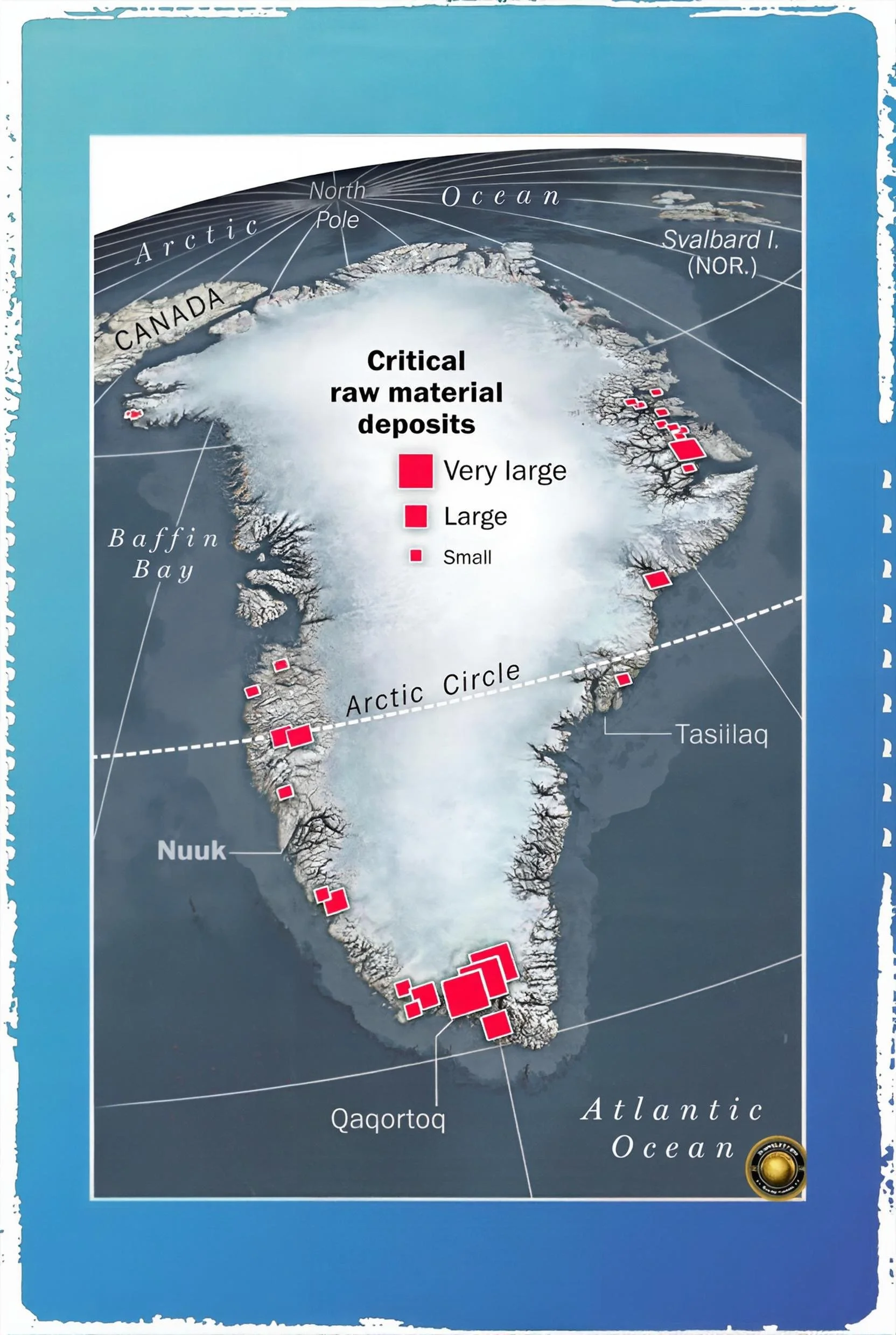
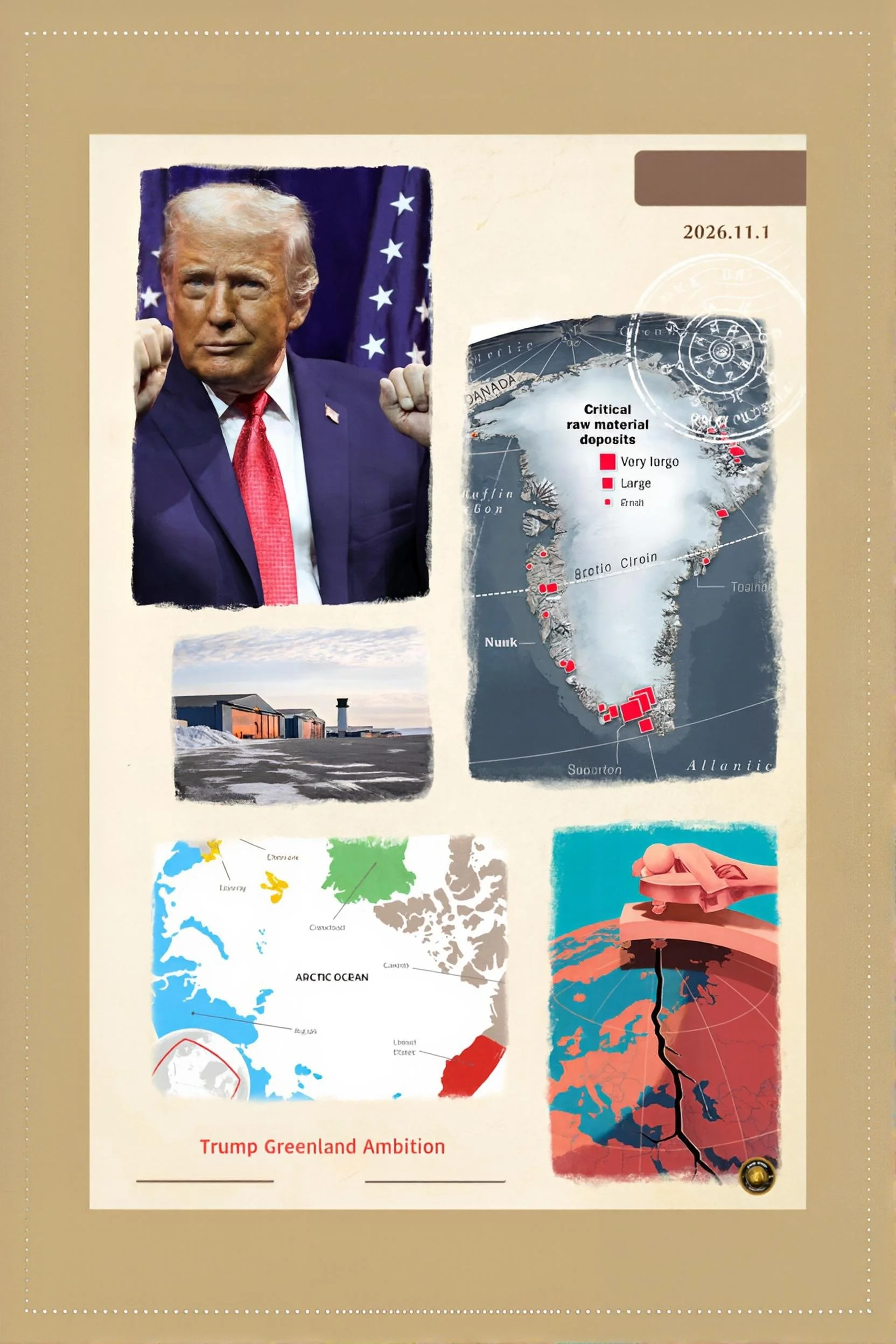
Greenland hosts two of the world's largest rare earth deposits: Kvanefjeld, comprising eleven million metric tons of reserves including three hundred seventy thousand metric tons of heavy rare earths, and the Tanbreez deposit, equally substantial.
The geological formations contain additionally essential elements including gallium, lithium, copper, and uranium—materials whose sourcing remains concentrated amongst a limited number of jurisdictions, predominantly situated within the Chinese sphere of influence or its client states.
The strategic calculus that motivated American interest in Greenlandic rare earths, however, encounters a formidable practical obstacle.
The harsh Arctic climate, operational for merely three months annually in mining regions, renders extraction extraordinarily expensive.
More fundamentally, the absence of processing capacity outside China means that even successfully extracted Greenlandic ore must return to Chinese refineries, thereby perpetuating American vulnerability to Chinese supply-chain manipulation.
Industry analysts assert that meaningful Greenlandic rare earth production remains a decade distant, assuming surmountable infrastructural, climatic, and regulatory impediments.
Greenland Valuation Challenges
Full resource values reach trillions in raw estimates (e.g., $4.4 trillion for all minerals), but low ore grades (<1% vs. 5-10% in operating mines), Arctic conditions, and lacking infrastructure slash economically viable portions to billions at best.
Global REE market projections hit $7.6 billion in 2026, underscoring Greenland’s potential if barriers lift.
No current production means “today’s value” reflects untapped strategic worth rather than realized revenue.
Historical Precedent: The Truman Administration and Forgotten Ambitions
The Postwar Purchase Proposal and Strategic Continuity
The contemporary campaign for Greenlandic acquisition does not represent an unprecedented deviation in American statecraft.
During the immediate post-World War II period, as the Soviet threat crystallised and nuclear strategy began reshaping military doctrine, American planners recognised that intercontinental ballistic missile trajectories rendered Greenland's Arctic position equally valuable for defensive positioning.
In December 1946, Secretary of State James Byrnes formally presented to Danish Foreign Minister Gustav Rasmussen a purchase proposal offering $100 million in gold bullion.
This sum, whilst substantial, represented less a reflection of Greenlandic economic value than a statement regarding American willingness to circumvent traditional diplomatic channels and treat territorial acquisition as a straightforward transaction between state actors, with indigenous inhabitants largely irrelevant to the negotiation.
Denmark's categorical rejection of the American offer introduced a pattern that would persist through subsequent decades: the assertion that Greenland, whilst strategically valuable, remained inextricably bound to Danish sovereignty.
The impasse produced an alternative arrangement through the 1951 Defence Agreement, which accorded the United States extensive rights to maintain military installations and conduct strategic operations whilst preserving nominal Danish sovereignty.
The historical parallel illuminates the persistent character of American strategic ambition in the region.
The language through which modern advocates for Greenlandic acquisition frame their case—emphasising prevention of Russian or Chinese dominance, the necessity of hemispheric security, the inadequacy of allied capability—mirrors almost precisely the rhetorical frameworks deployed by Truman-era planners.
This consistency suggests that Trump administration interest transcends idiosyncratic presidential preference and reflects instead the crystallisation of strategic doctrine that has evolved across administrations.
The Contemporary Geopolitical Context: Rivalry in the Arctic
Russian Rearmament and the Chinese Polar Initiative
Russian military activity in the Arctic has undergone substantial intensification since the termination of Cold War constraints. Moscow has refurbished over fifty Soviet-era facilities, established modernised ports, and deployed advanced naval and air capabilities throughout Arctic territories.
The Russian Northern Fleet operates at unprecedented levels of readiness, whilst Arctic-focused military procurement has emerged as a sustained priority within Russian defence budgeting.
China, lacking territorial claims within Arctic territories, has articulated its interests through the construct of a "Polar Silk Road"—an initiative encompassing resource extraction arrangements, shipping infrastructure participation, and strategic positioning within Arctic governance frameworks.
Chinese investment in Greenlandic mining projects, achieved through shareholding in companies exploring rare earth deposits, represents a manifestation of this broader Arctic strategy.
From the American perspective, the convergence of Russian resurgence and Chinese Arctic engagement creates a geopolitical environment wherein the absence of dominant American positioning constitutes a strategic deficiency.
The Trump administration's rhetoric regarding threats to American security emanating from potential Russian or Chinese occupation of Greenland, whilst substantially hyperbolic—Greenland is not surrounded by Chinese or Russian warships, as Trump suggested—reflects a legitimate concern regarding the marginalisation of American influence within a region of escalating strategic consequence.
The Acquisition Strategy: Diplomatic, Financial, and Military Dimensions
The Graduated Escalation of American Pressure
The Trump administration has demonstrated a willingness to pursue Greenlandic acquisition through multiple concurrent mechanisms, suggesting a strategy of graduated escalation calibrated to elicit territorial concessions through combination of incentive, pressure, and implied coercive capacity.
The financial component represents perhaps the most transparently transactional element. White House officials have circulated proposals providing individual payment to Greenland's approximately fifty-seven thousand residents, with figures ranging from $10,000 to $100,000 per person. Such payments, aggregating between $570 million and $5.7 billion, would function simultaneously as rationalisation and incentive—providing Greenlanders financial compensation for incorporation into the American polity whilst implicitly acknowledging the territorial integrity and self-determination rights that American rhetoric ostensibly denies.
The diplomatic dimension encompasses engagement with Denmark and Greenland through official channels, wherein American officials have indicated willingness to negotiate modalities of acquisition whilst maintaining that the outcome itself constitutes a predetermined objective.
Secretary of State Marco Rubio has stated formal American intent to purchase Greenland, distinguishing this from the coercive alternatives under consideration, thereby presenting acquisition-through-purchase as the diplomatically preferable option.
The military dimension, least publicly acknowledged but increasingly evident through reporting regarding Joint Special Operations Command planning directives, represents the ultimate escalation mechanism.
Trump administration statements that military force "remains an option" constitutes a threat of sufficient explicitness that military planning has commenced. Whilst the Joint Chiefs of Staff have expressed opposition to such intervention as legally and constitutionally impermissible, the explicit invocation of military possibility in presidential discourse represents a departure from conventional diplomatic practice and a signal of willingness to employ force should negotiated acquisition prove unattainable.
The Obstacles: Resistance and Practical Impediments
The Intransigent Opposition of Indigenous Populations
The Trump administration has encountered categorical and unified opposition from Greenlandic political leadership across party boundaries. All major political parties—whether pro-independence Siumut, the independence-advocating Naleraq, or the anti-mining Inuit Ataqatigiit—have issued joint declarations affirming that "Greenland's future must be determined by Greenlandic people" and that the island is "not for sale."
Survey evidence indicates that substantial majorities of Greenlandic residents oppose American acquisition, viewing the prospect with hostility. The assertion that payments might incentivise acquiescence to annexation reflects profound misunderstanding of Greenlandic political culture and nationalist sentiment.
For a population that has experienced centuries of Danish colonial governance and which views independence as a forthcoming historical inevitability, American incorporation represents not opportunity but the substitution of one imperial overlord with another.
NATO Architecture and the Crisis of Alliance Structure
American military acquisition of Greenland would constitute a direct violation of Article 5 of the North Atlantic Treaty, the foundational provision stipulating that armed attack upon one member constitutes attack upon all.
Danish Prime Minister Mette Frederiksen has unambiguously stated that military action would precipitate NATO's dissolution, a statement reflecting neither diplomatic hyperbole nor empty threat but rather the existential incompatibility between American unilateral territorial seizure and the reciprocal security arrangements upon which alliance coherence depends.
European allies—the United Kingdom, Germany, France, Italy, Spain, Poland, and Estonia—have issued joint statements affirming Danish territorial integrity and reiterating commitment to international law's foundational principles regarding sovereignty and territorial inviolability.
Such alignment represents precisely the consequence of unilateral American action that strategic doctrine presumes to prevent: rather than securing American dominance through Greenlandic acquisition, such action would fracture the alliance structure through which American hegemony in Europe has been historically maintained.
The Infrastructural and Climatic Realities
Mining operations in Greenland encounter obstacles of such magnitude that experts have characterised rare earth development prospects as "absurd." The harsh Arctic climate restricts operations to merely three months of the calendar year. Infrastructure capable of supporting large-scale extraction, beneficiation, and export remains wholly absent, with its construction requiring capital investments quantified in the billions of dollars and lead times extending across multiple decades.
Most critically, the absence of rare earth processing capacity outside China means that extracted Greenlandic ore must be transported to Chinese facilities for separation and refinement, thereby perpetuating the very supply chain vulnerability that American acquisition ostensibly seeks to remediate.
Experts project that meaningful Greenlandic rare earth production remains a minimum of ten years distant, rendering the mineral rationale substantially less compelling than Trump administration rhetoric suggests.
The Cause-and-Effect Architecture: From Strategic Doctrine to Political Pronouncement
The Logic of Hegemonic Competition
The American pursuit of Greenland reflects not aberration but rather the logical consequence of strategic doctrines emphasising hemispheric supremacy and the prevention of great power competition in regions Washington has historically dominated.
The Trump administration's explicitly articulated strategy of achieving American supremacy "in the Western Hemisphere," combined with the doctrine that American military capacity justifies unilateral action unconstrained by alliance structures or international law, produces a trajectory wherein Greenlandic acquisition becomes a logical objective rather than an anomalous caprice.
The successful American military operation in Venezuela in January 2026, resulting in the apprehension of President Nicolás Maduro without congressional authorisation or international coordination, appears to have emboldened administration advocates for comparable action in Greenland.
The demonstration that unilateral military intervention could achieve targeted objectives generated conviction that similar tactics could succeed regarding Greenlandic acquisition, particularly given that American military forces already positioned in the region possess overwhelming superiority in comparison to Danish defence capabilities.
Future Trajectories: Scenarios and Probabilities
Diplomatic Resolution and NATO Preservation
The continuation of diplomatic negotiation through established bilateral channels constitutes the most probable near-term trajectory.
The 1951 Defence Agreement provides extraordinarily expansive provisions regarding American military positioning, enabling the Trump administration to expand its presence without formal territorial acquisition.
Denmark and Greenland have demonstrated willingness to accommodate American military requests through existing frameworks, suggesting that specific security objectives might be achieved through negotiation rather than coercion.
The appointment of a special envoy to Greenland and the scheduling of tripartite negotiations between American, Danish, and Greenlandic officials indicate administration recognition that diplomatic mechanisms retain utility.
The presentation of purchase proposals, despite their categorical rejection by Greenlandic and Danish authorities, nonetheless functions to maintain negotiating frameworks within which potential compromise might emerge.
Escalatory Scenarios and Alliance Fracture
Should the Trump administration pursue military intervention despite European opposition and Danish resistance, the consequences would extend far beyond the acquisition of a single territory.
Such action would precipitate the disintegration of NATO, the fractionalisation of the transatlantic alliance, and the emergence of a strategic landscape wherein European security arrangements would require fundamental reorganisation absent American security guarantees.
The invocation of the Monroe Doctrine as applicable to Greenlandic sovereignty—as some administration officials have suggested—would signal American rejection of the post-World War II international law framework and the assertion of nineteenth-century imperial prerogatives regarding hemispheric dominance.
Such a reorientation would precipitate responses from Russia and China designed to exploit the resulting strategic vacuum, potentially generating the very security circumstances the Greenlandic acquisition purports to prevent.
The Mechanism of Greenlandic Independence and Conditional Sovereignty
An alternative trajectory might involve American support for Greenlandic independence coupled with the negotiation of a Compact of Free Association or equivalent arrangement granting the United States extensive military and strategic privileges in exchange for economic assistance and security guarantees.
Such an approach would circumvent Danish sovereignty whilst ostensibly honouring Greenlandic self-determination, though the distinction between such arrangements and American dominance would constitute largely a matter of technical legal designation rather than substantive geopolitical reality.
Conclusion: The Imperial Logic of Contemporary Power Politics
The Reassertion of Historical Patterns
The American pursuit of Greenland illuminates the degree to which contemporary great power competition has recapitulated the patterns of nineteenth-century imperialism, merely with modern technological apparatus and contemporary ideological justifications substituted for the missionary zeal and racial hierarchies that justified earlier territorial acquisitions.
The assertion that Greenland must become American not because Greenlanders desire such incorporation but because American security requires it reflects precisely the logic through which imperial powers have historically justified the subordination of peripheral populations to metropolitan interests.
The Trump administration's invocation of national security as the overriding imperative permitting the violation of Danish sovereignty and the negation of Greenlandic self-determination follows historical patterns whereby strategic exigency has been deployed to justify the abrogation of international law and the imposition of hegemonic control.
That such arguments emerged in the twentieth century context of Soviet deterrence and emerge in the twenty-first century context of Chinese competition suggests the persistence of geopolitical frameworks within which the incorporation of strategically situated territories constitutes a rational objective of hegemonic statecraft.
The ultimate irony inheres in the probability that military seizure of Greenland would achieve the opposite of its strategic intention. Rather than securing American hemispheric dominance and preventing the emergence of rival great power influence, such action would precipitate the very fragmentation of alliance structures and the dispersal of American influence that strategic doctrine presumes to prevent.
The maintenance of American hegemony—in the Arctic and globally—depends upon the alliance architecture that American unilateral action would destroy.
Greenland's value to American strategy derives not from its minerals or its real estate, but from its position within a system of allied cooperation that American conquest would necessarily obliterate.