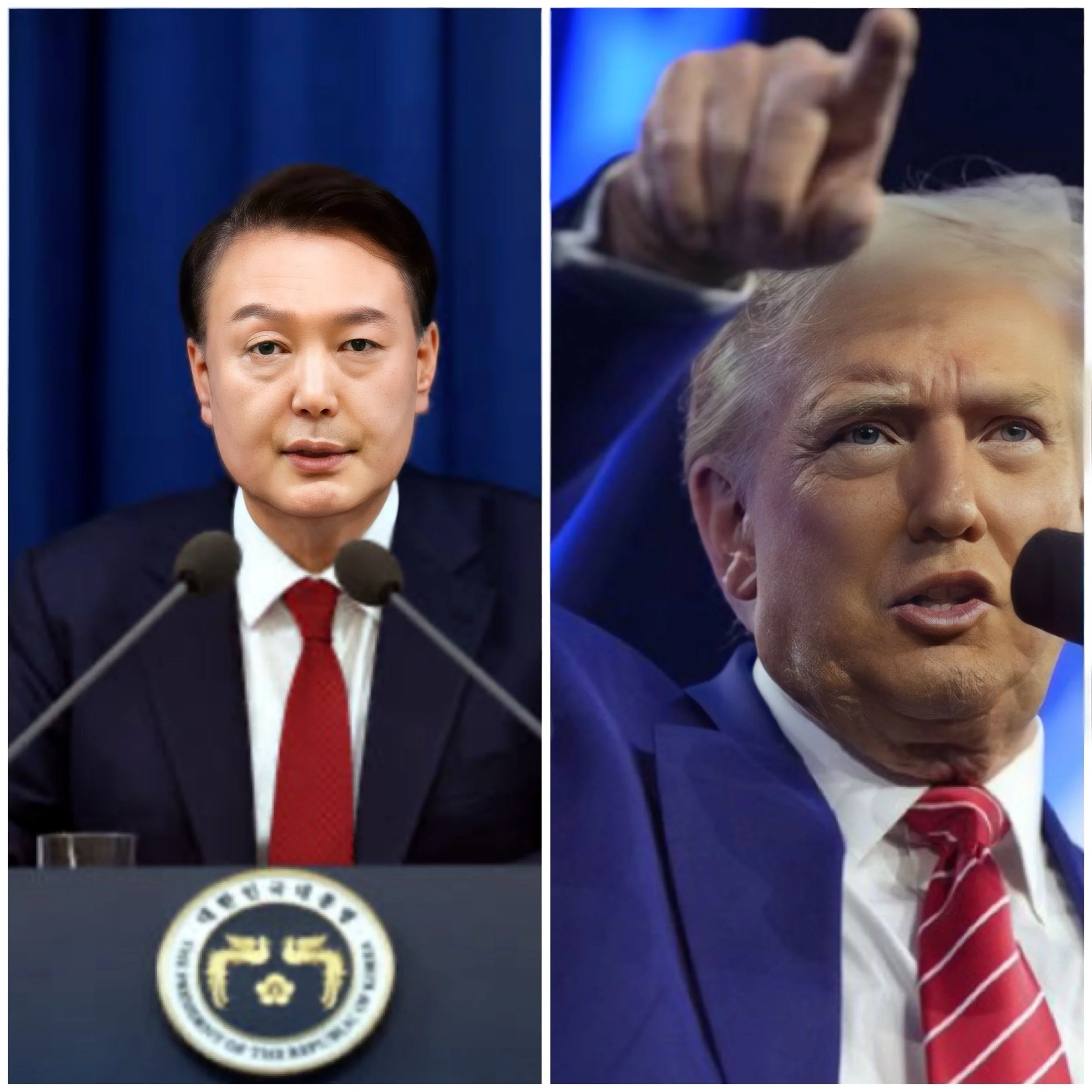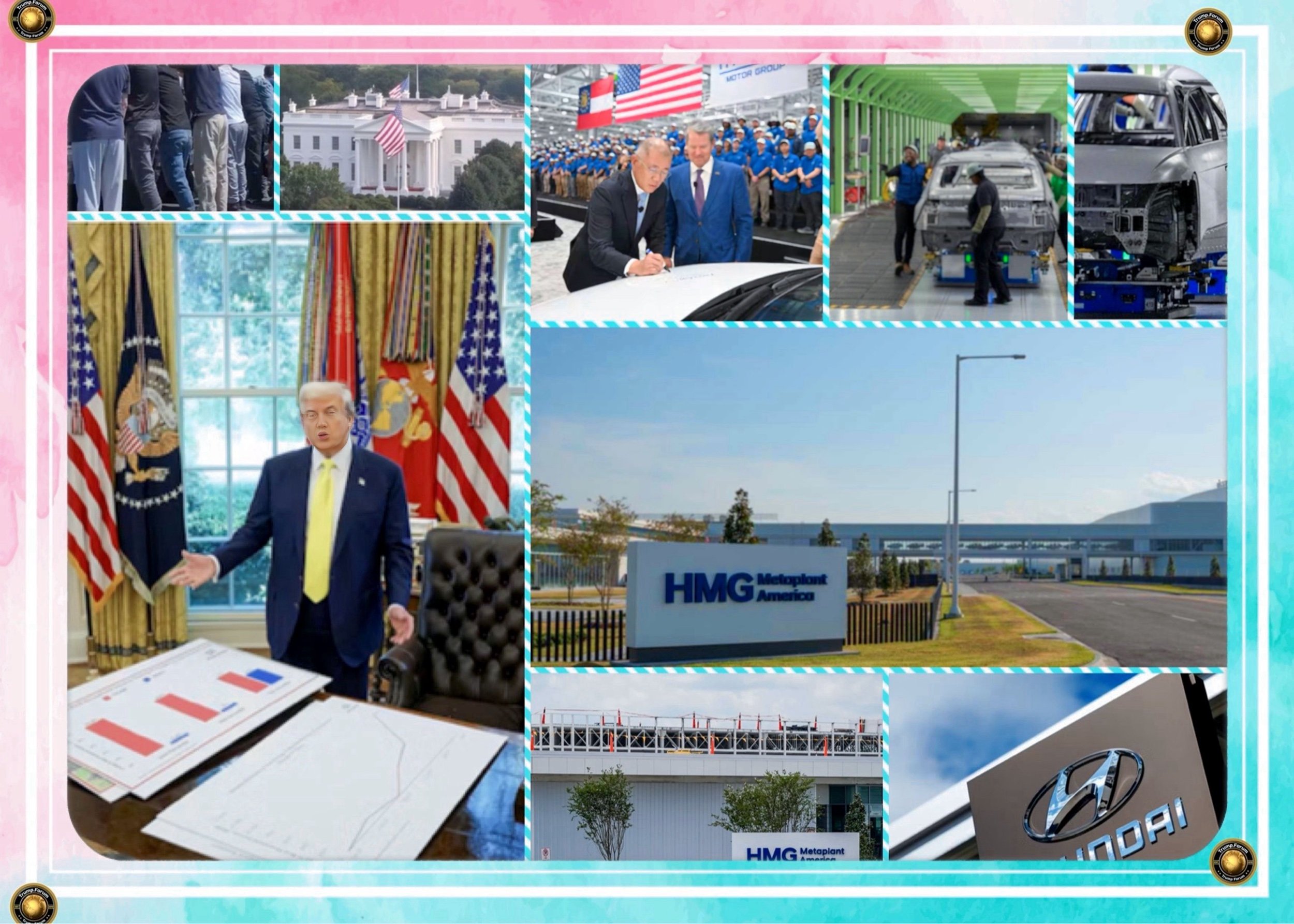
Trump's Immigration Crackdown on South Korean Workers at Hyundai Facility: A Diplomatic Dilemma and Economic Fallout : Western hegomony, Coercion tactics or Intimidation
Executive Summary
Trump's Immigration Crackdown on South Korean Workers at Hyundai Facility: A Diplomatic Dilemma and Economic Fallout
In a surprising turn of events, the Trump administration has launched a bold immigration raid targeting South Korean workers employed at the Hyundai manufacturing plant in the United States.
This action raises significant concerns regarding the treatment of foreign labor but also poses profound implications for U.S.-South Korea relations, sparking fears of diplomatic tensions that could ripple across the economic landscape.
As the administration pursues its stringent immigration policies, questions arise about whether this approach is a calculated diplomatic strategy or merely an attempt to instill fear in allied nations.
The repercussions of such a raid extend beyond individual workers and could strain an alliance that has been pivotal for both countries in terms of trade and security cooperation.
As negotiations and discussions between the two nations unfold, this raid's economic ramifications could threaten the plant's production stability and potentially hinder bilateral trade relations.
This situation underscores the delicate balance of immigration policy, international diplomacy, and economic interests, inviting scrutiny from various stakeholders concerned about the future of labor dynamics and diplomatic rapport.
Introduction
On September 4, 2025, U.S. Immigration and Customs Enforcement (ICE) executed an unprecedented enforcement operation at the Hyundai-LG electric vehicle battery plant construction site in Ellabell, Georgia.
This operation marked the most significant single-site enforcement action in the Department of Homeland Security's history, resulting in the detention of 475 individuals.
Among those arrested, more than 300 were identified as South Korean nationals.
The enforcement action mobilized approximately 500 federal, state, and local law enforcement officials from various agencies, including ICE, the FBI, the DEA, the IRS, and the Bureau of Alcohol, Tobacco, Firearms, and Explosives.
Footage released by ICE depicted a chaotic scene where workers were marched in a line, thoroughly searched, and restrained with shackles at their hands, ankles, and waists, undersco
Context: The $350 Billion Investment Framework
The July 2025 Trade Agreement
The immigration raid must be understood in the context of the comprehensive trade agreement between the United States and South Korea, which was signed in July 2025.
This agreement represented one of the most significant bilateral economic arrangements in recent diplomatic history, featuring:
Financial Commitments
$350 billion in total South Korean investments in U.S. strategic industries
$150 billion allocated explicitly for shipbuilding cooperation.
$100 billion commitment to purchase U.S. liquefied natural gas and energy products over four years.
Reduction of U.S. tariffs on South Korean products from 25% to 15%
Strategic Sectors
The investment framework targeted critical industries, including semiconductors, biotechnology, artificial intelligence, vital minerals, and advanced manufacturing.
The Hyundai-LG battery plant, valued at $7.6 billion, was positioned as a flagship project within this broader economic partnership.
Implementation Structure
South Korean officials clarified that the $350 billion commitment would function primarily through loan guarantees rather than direct capital injections, with actual equity involvement remaining below 5%.
This structure was designed to support "commercially viable, pre-vetted U.S.-based projects" while minimizing fiscal risk to South Korea.
The Raid: Scale and Execution
Operational Details
The September 4 operation represented the most significant single-site enforcement action in the Department of Homeland Security's history, mobilizing approximately 500 federal, state, and local law enforcement personnel.
The multiagency operation included ICE, the FBI, the DEA, the IRS, and the Bureau of Alcohol, Tobacco, Firearms, and Explosives.
Detention Statistics
475 total individuals detained.
Over 300 South Korean nationals are among those arrested.
Focus on the under-construction battery facility rather than the operational EV plant.
Legal Framework and Violations
ICE officials characterized the detentions as enforcement against individuals "illegally present in the United States.”
ICE officials characterized the detentions as enforcement against individuals "illegally present in the U.S." who were allegedly working contrary to their visa agreements.
Steven Schrank, the special agent overseeing Homeland Security Investigations, detailed that detainees had either:
Unlawfully entered the United States.
Overstayed their visas.
Violated the visa waiver program terms prohibiting employment.
Many South Korean workers were on business visas or participating in the visa waiver program, but were found engaged in unauthorized construction work.
Diplomatic Consequences and Resolution
South Korean Response
The raid triggered immediate diplomatic tensions with South Korea, a critical U.S. ally and the world's tenth-largest economy.
Foreign Minister Cho Hyun expressed "great sense of responsibility" regarding the arrests, emphasizing that "the economic endeavors of our investing companies and the rights of our citizens must not be unjustly infringed upon"
South Korean President Lee Jae-myung convened emergency meetings and directed comprehensive efforts to address the situation, establishing a dedicated task force to manage the crisis.
Swift Diplomatic Resolution
Within three days of the raid, South Korea successfully negotiated the release of all detained workers.
Presidential Chief of Staff Kang Hoon-sik confirmed on September 7 that arrangements were being made for a chartered flight to repatriate the workers.
This rapid resolution demonstrated both countries' recognition of the high stakes in maintaining their economic partnership.
Strategic Analysis: Dual Leverage Diplomacy
The Investment-Enforcement Paradox
The timing and scale of the raid illuminate a sophisticated but potentially counterproductive diplomatic strategy.
While the Trump administration actively courted South Korean investment to enhance U.S. manufacturing capacity through the $350 billion commitment, it simultaneously enforced immigration policies that undermined those companies' ability to execute their projects.
Immediate Impact
LG Energy Solution suspended most business travel to the U.S. and ordered all employees to return home.
Construction at the battery plant was halted during the operation.
The incident forced South Korean companies to reassess their operational strategies in the United States, which put both allies at economic risk.
Coercive Leverage or Policy Contradiction?
The raid's timing, just weeks after the landmark trade agreement, raises questions about intentionality versus policy coordination failures.
Several analytical frameworks emerge.
Intentional Coercion Theory
The operation may represent calculated leverage, reminding allies that economic concessions do not guarantee immunity from enforcement actions.
This interpretation suggests the Trump administration uses immigration enforcement as a tool of economic diplomacy.
Bureaucratic Disconnect Theory
Alternatively, the raid may reflect poor coordination between economic and immigration policy agencies, with ICE pursuing a months-long investigation without considering broader diplomatic implications.
Broader Context: Trump Administration
Immigration Enforcement
Escalating Workplace Raids
The Hyundai-LG raid occurred within a broader pattern of intensified workplace immigration enforcement under the second Trump administration.
ICE arrest numbers surged over 250% in June 2025 compared to the previous year, though deportation rates remained significantly lower than arrest figures.
Key Trends
Daily arrest targets of approximately 3,000 unauthorized immigrants.
Expansion of worksite enforcement operations beyond traditional sectors.
Increased arrests of individuals without criminal records beyond immigration violations.
The key trends are notably alarming; however, the most disturbing for US residents and citizens is the last one ‘Arrest of individuals without criminal records beyond immigration violations.”
The Trump administration needs to revisit the above as possible ‘rumors’ about ICE's role seem to be overstepping their jurisdiction.
Economic Disruption
Immigration enforcement operations have generated significant economic disruption across multiple industries.
California experienced a 3.1% drop in private-sector employment immediately following stepped-up immigration raids, while businesses reported substantial operational disruptions and customer concerns.
Geopolitical Implications
Alliance Strain and Adaptation
The incident represents a microcosm of broader tensions between Trump's "America First" economic policies and traditional alliance management.
South Korea's ability to quickly secure its workers' release demonstrates its diplomatic leverage, but the underlying policy contradictions suggest ongoing challenges for bilateral cooperation.
Investment Calculus Reassessment
The raid may prompt South Korean companies and other foreign investors to reassess their fundamental investment strategies.
U.S. investment strategies. Key considerations include
Operational Risk
Uncertainty regarding worker visa compliance and enforcement unpredictability.
Regulatory Environment
Questions about policy coordination and government reliability.
Alternative Markets
Potential diversification of investment portfolios to reduce U.S. dependency on time.
Precedent for Other Allies
The Hyundai-LG incident establishes a concerning precedent for other U.S. allies making significant investment commitments.
Japan and European Union countries, which have also negotiated substantial trade agreements with the Trump administration, may now factor in immigration enforcement.
Conclusion
Long-term Strategic Assessment
Transactional Diplomacy Risks
The incident exemplifies the risks inherent in transactional diplomatic approaches prioritizing short-term leverage over long-term relationship stability.
While South Korea successfully negotiated its workers' release, the underlying policy framework that enabled the crisis remains unchanged.
Economic Security Implications
The raid highlights fundamental tensions between economic security objectives and immigration enforcement priorities.
As the United States seeks to onshore critical manufacturing capacity through foreign investment, immigration policies obstructing the necessary skilled labor movement create structural contradictions in strategic planning.
Trust and Predictability Deficits
The incident contributes to broader concerns among U.S. allies about policy predictability and institutional reliability.
Despite formal diplomatic resolution, the underlying message - that massive investment commitments do not guarantee protection from enforcement actions - may have lasting implications for future economic partnerships.
Thus, the September 2025 Hyundai-LG raid represents more than an immigration enforcement operation; it embodies the complex challenges of managing economic interdependence in an era of heightened nationalism and transactional diplomacy.
While the immediate crisis was resolved through effective diplomacy, it revealed that structural tensions continue to shape the broader landscape of U.S.-allied economic cooperation.