Trump’s Tariff Escalation: Global Impacts of the April 9th Implementation and 50% China Threat
Introduction
President Donald Trump’s aggressive trade policy is set to enter a new phase with the implementation of “reciprocal” higher tariffs on April 9, 2025, following the initial 10% baseline tariff that took effect on April 5.
This represents a dramatic escalation in global trade tensions, particularly with China, whom Trump has threatened with an additional 50% tariff if Beijing doesn’t withdraw its retaliatory 34% duties—potentially resulting in a staggering 104% total tariff rate on Chinese goods.
Republican senators increasingly question the administration’s authority to unilaterally impose these measures, while economists and international leaders express concern about potential global recession risks.
The ripple effects are evident in market downturns and retaliatory measures from trading partners, with China vowing to “fight to the end” against American “blackmail.”
Trump’s Tariff Implementation Timeline and Structure
The Trump administration has structured its tariff policy in two distinct phases, which are justified under the declaration of a national emergency under the International Emergency Economic Powers Act (IEEPA).
The first phase, already in effect, established a baseline tariff affecting approximately 50 countries. “The initial 10 percent ‘baseline’ tariff took effect at United States seaports, airports, and customs warehouses at 12:01am ET on Saturday, ushering in Trump’s full rejection of the post-World War II system of mutually agreed tariff rates,” affecting nations including Australia, Britain, Colombia, Argentina, Egypt, and Saudi Arabia.
This initial implementation provides limited exemptions, with a 51-day grace period only for cargoes already in transit before the April 5 implementation date.
The more impactful second phase—the “reciprocal” higher tariffs—is scheduled for April 9, 2025, at 12:01 a.m. EDT.
These heightened tariffs target countries with which the United States maintains significant trade deficits and vary substantially by nation.
European Union imports will face a 20% tariff, while Chinese goods will be hit with a 34% additional tariff. This brings Trump’s total new levies on China to 54%, even before the threatened additional 50%.
During Trump's first term, Vietnam benefited from supply chain shifts and will face a particularly steep 46% tariff. However, the country has recently agreed to discuss a potential deal with the administration.
The Trump administration justified these measures as necessary to address “the hollowing out of our manufacturing base” and to strengthen “the international economic position of the United States and protect American workers.”
These tariffs are designed to remain in effect indefinitely “until such a time as President Trump determines that the threat posed by the trade deficit and underlying nonreciprocal treatment is satisfied, resolved, or mitigated.”
China Tariff Escalation and the 104% Threat
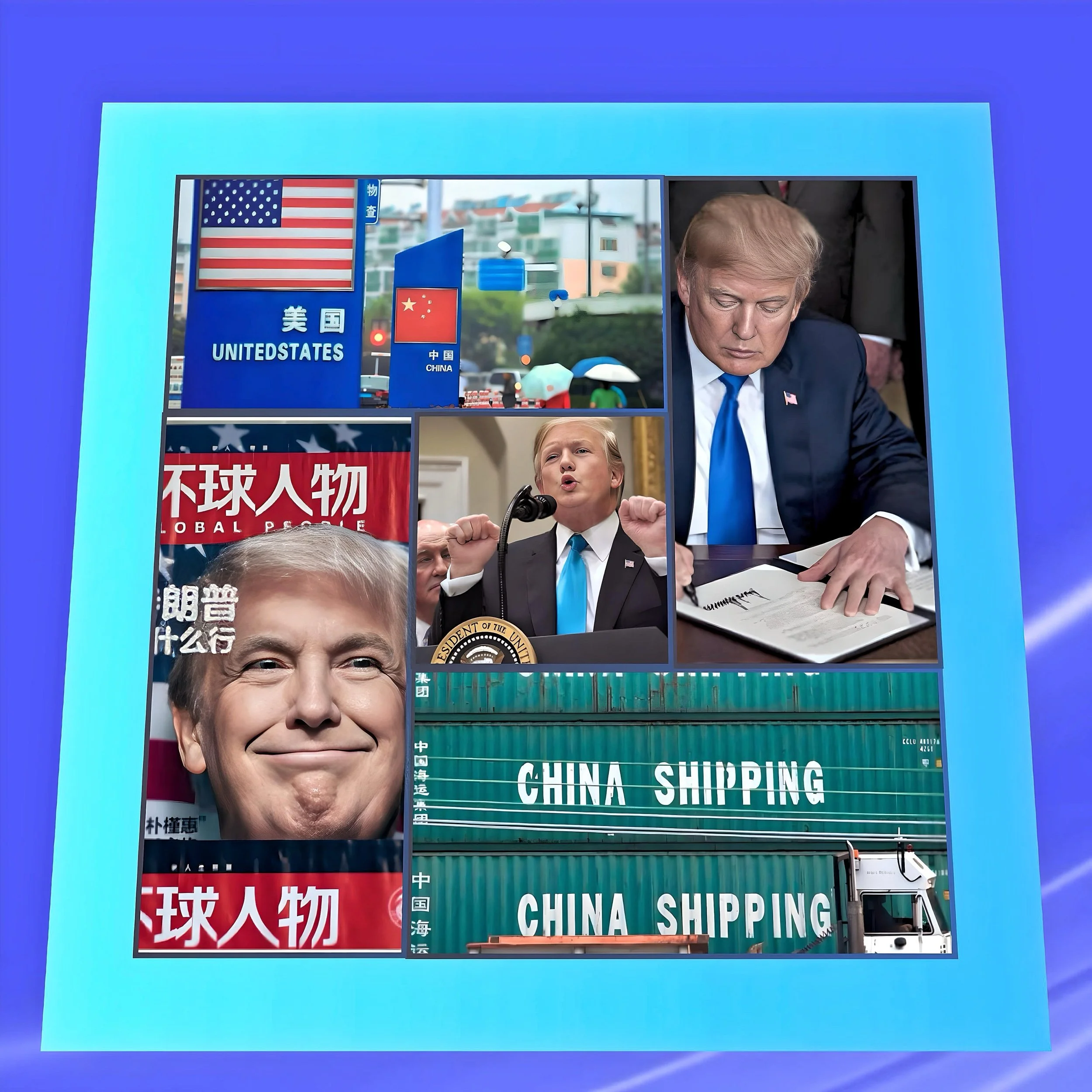
The situation with China represents the most severe trade confrontation, with Trump threatening an additional 50% tariff if Beijing doesn’t withdraw its retaliatory duties. “If the Trump administration imposes an additional 50 percent tariff, it could bring the U.S. levy on Chinese goods to 104 percent”.
The effective rate might be even higher for specific items that already faced tariffs established during Trump’s first term.
China’s Commerce Ministry has forcefully rejected Trump’s demands, stating: “The U.S. threat to further escalate tariffs on China represents a misstep on top of another misstep, once again revealing the coercive nature of the United States.
China will never acquiesce to this”. Beijing has explicitly characterized the U.S. threat as “blackmail” and vowed to “fight to the end” if Trump proceeds with the additional tariffs. China has already announced its 34% duties on American goods, which will come into effect on Thursday, April 11.
This escalation has significant implications, given the trade volume between the two nations. “In the previous year, American consumers purchased $440 billion worth of goods from China, making it the second most significant source of U.S. imports after Mexico”.
The ripple effects will impact American importers dealing with clothing, smartphones, chemicals, and machinery from China, likely resulting in substantial consumer price increases.
Congressional Oversight and Political Pushback
The Trump administration’s unilateral tariff implementation has prompted bipartisan concern in Congress, with some Republican senators questioning the president’s authority to impose such far-reaching economic measures without congressional approval.
Senator Thom Tillis, facing reelection next year, has become a co-sponsor of a bipartisan bill “aimed at reaffirming congressional authority and curbing the president’s unilateral tariff imposition.”
Tillis has expressed concern about the “cost of materials” feedback he’s receiving from businesses in his state.
The congressional pushback highlights fundamental questions about the separation of powers in trade policy.
Senator Todd Young told CNN that Congress should “play a significant role in formulating revenue strategies, whether they pertain to taxes or tariffs.”
While acknowledging that Trump requires “broad discretion” to implement policies, Young emphasized the legislature’s constitutional role in establishing tariff regulations.
The administration appears aware of this growing political resistance. Trump has already indicated intentions to veto the congressional oversight bill, while Senate Majority Leader Thune has shown reluctance to bring it to a vote.
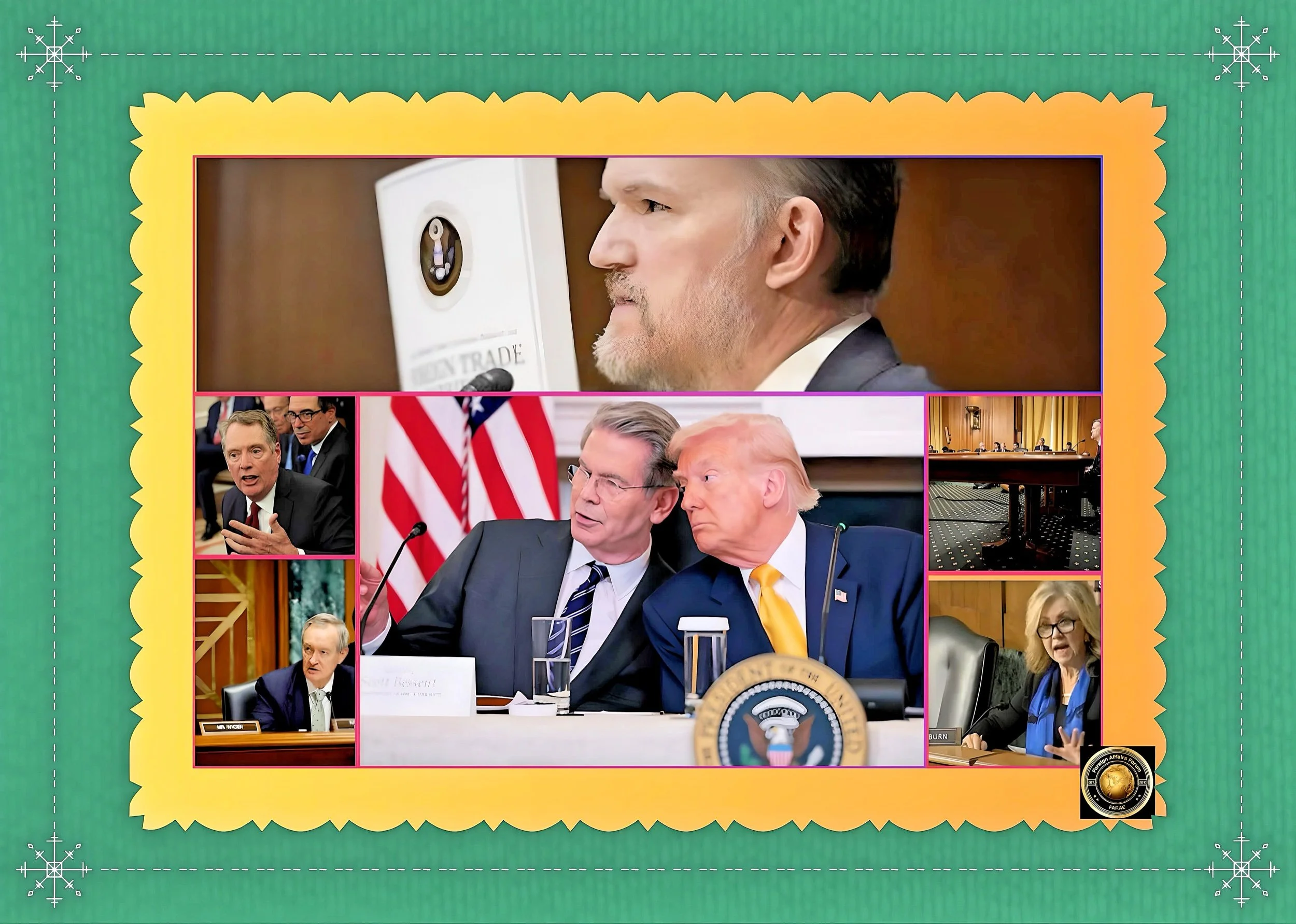
The Finance Committee hearing scheduled for 10 a.m. ET today (April 9) was just more of a wash. It was evident committee members were trying to understand by asking, ‘What is the plan?’ while questioning US Trade Representative Jamieson Greer about “who is responsible” for trade policy decisions and their implementation.
Administration’s Justification and Negotiation Strategy
The White House contends that its tariff strategy is already showing results. National Economic Council Director Kevin Hassett has stated that the administration is addressing “an overwhelming number of requests for negotiations” from various nations seeking to avoid the reciprocal tariffs.
Trump reportedly prioritizes discussions with “two of our closest trading partners: Japan and South Korea,” with Hassett describing feedback from these conversations as “very positive.”
Trump has publicly highlighted some diplomatic engagement, noting on Truth Social that he had “a productive call with South Korea’s Acting President” and discussions with Japan’s Prime Minister, who plans to send a delegation to Washington for trade negotiations.
The administration’s narrative portrays these tariffs as leverage to secure more favorable trade terms rather than as ends in themselves.
U.S. Trade Representative Jamieson Greer argued in today’s hearing that the president’s “strategy is already yielding results,” citing that nearly several “countries have responded to the President’s policy on achieving reciprocity.” One Senator asked him, ‘So what is the plan.’
However, Treasury Secretary Scott Bessent has acknowledged that the manufacturing renaissance promised by Trump won’t materialize immediately, noting that businesses will likely adopt a wait-and-see approach before committing to new American plant construction.
Global Economic Implications and Market Reactions
Implementing Trump’s tariff strategy has already triggered significant market volatility worldwide. “Global markets have experienced declines since last week, following the implementation of Trump’s tariffs, which affect nearly every nation.”
Asian stock markets faced their “most significant downturn in decades on Monday as the Trump administration stood firm,” though they saw a slight recovery on Tuesday.
Economists and market analysts warn that the current trade confrontation could result in prolonged economic difficulties.
Alfred Montuf-Helu, a senior analyst at The Conference Board’s China Center, cautions against expecting China to back down: “It would be a mistake to assume that China will concede and remove tariffs on its own.
Such a move would portray China as weak and give the US leverage to demand even more. We have reached a stalemate that will likely result in prolonged economic hardship”.
The economic ripple effects extend beyond the directly targeted nations. The Reserve Bank of India (RBI) is expected to announce a 25 basis point rate cut in its monetary policy decision on April 9. The CNBC-TV18 poll indicates that the RBI “could cut interest rates in April and June to support the economy before global issues bite.”
This highlights how even nations not directly targeted by the highest tariffs adjust monetary policy in anticipation of global trade disruptions.
Potential Recession Concerns
While the search results don’t explicitly address recession predictions, the scale and scope of these tariff implementations raise legitimate concerns about a global economic slowdown.
The combined effect of the U.S. targeting its largest trading partners with substantial tariffs and retaliatory measures from those nations creates a potential feedback loop of economic contraction.
The current situation represents “Trump’s full rejection of the post-World War II system of mutually agreed tariff rates,” suggesting a fundamental restructuring of global trade relationships that introduces significant uncertainty into business planning and investment.
The automotive sector faces particularly acute challenges, with a reported “25% tariff on all automotive products unless they were built in the United States from American parts”.
This threatens to disrupt integrated supply chains optimized over decades, potentially leading to higher consumer prices and reduced sales volumes.
International Responses and Regional Impacts
The impact of Trump’s tariff strategy varies significantly by region, with certain nations facing particularly steep challenges. Vietnam, which benefitted from supply chain shifts away from China during Trump’s first term, now faces a 46% tariff.
Cambodia will see tariffs increase to 49%. These high rates threaten to undermine the economic development of nations that successfully positioned themselves as manufacturing alternatives to China.
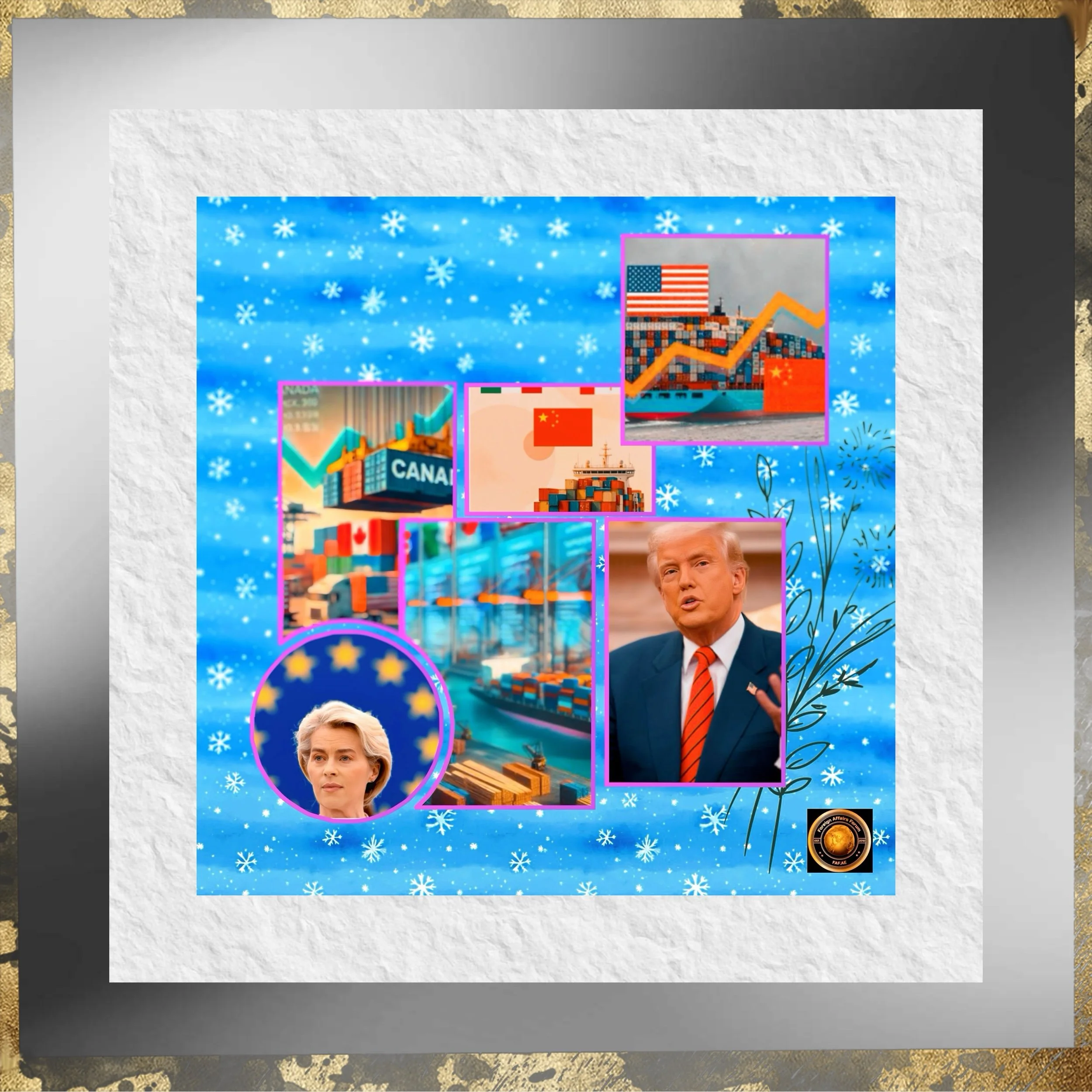
The European Union will face a 20% tariff, a substantial barrier to trans-Atlantic trade.
This is particularly sensitive for European economies experiencing slow growth and inflationary pressures. The potential for European countermeasures creates additional uncertainty for multinational businesses.
Some nations have received limited exemptions. “Canada and Mexico are exempt from Trump’s latest duties because they are still subject to a 25 percent tariff related to the US fentanyl crisis for goods”.
This selective approach to tariff implementation complicates global supply chain planning and may accelerate nearshoring trends for specific industries.
China’s strong response indicates a willingness to engage in prolonged economic confrontation despite the potential costs.
The Commerce Ministry emphasized that “the countermeasures China has taken are aimed at safeguarding its sovereignty, security, and development interests, and maintaining the normal international trade order.”
This suggests Beijing views the tariff battle as a matter of national sovereignty rather than simply an economic dispute, raising the stakes for potential compromise.
Conclusion
Trump’s tariff escalation, particularly the implementation of higher reciprocal tariffs on April 9th and the threat of additional 50% duties on China represents a fundamental shift in global trade dynamics with far-reaching implications.
The confrontational approach has triggered retaliatory measures from major trading partners, particularly China, and has created significant market volatility worldwide.
Congressional pushback highlights domestic political concerns about such unilateral actions' economic impact and constitutional authority.
Should Trump impose the additional 50% duty, the threatened 104% total tariff on Chinese goods would represent unprecedented trade barriers between the world’s two largest economies.
China’s forceful rejection of U.S. demands and vowing to “fight to the end” suggest that this trade confrontation may persist for an extended period, creating substantial uncertainty for global supply chains and businesses.
While the administration contends its strategy is yielding results regarding negotiation requests, the broader economic impacts remain concerning.
The next few weeks will be critical as markets adjust to the April 9th implementation and as tariff negotiations with key partners like Japan and South Korea potentially establish patterns for future accommodations.
The ultimate economic impact will depend significantly on how quickly and substantively these trade disputes can be resolved or whether they evolve into a prolonged global trade war with potential recessionary consequences.