Major Geopolitical Events Under Competitive Authoritarian Populism: A Comprehensive Analysis
Introduction
The rise of competitive authoritarian populism since the mid-2010s has fundamentally reshaped global geopolitics, creating a cascade of destabilizing events that have undermined the liberal international order.
FAF analysis delves into the most significant geopolitical developments driven by leaders who combine populist rhetoric with systematic erosion of democratic institutions while maintaining electoral facades.
The Nature of Competitive Authoritarian Populism
Competitive authoritarian populism represents a sophisticated form of authoritarianism where regimes maintain electoral processes while systematically eliminating genuine competition.
These systems are characterized by “formal democratic institutions that are widely viewed as the principal means of obtaining and exercising political authority,” yet “incumbents violate those rules so often and to such an extent that the regime fails to meet conventional minimum standards for democracy”.
The phenomenon combines several key elements: populist rhetoric that divides society between “the people” and corrupt elites, systematic manipulation of electoral competition, exploitation of crises for domestic control, and the weaponization of nationalism.
Unlike traditional authoritarian regimes, competitive authoritarian populists maintain the facade of democratic legitimacy while hollowing out its substance.
Putin’s Russia: From Hybrid- Cognitive Authoritarianism to Open Aggression
The Evolution of Russian Authoritarianism
Vladimir Putin’s Russia represents one of the most sophisticated forms of competitive authoritarian populism, evolving from hybrid authoritarianism in the early 2000s to what scholars now term “hybrid totalitarianism” following the 2022 invasion of Ukraine.
Putin’s regime has systematically used “soft powers” including election monitoring manipulation, disinformation campaigns, cyberspace control, and civil society repression to consolidate authoritarian rule.
The February 2022 invasion of Ukraine marked a critical escalation in Putin’s authoritarian evolution.
Rather than representing a deviation from competitive authoritarianism, the war demonstrates how such regimes can escalate to full military aggression when facing domestic legitimacy crises.
Putin’s decision to invade was staged as a response to demands supposedly present in wider society, following the peculiar logic of post-Bolotnaya authoritarian consolidation where “every expansion of the state’s authority is justified by an organic link between Putin and deeper social sentiment”.
Impact on Global Populist Networks
The Ukraine invasion has created significant divisions among European populist parties regarding their relationship with Russia.
Many right-wing populist parties that previously admired Putin’s “strong leadership” have been forced to moderate their positions, though some continue to advocate for “peace deals” heavily favoring Moscow.
The war has demonstrated how competitive authoritarian regimes can leverage geopolitical crises to strengthen domestic control and international influence networks.
Putin’s regime has also deepened cooperation with China through the Belt and Road Initiative, with Beijing providing crucial industrial inputs and diplomatic support for Russia’s war effort.
This Sino-Russian partnership represents a fundamental challenge to Western-led institutions and the liberal international order.
Trump’s Assault on Alliance Structures
First Term: Systematic Alliance Undermining
Donald Trump’s first presidency (2017-2021) represented an unprecedented assault on the liberal international order by the leader of its primary architect.
Trump’s competitive authoritarian populism manifested in systematic attacks on allies and international institutions through NATO threats, trade wars with allies, and withdrawal from international agreements including the Paris Climate Agreement, Iran Nuclear Deal, and WHO.
Trump’s approach combined populist nationalism with what scholars describe as “semi-isolationist” or “America First” policies that prioritized bilateral relations over multilateral agreements.
However, Trump’s foreign policy was not pure isolationism but rather represented a more unilateral approach that sought to expand US spheres of influence when possible.
Second Term: Accelerated Imperial Expansion
Donald Trump’s return to political prominence in 2025 has notably intensified existing global tensions, with analysts observing a marked divergence from the post-World War II international order established in 1945.
Throughout his second term, Trump's administration has embraced territorial ambitions that resonate with 19th-century imperial expansion.
Notable proposals include the potential annexation of Greenland, efforts to reclaim control over the Panama Canal, and aspirations to integrate Canada into the United States, paralleling historical patterns of colonialism.
A key aspect of Trump’s foreign policy has been his ambivalent approach to Russia.
Initially, his administration aimed to foster a cooperative relationship with President Vladimir Putin. However, this posture deteriorated due to persistent frustrations over Russia’s noncompliance with American strategic expectations.
This pivot led to the implementation of sanctions targeting not only Russia itself but also its partners, such as India and China, which have maintained their imports of Russian oil.
As geopolitical dynamics evolve, Trump’s strategy has focused on undermining the Sino-Russian alliance, elevating China to the status of primary global adversary.
In a bold military maneuver, Trump authorized an extensive operation against Iran, reminiscent of the contentious justifications employed by former President George W. Bush regarding the Iraq War’s rationale about weapons of mass destruction.
This operation involved the deployment of 12 B-2 Spirit bombers and a total of 125 aircraft, marking a significant exhibition of military prowess.
Such aggressive military strategies underscore the assertive decision-making style characterizing Trump's leadership and highlight the precarious nature of geopolitical relations in the Middle East.
Central to this military approach is a complex narrative linking the campaign to Israel, indicating an alignment with aspirations for a "Greater Israel."
These ambitions, when combined with military interventions, raise serious concerns about the potential for escalated conflict and destabilization throughout the region, ultimately threatening both regional and global peace.
Turkey’s Strategic Realignment Under Erdoğan
From NATO Ally to Strategic Autonomy
Turkey under Recep Tayyip Erdoğan exemplifies how competitive authoritarian populism can reshape alliance structures.
Since the 2016 coup attempt, Erdoğan has accelerated Turkey’s transformation from a NATO ally aligned with the West toward a more independent, transactional foreign policy characterized by the S-400 missile purchase from Russia, unilateral military operations in Syria, and strategic use of NATO expansion as leverage.
Erdoğan’s approach demonstrates how competitive authoritarian leaders exploit alliance dynamics for domestic political gain.
His populist nationalism has justified this realignment as defending Turkish sovereignty against Western imperialism, while simultaneously strengthening ties with Russia, China, and other non-Western powers.
The Ukraine invasion has paradoxically strengthened Turkey’s position as a regional power broker, allowing Erdoğan to mediate between Russia and the West while advancing Turkish interests.
Democratic Backsliding and Authoritarian Consolidation
Erdoğan’s competitive authoritarian consolidation has involved systematic attacks on democratic institutions, including judicial capture, media control, and the imprisonment of political opponents.
The transformation of Turkey’s parliamentary system into a presidential one through the 2017 referendum effectively rendered Erdoğan the sole power holder, demonstrating how competitive authoritarian leaders can use apparently democratic procedures to dismantle democracy itself.
Netanyahu’s Crisis-Driven Authoritarianism
Judicial Reform as Institutional Capture
Benjamin Netanyahu’s tenure as Prime Minister has exemplified how competitive authoritarian leaders use external conflicts to manage domestic crises.
Facing corruption charges, judicial reform protests, and coalition instability, Netanyahu has pursued systematic institutional capture through attempts to limit Supreme Court powers and increase government control over judicial appointments.
The 2023 judicial reform crisis demonstrated the resistance competitive authoritarian projects can face from civil society, with hundreds of thousands of protesters taking to the streets and military reservists threatening to refuse service.
However, Netanyahu’s government has continued to pursue its agenda through incremental changes, including the March 2025 passage of expanded control over judge appointments.
Regional Confrontation as Survival Strategy
Netanyahu’s approach combines security populism with systematic institutional erosion, framing all conflicts as existential threats requiring strong leadership while delegitimizing opposition as unpatriotic.
The expansion of military operations in Gaza, Lebanon, and against Iran serves multiple functions: rallying domestic support, shifting focus from corruption charges, and advancing a “Greater Israel” agenda through his coalition agreement to expand settlements and annex occupied territory.
The political party under Prime Minister Netanyahu's leadership has engendered significant risks for Israeli citizens on an international scale.
This situation transcends mere perceptions of global isolation and pervasive condemnation; it reflects a concerning militaristic mindset paired with aggressive policy initiatives.
Such actions contribute to a narrative suggesting the manipulation of U.S. political dynamics, largely influenced by organizations such as AIPAC.
This influence purportedly facilitates the diversion of American taxpayer resources to perpetuate Israeli occupations.
This approach not only seeks to maintain dominion over Palestinian territories but also appears to further an agenda that raises alarms regarding potential ethnic cleansing, not only within Palestine but possibly extending to the broader Arab region.
These developments prompt profound ethical considerations about the repercussions of these policies on both Israeli citizens and the international community at large.
Latin American Democratic Breakdown
Venezuela and Nicaragua: Complete Authoritarian Consolidation
Venezuela under Nicolás Maduro and Nicaragua under Daniel Ortega represent the most severe cases of competitive authoritarian breakdown in Latin America.
Both regimes have systematically dismantled democratic institutions while maintaining electoral facades, with Venezuela’s 2024 election representing what observers called the “mother of all frauds” involving manipulation of over 5 million votes.
The contrast between Venezuela’s 2024 election and Nicaragua’s 2021 approach reveals different strategies for competitive authoritarian consolidation. While Nicaragua’s Ortega eliminated opposition candidates before the election, Maduro allowed competition to occur before committing massive fraud, leading to sustained popular resistance and international condemnation.
Regional Patterns and International Response
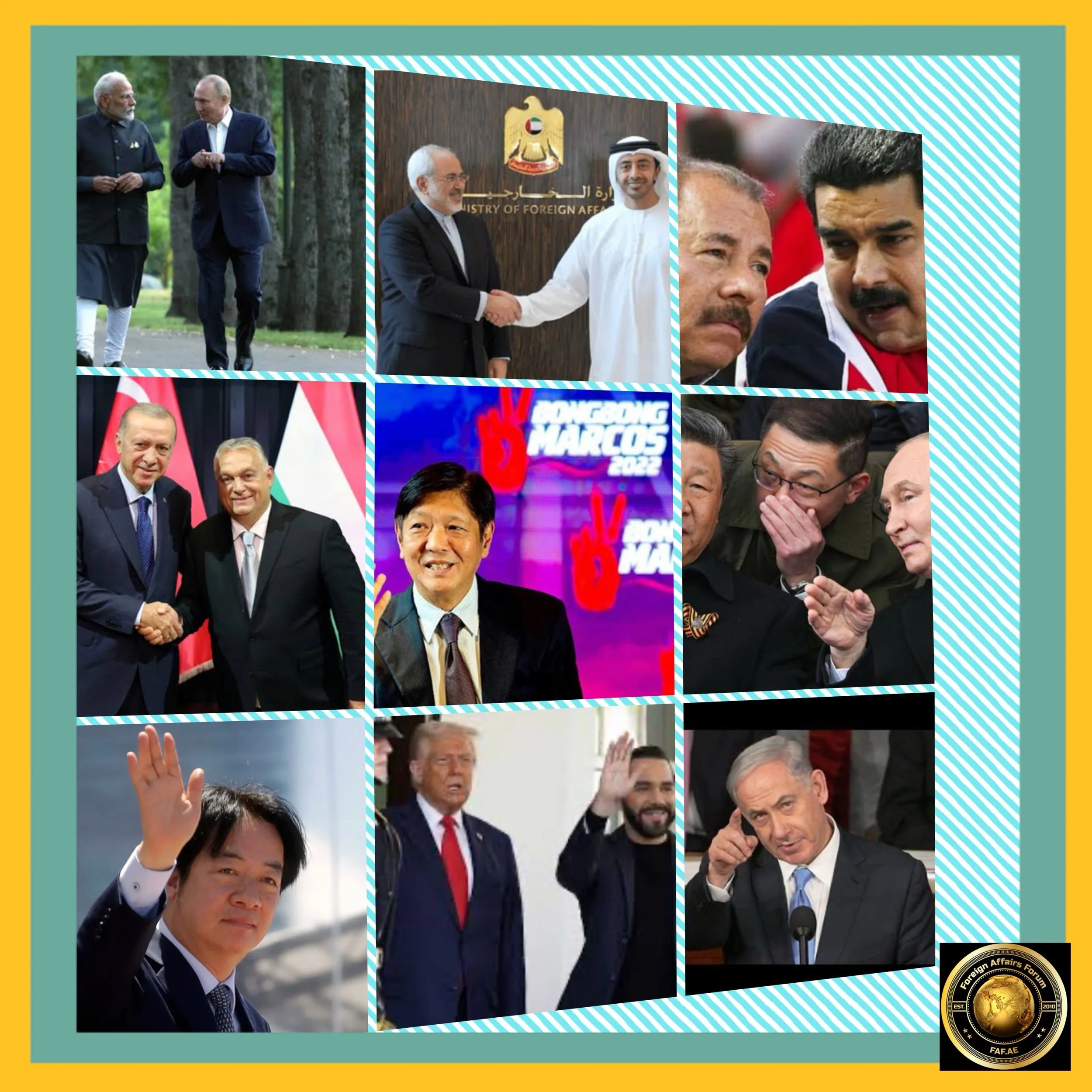
These developments reflect broader trends in Latin America, where weak rule of law, corruption, and inequality have created fertile ground for authoritarian populism. Countries like El Salvador under Nayib Bukele have embraced “popular authoritarianism,” sacrificing democratic rights for promises of security and order.
The limited Western linkage of many Latin American countries reduces external pressure for democratization, while alternative partnerships with China and Russia provide economic lifelines for authoritarian regimes.
Europe’s Authoritarian Challenge
Hungary’s EU Confrontation
Hungary under Viktor Orbán represents a paradigmatic case of competitive authoritarian consolidation within the European Union.
Orbán has systematically undermined democratic institutions while exploiting EU membership benefits and using veto powers to block Ukrainian military aid and dilute sanctions against Russia.
The EU’s Article 7 proceedings against Hungary, launched in 2018, demonstrate both the challenges of addressing competitive authoritarianism within democratic institutions and the limitations of existing enforcement mechanisms.
Despite eight years of hearings and documented rule of law violations, the EU has struggled to achieve the unanimous support necessary to suspend Hungary’s voting rights.
Brexit and British Populist Mobilization
The Brexit referendum and its implementation represent a significant case of populist mobilization within an established democracy.
The campaign successfully linked long-standing Eurosceptic narratives about sovereignty and status loss to high-salience issues including immigration, identity, and economic circumstances.
Boris Johnson’s leadership of the Brexit implementation process exemplified substantive populism through anti-EU, anti-immigration, and anti-Parliament discourse.
The Brexit process demonstrated how populist movements can exploit cultural trauma and humiliation narratives, linking EU membership to Britain’s decline and loss of sovereignty over decades of elite-driven narratives.
Asian Authoritarian Expansion
China’s Systematic Rights Erosion
Under Xi Jinping, China has charted a path toward greater authoritarian rule that extends far beyond its borders.
The 2020 Hong Kong National Security Law represents the culmination of systematic efforts to integrate Hong Kong with the mainland and eliminate the “One Country, Two Systems” framework.
This dramatic restriction on political opposition and creation of central government offices outside Hong Kong jurisdiction effectively ended Hong Kong’s autonomy.
China’s repression extends to systematic campaigns in Xinjiang and Tibet, with the detention of over one million Uyghurs and other minorities in internment camps representing what experts characterize as crimes against humanity.
These policies demonstrate how competitive authoritarian regimes can escalate to systematic persecution while maintaining international engagement.
Taiwan and Regional Security Threats
Xi Jinping’s approach to Taiwan illustrates how competitive authoritarian leaders use external threats to consolidate domestic power while genuinely threatening regional stability.
Taiwan’s democratic elections serve as an “uncomfortable reminder that Xi will never enjoy democratic legitimacy,” making Taiwan’s status a primary flashpoint in US-China relations.
Xi’s destructive policies at home and evisceration of Hong Kong’s autonomy have taught Taiwanese that unification would end their democratic freedoms.
India’s Hindu Nationalist Consolidation
Under Narendra Modi influenced by Amit Shah and Mohan Bagwat, India has witnessed the mainstreaming of Hindu nationalism and systematic marginalization of minorities.
Today India’s approach combines populist nationalism with authoritarian features including centralized power at the expense of federalism, attacks on secularists and intellectuals, and harassment of NGOs and universities.
The transformation represents what scholars term “ethnic democracy” that equates the majoritarian community with the nation and relegates Muslims and Christians to second-class citizenship.
Modi’s government has moved India toward a new form of democracy that maintains electoral competition while systematically undermining pluralism and minority rights.
Regional Authoritarian Networks
The Philippines Under Duterte
Rodrigo Duterte’s presidency demonstrated how competitive authoritarian leaders can use populist appeals to justify massive human rights violations.
Duterte’s “war on drugs” resulted in the deaths of over 12,000 Filipinos, mostly urban poor, through what Human Rights Watch characterized as systematic extrajudicial killings by police and vigilantes.
Duterte’s approach combined populist appeals to “ordinary people” with authoritarian methods including harassment of critics, attacks on press freedom, and the imprisonment of political opponents like Senator Leila de Lima.
The campaign demonstrated how competitive authoritarian leaders can maintain popular support while systematically violating human rights and democratic norms.
European Far-Right Consolidation
The rise of far-right populist parties across Europe represents a broader challenge to liberal democratic norms.
Germany’s Alternative for Germany (AfD) has moved from eurosceptic origins to become a “confirmed right-wing extremist endeavor” according to German intelligence, while achieving second place in 2025 federal elections with approximately 20% of the vote.
Italy’s Matteo Salvini has demonstrated how populist leaders can exploit immigration fears and anti-EU sentiment to gain political power.
Salvini’s acquittal on kidnapping charges related to preventing migrant disembarkation has reinvigorated his political career and lent credence to his narrative of defending Italy’s borders.
Global Patterns and Systemic Impacts
Electoral Integrity and Democratic Recession
The 2024 “super-cycle” of elections revealed systematic problems with electoral integrity worldwide, with quality declining in over half of the 62 elections evaluated globally.
Major democracies including Mexico, the UK, the US, India, and Indonesia experienced notable declines in electoral integrity, while authoritarian regimes continued longstanding patterns of electoral manipulation.
Freedom House reports indicate that global freedom has declined for 18-19 consecutive years, with political rights and civil liberties deteriorating in more countries than improved each year.
The breadth and depth of deterioration affect one-fifth of the world’s population, with attacks on pluralism driving the downturn in rights globally.
COVID-19 as Authoritarian Opportunity
The COVID-19 pandemic provided competitive authoritarian regimes with unprecedented opportunities to consolidate power and suspend civil liberties.
Authoritarian and populist regimes used the coronavirus pandemic as justification to further push back on democracy through control measures, knowledge manipulation, and subjectivation processes.
Countries like Hungary used the pandemic to grant unlimited emergency powers to Viktor Orbán, while leaders like Modi in India exploited the crisis to scapegoat minorities and Brazil’s Bolsonaro used federal structures to blame governors while avoiding responsibility for pandemic failures.
Economic Inequality and Populist Backlash
Research demonstrates strong linkages between rising economic inequality and support for populist movements, particularly right-wing populism.
The backlash against globalization reflects rational responses to rising inequality, with voters in declining industrial regions particularly vulnerable to populist appeals.
The geographic concentration of populist support in communities experiencing long-term economic and social decline suggests that trade, offshoring, and automation have steadily reduced manufacturing employment since the 1970s, creating conditions for populist mobilization.
The global financial crisis of 2008 catalyzed these divisions, as declining communities suffered deeper and longer downturns than metropolitan areas.
Crisis of the Liberal International Order
Systemic Challenges and Resilience
The cumulative impact of competitive authoritarian populism has fundamentally altered the international system through weakening of the liberal order, emergence of multipolar competition, global democratic recession, and alliance fragmentation.
The crisis represents both internal challenges from populist backlash within liberal democracies and external challenges from rising authoritarian powers.
European Union responses to the crisis have focused on strengthening resilience and rescuing the liberal international order through support for multilateralism and rules-based governance.
However, the EU’s geopolitical turn and focus on internal resilience potentially challenge its commitment to multilateralism and liberal democratic values.
Alternative Order Construction
China and Russia’s deepening partnership represents the most significant challenge to US-led international order, with Beijing providing crucial support for Russia’s war in Ukraine while advancing its own authoritarian model globally.
The Belt and Road Initiative serves as a mechanism for China to expand influence through debt-trap diplomacy and infrastructure development, while Russia provides military and energy partnerships.
These developments suggest movement toward a multipolar system with competing blocs led by different powers, rather than the liberal internationalist system that has predominated since 1945.
The challenge for democratic powers lies in adapting to this new reality while preserving core liberal values and institutions.
Conclusion
The Coordinated Challenge to Democratic Order
The major geopolitical events under competitive authoritarian populism since 2016 represent a coordinated challenge to the liberal international order that extends far beyond individual countries or regions.
From Putin’s invasion of Ukraine to Trump’s alliance disruption, from Erdoğan’s strategic realignment to Netanyahu’s institutional capture, these developments share common features that define competitive authoritarian geopolitics.
The systematic exploitation of crises for domestic control, weaponization of nationalism, disruption of alliance structures, and erosion of international cooperation represent core tactics of competitive authoritarian populism.
These regimes have proven adept at maintaining electoral facades while hollowing out democratic substance, using populist appeals to justify authoritarian consolidation, and exploiting global crises to advance their agendas.
The interconnected nature of these challenges suggests that addressing competitive authoritarian populism requires coordinated international responses that strengthen democratic institutions, support civil society, and develop new frameworks for international cooperation.
The alternative risks the continued erosion of democratic norms and the emergence of a world order dominated by authoritarian powers that reject pluralism and human rights.
Understanding these patterns is crucial for developing effective responses to what appears to be a sustained assault on democratic governance both domestically and internationally.
The stakes extend beyond individual elections or policy disputes to the fundamental question of whether democratic values and institutions can survive in an era of rising authoritarianism and declining international cooperation.