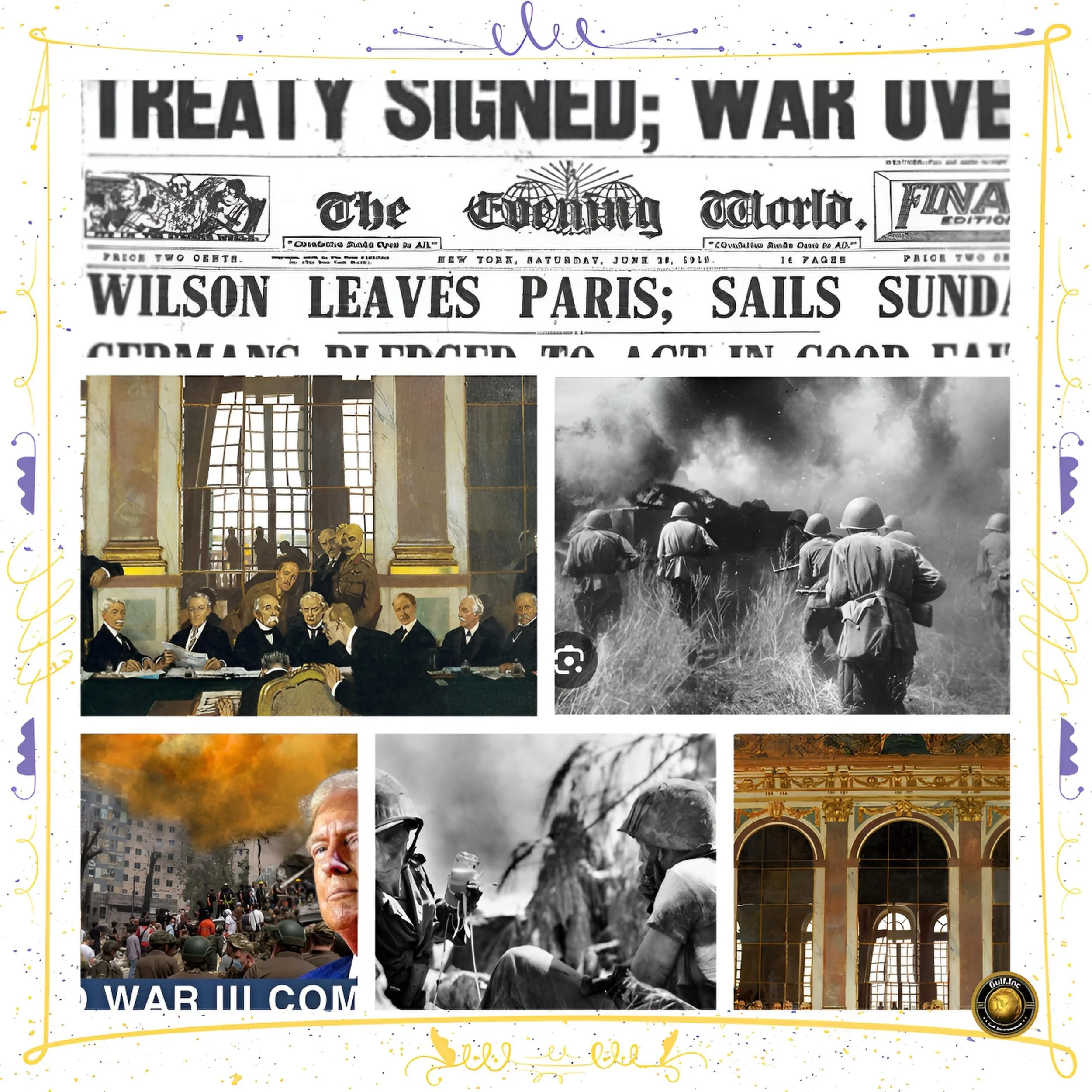
Current Geopolitics: Post-WWII Order Under Pressure
Executive Summary
The landscape of contemporary geopolitics is increasingly characterized by the strains facing the post-World War II order.
The conclusion of World War II marked a significant turning point in global relations, ushering in an era defined by newly established international norms, agreements, and alliances intended to promote peace and stability.
However, current tensions—whether stemming from territorial disputes, economic rivalries, or ideological clashes—suggest that this delicate equilibrium is being tested like never before.
With ongoing conflicts in various regions, the specter of a new global confrontation looms on the horizon, raising concerns that we may be on the precipice of another world war.
As nations navigate through complex alliances and competing interests, observers are left wondering if we are witnessing the early phases of what could escalate into World War III.
The current geopolitical climate calls for careful consideration of both historical precedents and present dynamics to understand the potential ramifications of these unfolding events.
History
The key attacks that led to the defeat of Germany in World War II were the Allied invasion of Germany starting in March 1945 and the Soviet Red Army’s push toward Berlin.
The Western Allies crossed the Rhine River on March 22, 1945, before advancing deep into western Germany, while the Soviet forces advanced from the east, culminating in the Battle of Berlin in April 1945.
This two-front invasion overwhelmed the German military, leading to the unconditional German surrender on May 8, 1945.
Additionally, the earlier Normandy landings on D-Day, June 6, 1944, marked the start of the Western Allied campaign to liberate Western Europe from Nazi occupation, which eventually paved the way for the invasion of Germany itself.
The combination of the successful D-Day landings, the push across the Rhine, and the Soviet assault on Berlin ultimately sealed Nazi Germany’s defeat.
Next came the US dropping the atomic bombs on Japan on Hiroshima and Nagasaki on August 6 and 9, 1945, respectively.
The atomic bombs were used specifically to force Japan’s surrender on August 15, 1945.
Introduction
Current Geopolitical Implications
The geopolitical landscape that emerged in the wake of World War II, following the definitive defeats of both Germany and Japan, is currently facing profound and multifaceted challenges.
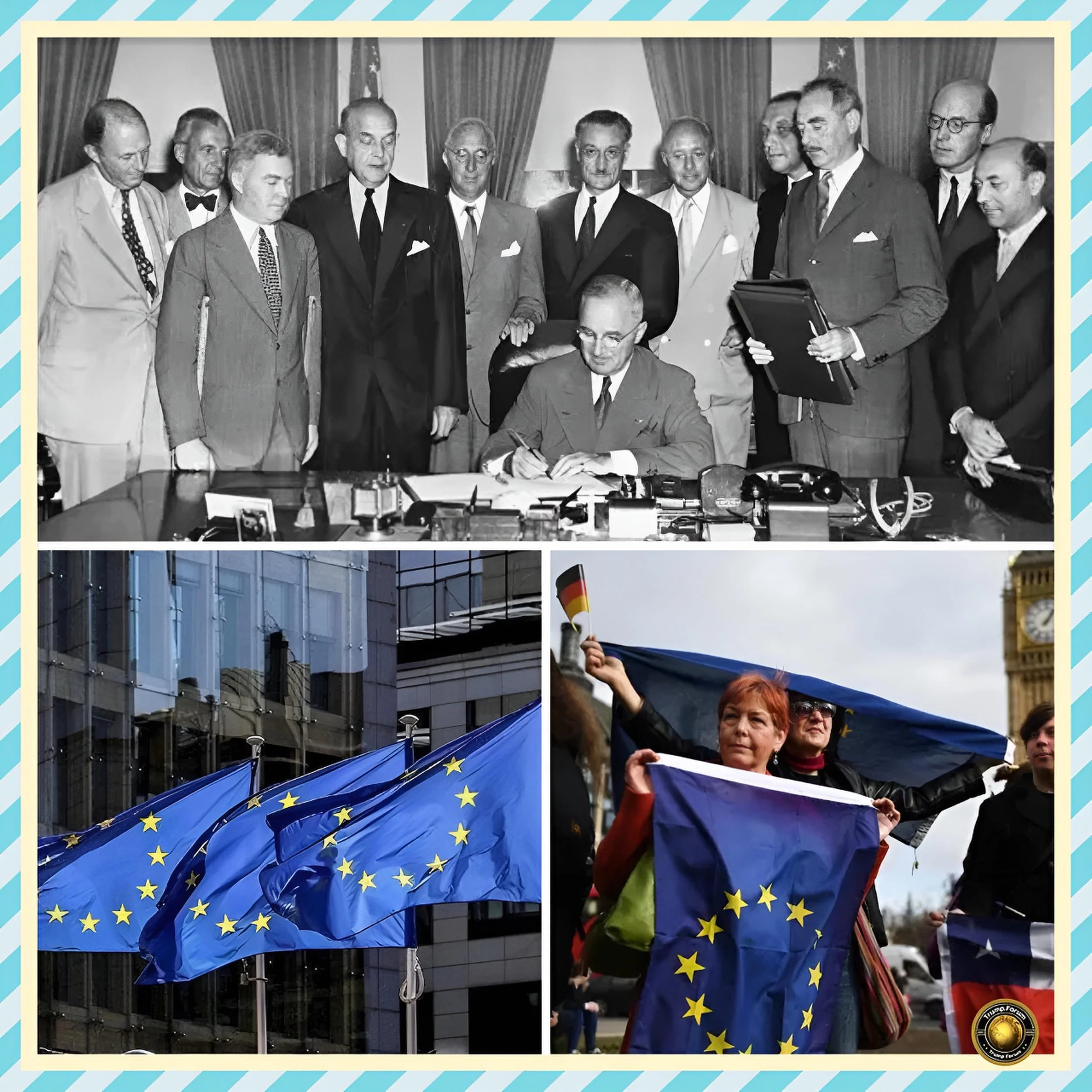
The global order established in 1945, characterized by a complex network of international collaborations and institutions such as the United Nations and the North Atlantic Treaty Organization (NATO), is now enduring its most serious crisis since its formation.
The Post-WWII Order Under Siege
The intricate international framework, designed to uphold principles of collaboration, collective security, and mutual respect among nations, is now grappling with a series of unprecedented threats.
Analysts and scholars alike contend that this order is under severe strain, as it confronts aggressive and expansionist actions from a number of countries.
Key foundations that have historically ensured territorial integrity, encouraged the peaceful resolution of disputes, and fostered multilateral cooperation are facing relentless challenges.
Nations pursuing assertive territorial claims and military posturing are increasingly testing the limits of this established framework, raising concerns among member states about the potential for conflict and the erosion of diplomatic norms.
As these dynamics unfold, the stability of the post-World War II global order hangs in the balance, prompting urgent discussions about the effectiveness of existing institutions and the need for reform to address the realities of contemporary international relations.
From Bipolar to Multipolar Competition
In stark contrast to the Cold War era, which was defined by a bipolar world dominated by the United States and the Soviet Union, today’s international dynamics are shifting towards a multipolar system.
This emerging environment features multiple centers of power that engage in competition on various fronts.
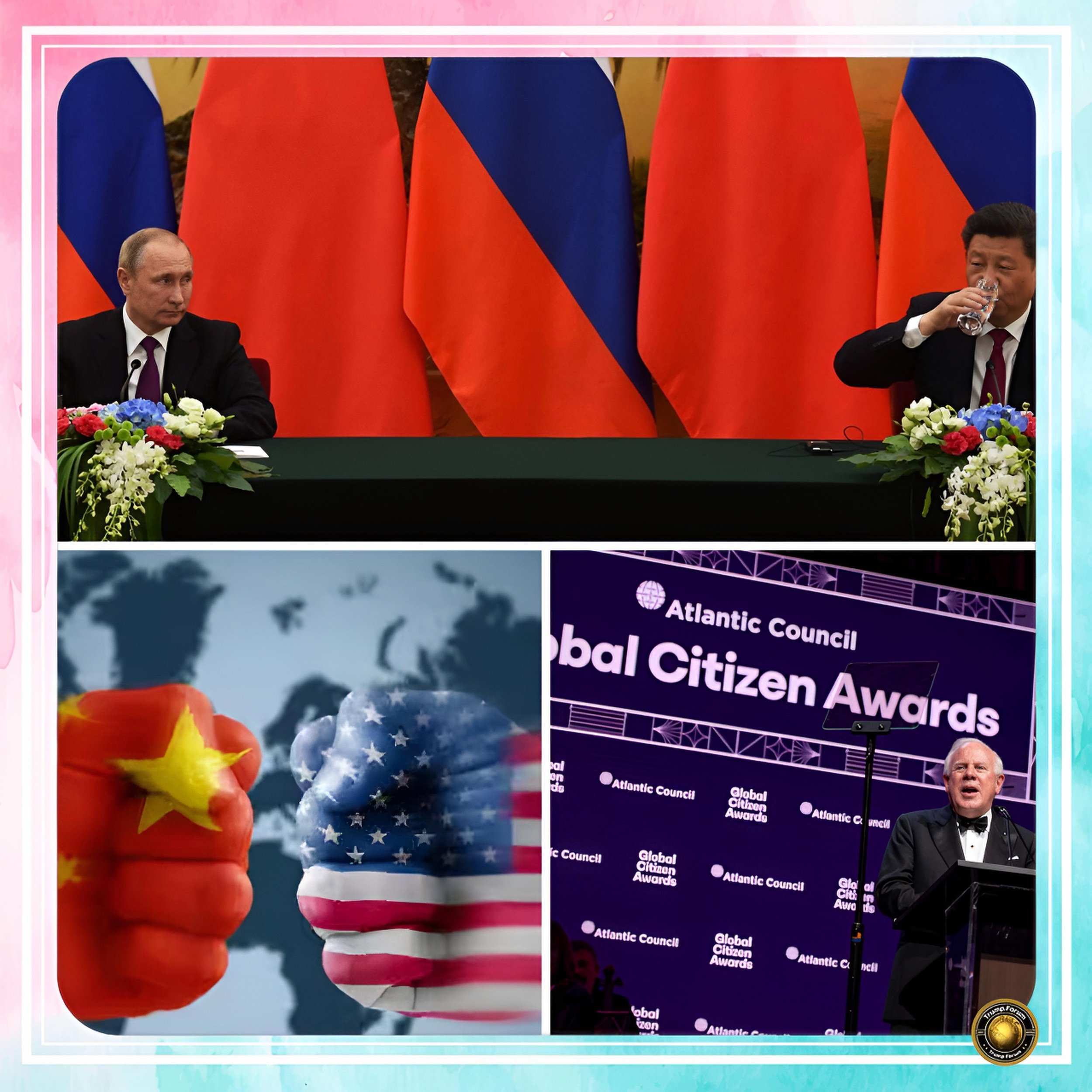
The intensifying rivalry between the United States and China mirrors the strategic contest that followed WWII but arrives with heightened complexity, largely due to the intricate web of global economic interdependence that connects these two powerful nations.
In the Middle East, Israel’s military actions and occupation of Palestinian territories extend beyond its borders, as it has engaged in escalating conflicts with Iran, Lebanon, Yemen, and Syria.
These actions have further complicated the already volatile regional landscape.
Meanwhile, China's aggressive territorial claims and military advancements in the South China Sea have emerged as a significant concern for global stability over the past two decades.
Russia’s Actions and the Challenge to Post-WWII Principles
Russia’s military incursion into Ukraine marks a stark and direct affront to the principles established after WWII.
This aggressive maneuver reflects a renewed willingness to alter international borders through force, despite widespread global condemnation.
The implications of such actions are profound, particularly since they occur within a nuclear-armed context that presents unique strategic calculations, echoing the territorial aggressions that precipitated the second World War.
Nuclear Proliferation Risks
The advent of nuclear weapons, first unleashed against Japan, has ushered in a perilous dimension of geopolitical risk. Currently, nine nations possess nuclear arsenals, and the threats of nuclear proliferation are surging.
The existing global nonproliferation framework, designed to control and limit these weapons, is increasingly coming under pressure as allied nations begin to question the reliability of security guarantees, while authoritarian regimes pursue substantial expansions of their nuclear capabilities.
The historical lessons drawn from the bombings of Hiroshima and Nagasaki continue to shape contemporary strategic discourse: nuclear arms offer both a deterrent effect and a profound existential threat.
For instance, Russia's nuclear posturing during its ongoing invasion of Ukraine highlights how these weapons may serve as a tool to intimidate potential foreign intervention, thereby amplifying the calculated value of nuclear armament in the context of territorial expansion.
Alliance System Evolution
The alliances forged in the wake of WWII—most notably NATO and the security agreements between the United States and Japan—are now undergoing adaptations to align with the shifting geopolitical realities.
European nations, along with U.S. allies in the Asia-Pacific region, are ramping up military expenditures in response to indications that the United States may no longer be willing to shoulder the burden of global security single-handedly.
This trend towards “remilitarization” signals a significant departure from the post-war expectation that the U.S. would consistently act as the primary global guarantor of security.
The interplay between economic nationalism and globalization captures the evolving contours of the post-WWII economic landscape, especially as the interconnectedness that once fostered international stability begins to fray.
This unraveling of foundational economic integration presents both challenges and opportunities as nations navigate their futures in an increasingly complex global context.
Post-WWII Economic Integration
In the aftermath of World War II, the United States and its Allies set the stage for a new global economic framework characterized by a liberal economic order.
This order emphasized the principles of free trade, the establishment of multilateral institutions, and the promotion of open markets, all with the aim of fostering peace and driving prosperity across nations.
Key organizations such as the International Monetary Fund (IMF), the World Bank, and the General Agreement on Tariffs and Trade (GATT) were instrumental in providing structured frameworks that helped stabilize international trade and investment, laying the groundwork for unprecedented economic growth.
However, in recent years, this global economic integration has encountered formidable obstacles.
The U.S., once a principal champion of free trade, has shifted gears, leading the charge towards a wave of protectionism and the re-imposition of tariff barriers.
This reversal is unlike anything seen globally for several decades, highlighting a marked deterioration in faith in global economic integration.
This transformation stems from rising concerns over trade deficits, job displacement, and strategic vulnerabilities in essential sectors such as technology and manufacturing.
Economic nationalism has emerged as a predominant force, prioritizing national self-interest and sovereignty while advocating for the protection of domestic industries.
Unfortunately, this often comes at the cost of international cooperation, leading to tensions that could further fracture already delicate alliances.
The implications of this shift are profound. A movement towards transactional policies focused on nationalism threatens to disrupt long-standing supply chains and erode established economic partnerships.
This not only stirs geopolitical competition among nations vying for economic security but also fosters a quest for technological independence that challenges collaborative innovation.
These fundamental changes pose a serious risk to the post-war liberal economic order, which has historically been a bedrock for geopolitical stability.
As nations retreat into nationalistic policies, the increasing likelihood of economic conflict and fragmentation becomes a growing concern.
The globalization that characterized the post-World War II era is now contested by the resurgence of economic nationalism, prompting a dramatic transformation in the landscape of global trade and international politics that endangers the existing international framework.
United Nations UNGA 2025
President Trump’s address to the United Nations General Assembly in 2025 included several controversial remarks that drew significant attention and discomfort from world leaders and commentators.
He criticized the UN as ineffective, questioned its very purpose, and repeatedly challenged key international priorities such as climate change, immigration, and responses to the wars in Ukraine and Gaza.
Criticisms of UN Institutions and Multilateralism
Trump declared that the UN failed to solve major global problems, claiming it “writes strongly worded letters” but “never follows them up,” calling these efforts “empty words” and warning that the UN’s existence is in jeopardy.
He also criticized the organization’s expensive renovations and suggested it funds invasions rather than stopping them.
Immigration and European Allies
He admonished countries with more open immigration policies, stating, “Your countries are going to hell”.
Trump claimed, with significant exaggeration, that the US admitted “zero” immigrants for several months and pushed his strict deportation policies as models for others.
Climate Change and Energy
Trump labeled climate action a “hoax,” dismissed renewable energy, and said “windmills are pathetic.” He asserted that European nations’ embrace of green energy was contributing to their downfall, urging countries to rely on American fossil fuels instead.
Foreign Policy: Russia, Iran, Gaza
He warned of punitive tariffs against Russia, criticizing European and NATO allies for continuing to buy Russian oil, and framed military operations against Iran as decisive actions that destroyed its nuclear capabilities.
On Israel and Palestine, Trump condemned recent recognitions of Palestinian statehood as a “reward for Hamas,” reinforcing his administration’s pro-Israel, anti-Hamas stance.
Tone and Reception
Trump’s blunt and unyielding style prompted laughter, discomfort, and some public rebukes from global leaders.
Key observers warned that dissolving trust in multilateral institutions like the UN risks escalating future conflicts—a historically significant concern given comparisons to the League of Nations.
In summary, Trump’s UNGA 2025 speech articulated a vision openly hostile to globalism, multilateral problem-solving, and climate action, while emphasizing national sovereignty, closed borders, and aggressive foreign policy—in stark contrast to traditional post-WWII norms.
President Trump’s remarks at the United Nations General Assembly (UNGA) 2025 were notably provocative and marked by strong criticism of international institutions and global cooperation.
He questioned the purpose of the UN, stating it was ineffective and accusing it of producing “empty words” rather than solving real problems.
Trump was explicit in championing national sovereignty, rejecting globalist approaches, and favoring unilateral action.
Immigration, Climate, and Foreign Policy
He strongly criticized open immigration policies in Europe, claiming they were “destroying” countries, and touted his administration’s strict immigration controls.
Trump called climate change action a “hoax,” dismissed renewable energy initiatives as failures, and labeled wind power as “pathetic”.
On the Ukraine conflict, he warned that continuing trade in Russian energy undermined the war effort and threatened punitive tariffs against Russia unless allies followed suit.
Trump condemned recognition of Palestinian statehood, calling it a “reward for Hamas,” and highlighted American military action against Iranian and Venezuelan targets as demonstrations of US strength.
International Reaction
Trump’s speech caused discomfort and laughter among many world leaders, some of whom expressed concern that such rhetoric undermines the credibility and cohesion of the UN and risks a breakdown of the post-war international order.
His statements pointed to a clear shift away from the multilateral, cooperative frameworks that defined US policy for decades, favoring an assertive and transactional approach to global problems.
Conclusion
The conclusion drawn from these developments leads to a crisis of institutional credibility among the international organizations formed in the wake of WWII—the United Nations (UN), the World Bank, and the IMF.
These institutions are facing mounting challenges as they struggle to maintain their effectiveness in an environment where major powers frequently opt for unilateral courses of action.
U.S. Secretary of State Rubio's recent assertion that the "post-war global order is not just obsolete; it is now a weapon being used against us" encapsulates the growing American skepticism towards multilateral frameworks, signaling a shift in perception about their utility and effectiveness.
The current global context increasingly resembles the turbulent interwar period, marked by institutional breakdown, rather than the relative stability observed after 1945.
One insightful analysis comments that we are “not entering a new order so much as watching the old one unravel,” suggesting that there is “no agreed-upon successor” system ready to take its place.
The defeat of Germany and Japan in 1945 established a robust framework for international collaboration that endured nearly eight decades.
The ongoing erosion of this framework foreshadows a return to a geopolitical situation reminiscent of the pre-World War II era—a period defined by great power rivalry, but with the added peril of nuclear weapons raising the stakes for any potential miscalculation.