Trump’s - Khan London Mayor fued - From Royal Red Carpet to Diplomatic Crisis
Executive Summary
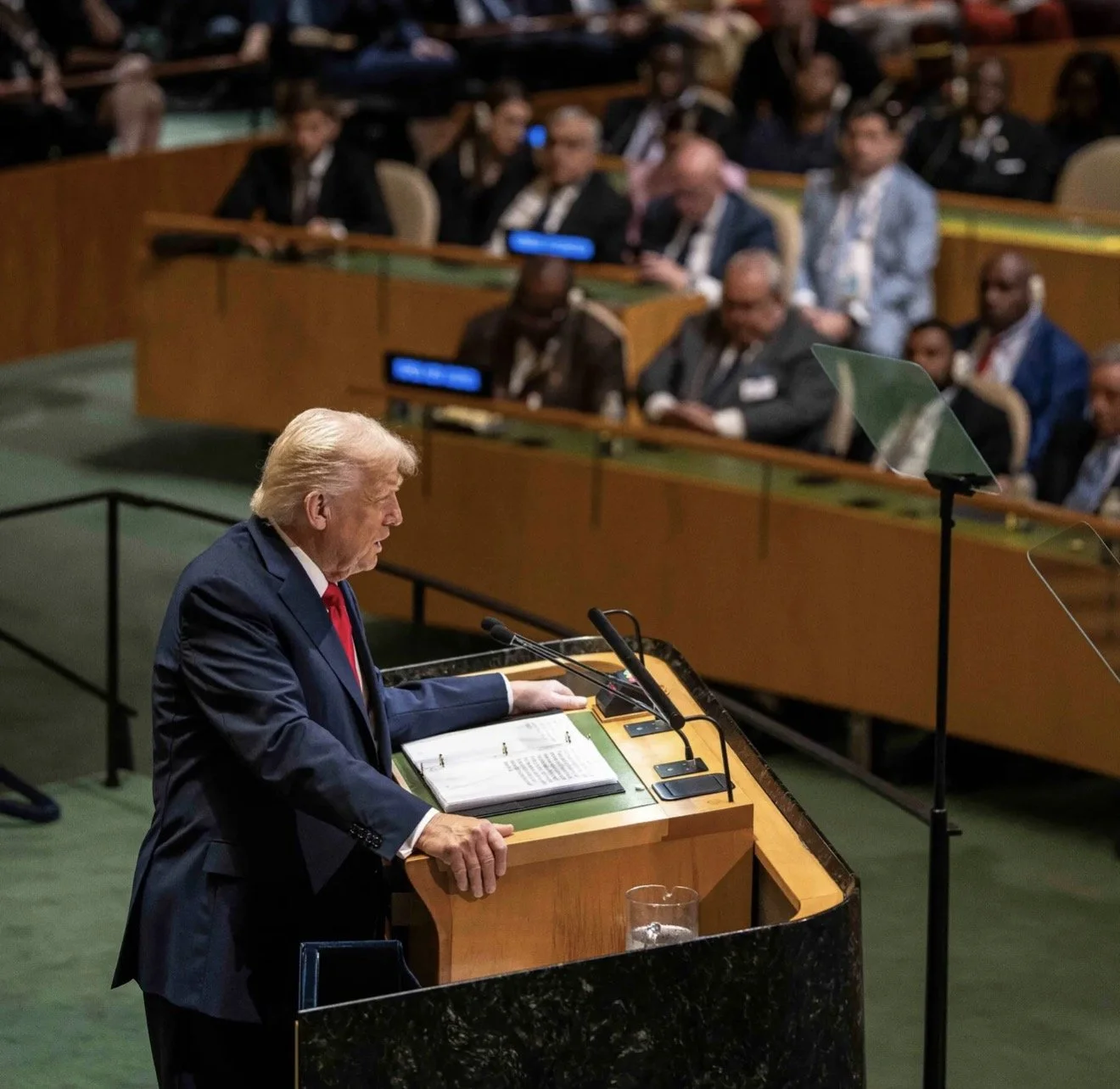
In a significant diplomatic incident, President Donald Trump directed a sharp attack against the Mayor of London, Sadiq Khan, during his address at the United Nations.
This confrontation escalated from what initially seemed like a ceremonial greeting, complete with a royal red carpet welcome, into a tense diplomatic crisis.
Trump's remarks not only criticized Khan’s leadership but also underscored the ongoing friction between U.S. and U.K. relations, as the mayor has been a vocal opponent of the former president's policies.
The implications of Trump’s comments have reverberated across international circles, casting a shadow over the otherwise warm atmosphere typically associated with such high-level gatherings.
Introduction
During his address at the United Nations, former President Donald Trump delivered a stinging critique of London Mayor Sadiq Khan, marking a notable diplomatic shift that has gained attention for its unusual nature.
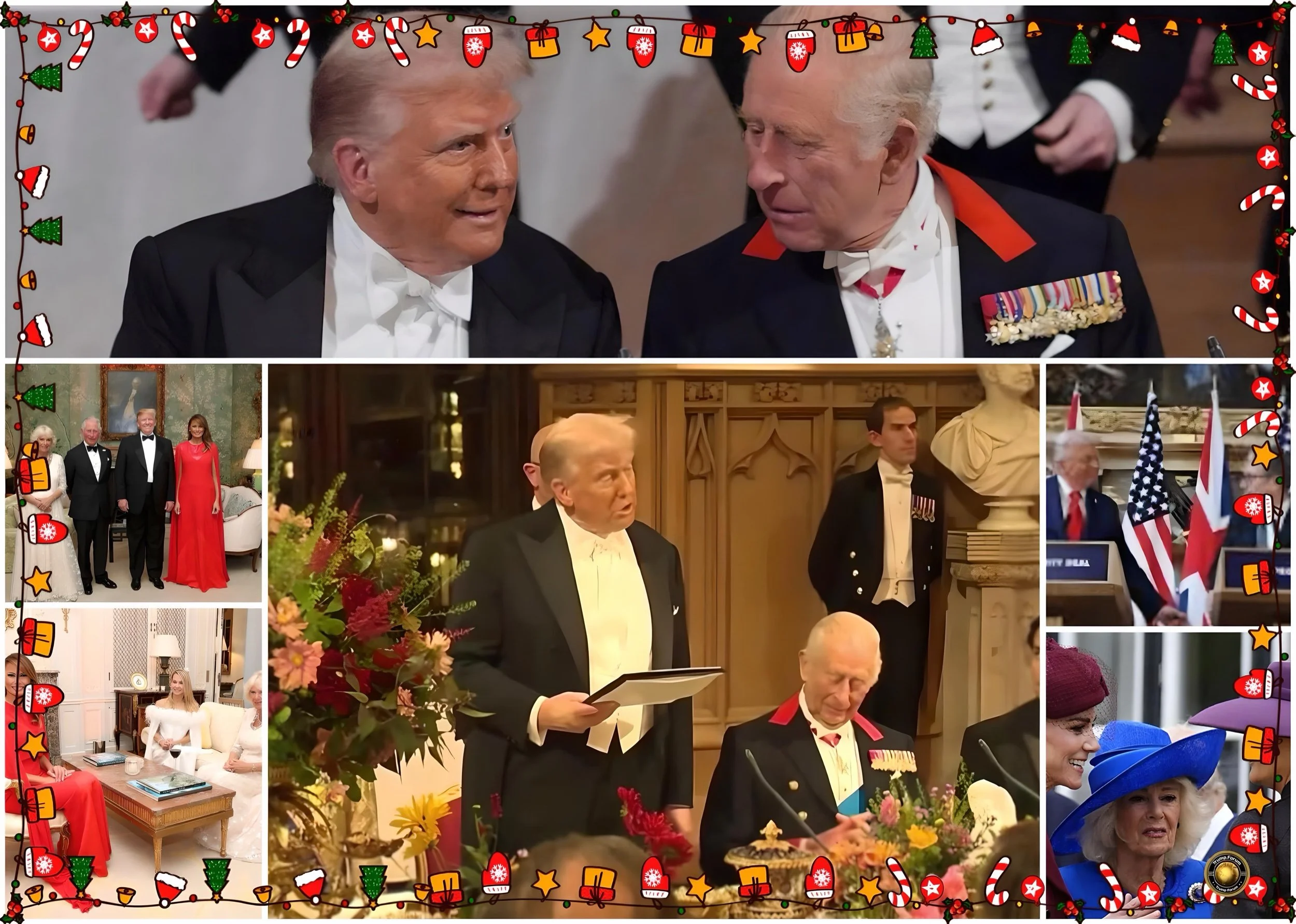
This outspoken confrontation was particularly remarkable given that it took place just five days after Trump received a grand reception from King Charles III during a special second state visit to the UK, which took place from September 17-18, 2025.
This extraordinary royal ceremony not only captivated the media but also imposed a considerable financial burden on British taxpayers, reportedly amounting to millions of pounds.
The stark contrast between Trump’s warm welcome by the monarchy and his subsequent derogatory remarks regarding Khan underscores the unpredictable dynamics inherent in Trump’s foreign policy engagements.
A Historical State Visit
Unprecedented Royal Treatment
Trump's state visit was unprecedented in nature and historical significance, making him the first U.S. President to experience two full state visits in the UK.
The royal family pulled out all the stops for this occasion, dubbed by observers as “the VIP treatment of VIP treatments.”
During the ceremonial welcome at Windsor Castle, King Charles III and Queen Camilla greeted the Trumps with an elaborate military ceremony that had not been seen for a visiting foreign leader in living memory.
This royal welcome featured a majestic horse-drawn carriage procession through the picturesque Windsor estate, with Trump and King Charles sharing the elegant Irish State Coach while Queen Camilla and Melania Trump rode in the Scottish State Coach, creating a stunning visual of royal splendor.
Exclusive Royal Access and Privileges
In a rare show of honor, Trump was granted private access to St. George’s Chapel, where he laid a floral wreath on the tomb of Queen Elizabeth II—a privilege typically reserved for the most esteemed guests.
The Trumps were also treated to exclusive exhibitions from the Royal Collection and enjoyed a lavish dinner in the grandeur of Windsor Castle’s State Dining Room.
A Lavish State Banquet
The visit culminated in a magnificent white-tie state banquet held in the opulent surroundings of St. George’s Hall, where 160 distinguished guests, including senior members of the royal family, were in attendance.
Trump had the distinct honor of sitting next to Princess Catherine, while Melania was positioned between King Charles and Prince William at the table. Trump expressed his gratitude, referring to the event as “one of the highest honors of his life,” emphasizing the importance of the occasion.
The Royal Family’s Position of Diplomatic Neutrality
Despite Trump's subsequent public denouncement of Khan, the Royal Family opted for complete diplomatic silence, adhering to constitutional protocol that prohibits the monarchy from commenting on political controversies involving foreign heads of state.
King Charles's approach reflects a delicate balance between his ceremonial obligations and the political neutrality that characterizes the modern British monarchy.
However, this timing created a somewhat uncomfortable situation for the Palace, which had invested significant resources and prestige in hosting Trump, only to have his inflammatory remarks overshadow the diplomatic efforts made just days prior.
Khan's Exclusion and Trump’s Retaliatory Remarks
In an unexpected move, Trump personally requested that Mayor Khan be excluded from the state banquet at Windsor Castle. Speaking on Air Force One, he stated clearly, “I didn’t want him there. He wanted to be there, as I understand it, but I didn’t want him present.” Khan’s office later confirmed that he neither sought nor anticipated an invitation to the royal affair.
This exclusion set the stage for Trump’s subsequent attack during his UN speech, where he alarmingly claimed that London was on the verge of adopting “Sharia law” and labeled Khan as a “terrible, terrible mayor,” further escalating tensions in the diplomatic relationship.
The Feud’s Deep Historical Roots
The conflict between Donald Trump and Sadiq Khan has persisted for nearly ten years, deeply rooted in stark ideological differences that have shaped their exchanges over time.
Origins (2015-2016)
The animosity between the two figures first ignited in 2015, when Khan, then a Member of Parliament, publicly denounced Trump's inflammatory proposal for a “Muslim ban” in the aftermath of the horrific Paris terror attacks.
Khan vehemently criticized Trump's immigration policies, labeling them “outrageous” and expressed his hope that such extremist viewpoints would ultimately lead to the collapse of Trump’s presidential campaign.
Escalation (2016-2017)
The rivalry intensified dramatically after Khan made history as London’s first Muslim mayor in May 2016. Shortly thereafter, Trump, seemingly irked by Khan’s rising profile, provocatively challenged him to an “IQ test” and dismissed him as “ignorant.”
In response, Khan turned the spotlight back on Trump, vehemently condemning the then-candidate’s decision to retweet videos from the far-right group Britain First, which Khan deemed a “betrayal of the special relationship” between the United States and the United Kingdom.
Persistent Attacks
Since then, Trump has made it a point to regularly target Khan, questioning his ability to effectively manage issues related to terrorism, crime rates, and immigration policies.
Khan, in turn, has not held back, accusing Trump of fostering a dangerous environment through what he terms “fascist” rhetoric and labeling him as “racist, sexist, misogynistic, and Islamophobic.”
This ongoing exchange highlights the deep ideological chasm between the two leaders and underscores the persistent nature of their conflict.
The Reality
London’s Safety Compared to U.S. Cities
Trump’s assertions regarding London’s safety are largely contradicted by extensive crime statistics that paint a different picture.
Homicide Rates (per 100,000 residents)
London - 1.2-1.5
New York- 3.4
Chicago - 24.0
Baltimore - 51.1
St. Louis - 64.9
These figures starkly illustrate that London maintains a significantly lower homicide rate compared to many prominent U.S. cities.
For instance, Baltimore and St. Louis report homicide rates that are several times higher than those of London, rendering the capital a much safer environment in this regard.
Overall Crime Statistics
For the year 2024-25, London’s crime rate is reported at approximately 132.6 crimes per 1,000 inhabitants, with alternative sources suggesting a figure of 106.4.
While this indicates a rise compared to previous years, it continues to reflect a safety level that surpasses that of numerous major American cities, particularly concerning violent crime.
Comparative Safety
According to Numbeo’s latest 2025 Crime Index, London is assigned a score of 55.13, categorizing it in the moderate risk range.
This is notably lower than cities such as Rio de Janeiro, which scores 75.25, but quite comparable to New York, which stands at 50.68.
Many American expatriates living in London consistently express a heightened sense of safety in the city compared to their experiences in large U.S. metropolitan areas.
Key Facts About London's Security Landscape
Violent Crime Reality
London's violent crime rate is approximately 85% of the UK national average, with an estimated 29 violent crimes per 1,000 residents during the daytime.
It's important to note that this statistic encompasses a broad range of offenses classified as "violent crime," including less severe incidents.
Terrorism and Knife Crime
Although knife crime has become a notable issue, with certain categories showing increments, it is essential to highlight that London’s overall homicide rate has seen a decline from its peaks experienced in the late 2010s.
For example, the city recorded 136 homicides in 2024, marking a reduction from figures observed in prior years.
International Comparisons
In a broader context, London consistently ranks as one of the safest among the 30 largest cities in the United States in terms of homicide rates.
Notably, both American tourists and residents alike often report feeling safer in London when compared to various comparable U.S. urban regions, reinforcing its reputation as a secure city on the international stage.
British Government’s Measured Response
Prime Minister Starmer’s Stance
In the face of personal attacks from former President Trump, Prime Minister Keir Starmer has exhibited a commendable degree of diplomatic composure.
He has publicly defended London Mayor Sadiq Khan by describing him as “a friend of mine,” while tactically sidestepping any direct clash with Trump.
This careful balancing act underscores Britain’s intricate diplomatic position, where defending its officials must be weighed against the need to preserve the longstanding "special relationship" with the United States.
Support from the Cabinet
Health Secretary Wes Streeting has strongly come to Khan's defense, emphatically stating, “Sadiq Khan is not trying to impose Sharia Law on London."
He characterizes Khan as a leader who embraces diversity, remarking on his participation in pride marches and his commitment to standing up for the varied cultural identities within the capital.
Furthermore, another key Cabinet minister, Pat McFadden, has completely dismissed Trump’s allegations regarding Sharia law as unfounded and baseless, reinforcing the government’s united front.
The Diplomatic Quandary
Trump's behavior during this visit has marked a striking violation of established diplomatic etiquette.
It is particularly jarring given that he made attacks on a prominent ally’s elected official just days after being afforded significant royal hospitality, including gracious receptions and honors from the British monarchy.
This jarring juxtaposition between his polite acceptance of royal accolades and his later incendiary rhetoric brings to light the complexities and tension that can arise in traditional diplomatic relationships.
Economic Implications
The timing of Trump’s outbursts is especially problematic, as he unveiled an ambitious £150 billion “Tech Prosperity Deal” during his tour of the UK.
His subsequent incendiary comments threaten to dilute the goodwill and cooperative spirit that were so carefully fostered during the royal engagements.
Such statements not only jeopardize diplomatic ties but may also impede economic opportunities that could benefit both nations.
Khan’s Bold Rebuttal
In stark contrast to Starmer’s diplomatic restraint, Mayor Sadiq Khan adopted a more confrontational approach, directly labeling Trump as “racist, sexist, misogynistic, and Islamophobic.”
This level of directness from a mayor of a significant allied city is unprecedented and reflects a rising tide of frustration with Trump’s controversial style of international diplomacy.
Khan’s forthright position signals a clear message that the mayor—and, by extension, the city he represents—will not tolerate divisive rhetoric that undermines the values of inclusivity and respect.
Conclusion
The Broader Implications
This episode encapsulates broader tensions in U.S.-UK relations under Trump’s presidency.
While the British establishment invested enormous diplomatic capital in hosting Trump with full royal honors, his immediate return to inflammatory rhetoric demonstrates the limits of traditional diplomatic courtship.
Royal Protocol vs. Political Reality
The Royal Family’s constitutional inability to respond puts them in an impossible position - they hosted Trump with full honors, yet cannot defend their capital city’s elected leader from false accusations.
Special Relationship Under Strain
The incident highlights how Trump’s combative style challenges the foundations of the U.S.-UK “special relationship,” forcing British officials to choose between defending their sovereignty and maintaining crucial alliance ties.
The Trump-Khan feud, playing out against the backdrop of royal pageantry and diplomatic protocol, reveals the fundamental tensions between Trump’s transactional approach to international relations and traditional diplomatic norms that have governed allied relationships for decades.