Israel’s Unprecedented Attack on Qatar: Geopolitical Ramifications and International Response
Executive Summary
Israel’s Unique Action Against Qatar: Geopolitical Implications and Global Reactions
In recent developments, Israel has engaged in a significant military action against Qatar, a move that raises important questions regarding regional dynamics and international relations.
This unprecedented event has the potential to reshape geopolitical landscapes, prompting varied responses from the international community.
As nations evaluate the implications of this action, the collective dialogue surrounding peace, security, and cooperation in the region becomes increasingly crucial.
Introduction
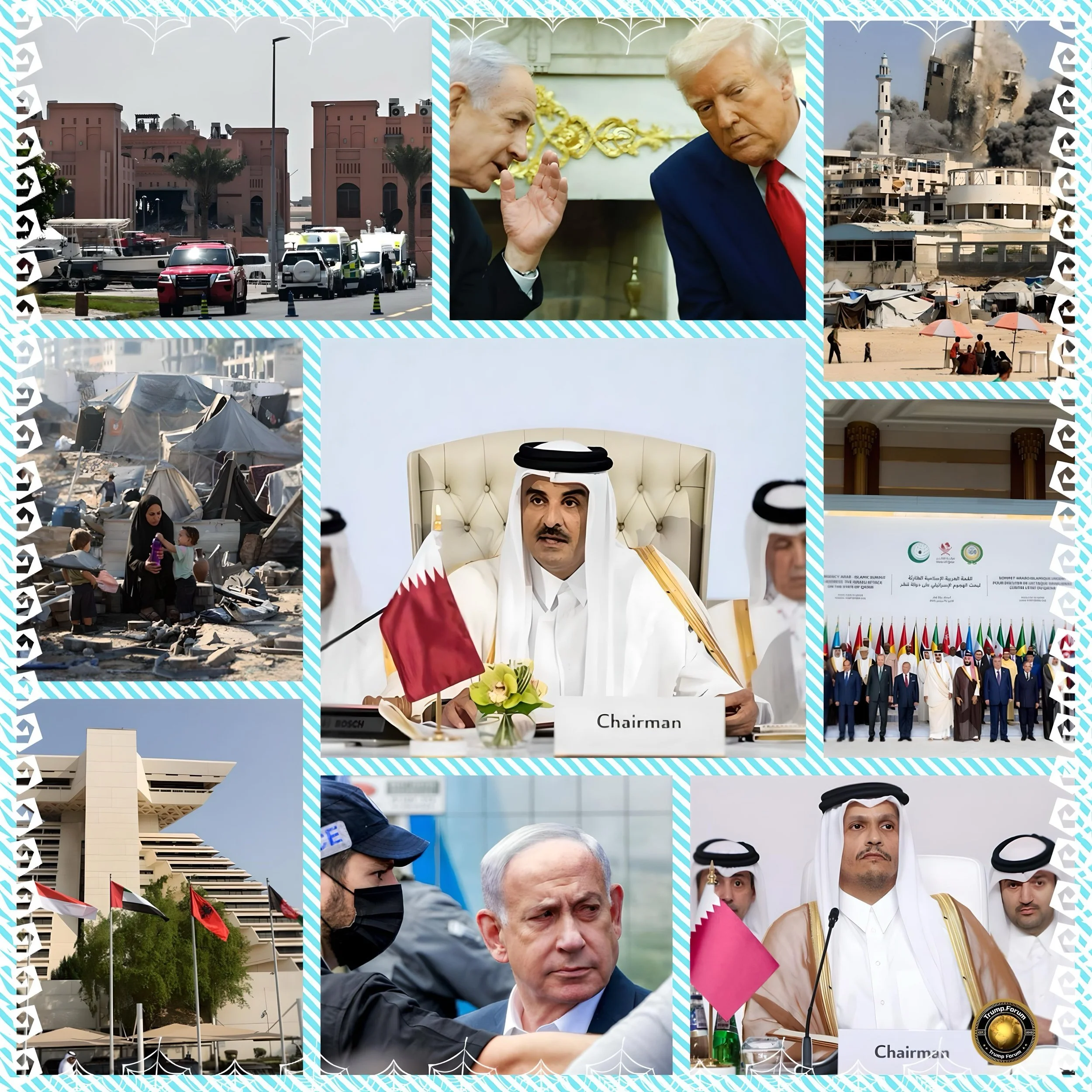
On September 9, 2025, Israel conducted its first-ever airstrike on Qatari soil, targeting Hamas political leaders in Doha.
This unprecedented attack has fundamentally altered Middle Eastern geopolitics, strained U.S.-Qatar relations, and prompted intense international condemnation while effectively derailing ceasefire negotiations in Gaza.
The Attack Details and Casualties
The Israeli Defense Forces executed the operation at 3:46 PM local time using twelve Israeli fighter jets (eight F-15s and four F-35s) that launched air-to-surface ballistic missiles from over the Red Sea, avoiding Arab airspace.
The missiles struck a residential compound in Doha’s Leqtaifiya district, near the Woqod petrol station on Wadi Rawdan Street, targeting Hamas’s political leadership as they met to discuss a new U.S.-backed ceasefire proposal.
The attack killed six people: Khalil al-Hayya’s son Humam (son of Hamas’s chief negotiator), his office director Jihad Abu Labal, three bodyguards, and a corporal from Qatar’s Internal Security Force.
Multiple civilians were also injured, including family members of the targeted officials.
Critically, Israeli security assessments increasingly believe the strike failed to eliminate any senior Hamas leaders, with the intended targets surviving the assassination attempt.
U.S. Role and Response
President Trump has expressed significant displeasure with the operation, describing himself as “very unhappy about the way that went down”.
The U.S. received only minutes of warning before the strike, with Trump stating the notification came “too late” to prevent it. Qatar disputes this timeline, claiming the first American call came ten minutes after the explosions were already heard in Doha.
Trump criticized the unilateral bombing of Qatar, calling it counterproductive to both Israeli and American goals.
He emphasized that while eliminating Hamas is “a worthy goal,” bombing inside a close U.S. ally like Qatar does not advance peace efforts. The President has assured Qatar’s leadership that such attacks will not happen again on their soil.
The incident has placed the U.S. in a precarious diplomatic position, given Qatar hosts Al Udeid Air Base—the largest American military installation in the Middle East with approximately 10,000 personnel.
This strategic partnership makes Qatar indispensable to U.S. regional operations.
What the Attack Reveals to the World
Israel's recent military strike raises several critical issues for the international community.
Violation of Sovereignty and International Norms
This operation constitutes a blatant breach of Qatar's sovereignty and established international legal standards, occurring within a densely populated urban environment that includes educational institutions, diplomatic missions, and vital civilian infrastructure.
Undermining Diplomatic Initiatives
By targeting key negotiators involved in U.S.-facilitated peace discussions, Israel appears to intentionally undermine the ongoing diplomatic efforts aimed at conflict resolution.
Hamas officials have characterized this attack as a definitive signal from Netanyahu rejecting any proposals for a ceasefire.
Regional Conflict Escalation
This incident marks Israel’s inaugural direct military action against a member of the Gulf Cooperation Council (GCC), extending its military engagement and complicating relations with key U.S. allies in the region.
Impunity in Military Operations
The attack intensifies the perception that Israel acts with considerable impunity, largely ignoring international pressures and the concerns of its allies regarding military conduct.
Global Condemnation
Reactions from the international community have been both swift and expansive:
United Nations Response
The UN Security Council issued a unanimous condemnation of the attack, with the United States breaking from its historical pattern of defending Israel at the UN by supporting this resolution.
UN Secretary-General António Guterres characterized the strike as a “flagrant violation” of Qatar’s sovereignty.
European Responses
French President Macron deemed the strikes “unacceptable.” British Prime Minister Starmer called attention to the violations of Qatar’s sovereignty. Similarly, Germany described the action as “unacceptable” and a clear infringement of international law.
Statements from Regional Powers
Arab nations, including Saudi Arabia, the UAE, and Egypt, have issued strong denunciations of the strike. The UAE’s foreign ministry articulated that aggression toward any member of the GCC is tantamount to an assault on collective Gulf security.
Broader International Reactions
Even nations that traditionally support Israel, such as India, have expressed "deep concern" over the incident, while Turkish President Erdogan has labeled it a direct violation of international legal frameworks.
This escalation in military actions and the resultant international response underscore the complexity and volatility of the current geopolitical landscape in the region.
Qatar’s Response Options
Qatar's Strategic Responses to Recent Regional Developments
Emergency Arab-Islamic Summit
On September 15, 2025, Qatar will convene an emergency Arab-Islamic Summit aimed at unifying leadership from the Muslim world to craft a cohesive strategy in response to Israel's military actions.
The summit will deliberate on a draft resolution that categorically condemns the aggression and emphasizes solidarity with Qatar amidst these tensions.
Legal Proceedings
Qatar is in the process of forming a specialized legal team to explore potential international legal actions against Israel.
This involves a thorough assessment of the avenues available under international law to address perceived violations stemming from the recent attacks.
Security Relationship Reassessment
In light of the evolving security landscape, Qatar is engaged in high-level discussions with U.S. officials to reevaluate the bilateral security framework.
This marks a significant shift, as Qatar recognizes that for the first time in its history, it faces a direct threat from Israel, prompting this reassessment of defense strategies.
Diplomatic Engagements
The Prime Minister of Qatar has recently met with President Trump in New York, utilizing diplomatic avenues to advocate for measures that could deter future aggressions against Qatar and to reinforce a global alliance supportive of Qatari sovereignty.
Commitment to Mediation
Despite the escalation in hostilities, Qatar remains dedicated to its role as a mediator in the region. However, it has expressed that the current ceasefire negotiations lack legitimacy in the aftermath of Israeli aggression, undermining prospects for diplomatic resolutions.
Israeli Responses During and Following the Attack
Israeli Prime Minister Netanyahu has adopted a defiant stance, justifying the military operations while issuing threats of further actions. He remarked, “I say to Qatar and all nations who harbor terrorists, you either expel them or you bring them to justice, because if you don’t, we will,” drawing comparisons between the Israeli response and the U.S. military intervention in Afghanistan post-9/11.
Domestically, Israeli officials have celebrated the military operations as a proportional response to a Hamas shooting incident in Jerusalem.
However, significant dissent has emerged within Israel's security establishment, with concerns that the operation's timing could adversely affect ongoing hostage negotiations.
Reports indicate that the Mossad declined to execute a pre-planned ground operation, which compelled Israel to rely on aerial bombardments instead.
Israeli UN Ambassador Danny Danon further stated that “history will not be kind to accomplices,” urging Qatar to expel Hamas or face the ramifications of its inaction.
UN Role and Two-State Solution
On September 12, 2025, the United Nations General Assembly made a pivotal decision by passing a resolution that endorses the “New York Declaration,” which delineates a pathway toward realizing a two-state solution to the enduring Israeli-Palestinian conflict.
The voting outcome demonstrated a robust global consensus, with 142 member states in support, while 10, including Israel and the United States, opposed, and 12 opted to abstain.
The resolution underscores the immediate need for Hamas to relinquish its governance over the Gaza Strip and articulates a strong advocacy for the establishment of a viable Palestinian state.
It further calls upon the international community to recognize Palestine as “an essential and indispensable component of the achievement of the two-state solution,” thereby reinforcing international support for Palestinian statehood aspirations.
In a related context, several nations, such as France, Canada, Australia, Belgium, and the United Kingdom, are preparing to formally acknowledge Palestinian statehood at a high-profile UN summit scheduled for September 22.
This acknowledgment is expected to fortify Palestinian claims to statehood in the midst of ongoing diplomatic negotiations.
In stark contrast to these international maneuvers, Israeli Prime Minister Benjamin Netanyahu has unequivocally rejected the notion of Palestinian statehood.
On September 11, 2025, he stated, “There will be no Palestinian state. This place is ours,” encapsulating Israel's resolute position against territorial concessions.
This declaration coincided with Netanyahu’s announcement of substantial plans to escalate settlement construction in the West Bank, specifically sanctioning the development of 3,400 new homes in the contentious E1 area.
This expansion is particularly critical, as it poses the risk of bifurcating the occupied West Bank from East Jerusalem, thereby further complicating the feasibility of a contiguous Palestinian state.
Netanyahu's unequivocal opposition to Palestinian statehood sharply contrasts with the increasing wave of international recognition that Palestine is set to receive.
This dichotomy creates a nuanced and contradictory dynamic within international diplomacy, as nations rally to affirm Palestinian rights while contending with Israeli policies that actively obstruct the realization of those aspirations.
Conclusion
Genocide Allegations and International Legal Proceedings
In December 2024, Amnesty International issued a report asserting that Israel is perpetrating acts of genocide against Palestinians in Gaza.
The organization found substantial evidence to conclude that Israel has engaged in systematic actions aimed at the destruction of Palestinian life and infrastructure.
Current legal proceedings are underway at the International Court of Justice (ICJ) concerning these genocide allegations, while the International Criminal Court (ICC) has initiated efforts to issue arrest warrants for Israeli Prime Minister Benjamin Netanyahu and other high-ranking officials.
These developments contribute to mounting international pressure on Israel, yet Netanyahu’s administration appears resolute in continuing its military operations.
The recent attack on Qatar must be understood within this framework of heightened international legal scrutiny.
It potentially reinforces claims regarding Israel’s flagrant disregard for international law and its apparent objectives to thwart diplomatic resolutions that may constrain its military operations in Gaza and the occupied territories.
This unprecedented military action has fundamentally shifted the regional geopolitical landscape, strained critical U.S. alliances, and underscored Israel’s readiness to escalate conflicts, even with American allies, in pursuit of its objectives against Hamas and the Palestinian quest for statehood.