The Digital Revolution: Nepal’s Gen Z Uprising and the Global Transformation of Democratic Governance
Executive Summary
In recent years, an unprecedented wave of activism and engagement has emerged from Generation Z in Nepal, sparked by the widespread availability of digital technology and social media.
This vibrant cohort, characterized by their innovative spirit and strong sense of social justice, is harnessing digital tools to advocate for change, challenge the status quo, and reshape democratic governance not only within Nepal but also on a global scale.
Fueled by the internet and mobile connectivity, Nepal’s youth are increasingly vocal about issues such as climate change, gender equality, and political accountability.
Their online platforms and grassroots movements serve as powerful testimonies to their commitment to democracy and transparency, reflecting a newfound urgency in addressing systemic problems.
As they mobilize through social networks, these young activists are creating a ripple effect that resonates far beyond Nepal’s borders, contributing to a broader, interconnected narrative on democratic ideals and civic participation worldwide.
The interplay of technology and activism reveals a transformative potential in how democracy is perceived and practiced.
As Nepal’s Gen Z continues to rise, they embody a shift toward a more inclusive and engaged form of governance, paving the way for a future where the voices of youth are not only heard but also integral to the democratic process across the globe.
Introduction
Nepal's political crisis in September 2025 marks a pivotal development in the trajectory of democratic governance, characterized by a generational cohort adept in digital communication effectively contesting entrenched political paradigms via unprecedented organization and mobilization.
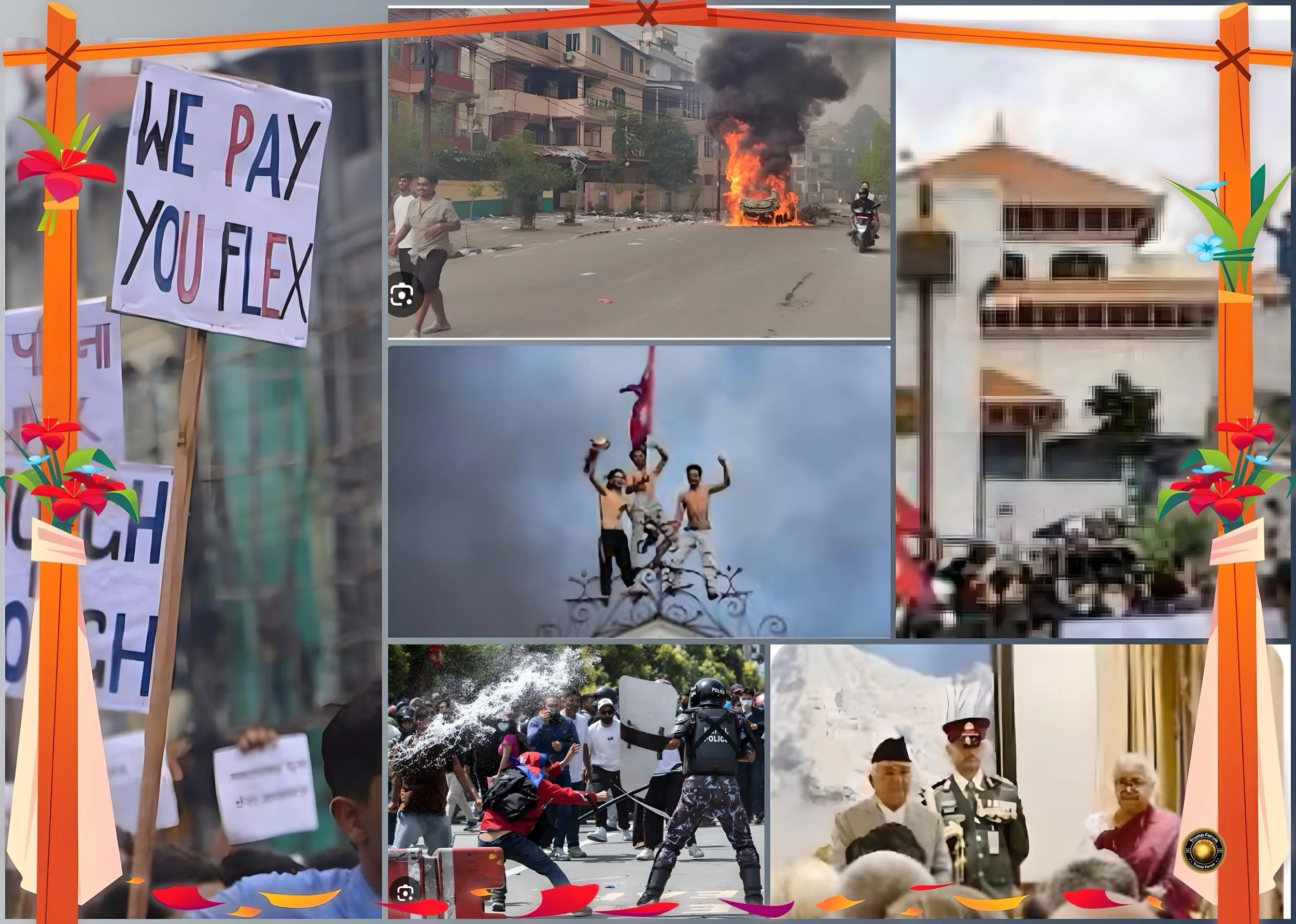
In a span of just eight days, initial protests against a governmental ban on social media escalated into a transformative governmental overthrow, resulting in the resignation of Prime Minister K.P. Sharma Oli, the dismantling of critical state institutions, and the establishment of a novel digital democracy framework.
This crisis underscores the inherent tensions between conventional governance models and the burgeoning influence of digitally-empowered youth movements, providing essential insights for nations worldwide regarding evolving concepts of political legitimacy, civic participation, and the increasingly central role of social media in democratic processes.
The Nepalese case exemplifies a significant shift in the function of social media, transitioning from a supplementary communication tool to the core platform for political discourse and decision-making.
Following the government's prohibition of 26 major social media platforms—including Facebook, Instagram, and WhatsApp—over 145,000 citizens migrated to Discord servers, effectively supplanting parliament as the nation’s primary arena for deliberation.
This "Discord democracy" enabled participants to engage in policy discussions, nominate leadership, and coordinate political actions in real time, ultimately leading to the selection of Sushila Karki as interim Prime Minister, a decision subsequently communicated to traditional governance institutions.
The rapidity and efficacy of this digital mobilization challenge conventional paradigms of political representation and institutional legitimacy.
Catalysts of Crisis: Beyond Social Media Restrictions
Economic Underpinnings of Discontent
While the immediate catalyst for Nepal's upheaval was the government's September 4 enactment of a social media ban following the non-compliance of major platforms with new registration mandates under the Social Media Bill 2025, the protests were deeply intertwined with longstanding structural grievances.
Nepal faces a youth unemployment rate of 12.6%, coupled with a per capita GDP lingering below $1,500, categorizing it among the world's poorest nations.
Notably, over 741,000 Nepalese sought employment abroad in the 2023-24 fiscal year, underscoring the scarcity of domestic economic opportunities.
The "Nepo Kids" movement, which gained traction on platforms like TikTok prior to the ban, directly confronted the conspicuous displays of wealth among the offspring of politicians, who showcased luxury items and extravagant vacations at a time when average citizens faced economic hardships.
Drawing parallels to the “nepo baby” discourse in Hollywood, this movement employed hashtags like #PoliticiansNepoBabyNepal to illuminate issues of corruption and nepotism within the highest echelons of government.
The timing of the social media ban—coinciding with the momentum of this anti-corruption initiative—was perceived by demonstrators as a deliberate strategy to suppress dissenting voices.
The Digital Transformation of Political Engagement
Nepal's internet landscape has experienced a rapid expansion, growing at an annual rate of 15%, which has fostered a generation that increasingly relies on social media platforms for political news instead of traditional media.
With 14.3 million active social media users—almost half the country's population—platforms like Facebook, Instagram, and YouTube have become integral to communication, commerce, and civic engagement.
The government's recent ban on these platforms effectively disrupted vital digital networks, notably impacting the approximately 80% of internet traffic that depends on social media.
This move demonstrated a fundamental disconnect on the part of the government regarding how digital-native generations engage with political processes.
Unlike older demographics that relied on traditional media and hierarchical political structures, Generation Z has cultivated alternative networks for information dissemination, political mobilization, and collective activism.
When official communication channels were obstructed, they adeptly pivoted to encrypted messaging applications, offline coordination, and peer-to-peer communication strategies to sustain organizational efforts.
Social Media as a Challenge to Traditional Governance Structures
The ongoing crisis in Nepal exemplifies a broader global trend where social media platforms are transitioning from supplementary tools to primary arenas for political participation, effectively reshaping democratic engagement.
The emergence of Discord servers during the protests served as advanced deliberative platforms, complete with voice, video, and text capabilities, gaining substantial attention such that these discussions were featured on national television and live-streamed during coverage of the events.
This digital democracy functioned with extraordinary efficiency, utilizing crowdsourced nominations, online polling, and real-time debate—processes that would typically take traditional parliamentary systems weeks or months to resolve.
The transparency associated with these digital discussions, where even military communications were made openly accessible, marked a significant departure from the opaqueness characteristic of traditional political operations.
This evolution suggests that Gen Z prioritizes transparency and direct participation as foundational democratic principles, possibly transcending conventional frameworks of representative democracy.
Reevaluating Traditional Values and Authority
The protests in Nepal illuminated a clear generational divide in attitudes towards political legitimacy and authority. While older generations tend to uphold hierarchical structures and institutional norms, Gen Z activists exhibited a pronounced detachment from traditional symbols of political power.
The acts of arson targeting the parliament, Supreme Court, and residences of political figures transcended mere vandalism; they symbolized a broader repudiation of institutions perceived as corrupt and unresponsive.
This denouncement of traditional authority does not equate to a rejection of democratic values per se. Rather, it suggests a reconfiguration of democratic identity in the digital era.
Gen Z protesters displayed a nuanced grasp of democratic tenets—they demanded accountability, transparency, and representation—while simultaneously denouncing the institutional frameworks through which these principles have historically been manifested.
Their focus on anti-corruption, economic equity, and freedom of expression resonates with core democratic values, even as their methodologies challenge established political processes.
The strategic use of social media for organizational purposes, their calls for transparency, and their insistence on participatory engagement signify an evolution in democratic practice rather than its outright abandonment.
Regional and Global Implications
A Pattern of Youth-Led Democratic Transformation
Nepal's current political crisis is emblematic of a wider trend of youth-driven political movements that have emerged across South Asia and beyond.
Similar uprisings, such as those in Sri Lanka (2022) and Bangladesh (2024), alongside the 2019 protests in Hong Kong, underscore the potency of social media in orchestrating resistance efforts.
These movements exhibit several key characteristics: digital mobilization, youth-centric leadership, anti-corruption rhetoric, and an acute capability for rapid mass mobilization.
Collectively, these phenomena indicate a significant paradigm shift in the mechanisms of political transformation in the 21st century.
Traditional forms of political dissent—typically organized through established political parties, formal institutions, or conventional media—are increasingly being augmented or outright displaced by leaderless, networked movements that leverage digital platforms to devise and implement sophisticated political strategies.
The implications of this transformation are profound, affecting political stability, democratic governance, and the landscape of international relations.
Geopolitical Consequences and International Responses
The political instability in Nepal carries notable geopolitical implications due to its strategic position between China and India.
The crisis unfolds against a backdrop of complex geopolitical dynamics, as former Prime Minister Oli fortified Nepal's ties with Beijing through the Belt and Road Initiative, while India retained significant cultural and economic influence.
China's substantial investment—amounting to $5 billion in infrastructure projects—contrasts sharply with India's concerns over the strategically vital Siliguri Corridor, creating a multifaceted context for the ongoing political upheaval.
The international response has been notably cautious, with diplomatic missions from the United States, United Kingdom, Japan, and France issuing joint statements advocating for peaceful assembly and freedom of expression, while also calling for restraint among all parties involved.
The U.S. State Department responded by elevating its travel advisory to Level 3, recommending that American citizens “reconsider travel” due to potential civil unrest.
This broader response from Western nations reflects a level of ambivalence regarding engagement strategies with digitally-driven political movements that operate outside traditional diplomatic frameworks.
Lessons for Global Governance
The Risks of Digital Restriction
Nepal’s experience elucidates the substantial risks associated with the control of digital communication in democratic contexts.
The social media ban, which aimed to mitigate misinformation and enforce regulatory compliance, inadvertently became a catalyst for the very instability it sought to prevent.
This situation illustrates a broader trend where restrictions on digital freedoms can destabilize government legitimacy and disrupt social cohesion.
This case exemplifies the necessity of conceptualizing digital platforms as critical civic infrastructure rather than mere communication tools.
In environments where social media constitutes the primary medium for political dialogue, commercial activity, and social interaction—as evidenced in Nepal—imposing limitations on these platforms could precipitate a crisis of legitimacy.
Engaging Digital-Native Generations
The crisis in Nepal highlights the imperative for governments globally to formulate innovative engagement strategies tailored to digitally empowered youth populations.
Traditional political participation frameworks—rooted in established political parties, formal consultations, or conventional media—are becoming increasingly inadequate for cohorts habituated to demand immediate, transparent access to political processes.
Effective governance in the digital era necessitates recognizing that legitimacy is now partially derived from meaningful interactions with online communities and the digital platforms that foster youth engagement. Governments that do not adapt to these evolving paradigms risk obsolescence or, as evidenced by Nepal, outright insurrection.
Balancing Regulation with Rights
The Nepalese case further exemplifies the complexities of regulating digital platforms while safeguarding democratic freedoms.
The proposed Social Media Bill 2025, which mandated platform registration and compliance with content moderation protocols, was designed to address legitimate concerns such as misinformation, hate speech, and digital harms.
However, its execution—characterized by blanket bans and ambiguous enforcement parameters—violated core principles of proportionality and due process.
Other nations facing similar regulatory dilemmas can gain insights from Nepal’s missteps, ensuring that digital governance frameworks emphasize transparency, stakeholder engagement, and adherence to human rights standards.
Effective regulation necessitates technical proficiency, a robust understanding of digital technologies from a judicial perspective, and an ongoing dialogue among governmental entities, platforms, and civil society organizations.
The Global Message from Generation Z
Redefining Citizenship and Political Engagement
The Gen Z protestors in Nepal delivered a poignant message to governments worldwide: traditional modalities of political engagement are increasingly inadequate for a generation shaped by digital interaction.
This demographic demands real-time transparency, direct involvement in decision-making processes, and prompt responses to their concerns. In the absence of suitable channels within conventional frameworks, they are inclined to establish alternative institutions and processes.
The movement’s focus on anti-corruption, economic equity, and freedom of expression underscores universal principles that transcend national borders.
However, the strategies employed to advance these ideals—such as digital mobilization, networked resistance, and direct action—represent distinctive 21st-century methodologies for enacting political change.
The Transformation of Democratic Legitimacy
The crisis in Nepal posits that democratic legitimacy in the digital context arises not solely from electoral victories but also from persistent engagement with online constituencies.
Governments that fail to communicate effectively and interact through digital mechanisms risk delegitimization among populations entrenched in digital culture.
This shift carries significant ramifications for democratic theory and practice. Conventional concepts of representation, deliberation, and accountability must be reexamined in the context of emerging technologies that facilitate direct, ongoing, and transparent political discourse.
The “Discord democracy” that manifested in Nepal exemplifies an early experimentation with these novel forms of political organization.
Global Implications for Democratic Governance
The international community's response to Nepal's crisis highlights the ambivalence surrounding engagement with digitally-organized political movements that circumvent conventional diplomatic and political frameworks.
While Western governments voice support for democratic principles and the right to peaceful assembly, they grapple with the absence of established protocols for interfacing with platforms such as Discord, social media movements, and other forms of digital political organization.
This disconnection between traditional diplomatic mechanisms and emergent digital political landscapes presents considerable challenges for effective international engagement, conflict resolution, and the promotion of democratic values.
As analogous movements gain traction in various countries, the international community must innovate new methodologies for digital diplomacy and support for digital democracy.
Conclusion
Navigating the Digital Democratic Transition
Nepal’s Gen Z uprising transcends a mere local political upheaval; it epitomizes a global paradigm shift in the operation of democratic politics within the digital arena.
The movement's efficacy in dismantling a government and instituting alternative deliberative institutions via social media platforms exemplifies both the potential and pitfalls of digital democracy.
For governments worldwide, the situation in Nepal delivers pivotal lessons regarding the dangers of curtailing digital freedoms, the imperative to engage with digitally-native demographics, and the necessity of evolving governance frameworks in sync with technological advancements.
The rapid progression—from an effective social media ban to government collapse within a mere eight days—underscores the speed at which digital movements can mobilize and orchestrate intricate political strategies.
The ramifications of these developments extend beyond governance, raising critical inquiries regarding democratic theory, international relations, and social transformation.
As Generation Z continues to gain political traction globally, their expectations for transparency, participation, and responsiveness are set to fundamentally reshape democratic institutions and practices.
Countries that adeptly navigate these shifts will likely achieve increased legitimacy and stability, while those that resist adaptation may confront upheaval reminiscent of Nepal’s transformation in September 2025.
The message from Nepal’s Gen Z is unequivocal: the trajectory of democracy is inexorably linked to digital engagement, participatory mechanisms, and immediate responsiveness.
Governments across the globe face a stark choice: adapt or risk becoming obsolete, engage or invite revolt. The implications of this decision, as evidenced by Nepal’s experience, could not be more critical.