The Overlooked Political Titan: Kwame Nkrumah and the Worldwide Evolution of Black Consciousness
Executive Summary
Kwame Nkrumah: The Overlooked Political Titan and His Role in the Global Awakening of Black Consciousness
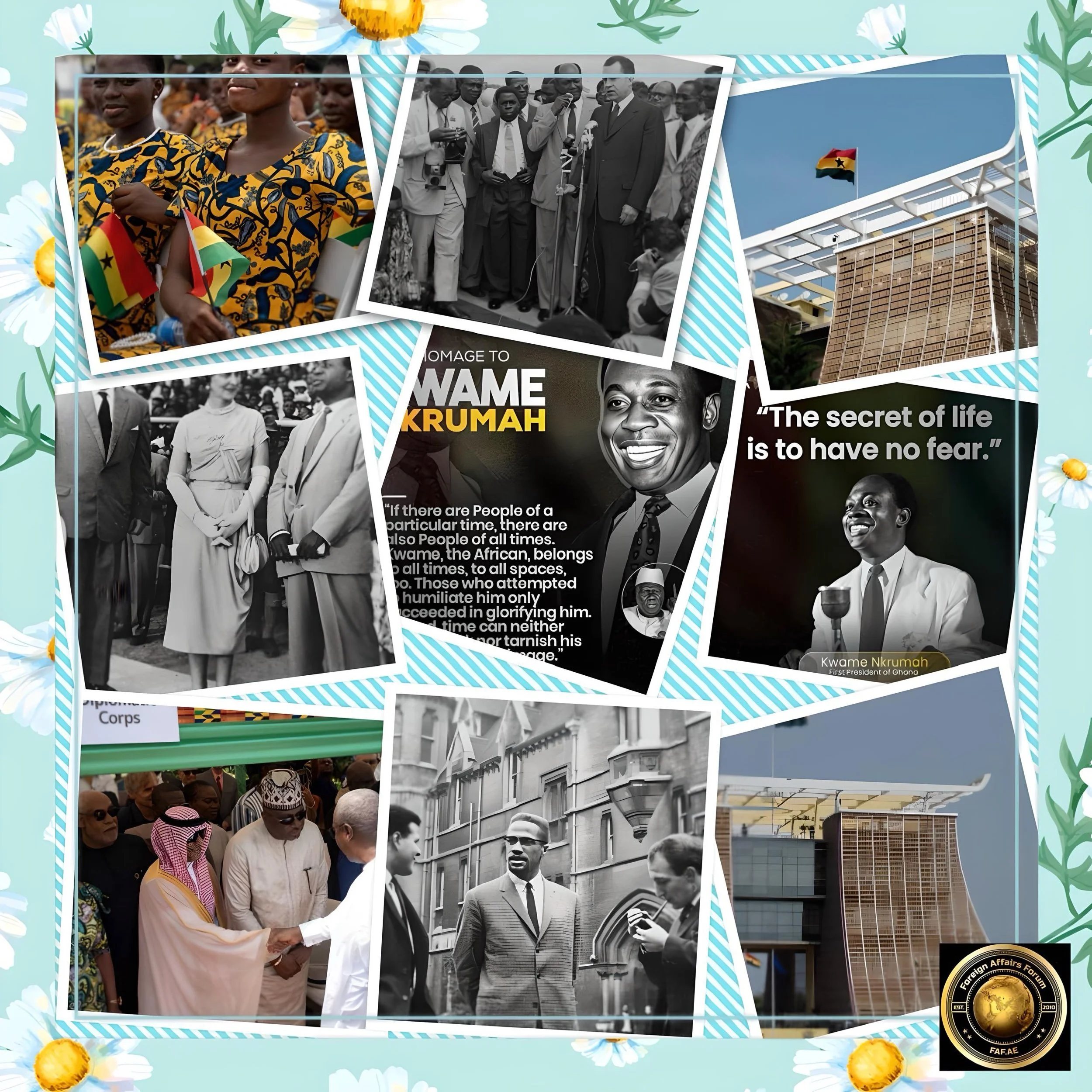
Kwame Nkrumah, the first President of Ghana, stands as a monumental figure in the landscape of modern political history, yet his contributions are often underappreciated by the Western narrative.
His leadership transcended national boundaries, inspiring a widespread transformation in Black consciousness around the globe.
Nkrumah's vision included not just the liberation of his own country from British colonial rule, achieved in 1957, but also a broader commitment to Pan-Africanism—the unification and empowerment of African nations and peoples.
Nkrumah’s ideology was rooted in the belief that true freedom could only be secured through collective action and solidarity among African states.
His philosophy of "Consciencism" emphasized the need for a new African identity that fused traditional values with contemporary social and political realities.
By establishing the Organization of African Unity in 1963, he sought to foster unity among African nations, advocating for self-determination and the end of colonialism across the continent.
His writings and speeches were laced with powerful rhetoric that aimed to awaken a sense of pride and responsibility among people of African descent worldwide.
Nkrumah's influence thus extended far beyond the borders of Ghana, resonating with civil rights movements in the United States and beyond, as activists drew upon his call for liberation and equality.
In examining Kwame Nkrumah's legacy, one uncovers a rich tapestry of political thought and action that continues to inspire dialogues around identity, independence, and the shared struggles of people of African ancestry.
His life and work underscore the vital importance of recognizing and commemorating the profound impact of historical figures who shaped the global panorama of democracy and human rights.
Introduction
The profound connection between African decolonization and the American civil rights movement that James Baldwin observed in Tallahassee represents one of the most significant yet underappreciated narratives of the 20th century.
Kwame Nkrumah’s leadership of Ghana to independence in 1957 catalyzed a global transformation in Black consciousness that fundamentally reshaped liberation movements on both sides of the Atlantic.
The Psychological Revolution of 1957
Baldwin’s observation that young African Americans “were born at the very moment at which Europe’s domination of Africa was ending” captures a crucial psychological shift.
Ghana’s independence on March 6, 1957, marked not just the birth of a new nation, but the emergence of a new global Black identity rooted in dignity and self-determination.
For the first time in centuries, Black people worldwide could point to a modern African state that had achieved freedom through organized resistance rather than European benevolence.
The symbolic power of this moment cannot be overstated.
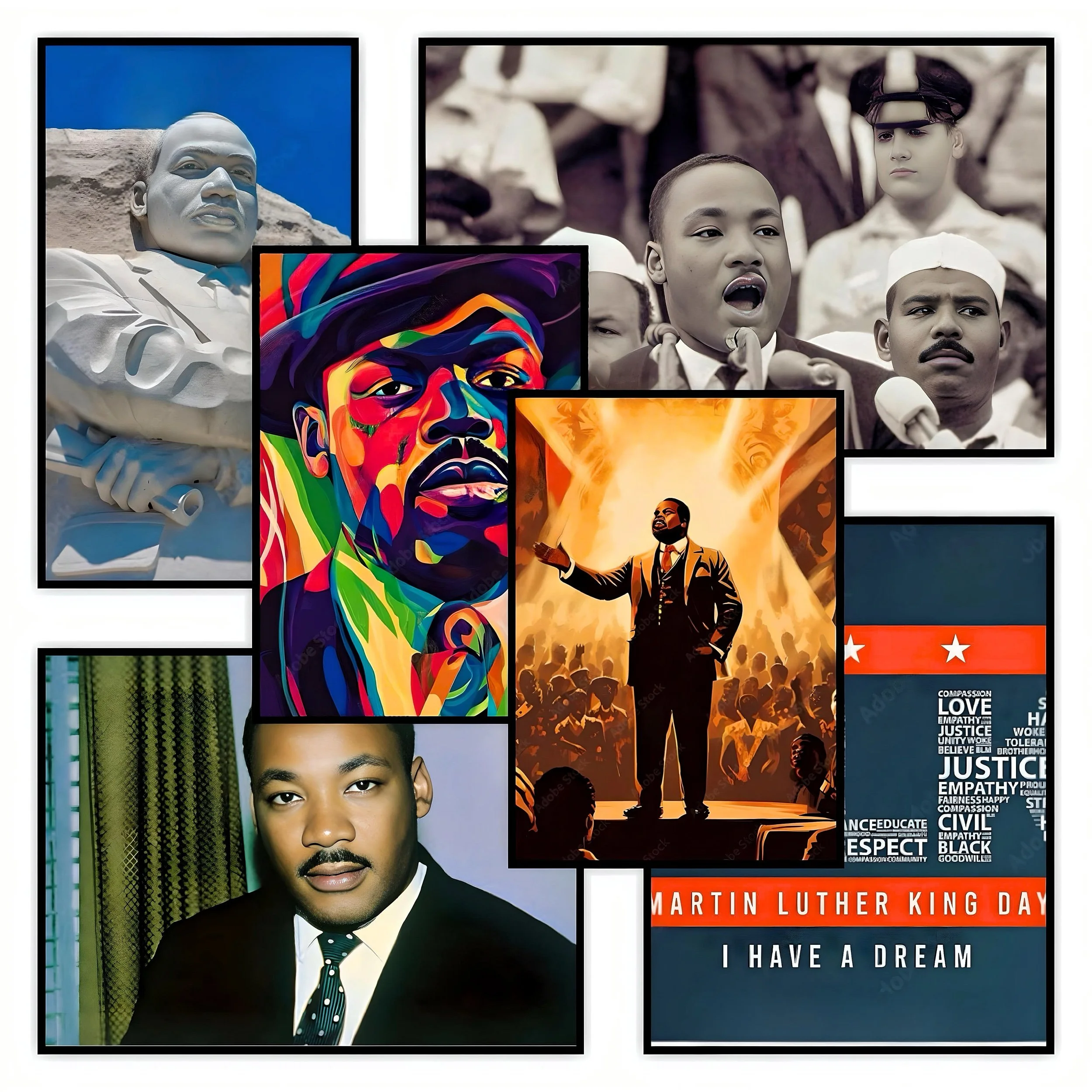
As Martin Luther King Jr. witnessed the Union Jack come down and Ghana’s Black Star flag rise, he wept with joy, recognizing that “this gives new hope to me in the struggle for freedom as I confront it”.
The sight of Kwame Nkrumah, a Black leader, dancing with the Duchess of Kent at the independence celebration demonstrated that racial hierarchies could be overturned through nonviolent means.
Nkrumah’s Vision of African Personality
Central to Nkrumah’s global impact was his concept of the “African Personality”—a deliberate effort to redefine the imagery of Africa and Black people worldwide.
This was not merely a cultural movement but a strategic political project designed to prove that “the black man is capable of managing his own affairs”.
The African Personality represented a form of racial uplift ideology that sought to eliminate the inferiority complexes instilled by colonialism and slavery.
Nkrumah understood that psychological liberation had to accompany political independence.
His approach resonated strongly with Black consciousness movements worldwide because it addressed the fundamental challenge identified by thinkers like Steve Biko: that “resignation to racial domination was rooted in self-hatred”.
By demonstrating Black political competence on the world stage, Ghana provided living proof that contradicted centuries of racist propaganda.
The Transnational Network of Liberation
Nkrumah deliberately cultivated connections with African Americans and other diaspora communities as part of his pan-African strategy.
His experience as a student in the United States during the 1930s and 1940s had exposed him firsthand to American racism, radicalizing his understanding of the global nature of white supremacy.
This experience convinced him that African liberation and Black American civil rights were interconnected struggles.
The relationship was reciprocal and transformative. African American leaders like Martin Luther King Jr., Malcolm X, and Maya Angelou visited Ghana and found their perspectives fundamentally altered by witnessing Black political leadership in action.
Shirley Graham Du Bois exemplified this connection, serving as Director of Ghana Television from 1964-1966 and using media to promote both African nationalism and women’s empowerment.
The Tallahassee Connection
Baldwin’s 1960 observations in Tallahassee perfectly illustrate this transformation in action.
The sit-in movement that began in Greensboro in February 1960 quickly spread to Florida A&M University students in Tallahassee, who drew inspiration from successful African independence movements.
These young activists possessed what Baldwin called a fearlessness that previous generations had lacked—a fearlessness rooted in knowing that Black people elsewhere had achieved freedom.
The students Baldwin observed were indeed “the only people in this country now who really believe in freedom” precisely because they understood freedom as a global rather than merely national project.
They had witnessed African countries throwing off colonial rule and knew that the same determination could overcome American segregation.
Global Black Consciousness and Cold War Dynamics
Nkrumah’s influence extended far beyond Ghana’s borders through institutions like the Bureau of African Affairs and the All-African Peoples’ Conference, which brought together liberation leaders from across the continent.
These networks allowed ideas, strategies, and inspiration to flow between different liberation struggles, creating a truly transnational movement.
The timing was crucial. The Cold War context meant that both American and African liberation movements could leverage superpower competition to their advantage.
Baldwin recognized that both Brown v. Board of Education and African decolonization occurred not from “justice or love” but because of “the realities of power in this difficult era”.
African independence provided moral and political leverage for American civil rights activists while demonstrating to the world that the United States’ claims about freedom and democracy were hollow as long as segregation persisted.
The Intellectual Legacy
Nkrumah’s concept of the African Personality influenced liberation movements worldwide, from Steve Biko’s Black Consciousness Movement in South Africa to the Black Power movement in the United States.
The core insight—that psychological liberation must accompany political liberation—became fundamental to late-20th-century liberation struggles.
The Black Consciousness Movement in South Africa explicitly built on Nkrumah’s insights, with leaders like Biko arguing that “black liberation would not only come from imagining and fighting for structural political changes, but also from psychological transformation in the minds of black people themselves”.
This understanding that Black people had to believe in their own worth before they could effectively struggle for power became central to liberation movements globally.
Conclusion
The Continuing Revolution: An Analysis of Kwame Nkrumah’s Impact on Global Black Consciousness
Kwame Nkrumah stands as a crucial architect in the decolonization processes across Africa and the broader Pan-African unity movement.
Yet, despite his significant contributions to post-colonial geopolitics, his influence remains substantially overlooked in Western political discourse.
Nkrumah’s dialectical methodology in addressing colonialism, coupled with his innovative perspectives on socialism and self-determination, catalyzed transnational movements that not only altered the political landscape but also significantly reawakened Black consciousness on a global scale.
A thorough examination of Nkrumah's ideological frameworks and strategic initiatives unveils profound insights regarding the complex interplay between colonial legacies and ongoing issues surrounding racial identity and empowerment.
The wave of African independence, ignited by Ghana's pioneering example, burgeoned into what James Baldwin termed a generation that “really believes in freedom.”
By 1960, a remarkable seventeen African nations achieved independence, fundamentally reshaping the global racial dynamics and challenging the historical narrative of European dominance as an inevitability.
This transformation transcended mere political structures, permeating cultural, educational, and identity spheres.
Institutions such as the Organization of African Unity, established under Nkrumah's guidance, facilitated institutionalized pan-African collaboration, while various cultural movements championed the celebration of African heritage and achievements.
Although Nkrumah’s vision of continental unity was only partially fulfilled, his insight that African liberation was integral to global Black freedom remained prescient.
The psychological revolution he instigated in 1957 sent reverberations throughout global movements, influencing locales from Birmingham to Soweto and from Selma to Salvador.
The youthful activists observed by Baldwin in Tallahassee emerged as emblematic of a novel historical juncture, one wherein the political landscape for Black agency was dramatically reshaped by the visibility of African leaders presiding over sovereign nations.
Thus, the political titan often forgotten in Western narratives was more than the founder of modern Ghana; he was a key figure in fostering a global transformation in Black consciousness that underpinned the modern civil rights movement.
A nuanced understanding of Nkrumah’s role elucidates why the conclusion of colonial dominion in Africa was indeed, as Baldwin noted, central to the broader narrative of contemporary freedom.