Ukraine is Trump's war not Zelensky’s
Executive Summary
The conflict in Ukraine can be viewed as closely intertwined with former President Donald Trump's administration, rather than being solely centered on Ukrainian President Volodymyr Zelensky's leadership.
During Trump's time in office, various actions and policies significantly influenced the dynamics of the war in Ukraine.
Trump's approach to foreign relations, particularly regarding military aid and diplomatic strategies, played a crucial role in shaping the situation on the ground.
As such, the conflict reflects not only the struggles of Ukraine under Zelensky but also the broader geopolitical implications tied to Trump's decisions and the stance of the United States during his presidency.
Introduction
Key Developments in President Trump’s Management of the Ukraine War
President Trump’s strategy regarding the ongoing Russia-Ukraine conflict during his second term has transitioned dramatically from assertive promises of immediate peace to a complex mix of diplomatic pressure, conditional military support, and economic sanctions that he adamantly controls—and therefore “owns.”
A Bold Promise to End the War “in 24 Hours
As part of his 2024 electoral campaign and early in his second term, Trump asserted his belief that he could broker a peace agreement between Russia and Ukraine within just 24 hours of assuming office.
This audacious claim was made during various high-profile events; most notably, he reiterated this promise at a CNN town hall in 2023, stating, “They’re dying, both Russians and Ukrainians. I want them to stop dying … I’ll have that done in 24 hours.”
However, by the spring of 2025, Trump had to acknowledge that his initial 24-hour pledge was an “exaggeration” and had been made with a degree of “sarcasm,” illustrating the stark contrast between his campaign rhetoric and the intricate realities of diplomatic negotiations.
He subsequently extended his self-imposed deadline to a more generous 100 days, all the while confessing to ongoing barriers: President Putin’s steadfast refusal to make any concessions and President Zelenskyy’s apparent hesitance to undertake the difficult compromises necessary for peace.
Increased Pressure on NATO Allies
At the NATO summit held in The Hague in June 2025, Trump wielded his considerable personal influence to demand that member countries increase their defense expenditures to 5 percent of their Gross Domestic Product (GDP) by the year 2035.
Most NATO leaders acquiesced to his request, committing to deliver annual plans that would outline how they would reach this ambitious goal, thereby redistributing Europe’s defense responsibilities and alleviating some of the financial burdens that the United States traditionally shouldered.
Trump heralded this development as a significant victory for “Western civilization,” attributing his leadership as pivotal in breaking a long-standing pattern of underinvestment in defense.
Critics, however, countered that while elevated defense spending could indeed fortify deterrence against aggressive actions, it did little to propel the stalled Russia-Ukraine peace process forward.
Escalation of Nuclear Rhetoric
In early August 2025, following a series of provocative online statements by Russian politician Dmitry Medvedev that hinted at the potential for nuclear escalation, Trump directed the repositioning of two U.S. nuclear submarines to “the appropriate regions” neighboring Russia as a form of deterrent.
This marked an uncommon instance of a sitting U.S. president publicly brandishing the threat of nuclear force outside of established diplomatic channels.
The Kremlin downplayed the military maneuver as a standard protocol but cautioned that all involved parties should exercise extreme caution when using nuclear language, highlighting the precariousness of the situation.
Suspension and Resumption of U.S. Military Aid
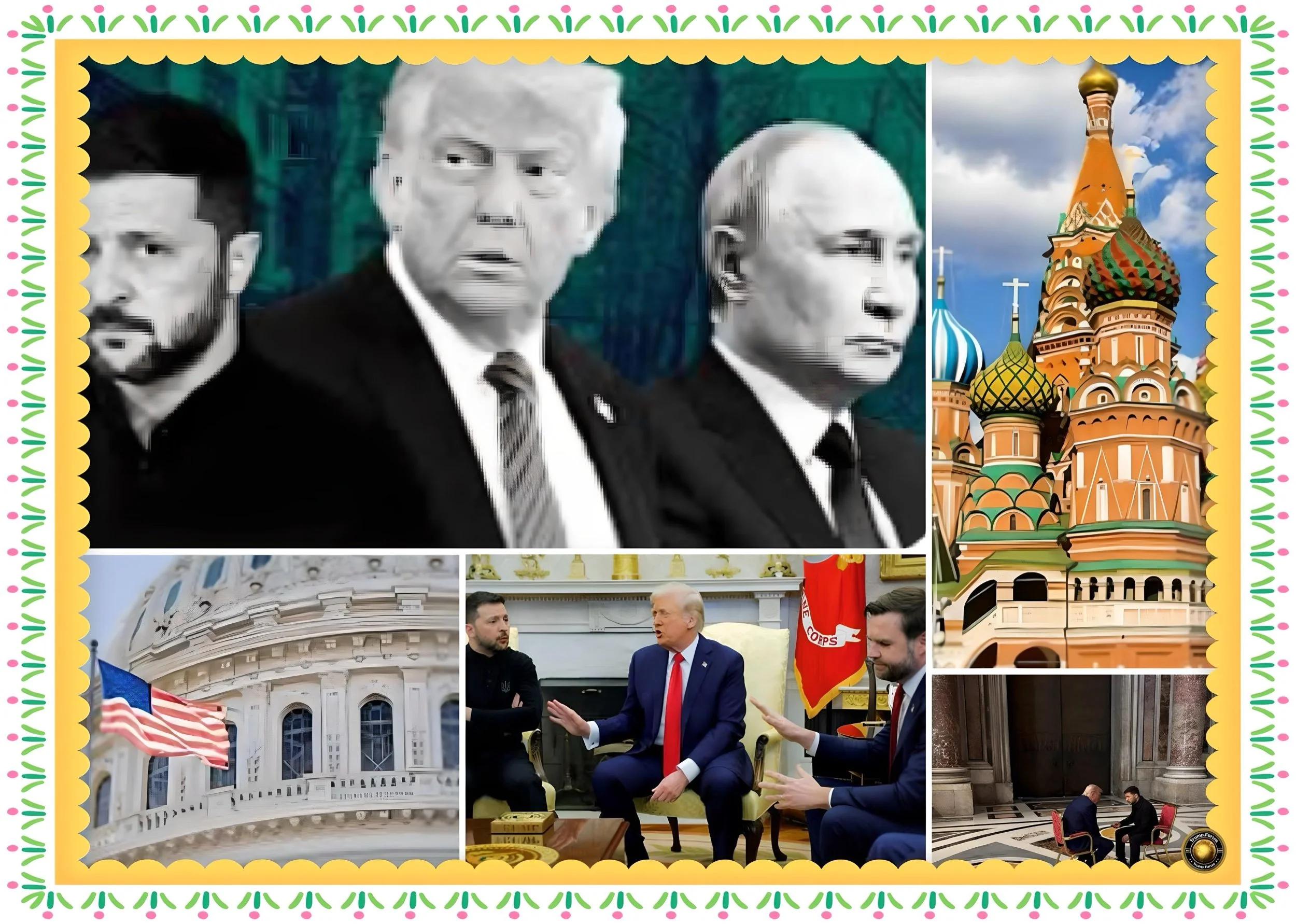
In the latter part of February 2025, after a notably tense confrontation in the Oval Office with President Zelenskyy, Trump enacted a halt on new shipments of U.S. military aid to Ukraine, including crucial defense assets such as Patriot missiles and precision-guided munitions.
This suspension was positioned publicly by the White House as a necessary “review” to ensure that any aid provided genuinely contributed to a diplomatic resolution.
However, following outcry from members of Congress and an unproductive conversation with President Putin, Trump reversed this decision in early July, resuming military assistance while asserting that Europe would need to shoulder more of the financial responsibility for ongoing support.
Threat of “Secondary” Tariffs on Russia’s Trading Partners
In July 2025, Trump issued a stark warning that he would impose punitive 100 percent tariffs on any nation—particularly significant energy importers such as India and China—that continued to purchase Russian oil, should a ceasefire deal not materialize within his newly set deadlines (initially projected at 50 days, only to be compacted to early August).
Economists swiftly raised concerns that such secondary tariffs could lead to significant disruptions in global markets, including a sharp spike in Brent crude prices, which would exacerbate inflation and provoke a negative diplomatic response from allied nations.
To enhance his position, Trump dispatched his special envoy, Steve Witkoff, to Moscow in early August with the goal of advocating for a ceasefire and implicitly deterring any imminent sanctions.
Conclusion
In the weeks following his inauguration, President Trump’s highly personalized approach to the Ukraine conflict has effectively transformed it into “his war.”
His strategies intertwine high-stakes deadlines, public admonishments directed at both President Putin and President Zelenskyy, military aid contingent upon political negotiation, demands for shared defense spending among allies, nuclear deterrent posturing, and sweeping economic threats.
As his presidency unfolds, the critical question remains: will these measures coalesce into a framework for sustainable peace, or will they serve to further inflame the existing volatility of the conflict?
This realization encapsulates the most significant foreign policy challenge of his administration.