China’s Red Sea Strategy: Diplomatic Calculation and Strategic Advantage
Introduction
The Red Sea has emerged as a critical maritime corridor where global powers, particularly China and the United States, execute increasingly complex strategies reflecting their broader geopolitical ambitions.
Recent developments, including the Houthi attacks on shipping and the American military response, have drawn attention to China’s nuanced regional approach.
Far from being silent, the Trump administration has escalated military operations against the Houthis while simultaneously highlighting Chinese support for the group.
FAF examines China’s strategic positioning in the Red Sea, the advantages it has secured, and the evolving U.S. response.
China’s Calculated Non-Intervention Strategy
China has adopted what experts describe as “calculated inaction” in the Red Sea crisis, deliberately distancing itself from direct military involvement despite having significant regional interests and presence.
This strategy is multifaceted and carefully calibrated to maximize China’s advantages while minimizing risks.
Strategic Presence Without Military Engagement
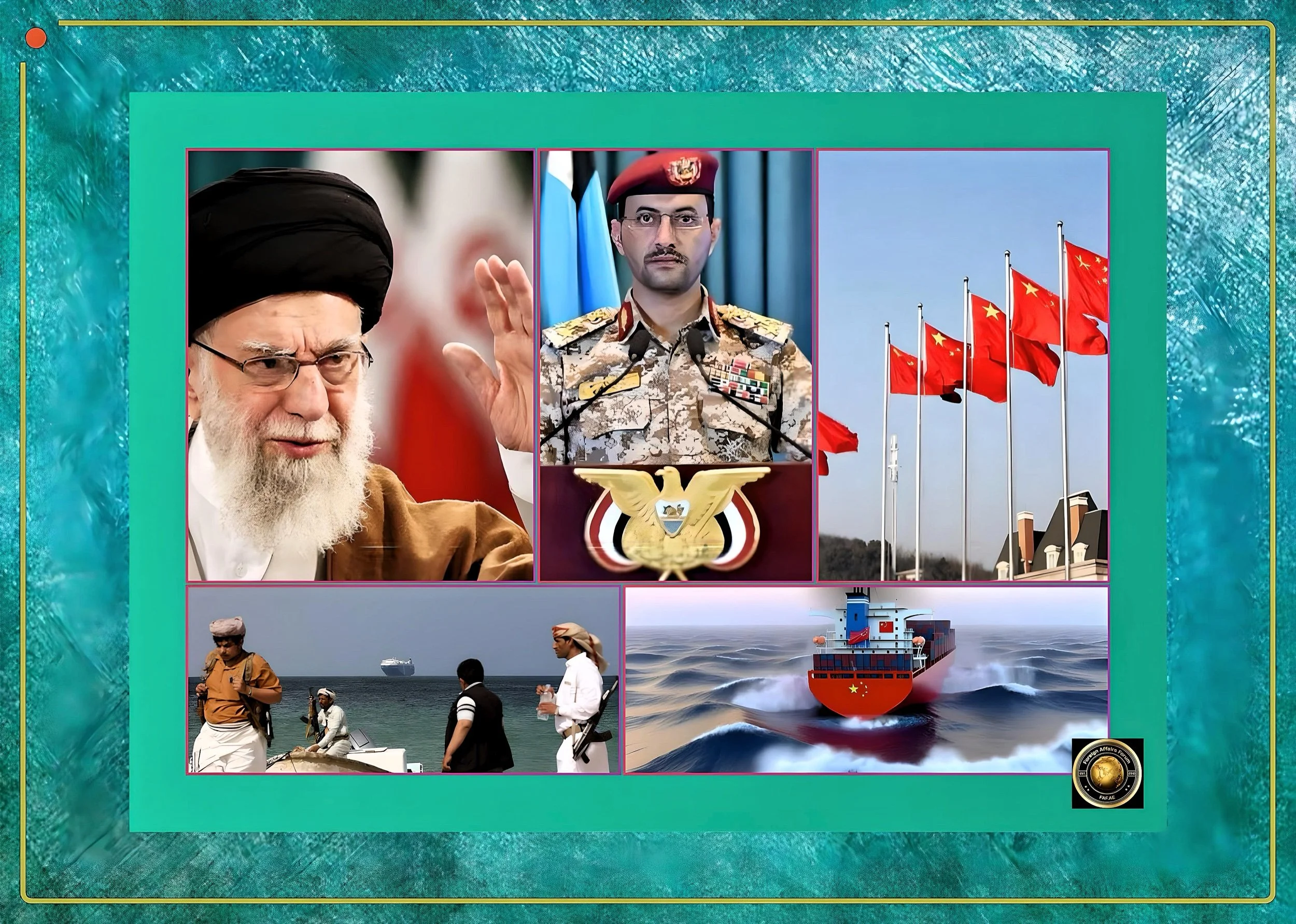
Despite maintaining a military base in Djibouti, China has notably refrained from participating in maritime security operations led by the United States or launching independent naval operations to counter Houthi attacks on shipping.
This absence is particularly striking given China’s substantial economic interests in the region and the threat that shipping disruptions pose to its trade routes.
The Chinese military base in Djibouti, strategically positioned at the southern entrance to the Red Sea, allows Beijing to project power in the region.
Yet, it has chosen not to deploy these assets against the Houthis.
China’s strategy appears to prioritize diplomatic positioning over military intervention. Beijing has carefully affirmed the principle of freedom of navigation without explicitly condemning the Houthis.
This delicate balancing act has reportedly yielded tangible benefits, as Houthi forces have allegedly refrained from attacking vessels that identify themselves as Chinese, and no Houthi attacks have been recorded on ships heading to Asia.
If accurate, this arrangement would represent a significant diplomatic achievement for China.
It would allow its commerce to continue relatively unimpeded while Western shipping faces attacks.
Economic Foundations of China’s Red Sea Strategy
China’s approach to the Red Sea is deeply rooted in its economic interests and the strategic vision embodied in its Belt and Road Initiative (BRI).
The Red Sea is a critical component of China’s 21st Century Maritime Silk Road, offering connectivity between Asia, Africa, and Europe.
This maritime corridor handles approximately 10 percent of worldwide trade and 40 percent between Asia and Europe, highlighting its crucial importance to global commerce.
China has made significant investments in port infrastructure along the Red Sea, including a 20 percent stake in Port Said in Egypt.
These investments align with the BRI’s objective of establishing a network of trade footholds and securing maritime routes vital for China’s economic growth.
The Red Sea’s strategic location makes it an essential gateway for Chinese products to enter African, European, Arab, and American markets.
Strategic Advantages for China and Implications for Global Powers
China’s approach to the Red Sea crisis has yielded several strategic advantages while potentially creating challenges for other global powers, particularly the United States.
Diplomatic and Economic Benefits
China’s diplomatic strategy has successfully secured preferential treatment for its shipping in the region.
According to reports, Chinese diplomacy has established “solid footholds” during the Red Sea crisis by affirming freedom of navigation without condemning the Houthis.
This approach has reportedly prevented the Houthis from attacking ships that identify as Chinese.
If accurate, this arrangement would give China a significant economic advantage as Western shipping companies face attacks or are forced to reroute around Africa, incurring substantial additional costs and delays.
The disruption of international shipping through the Red Sea may paradoxically benefit China’s broader strategic goals.
Some American analysts have suggested that the U.S. military presence in the Red Sea partly aims to counter Chinese influence.
Washington reportedly believes that its military dominance over the Red Sea impacts China in several key areas, including preventing China from exploiting sanctions on Russia and establishing surveillance over China’s trade with Europe.
The Iran Connection: Indirect Support for Houthi Operations
China’s relationship with Iran forms another critical dimension of its Red Sea strategy.
According to Western intelligence sources, China purchases approximately 90 percent of Iran’s oil, including crude sold by the Quds Force, the paramilitary arm of the Islamic Revolutionary Guard Corps.
This economic relationship indirectly finances Iran’s support for proxy groups across the Middle East, including the Houthis.
More recently, this relationship has evolved into more direct accusations.
In April 2025, the U.S. accused the Chinese satellite company Chang Guang Satellite Technology of supporting Houthi attacks on U.S. Navy vessels in the Red Sea by providing critical imagery for targeting.
The U.S. State Department characterized this as “directly supporting Iran-backed Houthi terrorist attacks on US interests.”
Even more serious allegations emerged in January 2025, claiming that China was directly arming Houthi rebels in exchange for unimpeded access through the Red Sea, marking a significant escalation in Beijing’s involvement in the region.
Trump Administration’s Response to China’s Red Sea Strategy
Contrary to the suggestion that President Trump has been silent on Chinese activities in the Red Sea, the administration has taken increasingly assertive action against the Houthis while also highlighting China’s role in supporting them.
Military Operations Against the Houthis
President Trump ordered a series of airstrikes against Houthi targets in Yemen beginning in March 2025, promising to use “overwhelming lethal force” until the Iranian-backed rebels cease their attacks on shipping.
In a post on his Truth Social platform, Trump warned: “Your time is up, and your attacks must stop, starting today. If they don’t, hell will rain down upon you like nothing you have ever seen before”.
The military campaign against the Houthis has escalated in recent weeks. On April 18, 2025, U.S. strikes on the Yemeni port of Ras Isa reportedly killed 74 people in what was described as the deadliest attack under the Trump administration.
Earlier, on April 5, 2025, President Trump shared a video on social media claiming to show an American airstrike killing dozens of Houthi fighters in Yemen, with the caption: “Oops, there will be no attack by these Houthis!
They will never sink our ships again!”.
Confronting China’s Role
The Trump administration has explicitly linked China to the Houthi attacks.
U.S. State Department spokesperson Tammy Bruce directly accused China of supporting the Houthis, stating, “Beijing’s support of that company Chang Guang Satellite Technology, even after we’ve engaged in discussions with them about this, certainly contradicts their claims of being peace supporters.”
This confrontational stance represents a significant shift in U.S. policy toward China’s activities in the Red Sea.
By publicly highlighting China’s role in supporting the Houthis and simultaneously escalating military operations against the group, the Trump administration is effectively challenging China’s strategy of calculated non-intervention while avoiding direct military confrontation with Beijing.
Conclusion
The Evolving Red Sea Dynamic
China’s approach to the Red Sea represents a sophisticated strategy for advancing its interests while avoiding direct military involvement.
By maintaining diplomatic ties with all parties in the conflict, indirectly supporting Iran and possibly the Houthis, and securing preferential treatment for its shipping, China has positioned itself to benefit from the crisis regardless of its outcome.
The Trump administration’s response has been increasingly assertive, combining military action against the Houthis with public criticism of China’s role in supporting them.
This dual approach aims to counter the immediate threat to shipping and the longer-term challenge of China’s growing influence in a strategically vital region.
As the situation continues to evolve, the Red Sea has become a critical maritime corridor and a theater for great power competition between the United States and China.
The outcome of this contest will have significant implications for global trade, regional stability, and the balance of power in the Middle East and beyond.