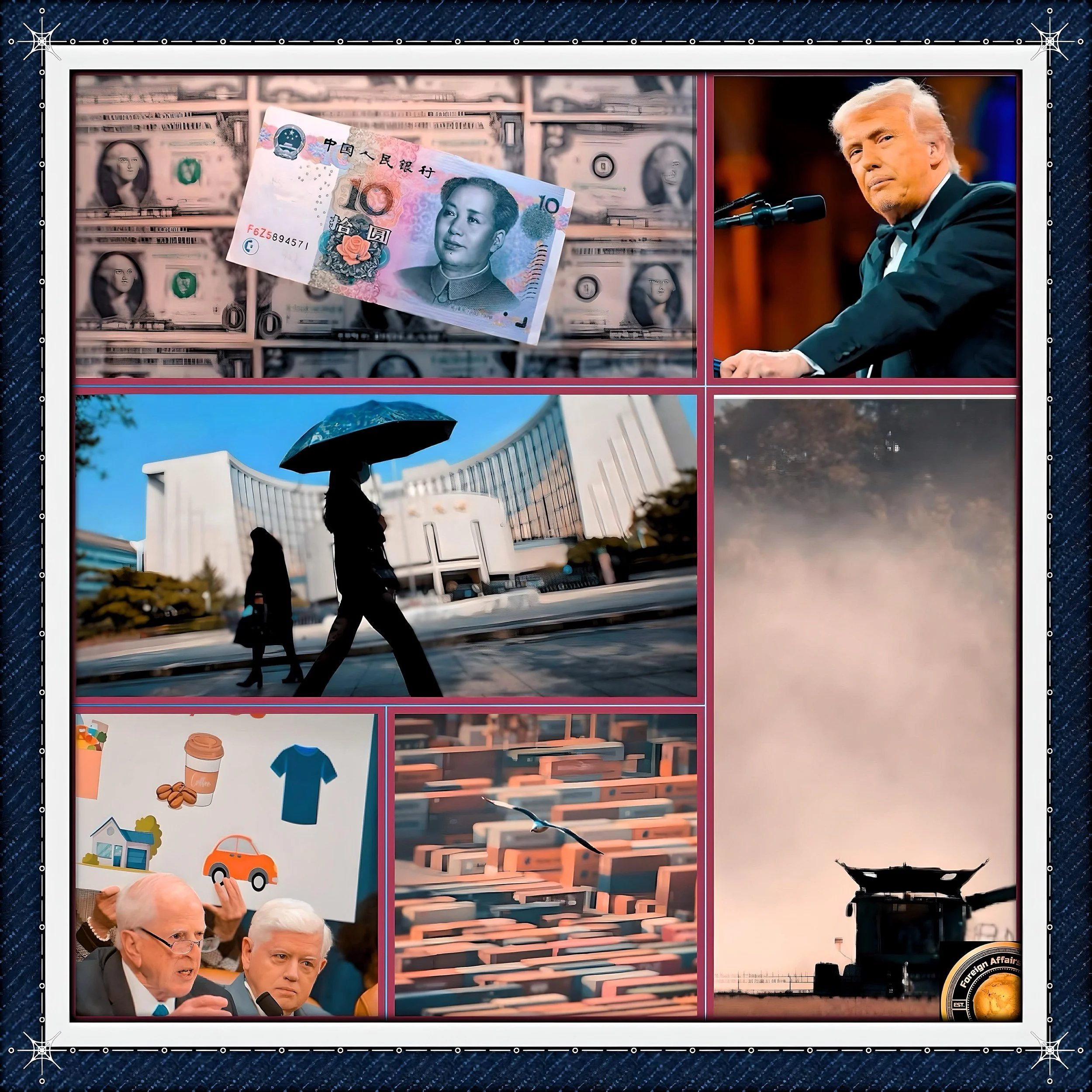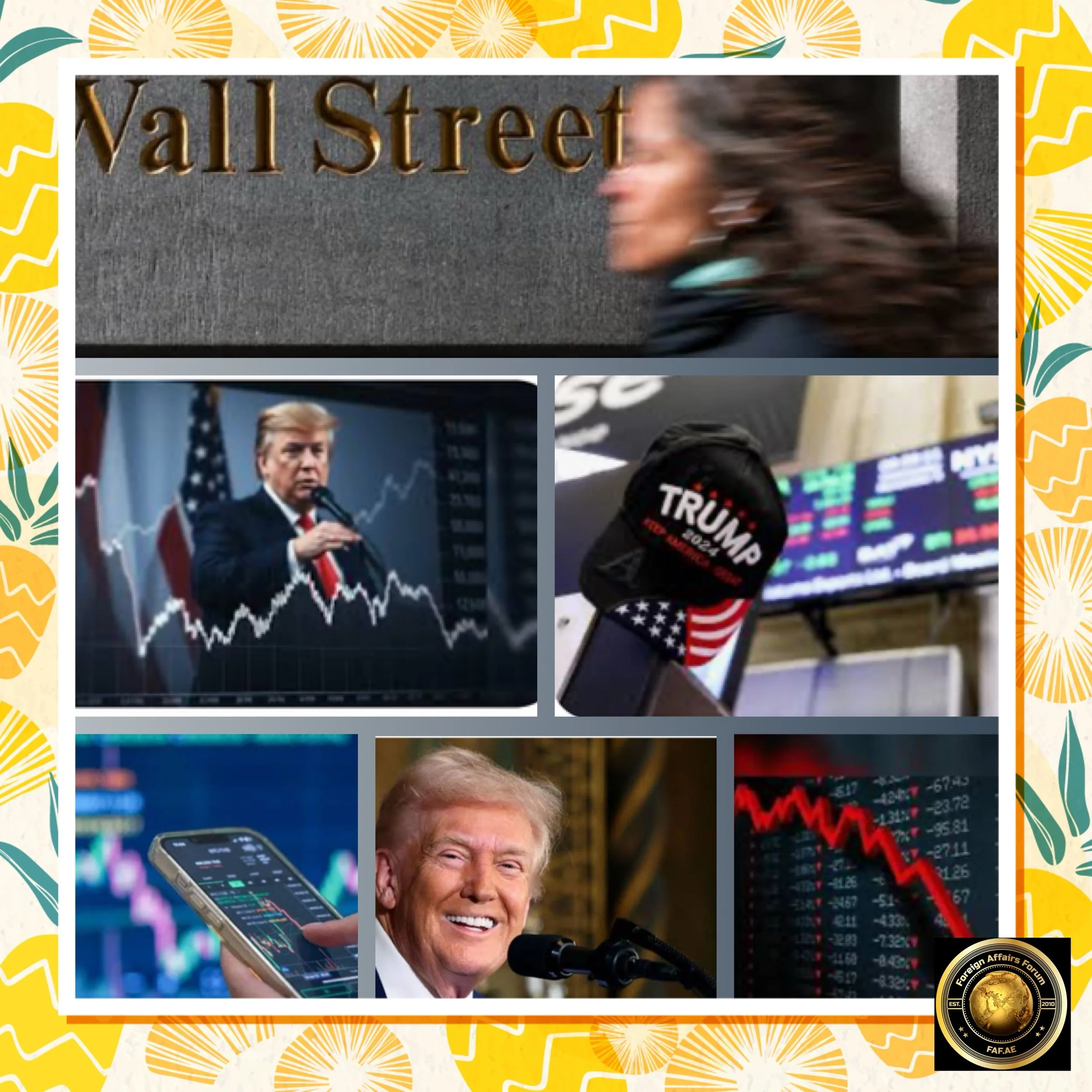
Trump 2.0 and Global Stock Markets: Navigating the Era of Unprecedented Volatility
Introduction
The second presidency of Donald Trump has unleashed one of the most tumultuous periods in modern financial history, fundamentally reshaping global stock markets through aggressive tariff policies, regulatory shifts, and unprecedented market interventions.
Since his inauguration on January 20, 2025, Trump’s “America First” agenda has created a perfect storm of market volatility, generating record-breaking crashes and spectacular recoveries that have redefined investment strategies worldwide.
The most dramatic event—the “2025 stock market crash” or “Trump Slump”—began on April 2, 2025, when Trump announced sweeping tariffs on Liberation Day, triggering the most significant global market decline since the 2020 COVID-19 pandemic.
This comprehensive analysis examines the multifaceted impacts of Trump’s second term on global markets, the future of traditional assets versus emerging alternatives like Bitcoin and gold, and the persistent uncertainty that continues to define the investment landscape.
The Trump Slump: A Market Catastrophe and Recovery
Liberation Day and the Great Market Crash
The defining moment of Trump’s second term arrived on April 2, 2025, when the president announced “Liberation Day”—a comprehensive tariff regime that would fundamentally alter global trade dynamics.
The announcement introduced sweeping tariffs affecting nearly all sectors of the U.S. economy, including a baseline 10% tariff on virtually all imports, 54% rates for China (later escalated to 245%), 20% for the European Union, and substantial tariffs ranging from 24% to 49% for countries including Japan, Vietnam, Thailand, Cambodia, and Taiwan.
The market’s response was immediate and devastating. Stock futures tumbled within hours of Trump’s afternoon announcement, with S&P 500 futures losing 3.9%, Nasdaq-100 futures dropping 4.7%, and Dow Jones Industrial Average futures falling 2.7%.
The following trading days witnessed unprecedented market destruction.
On April 3, the Nasdaq Composite lost 1,600 points in its worst sell-off since the COVID-19 pandemic began, the S&P 500 lost 4.84%, and the Dow fell 1,679 points, or 3.98%.
By April 4, with China imposing retaliatory 34% tariffs, the carnage intensified—the Dow Jones fell 2,231 points (5.5%), the S&P 500 lost 5.97%, and the Nasdaq entered bear market territory with a 5.8% decline.
Within just two trading days, the market experienced catastrophic losses: the Dow Jones lost over 4,000 points (9.48%), the S&P 500 declined 10%, and the Nasdaq plummeted 11%.
Over $6.6 trillion in market value was obliterated, marking the largest two-day loss in financial history.
The Chicago Board Options Exchange’s VIX benchmark, known as “Wall Street’s fear gauge,” spiked 15 points to close at 45.31—its highest level since the 2020 market crash.
The Miraculous Recovery
The turning point came on April 9, 2025, when Trump announced a 90-day pause on most reciprocal tariffs, excluding those on China.
This announcement triggered one of the most spectacular market rallies in history.
The S&P 500 surged 9.52% for its biggest one-day gain since 2008, the Dow Jones rose 7.87% for its largest gain since March 2020, and the Nasdaq posted a remarkable 12.16% increase—its largest one-day gain since January 2001 and second-best day ever.
By May 13, 2025, the S&P 500 turned positive for the year, and by June 27, 2025, it had not only recovered all its losses but closed at an all-time high of 6,173.07.
As of August 2025, the S&P 500 has gained over 6% since Trump’s inauguration, with major indices trading near record levels despite the extraordinary volatility experienced during the spring months.
Global Market Reactions and Regional Impacts
International Market Devastation
The Trump tariff announcements created a global contagion effect that extended far beyond U.S. borders.
On April 7, 2025, Hong Kong markets experienced the steepest decline with a fall of over 13.5%, while Chinese stock markets corrected by approximately 9%.
The broader Asian market massacre included the Nikkei 225 falling 7.83%, the Hang Seng dropping 13.22%, the Shanghai Composite declining 7.34%, and the Shenzhen Composite plummeting 9.66%.
European markets were not spared from the chaos, with the STOXX Europe 50 falling 5.34%, while other major markets including Australia’s S&P/ASX 200 (-4.23%), South Korea’s KOSPI (-5.57%), and Taiwan’s SE (-9.7%) all experienced significant corrections.
In India, the market reaction was particularly severe, with the Sensex dropping from 76,663 to 71,447 and the Nifty 50 falling from 23,352 to 21,742 on April 7, 2025, leading to a market value wipeout of INR 19 lakh crore.
European Market Resilience and Divergence
Interestingly, while U.S. markets struggled with Trump’s policies, European markets have shown remarkable resilience and even outperformance in some sectors.
Germany’s Frankfurt index has risen 16%, London’s market has grown 8%, and Paris’s stock exchange has increased by 3%.
This divergence reflects investors’ assessment that European markets may benefit from a relative safe haven status as Trump’s tariff policies create uncertainty in traditional U.S. trading relationships.
Economic Outlook and Recession Risks Through 2026
Global Growth Projections and Uncertainty
International organizations have significantly revised their growth forecasts downward due to Trump’s trade policies.
The IMF projects global growth of 3.0% in 2025 and 3.1% in 2026, down from earlier estimates of 3.3%.
The OECD forecasts even slower growth at 2.9% for both years, with particular weakness expected in the United States, Canada, Mexico, and China.
The economic impact varies significantly by region. U.S. growth is projected to decline from 2.8% in 2024 to 1.6% in 2025 and 1.5% in 2026 according to the OECD.
China faces similar challenges with growth expected to moderate from 5.0% in 2024 to 4.7% in 2025 and 4.3% in 2026.
Recession Probability Assessment
The probability of recession has increased substantially since Trump’s tariff implementation. Multiple sources indicate elevated recession risks:
J.P. Morgan Research estimates a 40% probability of U.S. and global recession
Goldman Sachs places U.S. recession odds at 30%
The IMF has raised recession probability from 25% to approximately 40%
Allianz projects recession probability exceeding 30% with rising stagflation concerns
These elevated risks stem from the combination of trade uncertainty, elevated interest rates, and the potential for policy errors.
The unusual depreciation of the U.S. dollar during trade disputes adds another layer of complexity, as this pattern differs from historical trade conflict precedents.
Federal Reserve Policy Trajectory
Interest Rate Outlook Through 2026
The Federal Reserve’s policy path remains highly uncertain due to conflicting economic signals.
Current market pricing suggests a 79.1% probability of a 25 basis point rate cut in September 2025, though this has fluctuated significantly based on incoming data.
Various institutions project different cutting cycles:
Goldman Sachs
Three 25bp cuts in 2025, two more in 2026, reaching a terminal rate of 3.0-3.25%
J.P. Morgan
Similar trajectory with a terminal rate of 3.25-3.5% by Q1 2026
Nuveen
Two cuts in 2025, two in 2026, with a more conservative approach
The Fed’s own projections from June 2025 suggest two 25bp cuts for the remainder of 2025, with only one additional cut in 2026.
However, these projections face significant uncertainty given the evolving economic landscape and political pressures.
Inflation Dynamics and Tariff Impact
Tariff-driven inflation presents a unique challenge for monetary policy.
While tariffs initially create one-time price level adjustments, the uncertainty surrounding future trade policy may cause more persistent inflationary pressures.
Core PCE inflation is projected to reach 3.9% by Q4 2025 before gradually declining.
The Fed must balance the need to address labor market weakness against the risk of accommodating tariff-induced inflation.
This balancing act becomes more complex given the political pressure from the Trump administration and the uncertain durability of current trade policies.
Asset Class Outlook: Gold, Bitcoin, and Equities Through 2026
Gold Price Projections and Safe Haven Demand
Gold has emerged as a primary beneficiary of the current uncertainty, with prices reaching new highs amid global instability.
J.P. Morgan Research has raised its gold price targets significantly, now expecting prices to average $3,675/oz by Q4 2025 and rise toward $4,000/oz by Q2 2026.
This represents a substantial increase from current levels around $3,343/oz.
The bullish gold outlook reflects several factors.
Geopolitical risks and trade tensions
Central bank diversification away from dollar assets
Inflation hedging demand amid tariff policies
Potential recession as a safe haven catalyst
Alternative forecasts show more conservative projections, with LongForecast predicting gold at $2,652/oz by end-2025 and $2,779/oz by end-2026, highlighting the wide range of expert opinions.
Bitcoin and Cryptocurrency Market Outlook
Bitcoin price predictions for 2026 show remarkable variation among analysts, reflecting the asset’s inherent volatility and the uncertain regulatory environment.
The analysis reveals forecasts ranging from conservative to highly optimistic scenarios:
Key Bitcoin predictions for 2026 include:
Flitpay
$122,800 - $178,200 range, with an average of $153,300
Investing Haven
$99,910 - $200,000 range, with conservative baseline expectations
Changelly
$186,788 - $233,290 range, the most bullish projection
Traders Union
$112,485 - $154,092 range, with technical analysis basis
The wide divergence in Bitcoin forecasts reflects several factors:
Regulatory uncertainty under Trump 2.0
Institutional adoption trends
Macroeconomic environment and inflation dynamics
Competition from traditional safe haven assets like gold
Bitcoin’s performance has been notably affected by Trump’s changing stance on cryptocurrency.
While initially supportive, recent tariff policies and economic uncertainty have created headwinds for risk assets, including cryptocurrencies.
Equity Market Outlook and Valuation Concerns
The stock market outlook through 2026 remains highly dependent on trade policy resolution and economic growth trends.
Current analysis suggests markets will remain range-bound with elevated volatility:
J.P. Morgan
S&P 500 trading range between 5,200 (baseline) and 5,800 (bull case)
U.S. Bank
Markets near record highs but facing tariff headwinds
Allianz
Synchronized global economic cycle decline expected
The equity market faces several key challenges:
Earnings pressure from higher input costs due to tariffs
Interest rate uncertainty affecting valuations
Geopolitical risks impacting investor sentiment
Potential recession reducing corporate profitability
Technology stocks face particular pressure due to supply chain disruptions and regulatory uncertainty.
However, some sectors may benefit from domestic preferences and reduced international competition.
Market Uncertainty Trajectory and Risk Factors
Persistent Uncertainty Indicators
Global uncertainty indices remain near COVID-era peaks, reflecting the profound impact of Trump’s trade policies on business confidence.
This elevated uncertainty manifests in several ways:
Corporate investment delays due to policy unpredictability
Supply chain restructuring costs and complexity
Currency volatility affecting international trade
Credit market stress in emerging economies
The uncertainty is compounded by the unprecedented nature of Trump’s approach to Federal Reserve independence, creating additional policy risks that markets must navigate.
Key Risk Factors Through 2026
Several critical risk factors will determine market performance through 2026.
Trade Policy Escalation
Further tariff increases or trade war expansion could trigger deeper economic contraction
Federal Reserve Policy Errors
Misjudging the inflation-growth balance could exacerbate economic weakness
Geopolitical Developments
Military conflicts or alliance disruptions could amplify market stress
Financial System Stability
Bank stress from commercial real estate or corporate credit could trigger broader crisis
Political Transition Risk
Uncertainty around Fed chair succession and congressional elections
Market Uncertainty and Future Outlook
The Persistence of Volatility
Despite the market’s recovery from the April lows, uncertainty remains the defining characteristic of the Trump 2.0 investment environment.
Trump’s unpredictable policy announcements, ranging from tariff threats to Federal Reserve criticism, continue to generate significant market volatility.
The president’s recent threat of secondary tariffs on nations with close commercial ties to Russia, including India, mainland China, and Turkey, demonstrates the ongoing potential for policy-driven market disruption.
Expert Predictions and Warnings
Financial experts remain divided on the sustainability of current market levels.
Morgan Stanley expects no net fiscal stimulus and anticipates “a decent size hit from tariffs and immigration,” projecting a -60 basis points impact on U.S. growth and a one-time +80 basis points increase to U.S. inflation.
BlackRock’s analysis suggests that tariffs will “lower growth and boost inflation globally,” with their Fundamental Fixed Income team lowering 2025 GDP growth expectations to 0% and raising core inflation expectations to 3.8%.
J.P. Morgan’s cross-asset strategy team has called for “range-bound equity markets” between a baseline of 5,200 and bull case of 5,800 for the S&P 500, noting that their bull case scenario “could be reached only with broad trade agreements, a decline in volatility and an improvement in sentiment”.
The Technology Sector Divergence
The technology sector, which had been a significant beneficiary of initial Trump optimism, has experienced pronounced volatility.
Tesla, emblematic of the “Trump trade,” initially surged on expectations of CEO Elon Musk’s proximity to the president but subsequently gave up all post-election gains due to tariff concerns and consumer backlash.
The tech-heavy Nasdaq has been particularly susceptible to trade war fears, entering correction territory multiple times during Trump’s second term.
Sectoral Winners and Losers
Defensive Sectors Outperform
The uncertainty created by Trump’s policies has led to a notable sector rotation toward defensive assets.
Consumer staples stocks have emerged as the only sector in the S&P 500 to consistently rise since Inauguration Day, reflecting investors’ flight to safety amid trade war concerns.
Healthcare and utility stocks have also outperformed as investors seek stability in an uncertain environment.
Trade-Sensitive Industries Under Pressure
Industries heavily dependent on international trade and supply chains have faced significant pressure. Apple, heavily reliant on Chinese manufacturing, has been particularly affected by the trade war, leading to drops in its stock value.
Manufacturing companies dependent on imported materials have struggled with rising input costs due to tariffs.
The Dollar’s Decline and Global Currency Implications
Historic Dollar Weakness
One of the most significant developments under Trump 2.0 has been the dramatic weakening of the U.S. dollar.
The dollar has lost 10% of its value against the euro in just six months—its worst performance in 30 years.
This decline reflects growing concerns about U.S. fiscal policy, mounting debt levels, and the potential long-term consequences of aggressive tariff policies.
The dollar’s weakness has important implications for both gold and Bitcoin.
As the dollar weakens, both assets become more attractive to international investors, providing additional tailwinds for their continued appreciation.
This dynamic has contributed to the synchronized rally in both traditional safe havens (gold) and digital alternatives (Bitcoin).
Regional Market Adaptations and Opportunities
Asian Market Resilience
Despite initial shock from Trump’s tariff announcements, Asian markets have shown remarkable adaptability.
Japan’s Nikkei Index reached all-time highs amid tariff relief negotiations and technology sector strength.
The resolution of trade uncertainty through bilateral agreements has provided support for regional markets, though China continues to face elevated tariff burdens.
Emerging Market Dynamics
Emerging markets have experienced mixed performance under Trump 2.0, with countries facing direct tariff threats experiencing significant outflows while others have benefited from trade diversion effects.
India, despite facing 25% tariffs on certain goods, has seen selective benefits as global supply chains adjust to avoid higher Chinese tariffs.
Investment Implications and Strategic Considerations
Portfolio Diversification Imperatives
The extreme volatility experienced under Trump 2.0 has reinforced the importance of portfolio diversification across asset classes, geographies, and sectors.
Traditional 60/40 stock-bond portfolios have proven insufficient to navigate the policy-driven volatility, leading to increased allocation toward alternative assets including gold, Bitcoin, and international equities.
Timing and Tactical Allocation
Market timing has become both more important and more challenging under Trump’s second term.
The dramatic swings from the April lows to August highs have rewarded investors who maintained discipline during periods of maximum pessimism while punishing those who panicked at market peaks.
Charles Schwab’s mid-year outlook suggests that investors should “use bouts of volatility to add to long-term equity exposure”.
Long-Term Structural Changes
The Reshaping of Global Trade
Trump’s tariff policies are creating lasting structural changes in global trade patterns that extend beyond his presidency.
The shift toward higher tariff rates—now at levels not seen since the 1930s Great Depression—represents a fundamental departure from decades of trade liberalization.
These changes are forcing companies to restructure supply chains, potentially creating permanent shifts in global economic relationships.
The Rise of Alternative Monetary Systems
The combination of dollar weakness, growing U.S. debt concerns, and the establishment of the Strategic Bitcoin Reserve is accelerating the development of alternative monetary systems.
Central banks’ aggressive gold accumulation and the growing institutional adoption of Bitcoin suggest a gradual shift away from dollar dominance in the global financial system.
Conclusion
Navigating the New Normal
Trump’s second presidency has ushered in an era of unprecedented market volatility characterized by policy-driven boom-bust cycles, the emergence of Bitcoin as a legitimate reserve asset, gold’s renaissance as the ultimate safe haven, and a fundamental reshaping of global trade relationships.
While markets have demonstrated remarkable resilience in recovering from the April crash, the persistence of uncertainty suggests that volatility will remain elevated throughout Trump’s term.
The future of stock markets vis-à-vis gold and Bitcoin appears to be one of coexistence rather than substitution, with each asset class serving distinct roles in investor portfolios.
Bitcoin has established itself as “digital gold” with the potential for exponential appreciation but significant volatility, while physical gold provides stability and wealth preservation during periods of maximum uncertainty.
Traditional equity markets, despite their volatility, continue to offer growth potential for investors willing to navigate policy-driven turbulence.
For investors, the Trump 2.0 era demands increased vigilance, enhanced diversification, and the flexibility to adapt to rapid policy changes.
The extraordinary events of 2025—from Liberation Day to the establishment of the Strategic Bitcoin Reserve—have demonstrated that political decisions can create both existential threats and exceptional opportunities within remarkably short timeframes.
Success in this environment requires not just financial acumen but also the psychological resilience to maintain long-term perspective amid short-term chaos.
The evidence suggests that markets will continue to face uncertainty as long as Trump’s unpredictable policy approach persists.
However, the fundamental strength of the U.S. economy, the growing institutional adoption of digital assets, and the enduring appeal of gold as a store of value provide reasons for cautious optimism.
The key for investors lies in maintaining diversified portfolios that can capitalize on opportunities while protecting against the inevitable volatility that has become the hallmark of the Trump 2.0 era.