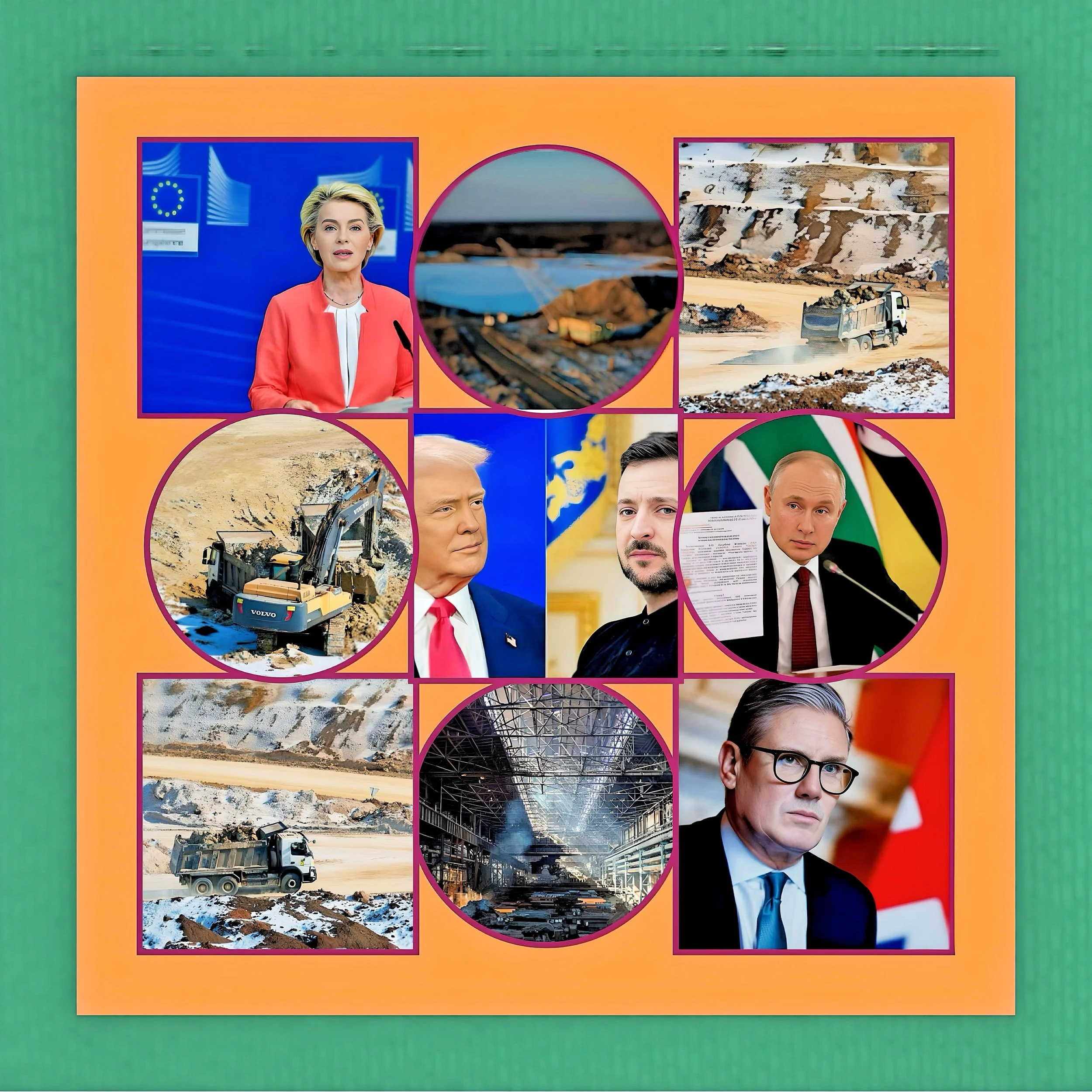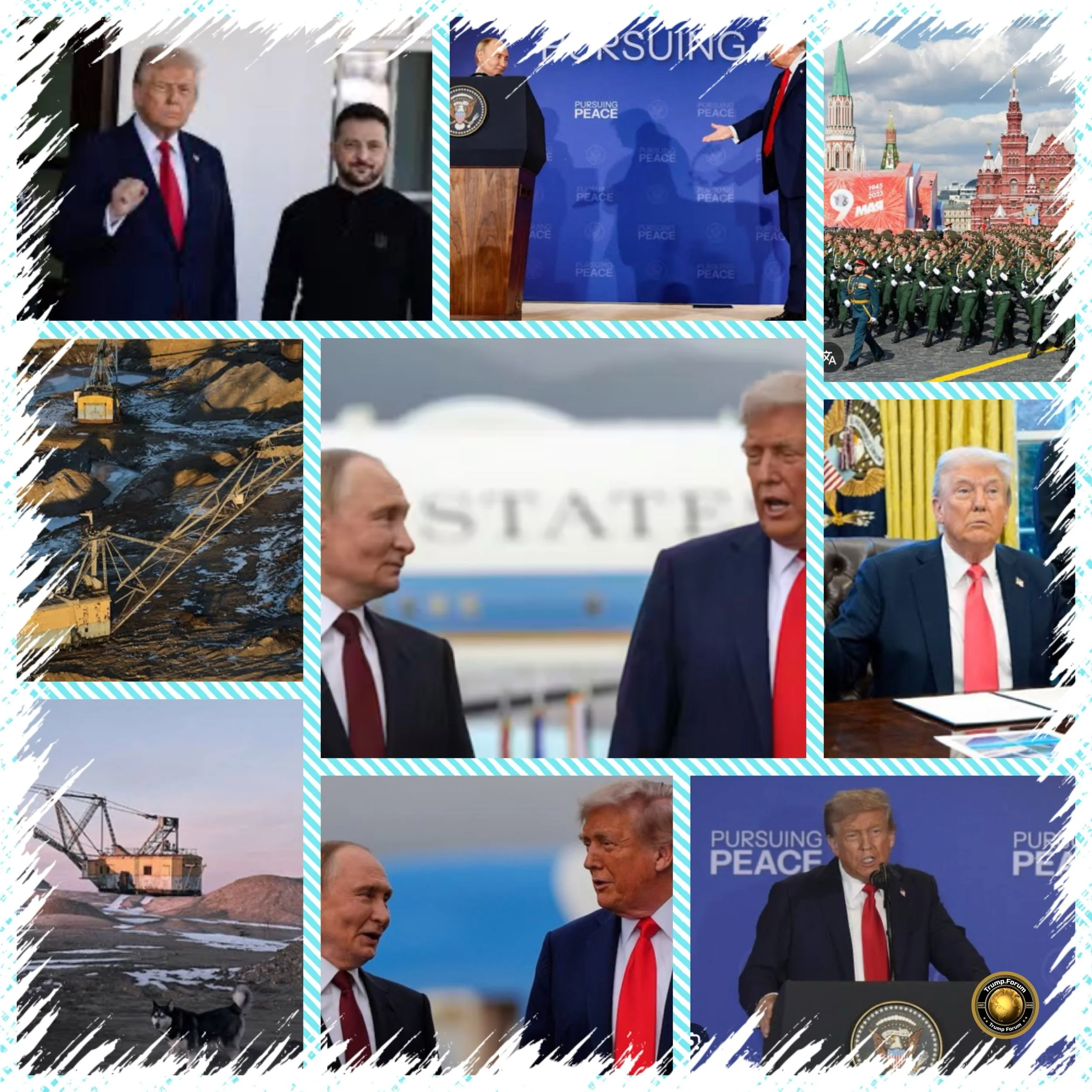
Trump's Proposed Ukraine Minerals Agreement risk- Navigating the Difficulties of Execution and the Geopolitical Landscape
Executive Summary
The ambitious mineral deal and accompanying peace initiative put forth by Trump have ultimately been almost sidelined, reflecting the ongoing complexities of international diplomacy.
The reality is that securing cooperation from Russia, particularly under Putin's leadership, appears increasingly unlikely.
The intricacies of both the implementation of this mineral deal and the broader geopolitical dynamics present significant hurdles.
Given the historical context and the current tensions, it’s clear that the prospects for an agreement are dim, underscoring the challenges faced in resolving not only this specific economic endeavor but also the larger conflict in Ukraine.
FAF delves into comprehensive analysis of Shevchenko Field and the broader mineral wealth in Donetsk and Luhansk regions highlights a complex geopolitical puzzle with significant implications for any peace negotiations.
Introduction
The minerals agreement between the United States and Ukraine, signed in April 2025 and ratified by Ukraine's parliament in May, is currently facing significant challenges in its implementation.
These obstacles highlight the complex interplay of economic ambitions, territorial governance issues, and evolving geopolitical dynamics.
According to multiple reputable sources, such as the Ukrainian Geologic Survey and Forbes Ukraine, Ukraine's natural resource wealth is estimated at approximately $26 trillion.
This valuation includes a diverse range of mineral reserves crucial for various industries.
Key elements include lithium, vital for battery technologies; titanium, recognized for its strength-to-weight ratio; graphite, indispensable in multiple industrial sectors; and uranium, essential for nuclear energy production.
Furthermore, Ukraine boasts substantial deposits of manganese, coal, iron ore, and other critical materials alongside extensive hydrocarbon resources.
Former President Trump's objective of accessing the $13 trillion worth of mineral assets still under Russian control introduces significant complications.
These arise from ongoing territorial conflicts, the logistical challenges inherent in mineral extraction and transportation, and the broader ramifications for international relations and regional stability.
As Ukraine strives to leverage its mineral wealth amid these geopolitical tensions, the success of the agreement will largely hinge on its ability to navigate and overcome these complex challenges.
Overview of Ukraine’s Mineral Resource Landscape
Ukraine is recognized as one of Europe's most mineral-abundant countries, boasting over 20,000 mineral deposits and 8,700 proven ore-bearing sites.
The nation is endowed with substantial reserves of essential minerals, including coal, natural gas, iron, manganese, nickel, titanium, uranium, lithium, and various rare earth elements, encompassing more than 117 types of globally utilized metals and minerals.
Key Mineral Regions
The principal mineral-rich areas are located within the "Ukrainian Shield," spanning regions such as Luhansk, Donetsk, Zaporizhzhia, Dnipropetrovsk, Kirovohrad, Poltava, and Kharkiv.
Resource Control Dynamics
A significant challenge to the minerals strategy lies in the realities of territorial control.
Current evaluations indicate that Russia occupies approximately 20% of Ukrainian territory and controls an estimated 40-53% of the nation’s total mineral wealth, valued at over $13 trillion.
Mineral Resources Under Ukrainian Administration
Following the geopolitical shifts in 2022, Ukraine maintains control over mineral zones primarily in its western and central territories, away from ongoing conflict areas.
The Ukrainian government is actively seeking foreign investment to foster economic recovery, having established new collaborative agreements, particularly with Western nations including the United States and the European Union.
Strategic mineral resources still under Ukrainian jurisdiction include critical lithium deposits (with two of four known deposits), titanium, iron ore, manganese, and additional rare earth elements, alongside agricultural resources.
Of particular importance, Ukraine’s lithium potential is significant, as it is estimated to hold up to one-third of Europe’s lithium reserves.
The interest from Western companies in exploring and extracting these resources is high, and Ukraine is positioning itself as a strategic partner to enhance post-conflict recovery and reinforce European supply chains.
Russian-Controlled Resources
Between 50-100% of Ukraine’s reserves of lithium, tantalum, cesium, and strontium
More than 56% of Ukraine’s hard coal reserves, approximated at about $12 trillion
20% of gas fields and 11% of oil fields
80% of natural gas reserves in the Black Sea
Key strategic deposits in the Luhansk, Donetsk, and Zaporizhzhia regions
The situation becomes increasingly tenuous as Russian forces advance towards critical mineral deposits, notably with troops now positioned less than 4 miles from the Shevchenko lithium deposit in Donetsk, approaching from multiple directions.
This deposit represents one of Ukraine's largest lithium reserves viable for commercial extraction.
Status of the Minerals Agreement
A landmark agreement between the United States and Ukraine has established a joint reconstruction investment fund with a 50-50 management structure.
Under this agreement, Ukraine is set to contribute 50% of the revenues from future explorations of new mineral, oil, and gas projects, while the US commits to providing funding and military assistance, classified as capital contributions.
The arrangement grants the US preferential access to new mineral licenses while ensuring that Ukraine retains full ownership and sovereignty over its natural resources.
The Ukrainian Parliament ratified this agreement on May 8, 2025, with an overwhelming vote of 338 in favor.
The agreement became operational shortly after, with procedural requirements fulfilled by May 13, 2025.
Notably, it excludes existing revenue-generating entities such as Naftogaz and Ukrnafta, making profitability contingent solely on new investments.
Alaska Summit Outcome and Strategic Shift
The August 15, 2025 Alaska summit between Trump and Putin ended without achieving Trump’s initial goal of securing a ceasefire.
Instead, the meeting resulted in a significant strategic shift in Trump’s approach.
Following the summit, Trump abandoned his demand for an immediate ceasefire and aligned with Putin’s preference for comprehensive peace negotiations.
Key Summit Outcomes
No formal agreement reached despite both leaders claiming “progress”
Trump shifted from seeking ceasefire to supporting direct peace negotiations
Putin presented territorial demands including Ukraine’s complete withdrawal from Donbas
No security guarantees provided to Ukraine
The summit effectively provided Putin with a diplomatic victory, allowing him to step back onto the global stage after years of isolation while making no concrete concessions.
Putin’s Territorial Demands and Peace Proposals
Following the Alaska summit, reports indicate Putin presented Trump with specific territorial proposals:
Putin’s Core Demands
Ukraine must completely withdraw from the Donbas region (Donetsk and Luhansk)
Russia would maintain control of currently occupied territories
Freeze current front lines in Zaporizhzhia and Kherson regions
Ukraine abandons NATO membership aspirations
Significant limitations on future Ukrainian military size
These demands would effectively cede approximately 50% of Ukraine’s mineral wealth to Russian control, as the Donbas contains most of Ukraine’s critical mineral deposits.
The proposal aligns with Putin’s broader strategy of securing control over Ukraine’s energy and mineral resources to maintain Russian dominance in European markets.
Implementation Challenges and Legal Complications
Several critical obstacles threaten the viability of Trump’s minerals strategy:
Territorial Access Issues
Most valuable deposits located in Russian-occupied or contested areas
Ongoing military operations preventing safe extraction activities
Infrastructure damage requiring massive reconstruction investments
Legal and Constitutional Barriers
Ukrainian constitution prohibits territorial concessions
International law considerations regarding resource extraction in occupied territories
Questions about legal authority to grant access to contested resources
Economic Feasibility Concerns
No active rare earth projects currently operating in Ukraine
Development timelines potentially extending up to a decade
Substantial capital requirements for infrastructure development
Energy grid reconstruction needed for mining operations
Alternative Proposals and Their Implications
Reports suggest Trump may offer Putin access to alternative mineral resources as incentives for peace:
Potential US Concessions
Access to Alaska’s natural resources including Bering Strait oil and gas
Lifting sanctions on Russia’s aerospace industry
Joint mining ventures in Alaska between Russian and American companies
Recognition of Russian mineral extraction rights in occupied Ukrainian territories
These proposals face significant domestic opposition and raise questions about the precedent of rewarding territorial aggression with economic incentives.
Congressional and Parliamentary Dynamics
While Ukraine’s parliament successfully ratified the minerals agreement, the US side faces different dynamics.
The agreement appears structured as a “sole executive agreement” that may not require Congressional approval.
However, Republican support in Congress has been mixed, with some viewing the deal as a business arrangement that could justify continued aid while others remain skeptical of ongoing Ukrainian involvement.
The deal has created potential for GOP unity by providing both economic rationale for Trump-aligned lawmakers and strategic justification for national security hawks.
Senator Roger Wicker called it “a game changer” that opened the door for more aid.
Future Prospects and Strategic Assessment
The success of Trump’s minerals strategy depends on several uncertain factors:
Military Situation
Continued Russian advances threaten additional mineral-rich territories
Potential expansion into Dnipropetrovsk and Kirovohrad regions would further increase Russian control over resources
Current trajectory suggests Russia could eventually control majority of Ukraine’s mineral wealth
Diplomatic Outcomes
No clear pathway to peace agreement that satisfies all parties
European leaders strongly oppose territorial concessions
Zelensky maintains constitutional prohibition on ceding territory
Economic Viability
Long development timelines conflict with immediate political pressures
Massive infrastructure investments required regardless of territorial control
Competition with established mineral suppliers and supply chains
The fundamental tension remains between Trump’s desire to “recoup” American investments through Ukrainian mineral wealth and the geopolitical reality that much of this wealth lies under Russian control.
Without a comprehensive peace agreement that includes Russian withdrawal from occupied territories—something Putin has shown no willingness to accept—the practical implementation of the minerals deal faces severe limitations.
The agreement may serve more as a symbolic demonstration of long-term American commitment to Ukraine rather than an immediate solution to either the war or American concerns about mineral supply chains.
Its ultimate success will likely depend on broader resolution of the territorial conflict and Russia’s willingness to relinquish control over Ukraine’s most valuable mineral deposits.
Conclusion
Pragmatic Economic Calculation
Former President Trump has highlighted the potential importance of a minerals agreement, arguing that it could facilitate the recovery of U.S. investments in Ukraine.
This perspective points to a strategic calculus: the negotiation for access to Ukraine's vast mineral resources may yield greater benefits than continuing to incur losses from an extended military engagement.
However, it appears that Trump may not fully grasp the intricate relationship between the geographic distribution of mineral resources and the contested territories in Ukraine.
This oversight is understandable, given the complexities of the nation’s resource distribution.
Currently, approximately $13 trillion in mineral resources are at risk of falling under Russian control, raising the stakes considerably.
Strategic Implications
The ongoing conflict represents a complex competition among three primary entities:
Ukraine
Ukraine's objective is to maintain sovereignty over its mineral wealth while strategically utilizing these resources to attract economic and military aid from Western allies. This delicate balancing act is essential for Ukraine’s stability and independence against external aggressions.
Russia
Russia, on the other hand, aims to solidify its territorial claims to access these valuable mineral deposits. Additionally, Moscow may pursue alternative partnerships to exploit these resources for its economic benefit.
United States
The U.S. seeks to secure critical mineral supplies to diminish its reliance on China, all while upholding Ukraine's sovereignty—a strategic endeavor that complicates the broader geopolitical landscape.
Notably, about 53% of Ukraine's mineral assets are situated in territories that are either under Russian occupation or contested, fundamentally complicating strategic calculations regarding any potential peace settlements.
Russia's control over key mineral deposits, including the Shevchenko Field, significantly enhances President Putin’s leverage in negotiations.
This dynamic poses challenges to the long-term viability of any U.S.-Ukraine mineral agreement.
Thus, the competition for mineral assets emphasizes that the conflict extends beyond mere territorial disputes, deeply entwined with critical resources essential for shaping the forthcoming technological and economic landscape.
The strategic convergence of Putin's territorial ambitions and the locations of Ukraine’s most valuable mineral deposits exemplifies a deliberate effort to seize control of resources valued for about $13-15 trillion.
Furthermore, this strategy positions Russia as a credible alternative supplier to the United States, further complicating the already intricate geopolitical dynamics.