Israel, Palestine, and Racial Politics: Analyzing Identity and Power Dynamics within a Global Framework
Foreward
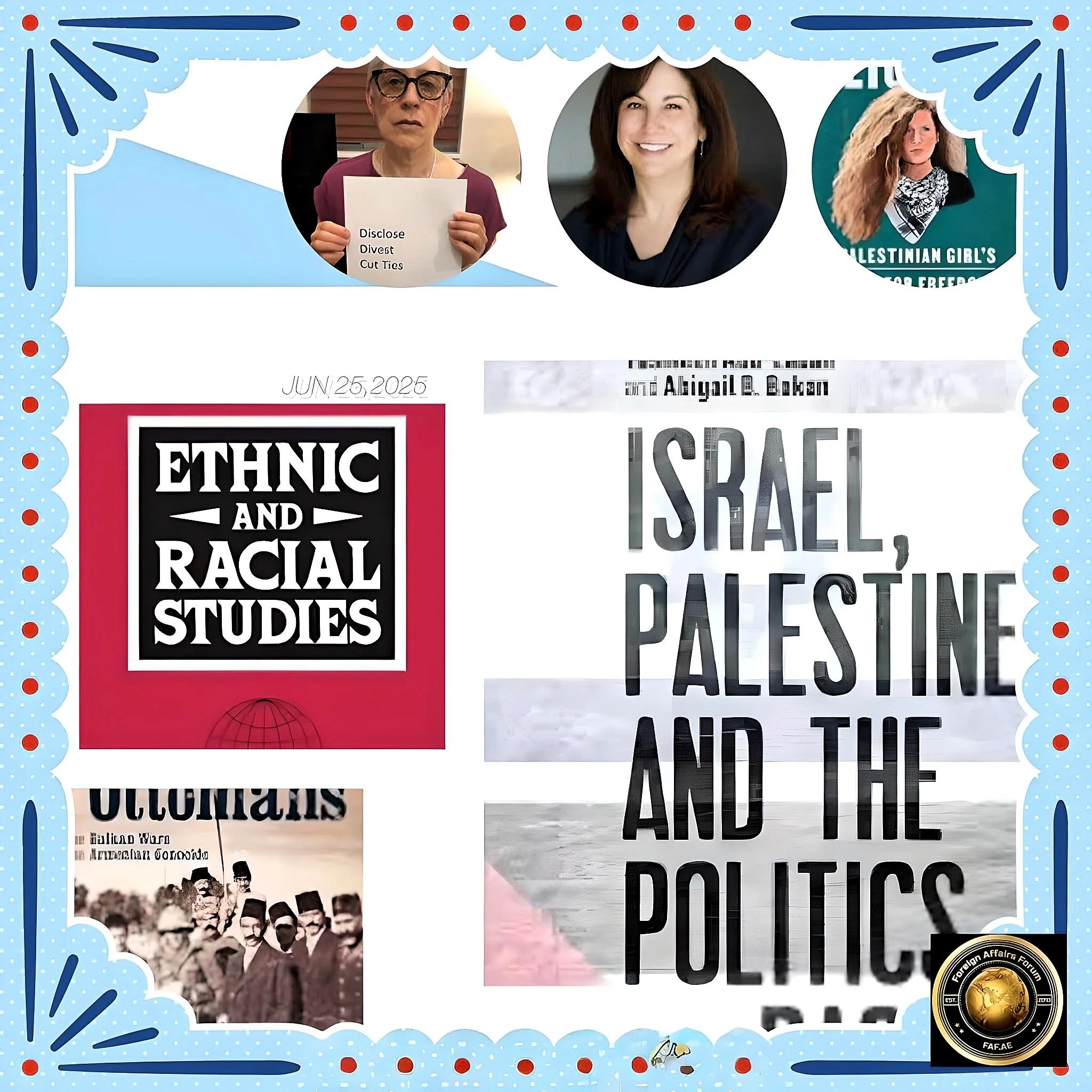
Yasmeen Abu-Laban and Abigail B. Bakan‘s groundbreaking work “Israel, Palestine and the Politics of Race: Exploring Identity and Power in a Global Context” offers a transformative analytical framework for understanding one of the world’s most complex and protracted conflicts.
Published in 2020 by Bloomsbury Academic, this comprehensive study examines the Israel/Palestine situation through the lens of race, racialization, racism, and anti-racism, providing crucial insights that are particularly relevant to today’s escalating geopolitical tensions.
The Authors’ Unique Perspective
The collaboration between Abu-Laban and Bakan brings together distinctly positioned scholars whose personal backgrounds inform their analytical approach.
Yasmeen Abu-Laban, Professor and Canada Research Chair in the Politics of Citizenship and Human Rights at the University of Alberta, brings her Palestinian cultural and diasporic experience to the analysis.
Her expertise spans immigration policies, multiculturalism, anti-racism, and surveillance technologies. Abigail B. Bakan, Professor in the Department of Social Justice Education at the University of Toronto’s OISE, contributes her Jewish cultural and diasporic perspective alongside her specialization in anti-oppression politics, intersectionality, and Marxist theory.
This unique positioning allows the authors to navigate the charged terrain of Israel/Palestine scholarship from both insider perspectives, offering what they describe as a necessary intervention in a field where “most social scientists actively avoid discussions of the situation in Israel/Palestine in their research and teaching for fear of reprisals”.
Theoretical Framework: The Racial Contract
Abu-Laban and Bakan’s analysis applies philosopher Charles Mills’ racial contract theory to the context of Israel/Palestine.
Mills’ concept describes how white supremacy operates as a global political system through both explicit and tacit agreements that maintain racial hierarchies.
The authors argue that an “Israel/Palestine racial contract” functions to “assign a common interest between Israel and its allies like the United States, while absenting the Palestinian experience”.
This theoretical framework enables them to examine how “the racial contract and Israel/Palestine” operates through what they identify as ideological, material, and literal dimensions. Ideologically, they argue that Israel’s legitimacy depends upon the narrative of an uninhabited land, “rendering the indigenous Palestinian population invisible in the most enduring and significant absence”.
This erasure is maintained through systematic conflation of Palestinians with terrorism and the criminalization of criticism of Israeli state policies.
The Apartheid Analysis
The book’s examination of Israel’s policies through an apartheid lens has proven remarkably prescient given recent developments.
Abu-Laban and Bakan’s analysis predates but aligns with subsequent findings by major human rights organizations.
Human Rights Watch concluded in 2021 that Israeli practices “amount to the crime of apartheid,” while Amnesty International reached similar conclusions in 2022, describing Israel’s system as one of “oppression and domination against Palestinians”.
The authors’ work contributes to this growing consensus by demonstrating how apartheid operates not just through formal legal structures but through racialized practices of separation and control.
They examine how the Israeli policy of hafrada (separation) creates “near-total physical separation between the Palestinian and the Israeli settler population of the West Bank”, while subjecting these populations to different legal systems—Israeli civil law for settlers and military law for Palestinians.
Environmental Racism and Resource Control
One of the book’s significant contributions is its analysis of environmental racism in Palestine.
The authors examine how Israel’s control over water resources exemplifies racialized domination. Jewish settlers in the West Bank receive a continuous water supply from Palestinian wells, while Palestinians face severe restrictions on water access and require permits even for rain-catching systems.
This environmental dimension of the conflict demonstrates how “Israel’s use of military orders to destroy Palestinian-built treatment centers, wells, or any other sort of facilities” represents a form of environmental apartheid.
The environmental analysis extends to Israel’s systematic destruction of Palestinian agriculture and native vegetation.
Since 1967, approximately 800,000 olive trees have been uprooted, with Palestinian crops replaced by European species that reduce biodiversity and harm local ecosystems.
This “environmental Nakba” represents not just ecological destruction but the erasure of the Palestinian connection to their land.
Gender, Surveillance, and Indigenous Rights
The book’s comprehensive approach addresses multiple dimensions of the conflict, often overlooked in traditional analyses.
Their gender analysis examines how militarization and occupation particularly impact Palestinian women, who face both patriarchal structures and military oppression.
The authors note how “militarization and the strains placed on families by poverty and unemployment have increased violence against women in the home”.
Their examination of surveillance technologies reveals how Israel has developed what they term a “technology of occupation.”
The authors document how Israeli surveillance systems use Palestinians as test subjects for technologies later exported globally.
This includes AI-powered systems, facial recognition technology, and drone surveillance that create what Palestinians describe as living under constant monitoring.
The book also addresses Palestinian claims to indigenous rights under the UN Declaration on the Rights of Indigenous Peoples.
This framework supports Palestinian arguments for self-determination, land rights, and cultural preservation in the face of settler colonialism.
The BDS Movement and International Solidarity
Abu-Laban and Bakan extensively analyze the Boycott, Divestment, and Sanctions (BDS) movement as a form of international solidarity modeled after the anti-apartheid struggle in South Africa.
They examine how BDS represents “a ‘United Nations from below’” that challenges state-level support for Israeli policies through civil society action.
The authors trace how BDS emerged from the 2001 World Conference Against Racism, where Palestinian activists connected with South African anti-apartheid veterans who “identified parallels between Israel and apartheid South Africa and recommended campaigns like those they had used to defeat apartheid”.
This historical connection demonstrates how Palestinian resistance and international solidarity intersect through shared anti-racism frameworks.
Contemporary Relevance and Geopolitical Context
The book’s analysis has gained urgent relevance amid the current escalation of violence that began on October 7, 2023.
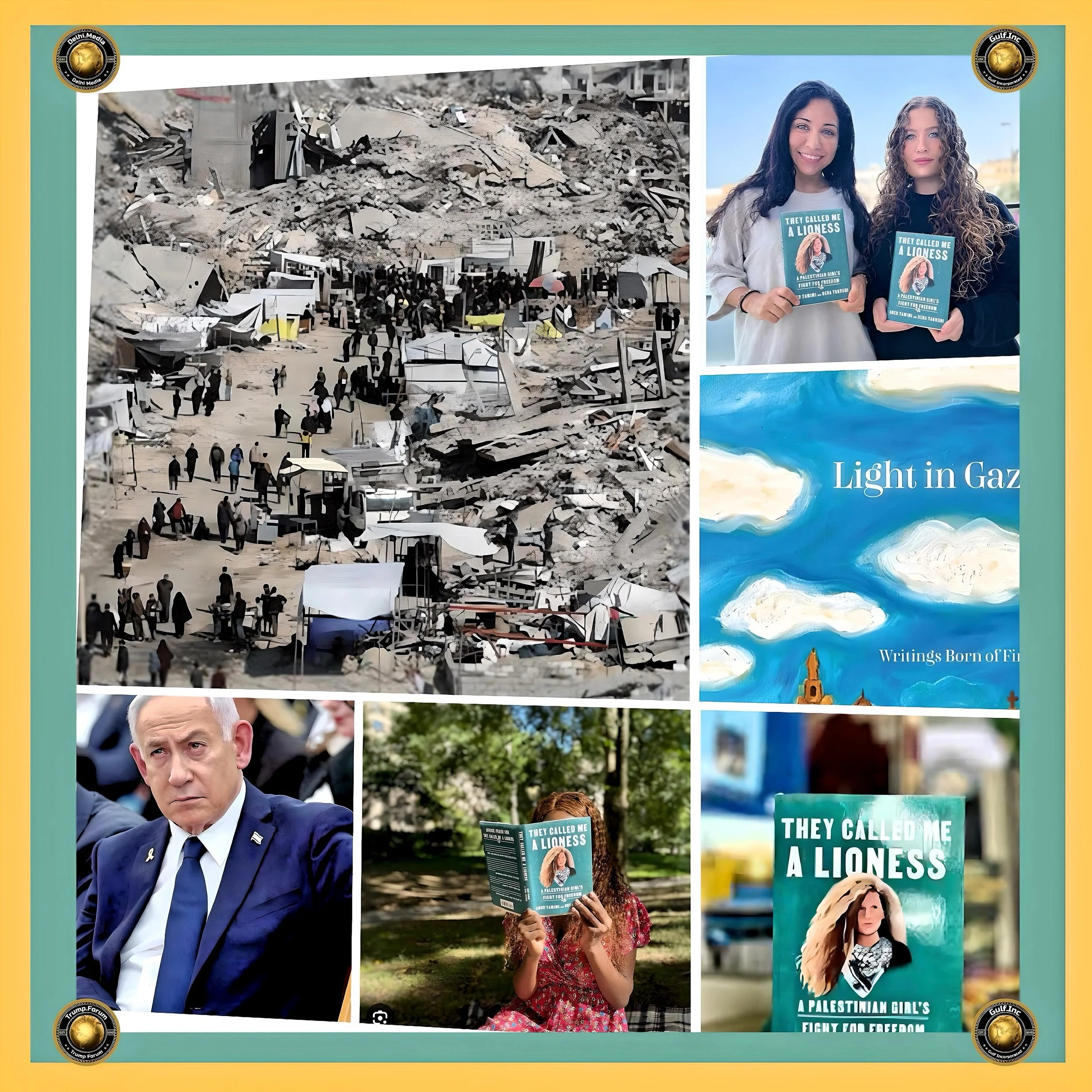
The ongoing conflict has resulted in over 57,000 Palestinian deaths in Gaza, according to the Gaza Health Ministry, with nearly all of Gaza’s population forcibly displaced and now being forced into a camp in Rafa, something loosely referred to as a concentration camp.
The International Criminal Court’s issuance of arrest warrants for Israeli Prime Minister Benjamin Netanyahu and former Defense Minister Yoav Gallant for war crimes and crimes against humanity validates many of the legal frameworks the authors employ.
The authors’ analysis of how “Israel perfected the racial strategy against Palestinians” through global surveillance helps explain how technologies developed for controlling Palestinians are now being deployed in the current conflict.
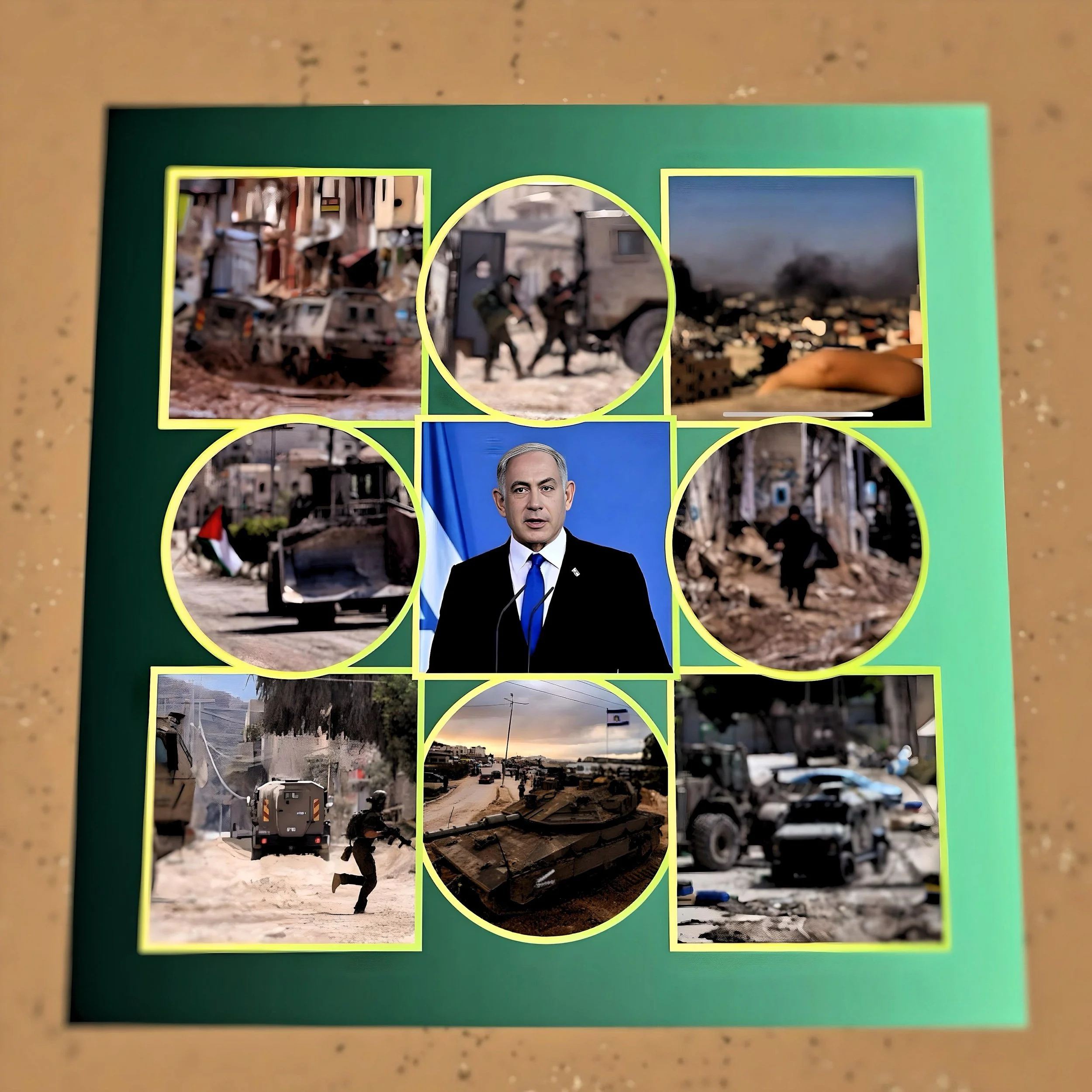
Reports indicate that Israel is using AI-powered systems like “Lavender” and “The Gospel” as a “mass assassination factory” with minimal human oversight.
Toward a One-State Solution
The book’s conclusion advocates for a one-state solution based on the South African model of post-apartheid transformation.
This approach, which the authors term “toward a one-state solution,” recognizes that the current reality already constitutes a single state with an apartheid system.
They argue that “the creation of a single state, following the example of post-apartheid South Africa, is the only solution to the conflict that will create a comprehensive, just, durable, and lasting peace”.
This position has gained support from various quarters, including some who argue that the two-state solution is no longer viable given the extent of Israeli settlement expansion and the current one-state reality on the ground.
Methodological Innovation and Scholarly Impact
Abu-Laban and Bakan’s work represents a methodological innovation in political science by centering race in the analysis of Israel/Palestine.
As they note, “race has been curiously absent within political science scholarship” regarding this conflict, with many scholars avoiding the topic entirely.
Their approach demonstrates how “Israel needs to be understood as a state and analyzed as such in a world of states; this centrally requires addressing race”.
The book’s impact extends beyond academia into policy and activist circles. Their framework has influenced how human rights organizations, international bodies, and civil society groups understand and address the conflict.
The authors’ analysis of “anti-Palestinian racism” as a distinct form of racialization has provided vocabulary and conceptual tools for advocates and scholars.
Conclusion
“Israel, Palestine and the Politics of Race” offers an essential analytical framework for understanding not just the historical roots of the Israel/Palestine conflict but its contemporary manifestations and global implications.
By centering race, the authors reveal how “the Israel/Palestine racial contract” operates through systematic exclusion, environmental destruction, surveillance, and international complicity.
As the conflict continues to evolve, particularly in light of recent escalations and international legal developments, Abu-Laban and Bakan’s work provides crucial tools for understanding how “global response to the Israel/Palestine racial contract” must involve confronting the racial dimensions of oppression and working toward genuine justice and equality.
Their call for “a politics of solidarity” that connects Palestinian liberation with broader anti-racist struggles remains as relevant today as when it was written, offering hope for transformative change in one of the world’s most intractable conflicts.