The Trump Dynasty and American Imperial Resurgence: Historical Patterns and Future Implications
Introduction
Historical Precedent of Political Dynasties in American Governance
The intersection of dynastic politics and imperial ambition in contemporary American governance signals a marked departure from the post-World War II political framework, while simultaneously resonating with historical patterns that have characterized the United States since its inception.
Analysis from the Foreign Affairs Forum indicates that Donald Trump’s political rise, coupled with his family’s increasing influence within the Republican Party and the administration's overtly expansionist rhetoric, suggests a transformational shift in American political dynamics that transcends conventional electoral timelines.
This trend coincides with a discernible resurgence of imperialistic discourse and territorial ambitions reminiscent of 19th-century American expansionism.
The confluence of dynastic consolidation and the revival of imperialistic tendencies carries significant implications for both domestic governance and global stability in the foreseeable future.
The Foundation of American Dynasty Politics
American politics has long been characterized by the emergence of powerful family dynasties that have shaped national governance across multiple generations.
The United States has witnessed the rise of numerous political families, with four notable dynasties—Adams, Harrison, Roosevelt, and Bush—each producing two presidents.
The Adams family is perhaps historically significant, with John Adams serving as the second president (1797-1801) and his son John Quincy Adams as the sixth president (1825-1829).
This established a precedent for multi-generational political influence that extended through five generations of public service.
The geographic distribution of these political dynasties reveals patterns of regional power concentration that mirror contemporary trends.
Many influential families established their political bases in specific states or regions before achieving national prominence—the Roosevelts from New York, the Kennedys from Massachusetts, the Bushes initially from Connecticut and later Texas, and the Daleys from Illinois.
This regional foundation-building strategy has proven essential for long-term political sustainability.
It provides stable electoral bases for launching national campaigns and maintaining political relevance across generational transitions.
Contemporary Dynasty Rankings and Influence Metrics
Modern analysis of American political dynasties employs quantitative methodologies to assess relative influence and longevity.
According to Stephen Hess’s comprehensive ranking system, which assigns points based on office held and generational continuity, the Kennedy family has the highest score, followed by the Roosevelts and Rockefellers.
The Bush family, ranking first in some contemporary assessments, represents one of the most successful modern political dynasties. It has produced two presidents and maintained active political engagement through multiple family members across four generations.
Despite facing tragic losses, the Kennedy dynasty continues to exert influence through representatives like Joseph Kennedy III, who began serving in Congress in 2013 and represents the fourth generation of Kennedy political involvement.
This multi-generational continuity demonstrates that the institutional memory and political capital established by dynasties can be maintained even after decades of changing political landscapes.
The systematic approach to dynasty-building involves the careful cultivation of political networks, strategic geographic positioning, and the development of distinct family brands that transcend individual political careers.
The Trump Family’s Dynastic Potential and Strategic Positioning
Trump Family Political Architecture
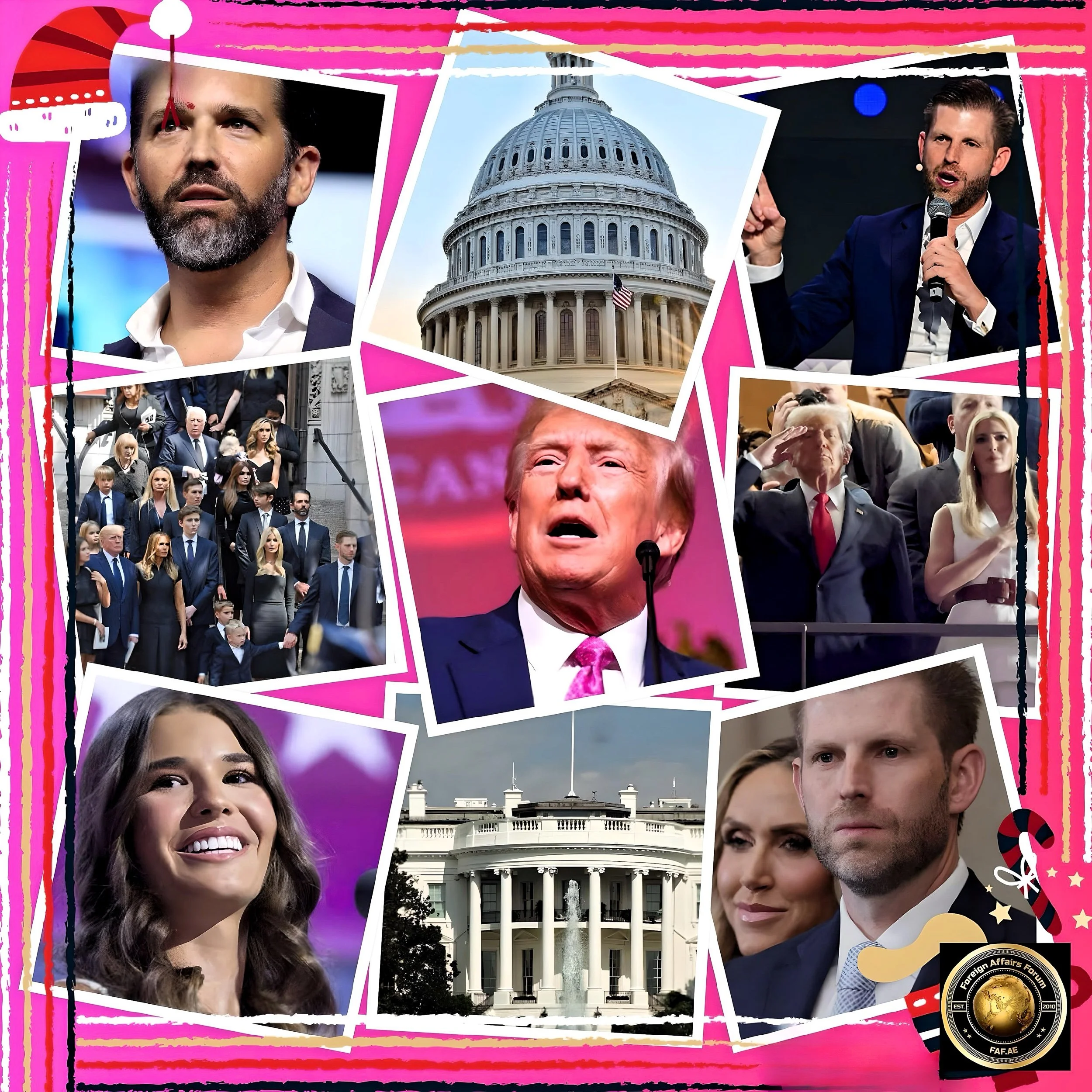
The Trump family’s entry into political dynasty status represents a unique case study in rapid political consolidation and brand leveraging.
Unlike traditional political families that gradually built influence over generations, the Trump political project emerged from an established business empire and media presence, creating immediate national recognition and political capital.
President-elect Trump has explicitly acknowledged his family’s dynastic potential, highlighting daughter-in-law Lara Trump’s political capabilities and suggesting that his children possess the competence necessary for continued political leadership.
The strategic positioning of Trump family members across various political and business roles demonstrates systematic preparation for long-term political influence.
Donald Trump Jr. and Eric Trump have maintained executive roles within the Trump Organization while supporting their father’s political campaigns and maintaining a high-profile media presence.
Lara Trump’s elevation to co-chair of the Republican National Committee represents the most direct pathway to electoral politics, with speculation about her potential appointment to Marco Rubio’s Senate seat suggesting immediate opportunities for expanded political influence.
Institutional Power Consolidation
The Trump family’s approach to political dynasty-building differs significantly from historical precedents' emphasis on media control and party apparatus infiltration.
Trump’s establishment of Truth Social under the Trump Media and Technology Group creates a direct communication channel with supporters, bypassing traditional media gatekeepers and establishing lasting influence infrastructure
This media presence, combined with the family’s business empire, provides financial independence and message control capabilities that historical political dynasties lacked.
Campaign strategist Brad Parscale’s declaration that “the Trumps will be a dynasty that will last for decades, propelling the Republican Party into a new party” reflects the Trump political project's transformative ambitions.
The integration of family members into key political positions—with Ivanka Trump and Jared Kushner serving as White House advisers during the first term—demonstrates the family’s comfort with nepotistic governance structures and their intention to maintain control across multiple political functions.
American Imperial Resurgence Under Trump Administration
Explicit Territorial Ambitions and Historical Parallels
The Trump administration’s foreign policy represents a marked departure from post-World War II diplomatic norms. It embraces explicitly imperial rhetoric and territorial acquisition strategies reminiscent of 19th-century American expansionism.
Trump’s stated ambitions to annex Canada, acquire Greenland, and regain control of the Panama Canal reflect a systematic approach to territorial expansion that echoes historical American imperial projects such as the Louisiana Purchase and the acquisition of Alaska.
These proposals, while often dismissed as rhetorical flourishes, represent a coherent strategy of resource acquisition and strategic positioning that aligns with historical patterns of imperial expansion.
The administration’s approach to Gaza represents perhaps the most stark example of imperial thinking, with Trump proposing to “take over” the territory, forcibly relocate Palestinian populations, and establish it as a special economic zone.
This proposal demonstrates the administration’s willingness to pursue territorial control through population displacement and economic reorganization and parallels historical imperial interventions in strategically valuable or economically promising territories.
The New MAGA Imperialism and Doctrinal Framework
Scholarly analysis has characterized Trump’s foreign policy as embodying a “New MAGA Imperialism” that abandons multilateral cooperation in favor of unilateral power projection and territorial acquisition.
This approach represents what analysts describe as a “hardline version of the Monroe Doctrine,” asserting American dominance over the Western Hemisphere while pursuing an explicitly transactional approach to international relations.
The administration’s break from the post-1945 rules-based international order reflects a fundamental rejection of the sovereignty principles that have governed international relations since the United Nations Charter.
The Trump Doctrine’s emphasis on “America First” policies extends beyond trade protectionism to encompass direct territorial expansion and resource acquisition.
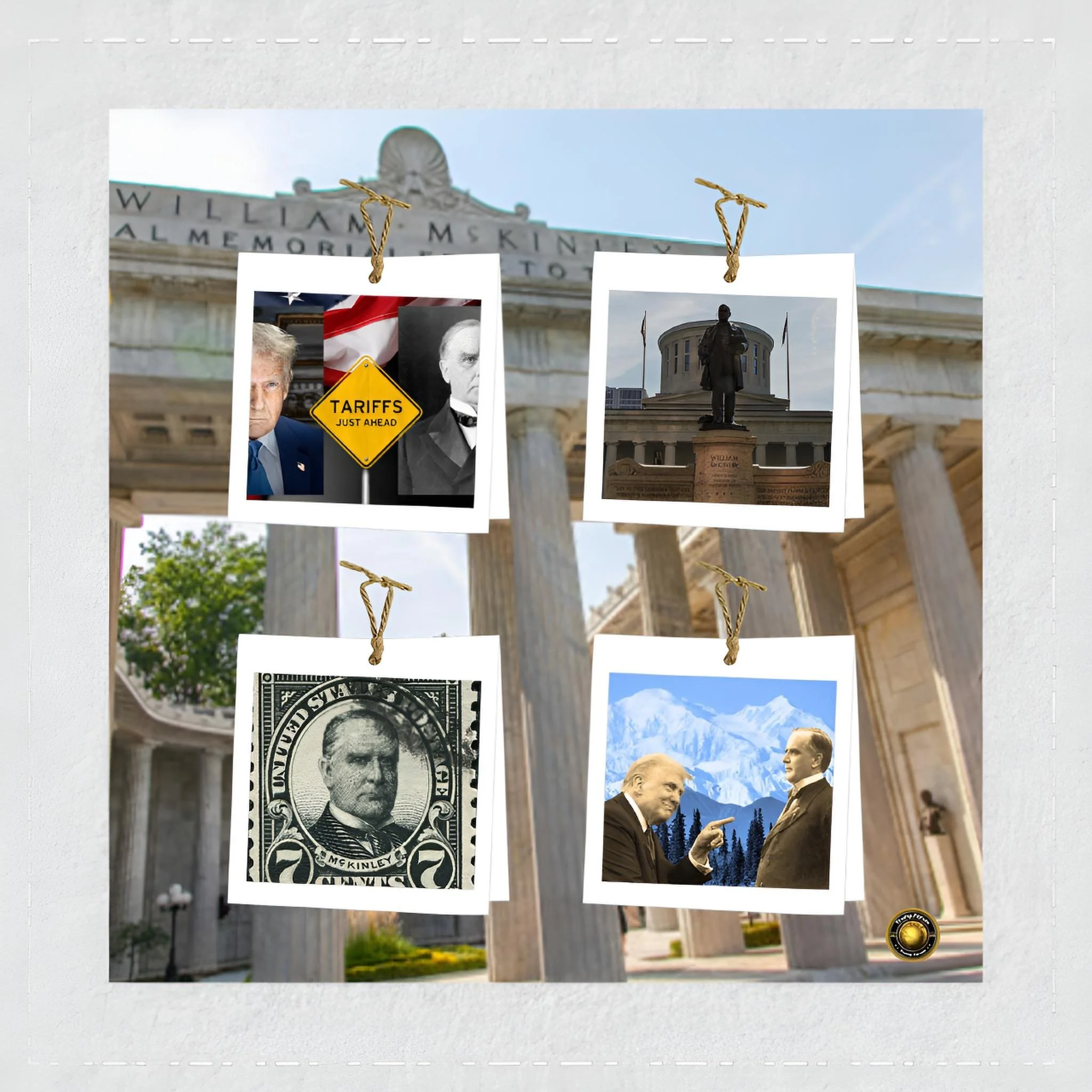
Trump’s initiation of trade wars with traditional allies Canada and Mexico and his continued trade conflict with China demonstrate the administration’s willingness to employ economic coercion as a tool of imperial policy.
This economic nationalism, when combined with territorial ambitions, creates a comprehensive imperial strategy that prioritizes American material interests over international legal frameworks or diplomatic consensus.
Historical Cycles and Imperial Decline Patterns
Ray Dalio’s Big Cycle Theory and American Position
Contemporary analysis of imperial cycles, particularly Ray Dalio’s Big Cycle Theory, provides a framework for understanding America’s current position within historical patterns of imperial rise and decline.
Dallo’s model suggests that empires follow predictable 250-year cycles characterized by periods of growth, peak dominance, and eventual decline through internal contradictions and external challenges.
According to this framework, the United States currently displays numerous indicators associated with late-stage imperial powers, including significant debt accumulation, internal political division, and competition with rising powers, particularly China.
The theory’s application to American circumstances reveals parallels and unique modern conditions that complicate simple historical repetition.
Traditional indicators of imperial decline—fiscal overextension, political polarization, and challenges from emerging powers—align closely with contemporary American conditions.
However, modern factors such as nuclear deterrence, global economic interdependence, and international institutional frameworks create constraints on imperial competition that did not exist in previous historical cycles.
Imperial Transition and Systemic Stability
The prospect of imperial transition in the nuclear age presents unprecedented global stability and challenges to international order.
Historical imperial transitions have typically involved a direct military conflict between declining and rising powers, but nuclear weapons create a mutual vulnerability that constrains such confrontation.
This dynamic suggests contemporary imperial competition may unfold through economic, technological, and proxy conflicts rather than direct territorial conquest between major powers.
The Trump administration’s explicit rejection of multilateral institutions and sovereignty principles represents a potential catalyst for accelerated imperial transition by undermining the institutional frameworks that have managed great power competition since World War II.
The administration’s willingness to pursue territorial acquisition through coercion rather than negotiation signals a return to imperial methods that the international system was explicitly designed to prevent. This could trigger countermeasures from other major powers and destabilize the current global order.
Future Implications and Systemic Challenges
Dynasty Consolidation and Democratic Governance
The potential establishment of a century-long Trump political dynasty raises fundamental questions about the compatibility of dynastic rule with democratic governance principles.
Historical analysis suggests that successful political dynasties require continuous adaptation to changing political conditions while maintaining core family interests and ideological commitments.
The Trump family’s apparent success in reshaping the Republican Party around personal loyalty rather than traditional conservative principles creates conditions for sustained political influence that could extend beyond regular electoral cycles.
The intersection of dynastic politics with imperial ambitions creates concerning implications for institutional governance and constitutional constraints.
Historical examples of family-based political control, particularly when combined with imperial projects, demonstrate tendencies toward authoritarian governance structures and the erosion of democratic accountability mechanisms.
The Trump administration’s emphasis on personal loyalty over institutional norms and explicit imperial ambitions suggests potential trajectories toward more centralized and personalized governance structures.
Imperial Overextension and Systemic Collapse
Combining explicit imperial ambitions with the structural challenges facing American hegemony creates potential scenarios for rapid systemic change that could destabilize both domestic and international order.
Historical patterns suggest that imperial powers pursuing territorial expansion while facing internal challenges and external competition risk accelerated decline through overextension and resource depletion.
The Trump administration’s simultaneous pursuit of territorial acquisition, trade wars, and military confrontation with multiple adversaries could accelerate the imperial decline that its policies ostensibly aim to prevent.
Contemporary global conditions, including climate change, technological disruption, and shifting economic power centers, create additional variables that historical imperial cycles did not encounter.
These factors could either accelerate the imperial transition through systemic stress or create new forms of international organization that transcend traditional imperial competition.
The ultimate trajectory of American imperial power—whether toward continued dominance, managed decline, or systemic collapse—will likely depend on the interaction between dynastic political consolidation and the administration’s capacity to manage multiple simultaneous challenges.
Conclusion
The intersection of the Trump family's dynastic aspirations with a resurgence of American imperialism marks a significant juncture in both domestic and global political landscapes.
Historical evidence indicates that American political dynasties can wield influence across generations by strategically positioning themselves and maintaining control over key institutions.
Concurrently, historical patterns of imperial expansion suggest that periods characterized by territorial acquisition often emerge alongside systemic strains and competitive pressures within the state.
The Trump administration's distinct amalgamation of business ventures, media dominance, and control over a major political party presents unprecedented avenues for dynastic fortification, potentially allowing for the extension of political influence beyond the customary electoral cycle.
This dual pursuit of territorial acquisition and dynastic consolidation provokes critical inquiries regarding the imminent trajectory of American governance and the international order.
Although historical trends provide useful analytical lenses, the unprecedented realities of nuclear armament, worldwide economic interconnectedness, and climate change introduce complexities that prior imperial frameworks did not have to confront.
The forthcoming decades will likely delineate whether the Trump political endeavor is a transient disruption of post-war standards or a profound shift toward more personalized and imperial governance structures, with the potential to fundamentally alter both American democracy and global stability for future generations.