US Senate Passes Trump’s Mega Bill: Next Steps and Implications
Introduction
The Senate Clears Trump’s Landmark Legislation
The US Senate has narrowly passed President Donald Trump’s comprehensive domestic policy bill, dubbed the “One Big Beautiful Bill Act,” by a margin of 51-50, with Vice President JD Vance casting the tie-breaking vote.
The legislation now moves to the House of Representatives, facing uncertain passage despite Trump’s July 4 deadline.
The bill represents Trump’s most significant legislative achievement of his second term, extending his 2017 tax cuts permanently while implementing sweeping changes to social safety net programs, immigration enforcement, and energy policy.
Three Republican senators—Susan Collins of Maine, Thom Tillis of North Carolina, and Rand Paul of Kentucky—joined all Democrats in opposing the measure.
Next Steps in the Legislative Process
House Challenges Ahead
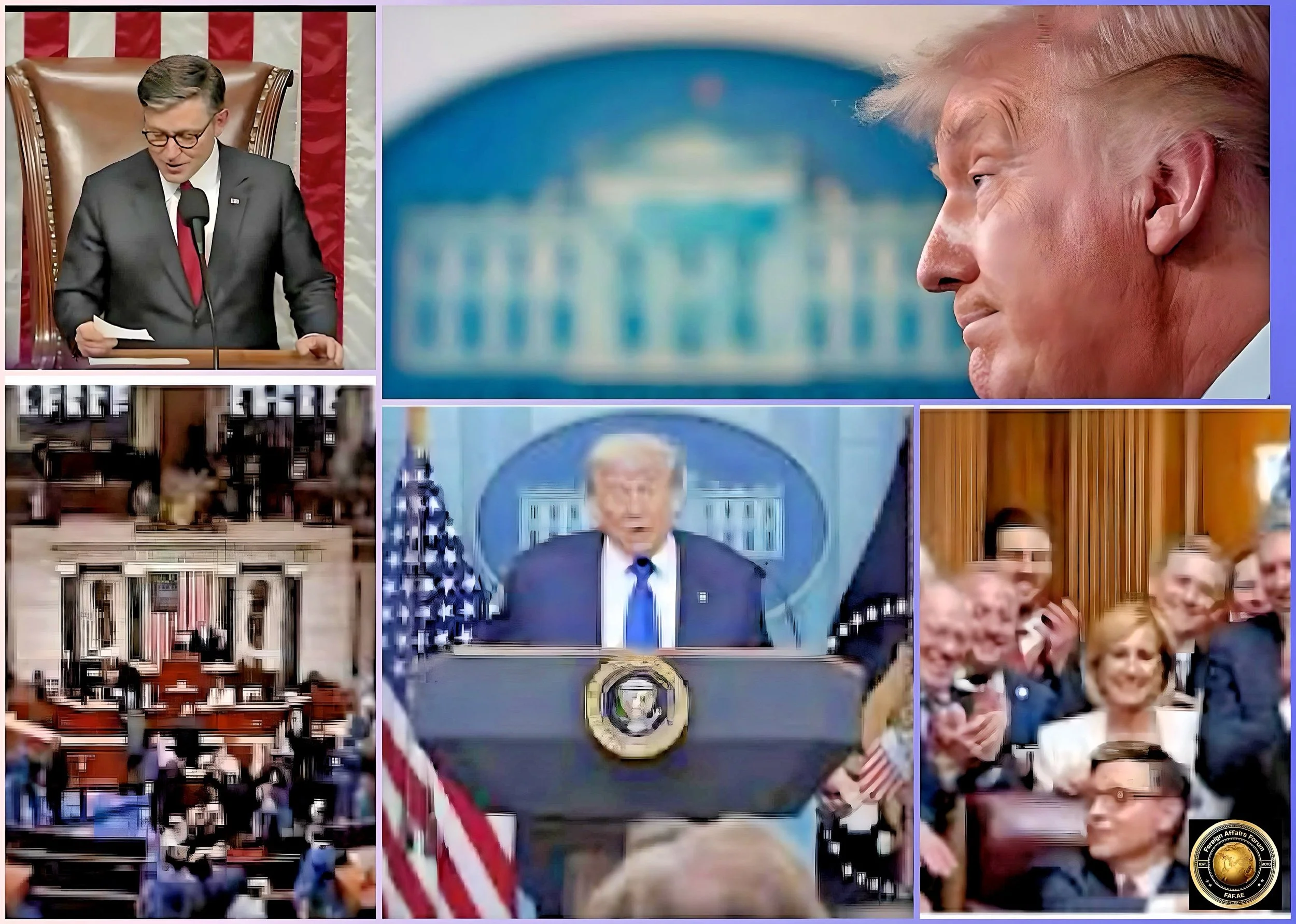
The legislation faces significant hurdles in the House, where Speaker Mike Johnson can only afford to lose three Republican votes if all members are present.
Several House Republicans have already opposed the Senate’s version, citing concerns about increased deficit spending and deeper Medicaid cuts than initially proposed.
The House Rules Committee is scheduled to begin markup of the bill, and floor debate could start Wednesday morning.
However, severe weather has complicated the timeline, with flight cancellations preventing some members from returning to Washington.
Conservative members of the House Freedom Caucus are threatening to block the procedural rule vote, which could derail the entire process.
Rep. Andy Harris (R-Tenn.), who chairs the Freedom Caucus, stated that the Senate bill is “not ready for prime time” and warned that “the rule vote will not succeed tomorrow morning”.
Trump’s Aggressive Timeline
Trump has maintained his July 4 deadline for the bill’s passage, though he has acknowledged the timeline may be “very hard” to meet.
The president has urged House Republicans to “UNITE” and “GET IT DONE” before the Independence Day holiday.
Implications for American Citizens
Healthcare and Social Safety Net Cuts
The bill’s most controversial provisions involve massive social safety net programs.
The Congressional Budget Office estimates that approximately 11.8 million Americans will lose their health insurance coverage over the next decade due to changes in Medicaid eligibility and work requirements.
The legislation imposes work requirements on non-disabled Medicaid recipients, mandating 80 monthly work hours or qualifying for exemptions.
The Senate version expanded these requirements beyond the House’s original scope, now including parents of children over 13 years old.
Healthcare providers have expressed strong opposition to these cuts.
The American Hospital Association warned that the $1 trillion reduction in Medicaid funding would cause “irreparable harm to health care” and potentially force rural hospital closures.
Tax Implications
The bill permanently extends Trump’s 2017 tax cuts, which were set to expire at the end of 2025.
While most Americans won’t see changes to their current tax situation, the legislation introduces new tax benefits for tips and overtime pay, key Trump campaign promises.
However, the tax benefits are heavily skewed toward higher earners.
Households making over $217,000 annually will receive an average tax cut of $12,500, while those earning under $35,000 will see only about $150 in benefits.
Economic Burden
The Congressional Budget Office projects the bill will add $3.3 trillion to the national deficit over the next decade, with some estimates reaching $5.3 trillion when accounting for interest and extended provisions.
This represents one of the most significant increases in federal debt in US history.
Global and International Implications
Weakening US Treasury Appeal
International investors increasingly view US Treasuries as less attractive due to the bill’s massive deficit spending projections. Foreign investment in US debt saw a net outflow of $14.2 billion in April, coinciding with Trump’s tariff announcements.
Toshinobu Chiba, a fund manager at Simplex Asset Management in Tokyo, stated he is “certainly worried about the expansion of the fiscal deficit” and is shifting investments from Treasuries to European bonds.
⏩This trend could undermine the dollar’s global reserve currency status.
Climate and Energy Policy Reversals
The legislation eliminates all clean energy subsidies established under the Biden administration, including solar investment tax credits, wind production tax credits, and electric vehicle incentives.
This retreat from renewable energy support could cede American leadership in transitioning global clean energy to China and European competitors.
The bill’s climate provisions have international implications, as the US withdrawal from climate commitments may encourage other nations to reduce their environmental efforts.
Only 21 out of 197 nations have submitted required climate commitments under the Paris Agreement, reflecting weakening global momentum.
Alliance Strain and Isolationist Tendencies
Trump’s aggressive foreign policy approach and domestic legislation prioritizing “America First” principles estrange traditional allies.
European leaders are discussing achieving “independence from the U.S.” as Trump’s policies create uncertainty about long-term American commitments.
The bill’s protectionist elements and Trump’s tariff policies drive allies to seek alternative partnerships.
Canada has struck defense agreements with Australia, while European nations are accelerating military cooperation discussions independent of US involvement.
Federal Reserve Independence Concerns
Trump’s Pressure Campaign
President Trump has intensified his attacks on Federal Reserve Chairman Jerome Powell, demanding significant interest rate cuts and even sending handwritten notes criticizing the Fed’s policies.
Trump has called Powell “a foolish person” and threatened to appoint his successor well before the chairman’s term expires in May 2026.
The president’s pressure campaign raises fundamental questions about Federal Reserve independence, a cornerstone of American monetary policy credibility.
Powell has maintained that the Fed will make decisions based solely on economic data rather than political pressure.
Institutional Independence at Risk
Trump’s attacks on the Federal Reserve parallel his broader assault on institutional independence, including his successful efforts to limit judicial oversight through the Supreme Court’s restrictions on nationwide injunctions.
This pattern suggests a systematic effort to concentrate executive power and reduce checks on presidential authority.
The Kiel Institute warns that “the Fed’s independence is at stake” and that defending it is “more important than ever” in the current political environment.
The erosion of Fed independence could have lasting consequences for US monetary policy credibility and global financial stability.
Executive Power and Democratic Concerns
Supreme Court Empowerment of the Executive Branch
The Supreme Court has consistently ruled in Trump’s favor, most recently limiting federal judges’ ability to issue nationwide injunctions that could block presidential policies.
This 6-3 decision effectively strengthens executive power while weakening judicial oversight.
The Court’s decisions have “systematically diminished judicial oversight and augmented executive discretion. “
This trend, combined with Trump’s frequent use of national emergency declarations, represents a significant shift in the balance of power between government branches.
Democratic Backsliding Concerns
Trump’s executive orders and policy approaches have been characterized as threatening democratic norms and institutions.
His administration’s actions include attempts to end birthright citizenship, massive deportation programs, and efforts to restructure the federal workforce through Schedule F orders.
International observers note that Trump’s foreign policy has been described as “imperialist and expansionist” in approach to the Americas while being isolationist toward Europe.
His territorial ambitions regarding Greenland, Canada, and the Panama Canal represent a revival of 19th-century expansionist policies.
Rising Imperialism and Global Concerns
Trump’s second-term foreign policy has been characterized as representing a “new MAGA imperialism” that abandons multilateral cooperation in favor of unilateral action.
His administration has withdrawn from international organizations, ceased foreign aid, and threatened military action to achieve territorial expansion.
This approach has prompted concern among democracy experts who study authoritarian consolidation.
The combination of domestic power concentration and aggressive international posturing mirrors historical patterns of democratic backsliding.
Conclusion
The passage of Trump’s megabill through the Senate represents a pivotal moment in American governance, with far-reaching implications for domestic policy, international relations, and democratic institutions.
While the legislation faces uncertain prospects in the House, its potential enactment would fundamentally reshape the relationship between government and citizens, potentially leaving millions without healthcare while concentrating benefits among higher earners.
The broader context of institutional challenges—from Federal Reserve independence to judicial oversight—suggests a systematic effort to concentrate executive power that extends well beyond this single piece of legislation.
Combined with an increasingly isolationist and aggressive foreign policy, these developments raise profound questions about America’s role in the world and the resilience of its democratic institutions in the face of authoritarian pressures.
The coming days will determine whether this legislation becomes law.
Still, its consideration alone has already revealed deep fractures in American governance and international relations that may persist regardless of the bill’s ultimate fate.