The Case of Boualem Sansal: Revolutionary Author Under Siege
Foreward
The international literary community is rallying around Boualem Sansal, a 75-year-old Franco-Algerian novelist whose imprisonment has become a flashpoint for freedom of expression debates worldwide.
Sansal’s case exemplifies the systematic persecution of revolutionary authors globally.
The Imprisonment and Charges
Boualem Sansal was arrested on November 16, 2024, upon his return to Algeria from Paris.
After being held incommunicado for over a week, he was charged under Algeria’s anti-terrorism laws with “undermining national unity” and “undermining the stability of institutions”.
He received a five-year prison sentence on March 27, 2025, which an Algerian appeals court upheld on July 1, 2025.
The charges stem from controversial remarks Sansal made during an interview with the French right-wing media outlet Frontières.
In it, he questioned Algeria’s current borders, arguing that France had redrawn them during the colonial period to include lands that once belonged to Morocco.
This statement was perceived as supporting Morocco in its territorial disputes with Algeria, particularly regarding Western Sahara.
Profile of a Revolutionary Writer
Sansal is no ordinary novelist.
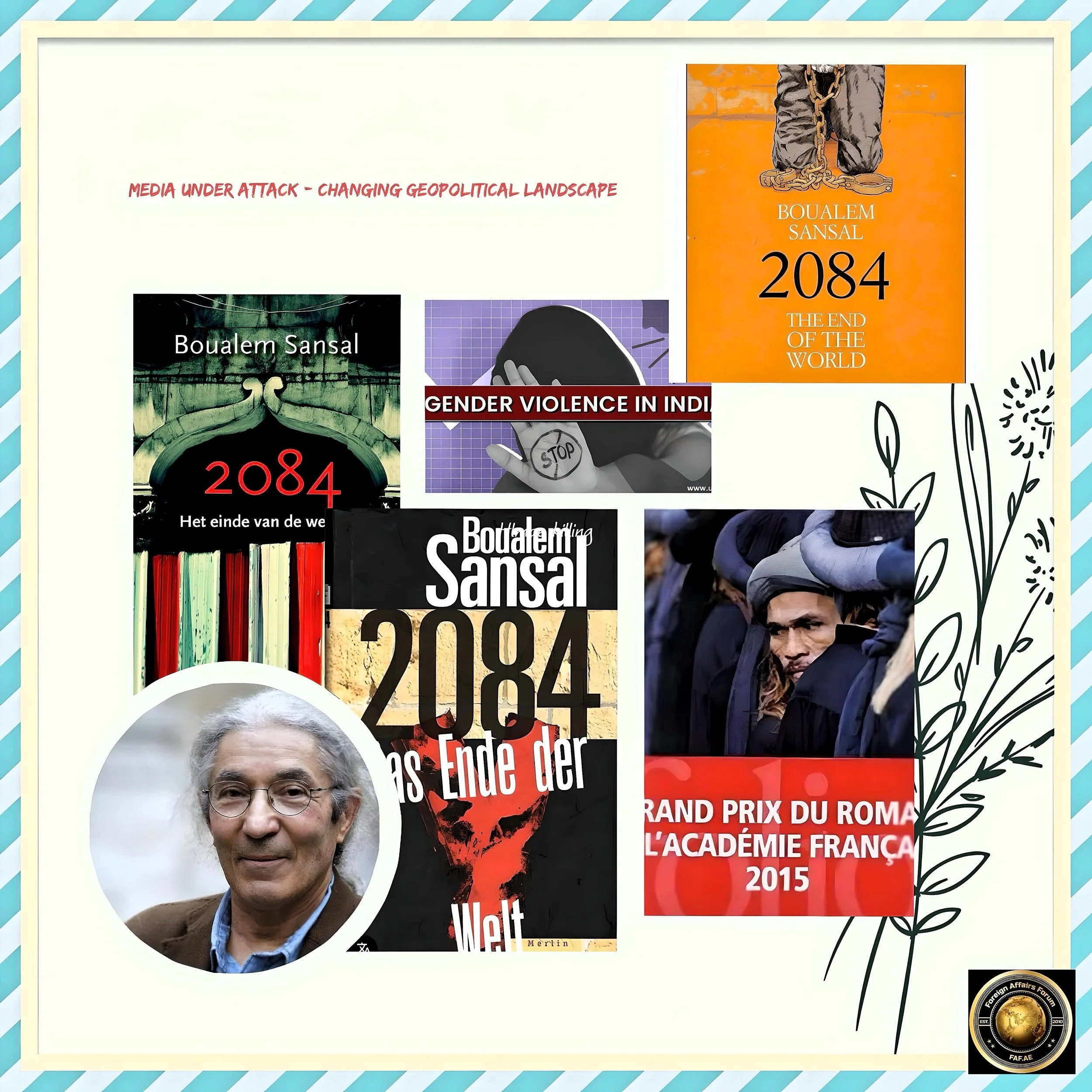
Born in 1949, he holds engineering and economics degrees and worked as a senior official in Algeria’s Ministry of Industry before turning to writing at age 50.
His literary works have consistently challenged Islamist extremism and authoritarian governance in Algeria.
His 2008 novel Le village de l’Allemand drew controversial parallels between Islamic fundamentalism and Nazism, exploring themes of historical responsibility and collective guilt.
The author has received numerous international accolades, including the Prix du Premier Roman (1999), the Peace Prize of the German Book Trade (2011), and the Grand Prix du roman de l’Académie française (2015).
Significantly, he became a French citizen in 2024, with President Emmanuel Macron personally attending his naturalization ceremony.
International Solidarity and Outrage
European Political Response
The European Parliament adopted a resolution on January 23, 2025, calling for Sansal’s immediate release by a vote of 533 to 24, with 48 abstentions.
The resolution, supported by five of the eight political groups in Parliament, condemned his detention as a violation of fundamental human rights and freedom of expression.
French officials have responded with increasing urgency.
Prime Minister François Bayrou called the situation “intolerable” and appealed to Algerian President Abdelmadjid Tebboune to grant Sansal a pardon, particularly given the author’s deteriorating health from prostate cancer.
Literary Community Mobilization
The literary world has mounted an unprecedented campaign for Sansal’s release.
A petition initiated by Prix Goncourt winner Kamel Daoud has been signed by multiple Nobel Prize winners, including Annie Ernaux, Jean-Marie Gustave Le Clézio, Orhan Pamuk, and Wole Soyinka.
Other prominent signatories include Salman Rushdie, who himself survived a brutal attack in 2022.
Literary festivals have organized solidarity events, including the Reykjavík International Literary Festival’s “Absent Author” program, where attendees signed petitions demanding Sansal’s release.
The Global Pattern of Writer Persecution
Escalating Worldwide Crackdown
Sansal’s case is part of an alarming global trend. According to PEN America’s Freedom to Write Index 2024, 375 writers were imprisoned across 40 countries, an insignificant increase from 339 writers in 2023.
This marks the sixth consecutive year of increasing writer imprisonments worldwide.
China leads global writer persecution with 118 imprisoned authors, followed by Iran with 43 writers behind bars.
The majority of these cases involve charges of “national security” violations, terrorism, or “undermining state unity”—the same broad accusations leveled against Sansal.
Common Targeting Strategies
Authoritarian regimes employ consistent tactics against revolutionary writers:
Vague terrorism charges: Writers are frequently accused of supporting terrorist organizations or threatening national security
Pre-trial detention: 80 writers were held without formal charges in 2024, often for extended periods
Digital surveillance: 203 online commentators were imprisoned for expressing dissenting views online
Transnational repression: Governments pursue writers beyond their borders, threatening families and associates
Political and Diplomatic Ramifications
France-Algeria Relations at Breaking Point
Sansal’s case has exacerbated already-strained diplomatic relations between France and Algeria. The tension stems from multiple factors:
France’s shift toward supporting Morocco’s sovereignty over Western Sahara in July 2024
Migration disputes and deportation policies
Historical colonial grievances
Economic competition in North Africa
Algerian lawmakers have condemned European interference, signing a statement in January 2025 that rebuked the European Parliament’s resolution as “misleading allegations with the sole aim of launching a blatant attack against Algeria”.
Global Political Reactions
The international response has revealed a pattern of appreciation and despair in political circles:
Appreciation manifests in
Unified European Parliamentary support transcending traditional political divisions
Diplomatic pressure from France and other democratic nations
Literary community solidarity crossing national boundaries
Recognition of Sansal’s courage in challenging authoritarian narratives
Despair is evident in
The systematic nature of writer persecution globally
The ineffectiveness of international pressure in securing releases
The deteriorating state of press freedom worldwide
The weaponization of terrorism laws against peaceful dissent
Historical Context of Writer Persecution
Precedents and Patterns
The persecution of revolutionary authors has deep historical roots. Similar cases include:
Salman Rushdie
Faced decades of death threats following the Satanic Verses controversy, culminating in a 2022 attack that left him blind in one eye
Indian writers
Over 40 authors returned literary awards in 2015 to protest the murder of rationalist writers like M.M. Kalburgi
Writers in exile
Hundreds of authors have fled their home countries to escape persecution, only to face continued threats
The Power of Words
Revolutionary writers pose unique threats to authoritarian regimes because they
Challenge official narratives and expose governmental failures
Inspire critical thinking and dissent among populations
Build solidarity across diverse communities
Document historical truths that regimes prefer to suppress
Offer alternative visions of society and governance
The Continuing Struggle
As of July 2025, Sansal remains imprisoned in Algeria, with his supporters hoping for a presidential pardon on Algeria’s Independence Day (July 5).
His case has become a symbol of the broader assault on freedom of expression globally, uniting writers, politicians, and activists in an unprecedented show of solidarity.
The systematic suppression of revolutionary authors like Sansal represents more than attacks on individuals—it constitutes an assault on the fundamental human right to free expression and the democratic values that underpin open societies.
The global reaction of both appreciation for these writers’ courage and despair at their persecution reflects the recognition that the fate of individual authors is inextricably linked to the health of democracy itself.
The international community’s response to Sansal’s case will likely set precedents for how similar situations are handled in the future, making this a defining moment in the ongoing struggle between authoritarianism and freedom of expression