Modern Israel and Ancient Israel: A Comprehensive Scholarly Review of Continuity, Credentials, and Political Context
Introduction
Modern Israel’s continuity with the biblical nation is a subject that sits at the crossroads of archaeology, genetics, theology, and geopolitics.
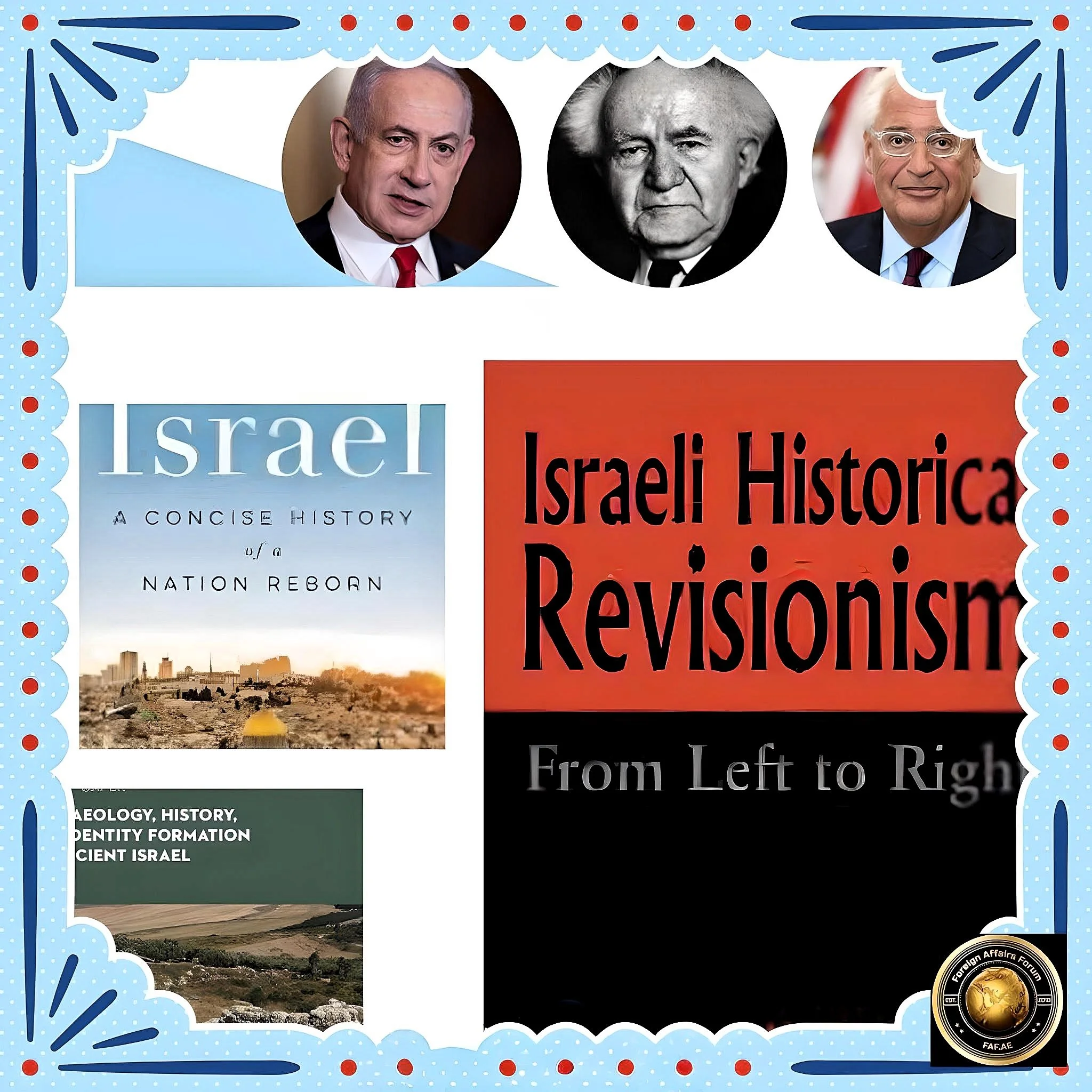
Former U.S. Ambassador David M. Friedman insists that “the nation of Israel today comprises a people that pray in the same language, in the same places and with the same liturgy as in ancient times. This is the same nation of Israel referred to in the Bible”.
FAF's comprehensive report evaluates that claim by surveying the full range of academic evidence, offers an in-depth profile of Friedman’s education and career, and situates his outlook within U.S. political dynamics, including his widely discussed 2025 interview with Senator Ted Cruz.
Overview
Modern scholarship reveals a complex mosaic: striking lines of continuity between ancient and contemporary Israelites coexist with clear episodes of demographic change, cultural evolution, and political re-founding.
Genetics confirms deep Levantine ancestry among Jewish and Palestinian populations, while archaeology demonstrates continuity and transformation across three millennia.
Linguistic, liturgical, and legal traditions also show durable threads. Yet the modern State of Israel is fundamentally a 20th-century political creation, shaped by Zionism, colonial legacies, global power rivalries, and migration waves that altered the region’s ethnic composition.
Evidence for Continuity Between Biblical and Modern Israel
Linguistic and Liturgical Lines
Hebrew Language
Modern Israeli Hebrew revives biblical Hebrew vocabulary and syntax, albeit with modern loanwords and pronunciation shifts.
Prayer Texts
The core prayers (Shema and Amidah) replicate the Second Temple formulations recited daily in contemporary synagogues.
Festival Cycle
Passover, Shavuot, and Sukkot remain anchored to agricultural rhythms defined in Leviticus and Deuteronomy.
Legal and Cultural Memory
Discontinuities and Scholarly Debates
Demographic Flux
Successive conquests (Assyrian, Babylonian, Roman, Arab, Crusader, Ottoman) introduced non-Israelite genetic layers.
Political Sovereignty Gap
No independent Jewish state existed from 63 BCE to 1948 CE, breaking strict state continuity.
Diaspora Transformations
Rabbinic Judaism (post-70 CE) re-interpreted Temple-centric worship, producing significant theological evolution.
Territorial Boundaries
Modern Israel’s borders differ from those of Iron-Age Israel/Judah and the Hasmonean realms.
Language Revival
Spoken Hebrew disappeared for ~1,700 years as a vernacular before its 19th-century revival.
Scholars thus caution that continuity is partial: genetic, cultural, and textual threads connect past and present, but the modern state is not a direct political continuation of the monarchies of Saul, David, or Solomon.
David M. Friedman: Education, Career, and Qualifications
Friedman’s academic background is conventional for a lawyer-diplomat, but not that of a professional historian or archaeologist.
His arguments lean on legal practice, personal faith, and immersion in Israeli policy circles rather than peer-reviewed scholarship.
Political Context: Theology Meets U.S. Partisanship
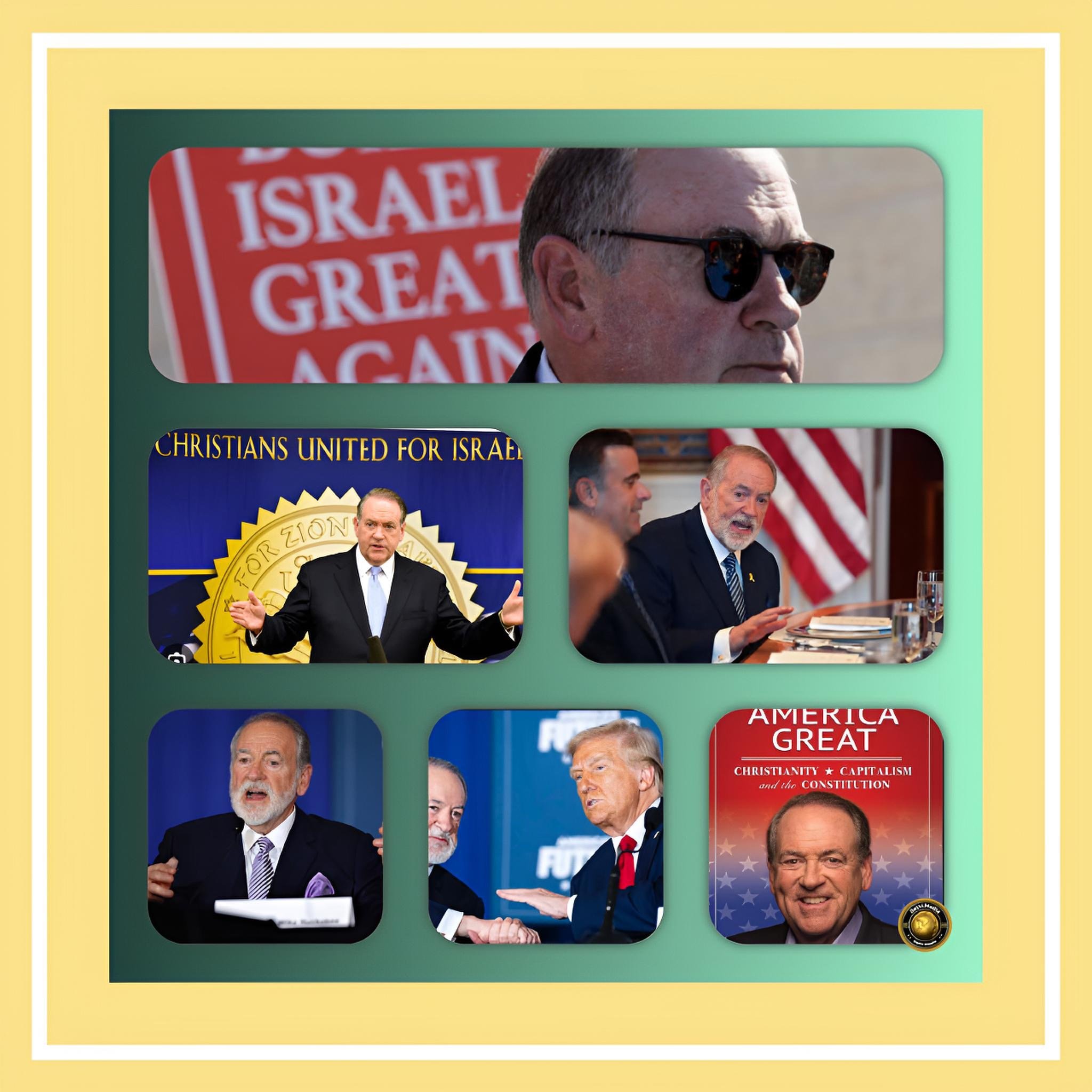
The Cruz–Carlson–Friedman Flashpoint
The exchange exposes how biblical rhetoric functions in U.S. politics: elected officials cite scripture to justify foreign-policy stances, while commentators probe the theological premises behind those citations.
Friedman’s response—grounding modern Israel in unbroken covenantal identity—aligns with his tenure under President Trump, whose administration consistently elevated biblical language in Mideast strategy.
Friedman’s Political Incentives
Personal Ideology
Orthodox observance and settlement philanthropy incline him toward maximalist territorial claims.
Trump Alliance
His diplomatic milestone—the move of the Jerusalem embassy—depends on a narrative of ancient-modern linkage.
Electoral Coalitions
Evangelical voters reward politicians who defend covenantal readings of Israel; reinforcing the link bolsters Republican support.
Regional Strategy
Abraham Accords framed Israel as a regional partner against Iran; the continuity narrative legitimizes Israeli sovereignty in these deals.
Critics counter that theology should not determine policy and warn that partisan framing risks eroding bipartisan consensus on Israel.
Scholarly Appraisal of Continuity Claims
Strengths of Friedman’s Position
Archaeological Anchors
Tangible evidence—inscriptions, urban footprints—substantiates Iron-Age Israelite polities and rituals still central to Jewish life.
Genetic Overlaps
Genome-wide analyses confirm substantial biological continuity among Jewish communities and other Levantines.
Cultural Persistence
Hebrew liturgy, scriptural canon, and calendar survived millennia, supporting an argument of national memory.
Limitations and Counterpoints
Theological Dimensions
Jewish Perspective
Classical rabbinic authorities debated whether restoration requires messianic advent; modern Religious Zionism reads 1948 as “the first flowering of redemption.”
Christian Zionism
Genesis 12:3, Romans 11, and Revelation fuel evangelical support, though amillennial/postmillennial schools dispute geopolitical applications.
Islamic View
Islam recognizes biblical prophets but often regards modern Israel as a colonial imposition, complicating “same nation” assertions.
The bottom line is that continuity claims are persuasive for communities that accept covenant theology; secular historians acknowledge partial lineage but highlight breaks and transformations.
Synthesis: How “Same” Is Modern Israel?
Modern Israel can credibly claim to be the cultural and religious descendant of biblical Israel, yet as a sovereign state, it is re-founded after a long discontinuity. Friedman’s assertion thus holds in cultural-civilizational terms, less so in strict political succession.
Conclusion
David M. Friedman posits that contemporary Israel is fundamentally the same nation depicted in biblical texts, a viewpoint partially supported by substantial archaeological, genetic, linguistic, and liturgical continuities.
However, this assertion requires a nuanced perspective, as centuries of demographic shifts, theological developments, and the modern re-establishment of statehood introduce discontinuities that historians and theologians must not overlook.
Friedman’s credentials—a background in anthropology from Columbia, legal training from NYU, and a notable diplomatic career—grant him a specific authority.
Nevertheless, his arguments often stem from personal belief systems, legal interpretations, and political agendas rather than from peer-reviewed historical scholarship.
Moreover, his perspective aligns closely with U.S. evangelical politics and the strategies of the Trump administration, highlighting how theology and geopolitics intertwine in contemporary discussions.
The evidence calls for a balanced approach for both policymakers and scholars: it is essential to acknowledge the profound Jewish connections to the land and people of ancient Israel while also recognizing the complex historical transitions that have shaped the modern, multicultural, and contested Middle East.
This balanced perspective has the potential to enhance interfaith dialogue, mitigate nationalist absolutism, and promote more nuanced diplomatic solutions in the region.
This extensive review indicates that while continuity exists, it is inherently multifaceted. Friedman's assertion encapsulates a significant aspect of Jewish identity but cannot overshadow the complexities that serious scholarship has addressed.
It is essential to delineate modern Israel from biblical Israel: the former, a nation-state established in 1948, differs from the latter, which refers to the ancient kingdom characterized in religious narratives.
Modern Israel operates as a secular democracy, a structured political entity with defined borders, contrasting sharply with the theocratic governance of biblical Israel, where religious law (the Torah) dictated societal order and God was regarded as the ultimate authority.
Biblical Israel emerged as an ancient kingdom, comprised of a confederation of Hebrew tribes, controlling territories that encompass present-day Israel, the West Bank, parts of Jordan, Lebanon, and Syria.
Conversely, modern Israel was established as a homeland for Jewish people following centuries of persecution, particularly in the aftermath of World War II, when the British relinquished control of the territory to the UN for future governance concerning European Jews and the Palestinian population residing in what is now Israel.
Despite its cultural and religious connections to its biblical predecessor, the modern state operates as a distinctly secular entity.
While modern Israel's identity, heritage, and language draw from biblical Israel, the two remain separate historical constructs, often conflated by politicians for strategic advantage, often at the expense of truth.
History's silence perpetuates the essence and objectives attributed to the divine in various holy texts.