Ted Cruz - Carl Tuckerson: Cites Genesis 12:3 as motivation for supporting Israel; American Christian values during the 2014 Hamdaniya district genocide.
Introduction
Ted Cruz cites Genesis 12:3 as 'personal motivation' for supporting Israel in heated Tucker Carlson interview’
The Controversial Exchange
In a recent interview, Senator Ted Cruz articulated his robust support for Israel through a theological framework, invoking Genesis 12:3, a key biblical verse that speaks to the covenantal relationship between God and the Jewish people.
His scripture references highlight the intersection of faith and international policy, underscoring how religious beliefs can inform geopolitical positions.
Cruz’s critique highlights a critical absence of Christian consciousness during the 2014 genocide in *Hamdaniya district -Qaraqosh-Mosul, raising concerns about the insufficient integration of Christian values into U.S. foreign policy, especially in humanitarian interventions. This observation invites a broader examination of the moral implications of American actions on the global stage.
He posits that this deficiency has implications for American leadership and its moral obligations on the global stage.
During a heated two-hour exchange with Tucker Carlson that gained significant traction on social media, Cruz engaged in a rigorous theological and political discourse regarding U.S. support for Israel, framing his argument through a biblical lens.
This confrontation was set against the backdrop of America's role in the increasing tensions between Israel and Iran.
Cruz defended his position by asserting a perceived biblical mandate, quoting, “Those who bless Israel will be blessed, and those who curse Israel will be cursed.”
This assertion highlights his commitment to align with what he perceives as the positive moral imperative of supporting Israel.
Cruz’s Biblical Justification Under Fire
When Carlson pressed Cruz about the biblical source, Cruz struggled to provide the exact reference, admitting he didn’t have “the scripture off the tip of my tongue.”
Carlson quickly identified the verse as Genesis 12:3, which states: “I will bless those who bless you, and whoever curses you I will curse; and all peoples on earth will be blessed through you”.
This led to one of the most contentious moments of the interview when Carlson challenged Cruz directly: “So you’re quoting a Bible phrase. You don’t have context for it and don’t know where it is in the Bible, but that’s your theology? I’m confused. What does that even mean?”
The Theological Debate
The exchange highlighted fundamental questions about the interpretation of Genesis 12:3 and its application to modern Israel.
Cruz maintained that the biblical command to support Israel applies to “the nation of Israel,” not necessarily its government.
However, he later clarified that he does support the current Israeli government led by Prime Minister Benjamin Netanyahu.
Carlson pressed further, asking whether Cruz believed Christians are commanded to support the government of Israel.
Cruz responded that while his Christian faith informs his views, his support comes from believing “biblically, we are commanded to support Israel”.
Biblical Scholarship and Interpretation
The Genesis 12:3 verse has been central to Christian Zionist theology, with supporters arguing it establishes a divine mandate to support Israel.
However, biblical scholars have debated whether this promise to Abraham applies explicitly to the modern state of Israel or has broader theological implications.
The verse appears in God’s covenant with Abraham, where God promises: “I will bless those who bless you, and whoever curses you I will curse; and all peoples on earth will be blessed through you”.
Some scholars note that this promise was made to Abraham personally, decades before the nation of Israel existed, and that Abraham’s descendants include both Jews and Arabs.
Political Implications and AIPAC
The theological debate extended into political territory when Carlson challenged Cruz about his financial support from the American Israel Public Affairs Committee (AIPAC).
According to OpenSecrets.org, Cruz has received more than $1.8 million from the pro-Israel lobby through 2024.
Texas Senator Ted Cruz is pushing for an additional $250 billion in aid to Israel just days after a devastating flood hit Texas.
Carlson accused AIPAC of functioning as a “foreign lobby” that influences U.S. politicians on behalf of Israel’s interests. Cruz defended the organization, arguing that it represents American citizens who support Israel, not the Israeli government directly.
The Broader MAGA Divide
The Cruz-Carlson confrontation exposed a significant rift within the MAGA movement over foreign policy, particularly regarding potential U.S. involvement in Israel’s military actions against Iran.
While Cruz represents the hawkish, pro-Israel wing of the conservative movement, Carlson advocates for a more isolationist “America First” approach that questions deeper U.S. commitments in the Middle East.
This divide became particularly apparent when Cruz suggested that Iran poses a direct threat to the United States and former President Trump. At the same time, Carlson questioned whether such claims justified military intervention.
Public and Academic Response
The interview generated significant discussion across social media and academic circles, with many noting Cruz’s apparent lack of preparation for theological questions about a verse he cited as central to his political beliefs.
Biblical scholars and theologians have weighed in on both sides of the debate, with some supporting Cruz’s interpretation while others argue for a more nuanced understanding of the Abrahamic covenant.
The exchange has also sparked broader conversations about the role of biblical interpretation in modern foreign policy and the influence of Christian Zionism on American politics.
Conclusion
The 21st century has seen a notable trend in which global leaders with imperialistic inclinations utilize neo-spiritual and religious texts to foster confusion that serves their pursuit of power and recognition.
Within the context of Ted Cruz, the Bible is employed selectively and often without a comprehensive understanding, particularly when supporting actions of modern Israel, which are distinct from the biblical Israel.
Genesis 12:3 represents a critical element of the Abrahamic covenant: “I will bless those who bless you, and whoever curses you I will curse; and all the peoples on earth will be blessed through you.”
This verse likely originated around 2091 BC, according to the chronologies offered in the Book of Genesis, marking the moment God first promised Abram (later Abraham) blessings and nationhood. The broader narrative in Genesis 12, which details God's call to Abram and his initial journey to Canaan, aligns temporally with this promise.
A nuanced critique of the instrumentalization of religious texts within political arenas exposes a prevalent issue of misinterpretation and exploitation. Historical case studies illustrate that aggressors frequently invoke religious rhetoric to bolster their political objectives.
Analyzing both contemporary instances and historical precedents reveals three prominent examples of how religious doctrine has been harnessed for political ends across diverse faith traditions:
Christianity
The Crusades (11th-13th centuries) epitomized European monarchs' manipulation of religious zeal.
They employed divine justification to legitimize military campaigns aimed at territorial expansion and strategic control, thus cloaking imperial ambition in the guise of sanctity.
The Bible continues to be utilized selectively within a Christian-dominated framework.
Dependence on it emerges as relevant in discussions surrounding modern Israel. Still, this sentiment appears absent during significant humanitarian crises, such as the mass genocide of Christians in Qaraqosh-Mosul, Iraq, in June 2014, a tragedy echoed by ongoing violence against religious minorities.
The 2014 genocide was not confined to Christians; Yazidis and Shia Muslims also faced severe persecution.
A pressing question arises: Are leaders like Cruz equally concerned about God's promises extending beyond the Jews of both biblical and contemporary Israel to encompass Christians in broader society?
This prompts a critical inquiry into the understanding of biblical texts as guiding principles for progressive spiritual growth in the present and future.
ISLAM
In modern geopolitics, extremist factions like ISIS and Al-Qaeda exploit radical interpretations of Islamic texts to justify terrorism. These groups frame narratives of jihad against perceived adversaries, masking their political ambitions under a façade of religious zeal that incites violence and insurgency.
Hinduism
In contemporary India, the rise of Hindu nationalism illustrates selective hermeneutics applied to Hindu scriptures.
Such reinterpretations rationalize political actions against minority populations, particularly Muslims, culminating in policies that prioritize majoritarian interests under the guise of cultural defense, diverting attention away from the faith's core tenets.
These examples illuminate the complex nexus between religion and politics, wherein theological assertions are frequently repurposed to advance agendas beyond spiritual discourse.
The Cruz-Carlson interview is a microcosm of the broader discourse within American Christianity and conservatism regarding the appropriate relationship between biblical faith and political agency.
While Cruz asserts that his support for Israel is rooted in genuine religious conviction grounded in Genesis 12:3, critics contend that his interpretation oversimplifies intricate theological questions and conflates ancient biblical promises with the complexities of modern geopolitical realities.
This controversy highlights the ongoing tensions among divergent scriptural interpretations and their far-reaching implications for contemporary foreign policy, particularly concerning the Middle East and America’s role in regional conflicts.
*Note:
The Hamdaniya region, along with Aitiu and Rmeish, occupies a significant position in the geopolitical discussions that have garnered the attention of figures like Ted Cruz in the United States.
The implications of Genesis verses frequently invoked in debates surrounding the legitimacy of the State of Israel warrant careful consideration.
Moreover, recent military operations conducted by Israel against Aitiu and Rmeish—predominantly Christian towns in Lebanon—have precipitated substantial evacuations of Christian residents in 2024.
These individuals were increasingly anxious about the prospect of further military actions and have sought refuge in Beirut or neighboring countries such as Syria, driven by ongoing regional instability.
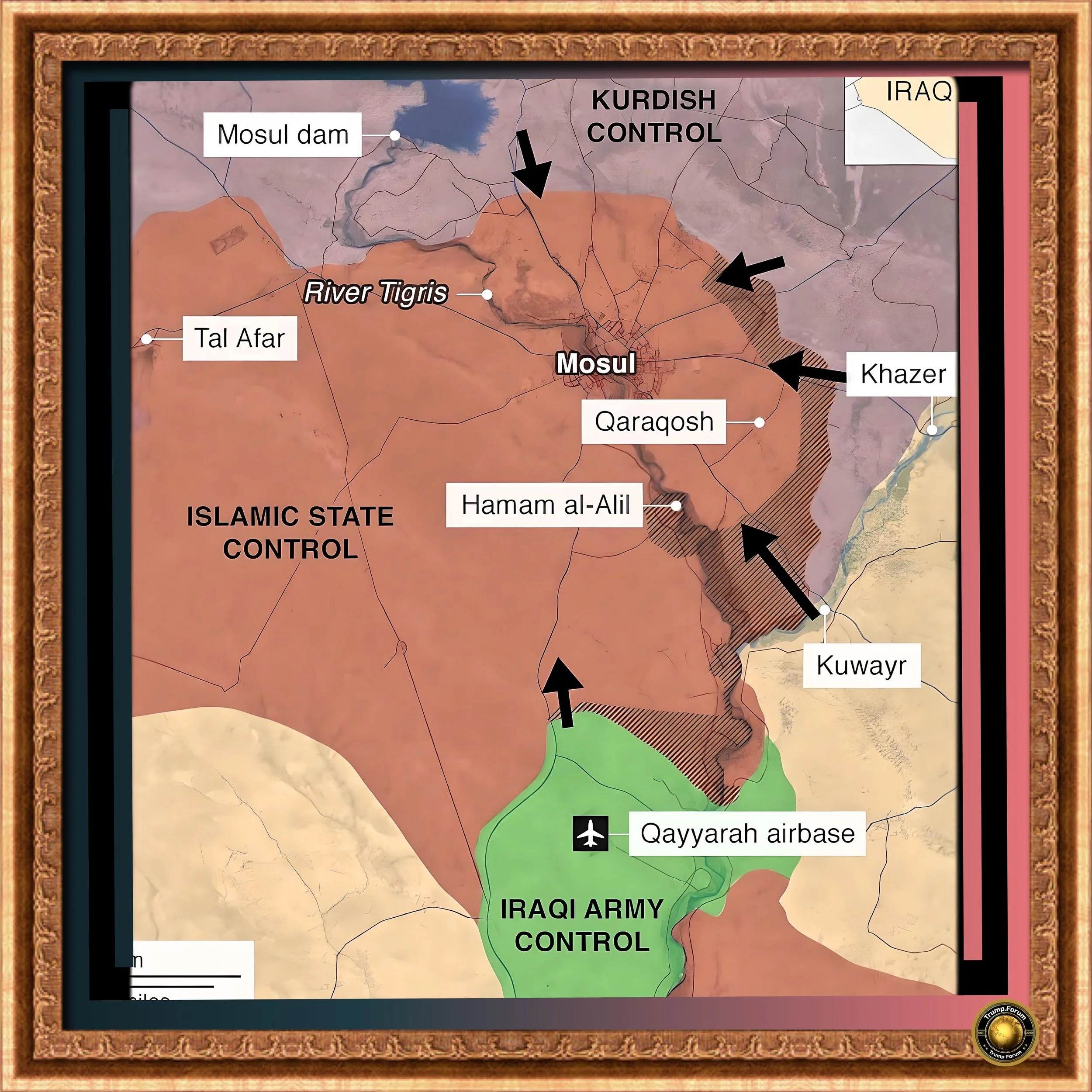
Located approximately 32 kilometers southeast of Mosul and 60 kilometers west of Erbil, the Hamdaniya district encompasses a portion of the Ninewa Plains and is notable for its diverse minority populations. It sits at the heart of the Disputed Territories, an area defined by complex socio-political dynamics.
The summer 2014 incursion by the Islamic State of Iraq and the Levant (ISIL) had devastating repercussions for the Yazidi, Shabak, and Christian communities within the Ninewa Plains, resulting in a near-total exodus of the historically significant Christian population in Hamdaniya.
Approximately 125,000 individuals were displaced, while those who remained were often subjected to brutal executions or abduction into slavery, contextualizing the systematic persecution of minority groups as a genocide.
In light of this existential threat, members of these minority communities formed armed self-defense units.
Various micro-localized militia factions emerged with the intent of safeguarding their communities across the Ninewa Plains. However, these groups remain under-resourced and politically marginalized, constraining their operational independence amid an intricately competitive security and political landscape.
As a result, they often ally with larger security forces, including Kurdish groups, the Iraqi government in Baghdad, and Shi’a Popular Mobilization Forces (PMF) from the southern regions.
This intersection contributes to the ongoing power struggle between Baghdad and the Kurdistan Regional Government (KRG) over control of the Disputed Territories.
The district capital of Hamdaniya is the town of Hamdaniya itself, although Qaraqosh—recognized as Iraq's largest Christian city—functions as the district's primary demographic and administrative center.
Qaraqosh encapsulates the acute challenges associated with displacement, repatriation, and reconstruction; what once was a vibrant town of 50,000 has transformed into a near-ghost town, with limited return of residents and minimal restoration of infrastructure.
The political and social dynamics in Qaraqosh, alongside those in the adjacent town of Bartella, will serve as the focal points of this research study. However, many trends observed in these areas resonate throughout the broader Ninewa Plains.
Key Facts: Qaraqosh
Population: 226,367 (district); 50,000 (Qaraqosh town)
Ethnic Composition: Majority Assyrians, Chaldeans, Syriacs (all Christian communities of diverse denominations); significant number of ethnic Shabak (majority Shi’a, minority Sunni), Kurdish, and Arab minorities
Date taken by ISIL: August 6-7, 2014 (Qaraqosh)
Date reclaimed: end of October 2016
Ground Forces engaged in clearing: Primar,ily the Iraqi Army
Overall Control: ISF
LHSFs present: NPU (local PMF) in Qaraqosh; Babylon Brigade (local PMF) in Bartella; other local Christian groups (NPF, NGPF) nearby
Key Issues:
Return of population and reconstruction did not beginning
Competition between KRG and Baghdad, realized via competing local groups