Insights for Western Nations: In-Depth Analysis on Learning from India's Approach
Introduction
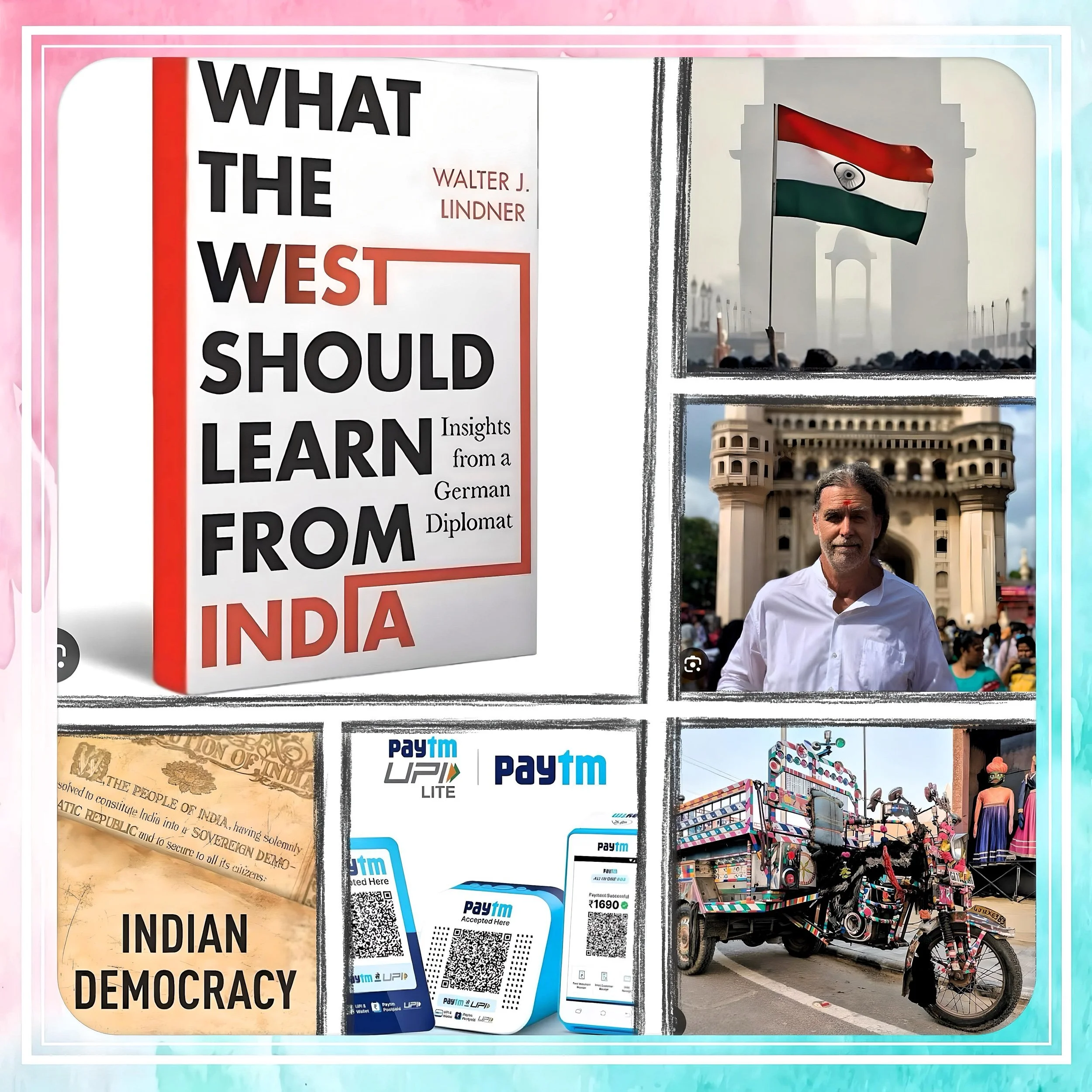
Walter J. Lindner, the former German ambassador to India (2019-2022), presents a unique perspective on what Western nations can learn from India in his book “What the West Should Learn From India: Insights from a German Diplomat.”
Drawing from his extensive diplomatic experience and deep engagement with India spanning over four decades, Lindner offers valuable insights into India’s approach to democracy, diplomacy, and global challenges.
Key Lessons for the West
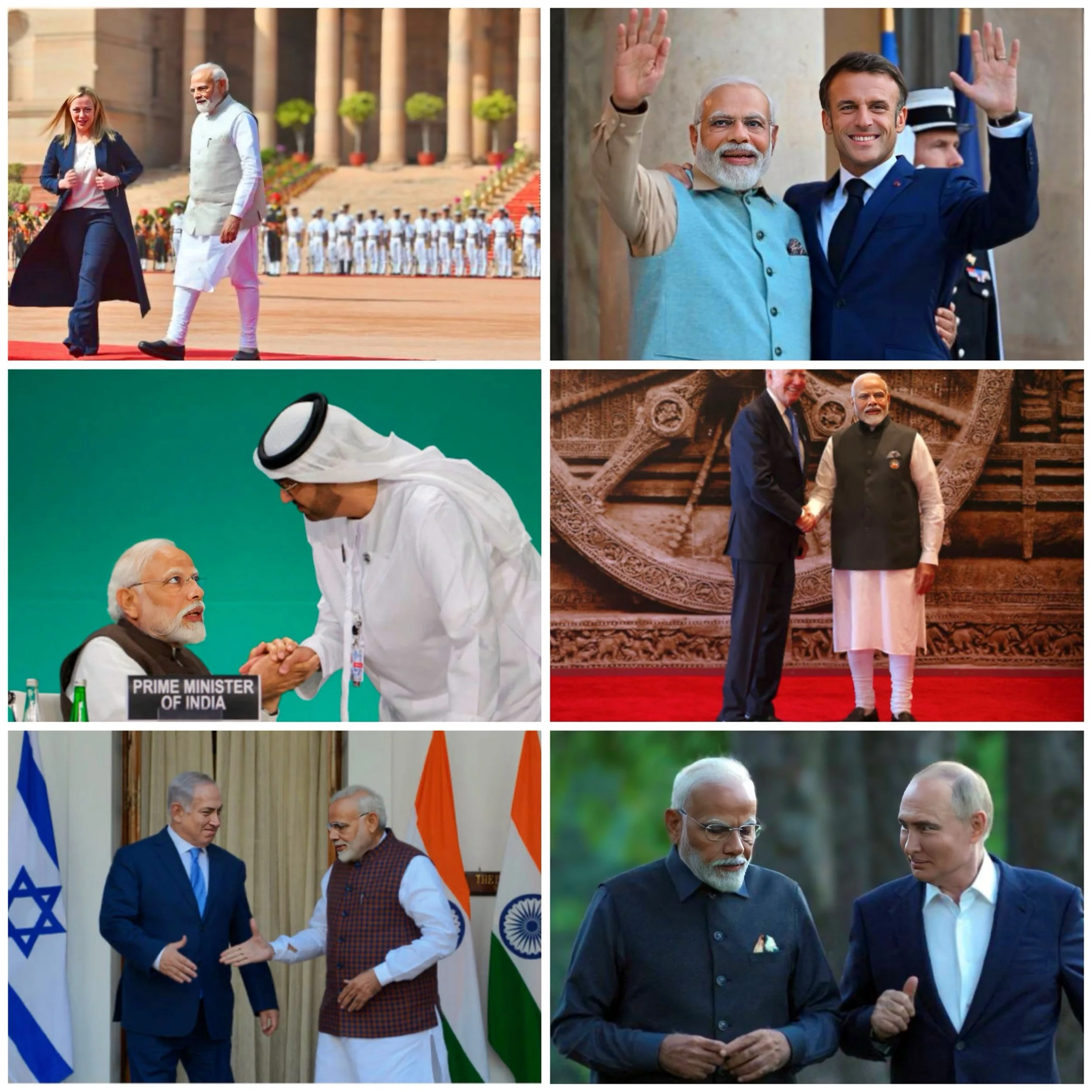
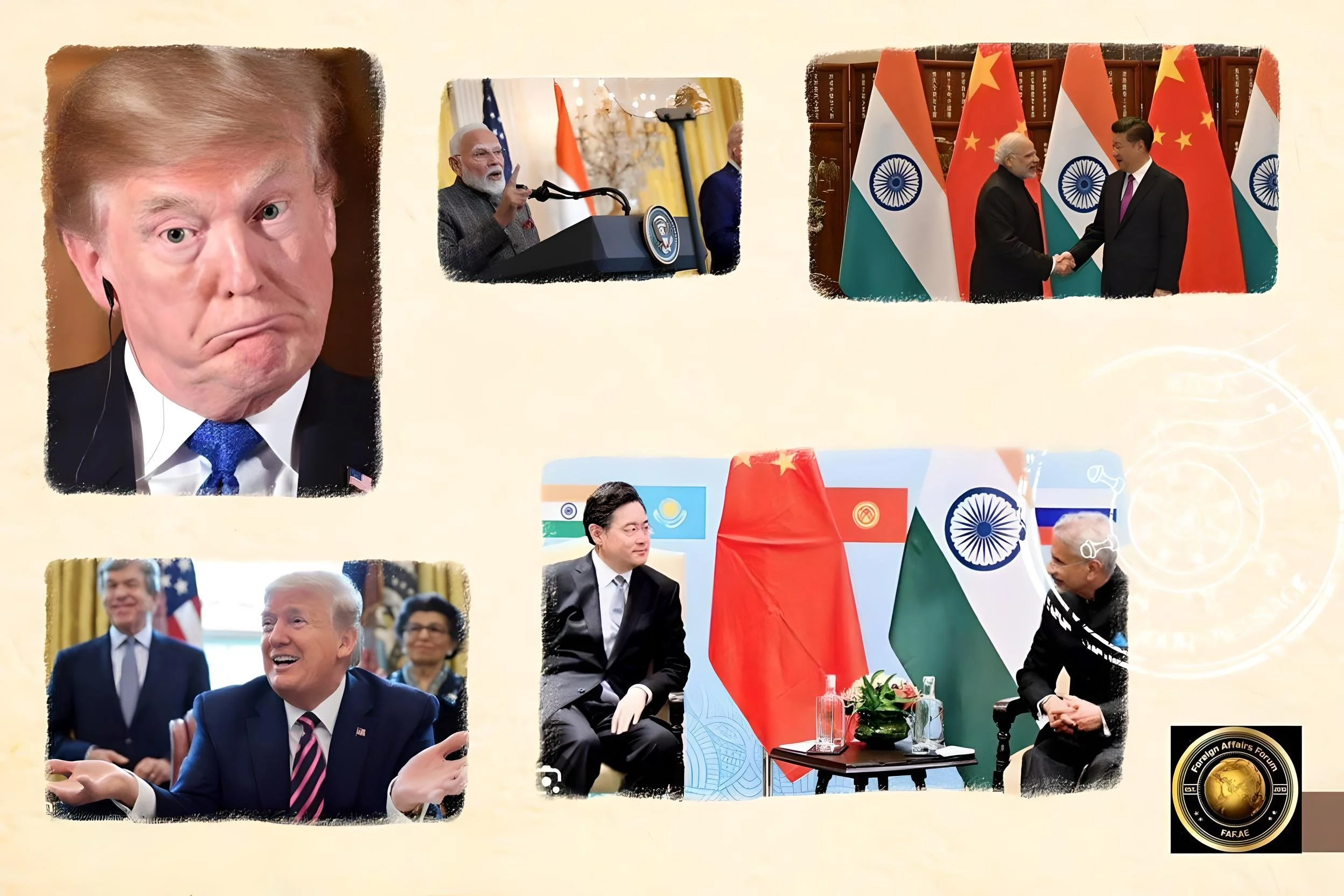
India’s Unique Diplomatic Balance
One of Lindner’s most significant observations is India’s exceptional ability to maintain relationships across geopolitical divides.
India is the only country in the world with good relationships with both Putin and Zelenskyy, with Netanyahu and Abbas, and with leaders across the political spectrum globally.
This diplomatic flexibility stems from India’s non-aligned tradition and its commitment to strategic autonomy, positioning it as a natural mediator in global conflicts.
India’s balanced approach to the Russia-Ukraine conflict exemplifies this diplomatic sophistication.
While maintaining its historic ties with Russia—a relationship dating back to the Cold War era—India has simultaneously engaged constructively with Ukraine and Western partners.
⏩India has been a balancing factor between superpowers, East and West, and North and South, demonstrating that countries can pursue their national interests without being forced into rigid blocs.
Democratic Resilience and Pragmatism
Lindner challenges Western preconceptions about Indian democracy, arguing that critics should “hear both sides and see the difficulties which the country has, what are its challenges, and then make up your mind”.
He emphasizes that no democracy is perfect—not in the US, Germany, or India, and advocates for understanding rather than preaching about democratic ideals.
⏩India’s democracy, while facing challenges from issues like the caste system, Hindu nationalism, and economic inequality, continues to function as the world’s most extensive democratic system.
The persistence of democratic institutions despite these pressures offers lessons in resilience and adaptation that Western democracies can learn from as they face their challenges.
Economic Dynamism and Innovation
India’s economic transformation showcases remarkable achievements that the West should emulate.
India has become the world’s fourth-largest economy, surpassing Japan, and is projected to overtake Germany to become the third-largest economy within 2-3 years.
⏩Several factors drive this growth
⏩Digital Leapfrogging
India has successfully bypassed traditional infrastructure limitations through digital innovation.
You leapfrog telephone lines, end up with everyone having a cellphone and doing financial transactions with it.
In Germany and many European countries we are still lagging behind.
🆙India’s digital public infrastructure, including the Unified Payments Interface (UPI) and Aadhaar system, demonstrates how countries can leverage technology for inclusive development.
⏩Entrepreneurial Spirit
Lindner highlights India’s unique approach to risk-taking and resilience: “If you have 10 startups and eight are not successful, but maybe the two are… you fall down, you get up, then the eighth time it’s working”.
This willingness to experiment and learn from failure contrasts with Western risk aversion and complacency.
⏩Global Leadership
The success of Indian CEOs worldwide reflects a “holistic approach to take care of the soul and the heart.
It is not a pure capitalistic approach”, combining business acumen with cultural wisdom.
Climate Leadership and Innovation
India has emerged as a global leader in climate action, offering innovative solutions that the West can adopt.
India is combining growth with environmental sustainability in a meaningful manner.
Key initiatives include
The International Solar Alliance (ISA)
Launched jointly by India and France in 2015, the ISA has become a pioneering multilateral organization promoting solar energy deployment globally.
With over 120 member countries, it demonstrates India’s ability to create consensus on global challenges.
Coalition for Disaster Resilient Infrastructure (CDRI)
This initiative focuses on climate-proofing critical infrastructure, with every one dollar invested in making infrastructure more resilient potentially saving losses of over $4 when a disaster strikes.
Renewable Energy Success
India’s renewable energy capacity has grown exponentially, with solar power installed capacity increasing 25 times from 2.6 GW to 66.8 GW since 2014.
India now ranks fourth globally in renewable energy installed capacity.
Spiritual and Holistic Approach to Leadership
Lindner emphasizes India’s unique integration of spirituality with practical governance and business leadership.
India’s soft power remains strong because it is part of India’s DNA—its spirituality, history, culture, religions, music have left an imprint worldwide. This holistic approach offers several lessons:
⏩Values-Based Leadership
Indian business leaders often incorporate ethical and spiritual considerations into decision-making, creating more sustainable and socially responsible enterprises.
⏩Long-term Perspective
The influence of ancient wisdom traditions like the Bhagavad Gita promotes long-term vision and sustainability considerations, contrasting with short-term profit maximization prevalent in Western business culture.
⏩Inclusive Growth
India’s development philosophy of “Sabka Saath Sabka Vikas” (development for all) reflects a commitment to inclusive progress that addresses both material and spiritual well-being.
Global South Leadership
India’s role as a voice for the Global South provides crucial lessons for international cooperation.
Through initiatives like the Voice of Global South Summit, India has created platforms for developing nations to articulate their priorities and concerns.
The summit brought together 125 countries from across Latin America, Africa, Asia, and other regions, demonstrating India’s convening power.
India’s leadership in organizations like BRICS, G20, and various South-South cooperation initiatives shows how emerging economies can reshape global governance structures.
India is equally non-aligned among Brazil, Russia, China, and South Africa in BRICS, maintaining its strategic autonomy while building partnerships.
Challenges and Critical Perspectives
Lindner acknowledges India’s significant challenges while arguing that understanding these complexities is essential for meaningful engagement:
⏩Caste System
The persistence of caste-based discrimination remains a significant challenge to India’s democratic ideals.
The existential problems of out-castes life are freedom and equality, which are the essence of democracy.
However, India’s ongoing efforts to address these issues through affirmative action and legal reforms demonstrate democratic self-correction.
⏩Religious Tension
The rise of Hindu nationalism and its impact on minority rights presents challenges to India’s secular democracy.
Yet Lindner argues for nuanced understanding rather than blanket condemnation, emphasizing the need to engage with all stakeholders.
⏩Environmental Pressures
Despite climate leadership, India faces enormous environmental challenges including air pollution, water scarcity, and waste management in its mega-cities.
However, innovative solutions like plastic waste recycling initiatives and sustainable urban planning demonstrate India’s problem-solving capabilities.
Strategic Implications for the West
Lindner’s analysis suggests several strategic imperatives for Western nations
⏩Rethink Engagement Approaches
Rather than lecturing or imposing Western models, the West should engage with humility and seek to understand different approaches to governance and development.
India’s success in maintaining democracy while addressing unique challenges offers alternative models worth studying.
⏩Leverage India’s Mediating Role
Given India’s unique diplomatic position, “if we are anywhere in the world in need of a big weight in a country, India is the first choice”. Western nations should work with rather than against India’s balanced approach to global conflicts.
⏩Learn from Innovation Models
India’s success in digital innovation, renewable energy, and frugal engineering offers lessons for Western economies facing competitiveness challenges.
↔️The concept of “jugaad” (innovative problem-solving) and India’s ability to create inclusive technologies deserve serious study.
Adapt Climate Strategies
India’s approach to combining development needs with environmental responsibilities provides models for sustainable growth that developed nations can adapt to their contexts.
Conclusion
Walter J. Lindner’s insights reveal 🆙India not as a country to be patronized or reformed by the West, but as a source of valuable lessons for addressing 21st-century challenges.
⏩India represents everything that the West is not—young, dynamic, and innovative, offering alternative approaches to democracy, development, and diplomacy.
The West’s traditional assumption of superiority needs to give way to mutual learning and respect.
⏩As Lindner notes, “the more we get to know about the rest of the world, the greater our humility and modesty must become”.
India’s rise as a global power—economically, diplomatically, and morally—requires Western nations to reconceptualize their relationship with the Global South and embrace the multipolar world that is emerging.
⏩India’s story demonstrates that there are multiple paths to modernity, democracy, and development.
By learning from India’s experiences—both successes and challenges—the West can better navigate its own transitions and contribute more effectively to global problem-solving in an interconnected world.