India’s Journey Toward Reclaiming the Golden Bird: Navigating Tradition and Transformation in a Multipolar World
Foreward
The vision articulated through Martin Luther King Jr.‘s iconic “I Have a Dream” speech resonates profoundly with India’s contemporary aspirations for social transformation and economic ascendancy.
As India stands at the crossroads of tradition and modernity, the nation grapples with the complex challenge of reclaiming its historical identity as the “Golden Bird” while dismantling systemic barriers perpetuating inequality for centuries.
The Historical Context: From Golden Bird to Colonial Subjugation
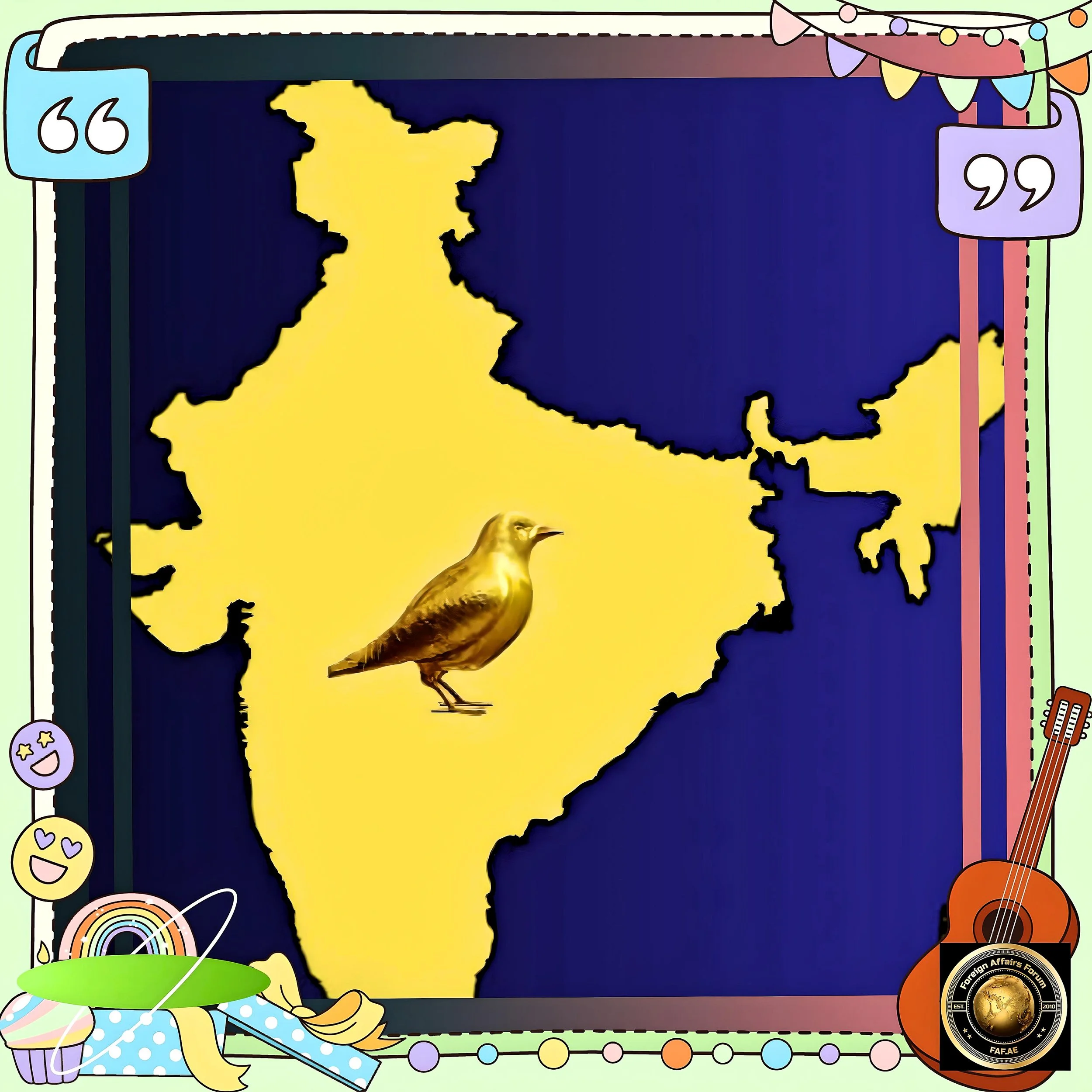
India’s moniker as “Sone ki Chidiya” (The Golden Bird) reflects a glorious past when the subcontinent commanded global respect for its wealth, cultural richness, and strategic importance.
Historical evidence indicates that India accounted for a significant portion of global GDP, with its abundant natural resources, strategic trade routes, and flourishing civilizations attracting merchants and scholars from across the world.
However, this prosperity was systematically dismantled through centuries of foreign domination, first under the Mughal Empire and later through British colonial exploitation.
The contemporary discourse around India’s “Golden Bird” identity must acknowledge the legitimate pride in historical achievements and the need to move beyond romanticized narratives that obscure the complexities of India’s past and present challenges.
Contemporary India: A Nation of Contradictions
The Persistence of Caste and Religious Discrimination
Despite constitutional guarantees of equality, India’s social fabric remains deeply stratified along caste and religious lines.
The Supreme Court’s 2024 landmark ruling against caste-based discrimination in prisons highlights how deeply entrenched these prejudices remain within institutional structures.
Research reveals that outcast entrepreneurs continue to face a 16% income gap compared to non-marginalized castes, even when controlling for education and social capital.
Religious minorities, particularly Muslims, who constitute 14% of the population, face systematic exclusion from elite sectors, with only 4.6% representation in the Indian Administrative Service and 3.2% in corporate board positions.
While recent data suggests a narrowing income gap between Hindu and Muslim families—reducing by 87% from ₹1,917 per month in 2016 to ₹250 in 2023—significant institutional barriers persist.
Technological Advancement Amid Social Regression
India’s digital transformation presents a paradox of progress and prejudice.
The Unified Payments Interface (UPI) has revolutionized financial transactions, processing 17,221 crore transactions worth ₹246.83 lakh crore in 2024, demonstrating remarkable technological capability.
However, this digital infrastructure perpetuates existing biases—facial recognition systems misidentify 29% of Dalits versus 7% of upper castes, creating what experts term a “digital caste system.”
The Aadhaar biometric system, covering 1.3 billion Indians, exemplifies this contradiction: while promoting financial inclusion, 38% of rural Dalits lack access due to fingerprint erosion from manual labor.
Generational Dynamics and Future Prospects
Generation Z and Alpha: Catalysts for Change
India’s younger generations represent the greatest hope and challenge for social transformation.
Generation Z demonstrates unprecedented entrepreneurial ambitions, with 85.5% aspiring to start businesses.
Yet it faces structural barriers exemplified by outcast-led startups receiving only 2.3% of early-stage funding despite constituting 12% of applicants.
The emergence of Generation Beta, born from 2025 onwards, presents new opportunities for breaking traditional hierarchies.
However, 34% of Generation Z workers report disengagement in the workplace, closely followed by millennials at 31%, suggesting systemic issues in how institutions engage young talent.
Educational Reform and Skills Gap
India’s education system remains a critical bottleneck for inclusive growth.
Despite graduating 15,000 engineers annually from elite IITs, 47% lack employable skills due to curricula frozen in outdated paradigms.
The Economic Survey 2024 reveals that only 51.25% of youth are deemed readily employable straight out of college, highlighting the urgent need for educational reform.
The National Education Policy (NEP) 2020 represents an ambitious attempt at transformation but faces significant implementation challenges, including inadequate funding, infrastructure deficits, and resistance to change.
Economic Aspirations and Global Positioning
The Path to Third-Largest Economy
India’s ambition to become the world’s third-largest economy by 2050 appears increasingly achievable. Current projections suggest India’s GDP will reach $6.3 trillion by 2029, surpassing Germany and Japan.
However, per capita GDP is projected to reach only $4,281 by 2029, highlighting the challenge of translating aggregate growth into individual prosperity.
Foreign Direct Investment (FDI) patterns reveal structural inequalities: while gross FDI reached a record $81.04 billion in 2024-25, the benefits primarily accrue to luxury consumption rather than equitable development.
Strategic Autonomy in a Multipolar World
India’s foreign policy success in 2024 demonstrates sophisticated navigation of global complexities through strategic autonomy.
The nation’s ability to maintain relationships with diverse partners while avoiding entanglement in superpower rivalries positions it well for multipolar leadership.
Institutional Challenges and Reform Imperatives
Judicial System and Governance
India’s judicial system faces unprecedented challenges, with over five crore pending cases undermining the rule of law.
The system’s failure is particularly acute for marginalized communities, with only 2% of Dalit rape cases resulting in convictions versus 25% nationally.
Banking Sector Transformation
The “birthright mindset” in nationalized banks represents broader institutional inertia.
While these institutions were nationalized to promote financial inclusion, bureaucratic culture and resistance to performance-based evaluation continue to hinder efficiency.
Pathways Forward: Recommendations for Transformation
Comprehensive Anti-Discrimination Framework
India must implement explicit anti-caste and anti-religious discrimination policies across all sectors, following examples set by companies like Apple and Cisco that include caste as a protected category.
This requires
Mandatory diversity reporting and accountability measures
Blind recruitment processes to eliminate bias
Targeted funding for marginalized community entrepreneurs
Cross-community networking and mentorship programs
Educational System Overhaul
Transforming India’s education system requires:
Industry-aligned curricula integrating AI, cybersecurity, and humanities
German-style dual study programs combining academic learning with corporate apprenticeships
Competency-based credentialing replacing degree-centric models
Performance-linked funding tied to graduate employability metrics
Technological Inclusion
Digital infrastructure must serve equity rather than perpetuate discrimination:
Bias-free facial recognition and AI systems
Universal access to digital services regardless of socioeconomic status
Cybersecurity measures protecting vulnerable communities
Digital literacy programs bridging the urban-rural divide
Intergenerational Bridge-Building
Successfully integrating younger generations requires
Open communication fosters mutual respect between generations
Balanced technology use promotes both digital fluency and real-world engagement
Cultural education preserving heritage while embracing change
Mental health support addressing generational stress and anxiety
Conclusion
Toward an Inclusive Golden Bird
India’s journey toward reclaiming its identity as the Golden Bird must transcend nostalgia for a mythologized past and confront the harsh realities of contemporary inequality.
The nation’s remarkable technological achievements and economic growth provide a foundation for transformation, but meaningful progress requires dismantling centuries-old systems of discrimination and exclusion.
India's vision of being a global leader in a multipolar world remains achievable, but only through comprehensive reforms that prioritize human dignity over traditional hierarchies.
Like Martin Luther King Jr.’s dream of a society where individuals are judged by the content of their character rather than the color of their skin, India must aspire to become a nation where talent and merit triumph over caste, religion, and inherited privilege .
The path forward demands courage to challenge entrenched interests, wisdom to preserve valuable traditions while discarding harmful practices, and commitment to ensuring that India’s golden future belongs to all its people, not merely a privileged few.
Only through such transformation can India truly reclaim its place as the Golden Bird—this time, as a beacon of inclusive prosperity and social justice in an interconnected world.