Germany Faces Economic Crisis as Trump Tariffs Threaten Two-Year Recession Extension
Introduction
Germany’s economic outlook has darkened considerably as U.S. President Donald Trump’s tariff policies threaten to extend the country’s recession for an unprecedented third consecutive year, potentially marking the first such occurrence in post-war German history.
The Bundesbank’s stark warning that Germany could face “two more years of recession if a trade war with the United States escalates sharply” underscores the severity of the economic challenge facing Europe’s largest economy.
Current projections suggest German economic output could decline by 0.5 percent this year and 0.2 percent in 2026 if Trump’s tariffs are fully implemented and the EU retaliates.
FAF, Berlin.Forum analyzes economic deterioration as Germany’s export-dependent economy struggles with the immediate impact of existing U.S. tariffs, including a 25% levy on imported vehicles and parts and a temporary 10% tariff on all goods.
The crisis has prompted urgent diplomatic efforts from German Chancellor Friedrich Merz and European Union leaders to negotiate a resolution before the critical July deadline that could determine whether Germany experiences its most extended recession period since World War II.
Economic Impact and Recession Projections
Current Economic Vulnerabilities
Germany’s economy enters this tariff crisis from an already weakened position. It has contracted for two consecutive years, with declines of 0.3% in 2023 and 0.2% in 2024.
The country now faces the unprecedented prospect of a third consecutive year of recession, a scenario not witnessed in the post-war era.
Economic forecasting institutes have revised their growth predictions dramatically downward, cutting the 2025 forecast to just 0.1% from the previously expected 0.8%. This is primarily due to the impact of U.S. tariffs on steel, aluminum, and automobiles.
The Bundesbank’s analysis presents two distinct scenarios for Germany’s economic future. In the worst-case scenario, where Trump’s tariffs are fully implemented from July and the EU retaliates, German economic output would contract by 0.5% in 2025 and 0.2% in 2026.
Even in more optimistic projections that account for potential infrastructure and defense spending increases under Chancellor Merz’s proposed policies, the economy would stagnate this year before achieving modest growth of 1.2% in 2026 and 1.2% in 2027.
These projections reflect the profound uncertainty that Trump’s trade policies have injected into German economic planning.
Labor Market Consequences
The human cost of this economic downturn is becoming increasingly apparent in Germany’s labor market. Federal Employment Agency chief Andrea Nahles has warned that, based on an analysis of a 25% tariff rate scenario, U.S. tariff policies could result in the loss of 90,000 jobs within a year.
This employment crisis is compounded by Germany’s unemployment rate, which has increased more sharply than anticipated in recent months. For the first time in a decade, the number of jobless individuals neared 3 million.
The unpredictability of U.S. trade policy is particularly damaging to employment prospects. Nahles noted that this uncertainty “discourages companies from making investments, hiring staff, and providing training.”
Industry-Specific Impacts
Automotive Sector Under Siege
The German automotive industry stands as the most vulnerable sector to Trump’s tariff regime, facing direct threats to its core export markets and manufacturing operations.
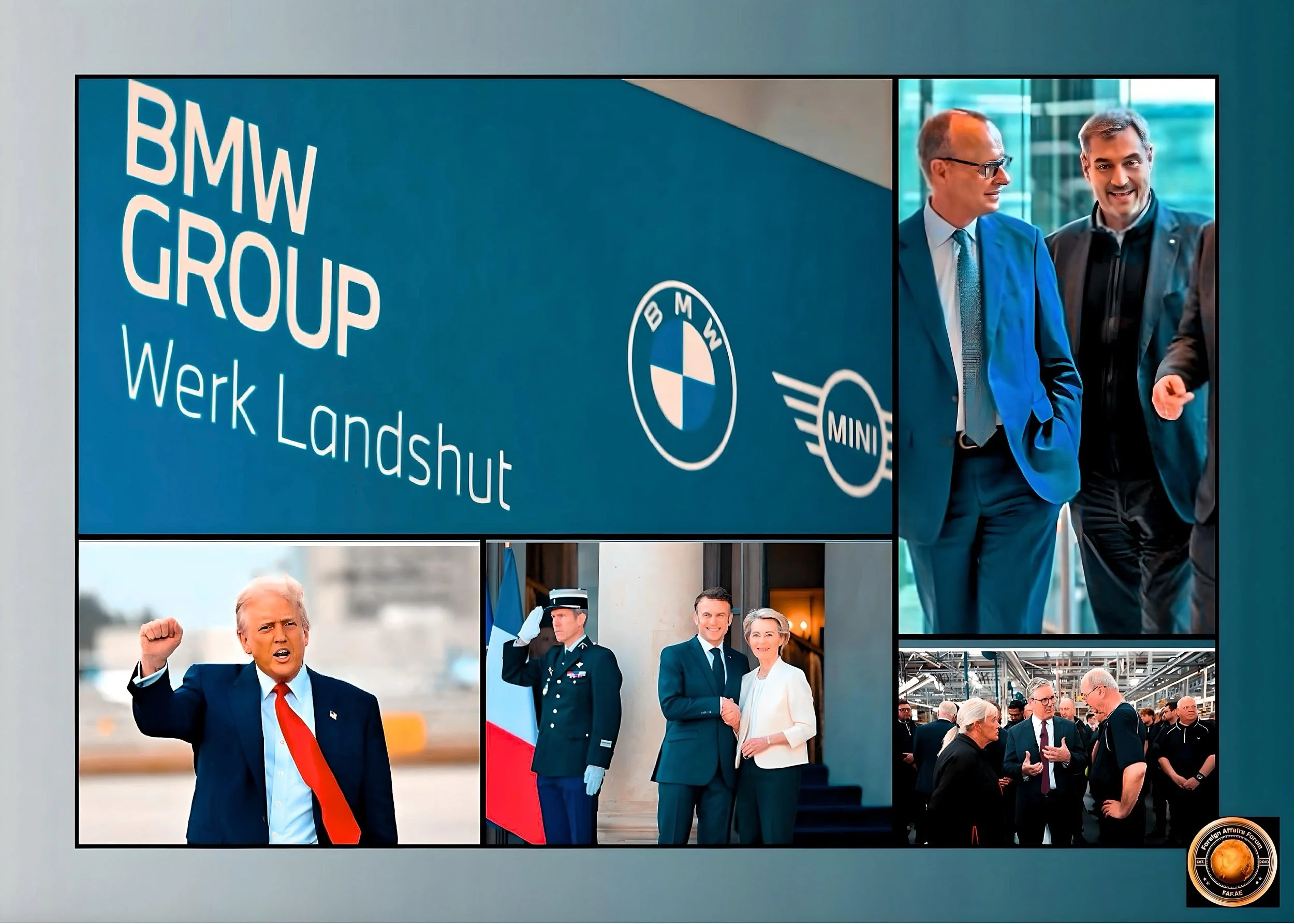
Major German automakers including BMW, Mercedes-Benz, Volkswagen, and Audi have seen their popular U.S. market presence jeopardized by the 25% tariff on imported vehicles and parts.
The severity of this impact is illustrated by the fact that the United States was Germany’s largest trading partner in 2024, with a trade volume of 253 billion euros in goods exchanged between the two nations.
Mercedes-Benz has emerged as a key player in attempting to negotiate solutions, with CEO Ola Kaellenius positioning the company as a “sounding board” in tariff discussions between the EU and the United States.
The company, along with BMW and Volkswagen, is actively engaged in discussions with Washington regarding potential import tariff agreements. One innovative proposal under consideration involves granting German automakers credits for vehicles they export from the United States, which could be offset against tariffs.
This approach reflects the integrated nature of German automotive operations, with Chancellor Merz noting that German automakers produce approximately 400,000 vehicles in the United States, roughly equivalent to their domestic production.
Manufacturing and Industrial Sectors
Beyond automotive, Germany’s broader manufacturing sector faces significant disruption from the tariff regime.
Mid-sized manufacturers exemplify the challenges facing the German industrial base, as demonstrated by Tornado Antriebstechnik GmbH, a gearbox manufacturer that ships 15% of its production to the United States.
The company’s general manager reported that they “simply can’t absorb these costs indefinitely” and have been forced to pass burdens onto customers.
More concerning, the company has placed U.S. expansion plans on hold and is “considering scaling back our American operations and refocusing our investments domestically”.
The steel and aluminum industries face particularly harsh treatment under Trump’s tariff structure, confronting 25% import duties that have disrupted long-established transatlantic supply chains.
These tariffs have been characterized by industry representatives as creating “new friction to long-established transatlantic supply chains” and representing “an unprecedented attack on free trade”.
The machinery and pharmaceutical sectors, traditionally strong German export industries, also face significant headwinds as they navigate the 10% blanket tariff on all goods and the potential for escalation.
German Leadership Response: Merz’s Diplomatic Strategy
Chancellor Merz’s Direct Engagement
German Chancellor Friedrich Merz has adopted a proactive diplomatic approach to address the tariff crisis, engaging directly with President Trump to seek negotiated solutions.
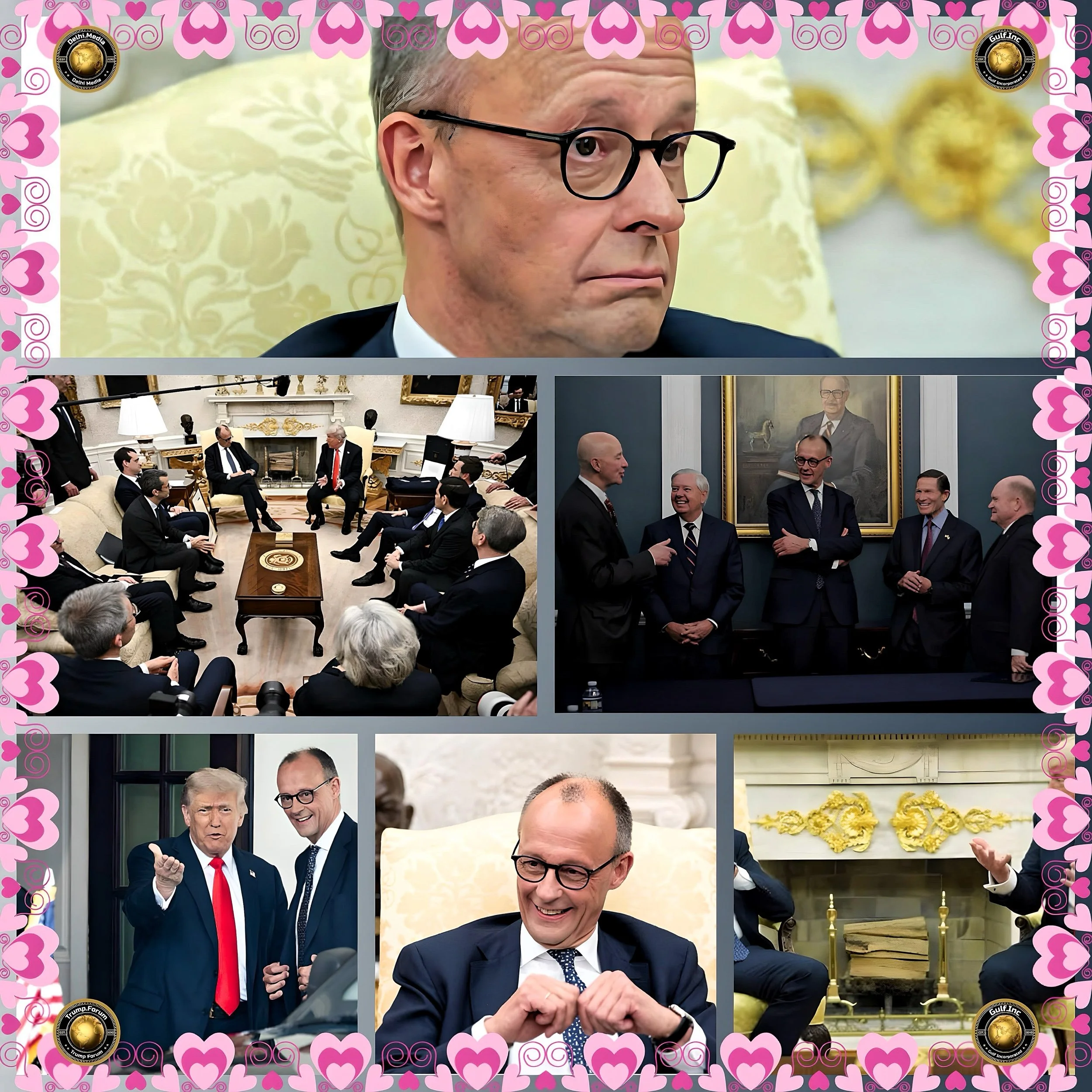
During his recent White House visit, Merz reported having “productive” discussions with Trump, during which they “agreed to strengthen cooperation on trade matters and other issues”.
Merz emphasized Germany’s readiness to take on a greater leadership role in future trade agreements, noting that while the European Union sets trade policy, “Germany had a significant role to play given the size of its exports”.
Merz’s strategy centers on highlighting the mutual benefits of German-American economic integration. He has pointed out to Trump that German automakers operate significant manufacturing facilities in the United States, producing vehicles that are sometimes exported back to Germany.
This balanced approach led Merz to propose: “Can we not acknowledge that for every car that is imported another car is exported by the same manufacturer and drop the tariffs?”. His optimistic assessment suggests potential for progress, though he acknowledges “we’re not yet at the goal line”.
Fundamental Economic Philosophy
At the core of Merz’s approach lies a strong commitment to free trade principles that directly contradicts Trump’s protectionist agenda. Merz has stated unequivocally that “free trade, open markets is the best thing for mutual wealth of our countries and of our continent”.
He views Trump’s tariffs as “really threatening Germany’s economy” and has made clear that Germany is actively “looking for ways to bring them down”. His vision for resolving the crisis is elegantly simple: “Let’s implement a 0% tariff rate on transatlantic trade, and that will resolve the issue”.
Merz has also emphasized the importance of European unity in confronting U.S. trade pressure. He characterized Trump’s 90-day pause on certain tariffs as evidence that “a united European approach to trade having a positive effect”.
This perspective reflects his belief that “Europeans are resolute in our commitment to protect ourselves, and this situation illustrates that solidarity is our greatest strength”.
European Union’s Coordinated Response
Negotiation Strategy and Timeline
The European Union has maintained a dual-track approach to the tariff crisis, simultaneously pursuing diplomatic solutions while preparing retaliatory measures.
European Trade Commissioner Maros Sefcovic has engaged directly with U.S. Trade Representative counterparts, with technical teams from the Commission conducting ongoing discussions throughout the crisis period.
The EU’s fundamental position remains clear: “We do not wish to pursue a path of tariffs. Instead of seeing them rise, we advocate for their reduction and, wherever feasible, their complete removal”.
The urgency of these negotiations is underscored by the approaching July 9 deadline set by Trump for reaching trade deals with the EU and other trading partners.
This deadline creates significant pressure for both sides, as failure to reach agreement could see tariffs on EU exports to the U.S. surge from the current 10% to as high as 50%. U.S. and EU officials met in Paris and reported that negotiations were “constructive and advancing quickly,” though substantial challenges remain.
Retaliatory Measures and Economic Leverage
While pursuing diplomatic solutions, the EU has prepared comprehensive retaliatory measures to demonstrate its resolve.
The European Commission has proposed countermeasures affecting up to 95 billion euros worth of U.S. imports if negotiations with Washington fail.
These potential actions would target a diverse range of American products, including wine, bourbon, various spirits, fish, aircraft, vehicles and their components, chemicals, electrical devices, health products, and machinery.
The EU’s retaliation strategy builds upon earlier responses to U.S. metal tariffs, where the bloc implemented tariffs of approximately 25% on U.S. imports valued at 21 billion euros, including corn, wheat, motorcycles, and apparel.
These tariffs were suspended following Trump’s 90-day pause, but would automatically activate if negotiations fail. European Commission President Ursula von der Leyen has emphasized that “the EU is entirely dedicated to achieving negotiated solutions with the U.S.,” while simultaneously “preparing for all eventualities”.
Legal Challenges and Strategic Advantages
The EU has gained additional leverage in negotiations following U.S. court challenges to Trump’s tariff authority. A U.S. appeals court’s questioning of the legality of Washington’s “reciprocal” tariffs has strengthened the EU’s negotiating position.
As one EU official noted, “The ambiguity regarding legality of ‘reciprocal’ certainly provides us with additional leverage”. This legal uncertainty has reinforced the EU’s confidence in maintaining its proposal for mutual elimination of tariffs on industrial products.
The Commission has also indicated its intention to file complaints with the World Trade Organization regarding U.S. tariffs, beginning with consultations between the involved parties.
This multilateral approach demonstrates the EU’s commitment to defending the rules-based international trading system while seeking bilateral solutions with the United States.
Conclusion
The tariff crisis between the United States and Germany represents a critical juncture for European economic stability and the future of transatlantic trade relations.
Germany’s potential slide into an unprecedented third consecutive year of recession would not only devastate Europe’s largest economy but could trigger broader economic instability across the continent.
The automotive industry’s vulnerability, combined with threats to manufacturing, steel, and other key sectors, illustrates how deeply integrated supply chains have become casualty to renewed trade protectionism.
Chancellor Merz’s diplomatic engagement with President Trump, while showing promise for dialogue, faces the fundamental challenge of reconciling incompatible economic philosophies.
Germany’s commitment to free trade and open markets stands in direct opposition to Trump’s protectionist agenda, though the mutual economic benefits of continued cooperation provide potential common ground.
The approaching July deadline creates both urgency and opportunity for breakthrough negotiations.
The European Union’s coordinated response demonstrates the value of multilateral approaches to trade disputes, while its prepared retaliatory measures signal determination to protect European economic interests.
As negotiations continue, the stakes extend far beyond immediate economic impacts to encompass the future architecture of international trade relations.
The resolution of this crisis will likely determine whether the post-war commitment to open markets and multilateral cooperation can survive in an era of renewed economic nationalism.