German Chancellor’s, Friedrich Merz, White House Visit and the Trump-Musk Feud: A Diplomatic Success Amid Political Turmoil
Introduction
The recent diplomatic encounter between German Chancellor Friedrich Merz and President Donald Trump on June 5, 2025, starkly contrasts the explosive public feud between Trump and Elon Musk that erupted simultaneously.
FAF, Washington.Media analysis shows that while Merz successfully navigated his inaugural White House visit as chancellor, establishing what appears to be a constructive working relationship with the American president, the Trump-Musk alliance dramatically collapsed in a series of public exchanges that dominated headlines and shook financial markets.
Merz’s Strategic Diplomatic Victory
A Carefully Orchestrated First Meeting
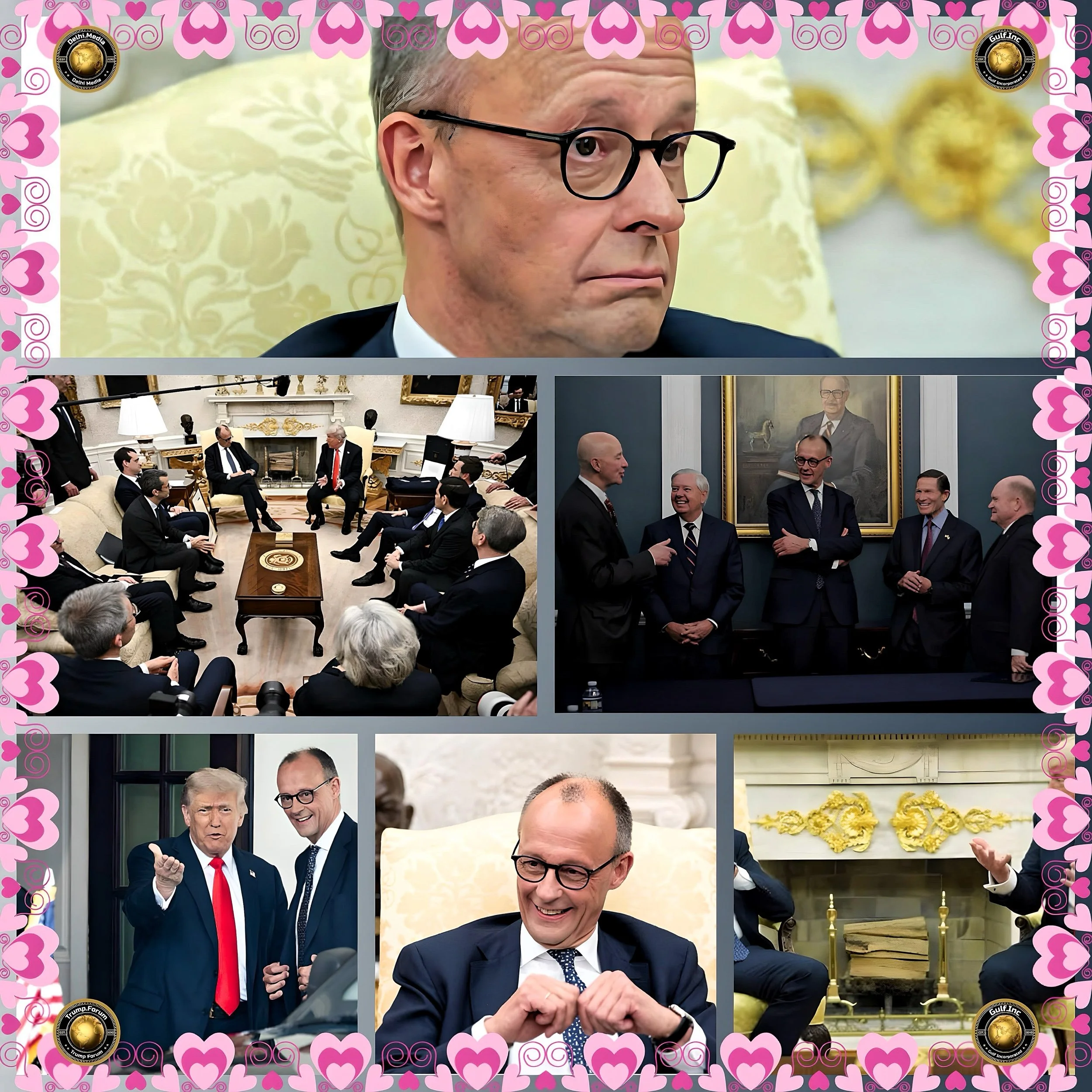
German Chancellor Friedrich Merz’s visit to the White House marked a significant diplomatic achievement, particularly given the challenging context of recent U.S.-European relations.
The meeting, which was Merz’s first face-to-face encounter with President Trump since assuming the chancellorship in May 2025, demonstrated a strategic approach to managing the unpredictable American leader.
Unlike previous encounters that resulted in public confrontations for leaders such as Ukrainian President Volodymyr Zelenskyy and South African President Cyril Ramaphosa, Merz emerged from the Oval Office with what he described as a productive and forthright discussion.
The personal touches that characterized the encounter indicated preparation for this meeting.
Merz presented Trump with a gold-framed birth certificate of the president’s grandfather, Friedrich Trump, who had immigrated from Kallstadt, Germany.
This gesture resonated with Trump, who described the gift as “fantastic” and promised to display it prominently.
The symbolic nature of this exchange highlighted Merz’s understanding of Trump’s interests and his ability to connect on a human level before addressing substantive policy issues.
The friendly dynamics between the two leaders were apparent throughout their public appearances.
Trump referred to Merz as a “very good man to deal with” and even joked during the press conference, “I’m not friends with anybody,” before pointing to Merz and adding, “I’m friends with you.”
This rapport was facilitated by several factors that positioned Merz favorably: his tall stature, excellent English, business background, and conservative political alignment that resonated with Trump’s preferences.
Key Policy Discussions and Outcomes
The substantive discussions covered three primary areas: Ukraine policy, NATO defense spending, and trade relations. On Ukraine, Merz articulated a significantly different stance from Trump’s, yet this divergence was handled diplomatically rather than confrontationally.
Metz emphasized that Russia was the aggressor and provocateur in the conflict, maintaining Germany’s support for Ukraine while acknowledging Trump’s role as a pivotal figure capable of exerting pressure on Russia.
The German chancellor reminded Trump of the historical significance of American intervention in Europe, referencing the upcoming D-Day anniversary and stating, “America is once again in a robust position to take action towards ending this war.”
Regarding NATO and defense spending, Merz successfully positioned Germany as a committed ally willing to increase its defense expenditures.
He has pledged to raise Germany’s defense spending to 3.5% of GDP, with an additional 1.5% dedicated to security-related infrastructure.
This commitment satisfied Trump’s long-standing criticism of European allies for insufficient defense contributions.
Trump welcomed this increase in Germany’s defense spending, though he suggested he would eventually cap Germany’s rearmament efforts.
On trade matters, perhaps the most contentious issue given Trump’s threats of 50% tariffs on EU goods by July 9, Merz and Trump agreed to strengthen cooperation and send officials to explore solutions.
Merz informed Trump that Germany, Europe’s largest economy, was prepared to assume a more significant leadership role in future trade negotiations.
The German chancellor’s business background, including his previous work at BlackRock, likely facilitated these discussions by providing common ground with the business-oriented Trump.
The Trump-Musk Alliance Collapses
The Origin and Escalation of the Conflict
While Merz successfully managed his diplomatic mission, a far more dramatic story unfolded in the relationship between Trump and Elon Musk.
The conflict erupted over Musk’s criticism of Trump’s signature legislative initiative, the “One Big Beautiful Bill Act.”
Musk’s measured criticism of the bill escalated into a full-scale public feud on social media platforms and in press conferences from June 5 to 6, 2025.
The breaking point came when Musk posted a 2013 tweet from Trump expressing disbelief over Republicans extending the debt ceiling, labeling it as “wise words,” directly contradicting Trump’s current position advocating for its complete elimination.
This marked Musk’s first direct criticism of Trump personally, rather than just his policies. The timing was particularly striking, as it occurred while Trump met with Chancellor Merz in the Oval Office.
Trump’s response during the press conference with Merz revealed his disappointment and confusion over Musk’s sudden opposition. “Elon and I had a great relationship. I don’t know if we will anymore,” Trump stated, suggesting that Musk was suffering from “Trump derangement syndrome.”
He accused Musk of being aware of all aspects of the bill and never having objections until leaving his government position.
The Financial and Political Ramifications
The public nature of this conflict had immediate and substantial financial consequences.
Tesla’s stock plummeted 14% during the dispute, erasing all gains made in May and representing the 11th-worst trading day for the electric vehicle manufacturer since its IPO. Musk’s estimated wealth decreased by $27 billion to $388 billion, though he maintained his status as the world’s richest person.
The broader market impact extended to cryptocurrencies, with Ethereum down 7%, Solana falling 6%, and the Musk-backed dogecoin dropping 9%.
The escalation reached extraordinary levels as Musk made increasingly provocative statements.
He agreed with a user’s suggestion that Trump should be impeached and replaced by JD Vance, warned that Trump’s tariffs could lead to a recession, and even threatened to decommission SpaceX’s Dragon spacecraft that NASA uses for astronaut transport. Perhaps most controversially, Musk alleged without evidence that delays in releasing the “Epstein files” were due to Trump’s involvement.
The conflict revealed deeper issues within the Trump administration regarding policy direction and influence.
According to sources familiar with the relationship, Musk’s frustration stemmed from several factors, including removing electric vehicle tax credits from the bill, despite Tesla having spent at least $240,000 lobbying for the measure.
The Congressional Budget Office estimated that Trump’s bill would increase the federal debt by $2.4 trillion over the next decade, which directly contradicted Musk’s advocacy for fiscal responsibility.
Strategic Implications and Future Outlook
Merz’s Diplomatic Model for European Leaders
Chancellor Merz’s successful navigation of his Trump meeting provides a potential template for other European leaders seeking to maintain constructive relationships with the unpredictable American president.
His approach demonstrated several key elements: thorough preparation, personal touches that appeal to Trump’s interests, direct but respectful communication, and a willingness to find common ground while maintaining core positions.
Merz’s post-visit commentary emphasized the importance of engaging with Trump rather than talking about him. “Let’s cease talking about Donald Trump with a raised finger and a wrinkled nose.
You need to engage with him, not about him,” he stated upon returning to Berlin. This perspective suggests a pragmatic approach to transatlantic relations that prioritizes dialogue over confrontation, even when significant policy differences exist.
After the meeting, the German chancellor’s confidence was evident in his assessment that the American administration is “open to discussion, listens, and is willing to accept other opinions.”
This characterization contrasts Trump's more adversarial relationships with other world leaders, suggesting that Merz’s approach may have identified an effective strategy for productive engagement.
The Broader Context of U.S.-European Relations
The timing of Merz’s visit, coming ahead of the G7 summit in Canada and a NATO meeting in The Hague, positions Germany to play a crucial role in coordinating European responses to Trump’s policies.
With the July 9 deadline looming for threatened tariffs on EU goods, Merz’s establishment of working-level cooperation on trade issues could prove vital for preventing a trade war.
The contrast between Merz’s diplomatic success and the Trump-Musk conflict highlights the complex dynamics within the current American political landscape.
While Merz demonstrated that constructive engagement with Trump remains possible, the explosive nature of the Trump-Musk feud reveals the volatility and unpredictability that continue to characterize the administration.
Conclusion
The convergence of Chancellor Merz’s diplomatic triumph and the Trump-Musk conflict during the same 48-hour period illustrates the dual nature of contemporary American politics under Trump’s leadership.
Merz’s successful visit demonstrates that skilled diplomacy, careful preparation, and strategic relationship-building can still yield positive outcomes in U.S.-European relations, even amid broader tensions over trade, defense, and global security issues.
However, the spectacular breakdown of the Trump-Musk alliance serves as a reminder of the personal and unpredictable nature of Trump’s decision-making process.
The financial markets’ adverse reaction to their conflict and the policy implications of their disagreement over fiscal matters suggests that personal relationships continue to play an outsized role in American governance.
For European leaders, Merz’s approach offers a roadmap for engagement that balances pragmatic cooperation with principled positions on core issues.
As the international community prepares for upcoming summits and continued negotiations on trade, defense, and security matters, the German chancellor’s direct but respectful engagement model may prove increasingly valuable in maintaining transatlantic partnerships despite the challenges of Trump’s distinctive leadership style.