Wars Lost by the United States: A Comprehensive Analysis
Executive Summary
Title: Wars Lost by the United States: Insights and Analysis for Today’s Geopolitical Landscape
This comprehensive exploration delves into the conflicts where the United States faced significant setbacks, drawing from historical events to extract valuable lessons applicable to the contemporary geopolitical environment.
By examining wars such as Vietnam, Iraq, and Afghanistan, the analysis highlights the reasons for the failures in strategy, execution, and diplomacy.
In the Vietnam War, for example, the U.S. underestimated the resolve and ingenuity of the Viet Cong, leading to a prolonged conflict characterized by guerrilla warfare and a lack of clear objectives.
This study reflects on the importance of understanding local cultures and the implications of public opinion, both domestically and internationally.
Similarly, the invasions of Iraq in 2003 and Afghanistan in 2001 reveal critical errors in planning and post-war strategies.
The analysis scrutinizes the challenges faced in nation-building, the complexities of insurgency, and the ramifications of failing to secure a stable political environment following military intervention.
By synthesizing these historical lessons, this work aims to inform current policymakers and military strategists, emphasizing the necessity for a comprehensive understanding of the multifaceted nature of modern warfare and the geopolitical stakes involved in international engagements.
Introduction
The military history of the United States is marked by numerous conflicts, each reflecting varying degrees of success and failure. While often celebrated for its military prowess, the U.S. has encountered several notable defeats and strategic setbacks that have profoundly influenced its foreign policy and military doctrine.
FAF analysis delves into the significant wars and military engagements in which American forces fell short of their principal objectives.
Major Strategic Defeats
Vietnam War (1955-1975)
The Vietnam War is perhaps the most significant and universally acknowledged military defeat in American history.
The U.S. military engaged in numerous conventional battles, often emerging victorious and inflicting considerable casualties on the North Vietnamese Army and the Viet Cong.
However, despite these tactical victories, the overarching goal of preventing a communist takeover in South Vietnam remained unachieved.
The U.S. suffered approximately 58,220 military casualties, while estimates suggest that the combined losses for North Vietnamese and Viet Cong forces were several times greater.
Ultimately, the relentless pressure and discontent at home, coupled with the unsustainable financial toll of the conflict, compelled the U.S. to withdraw.
By July 1976, Vietnam was unified under a communist government, with neighboring countries Laos and Cambodia also succumbing to similar fates.
Afghanistan War (2001-2021)
The Afghanistan conflict, the longest military engagement in U.S. history, concluded with a stark reminder of significant strategic miscalculations.
On August 30, 2021, American troops completed their withdrawal after two decades of involvement which had cost an estimated $2.313 trillion. This prolonged war culminated in the Taliban swiftly retaking Kabul on August 15, 2021, just days before the final American exit.
The chaotic withdrawal was marked by "colossal failures" and unfulfilled promises, resulting in tragic loss of life, including over 180 Afghans and 13 U.S. service members.
Overall, the conflict claimed an estimated 243,000 lives, underscoring the devastating human cost of this prolonged military engagement.
War of 1812
The War of 1812 featured several attempts by American forces to invade British-held Canada, all of which ended in failure.
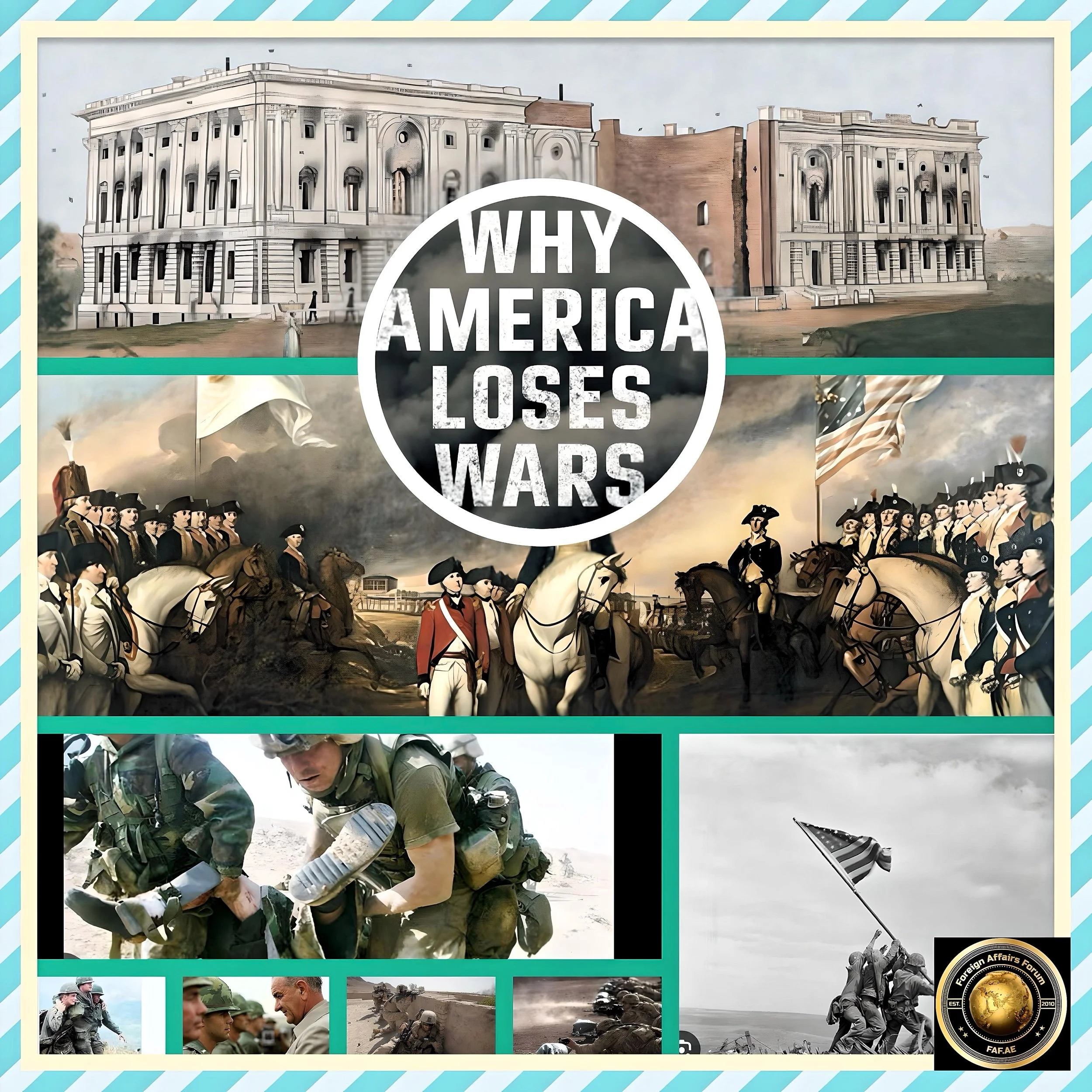
In a significant retaliatory move in 1814, British forces set fire to key structures in Washington D.C., including the White House, as a response to earlier American aggression against British territories in Canada.
The war concluded with the Treaty of Ghent, which simply restored the territorial status quo, neglecting the original grievances that had ignited the conflict. The American military's inability to capture any Canadian territory illustrated a pronounced failure to meet its war aims.
Early American Military Defeats
American-Algerian War (1785)
The American-Algerian War, one of the first military conflicts after the U.S. gained independence, resulted in a significant defeat for the nascent nation.
This conflict erupted in 1785 when the port of Algiers exploited the absence of protection from the Royal Navy for American merchant vessels, leading to the seizure of 53 ships and the capture of 180 American sailors.
Without a standing navy to defend its interests, the United States was coerced into negotiating a treaty that mandated the payment of an annual tribute of $21,600 to the Dey of Algiers to secure the release of its citizens.
This early setback prompted Congress to enact the Naval Act of 1794, which established the United States Navy to prevent such humiliations in the future.
Red Cloud’s War (1866-1868)
Red Cloud’s War is a notable conflict illustrating a significant victory for Native American forces against the U.S. military.
Sparked by the intrusion of settlers along the Bozeman Trail, which encroached upon traditional Sioux hunting grounds, renowned leader Red Cloud mobilized a coalition of Native warriors to resist U.S. expansion through guerrilla warfare.
The Fetterman Fight represented the war's largest engagement, resulting in the deaths of 81 U.S. soldiers, marking one of the greatest military losses for the American forces on the Great Plains before the notorious Battle of the Little Bighorn.
Ultimately, Red Cloud’s persistent resistance compelled the U.S. government to abandon their forts and acquiesce to the Sioux demands, culminating in the signing of the Sioux Treaty of 1868 — an unprecedented moment in American history where the government conceded all demands following a military defeat.
World War II Defeats
Philippines Campaign (1941-1942)
The Philippines Campaign is often cited as one of the most catastrophic defeats in U.S. military history during World War II. Around 23,000 American military personnel were either killed or captured, and a staggering 100,000 Filipino troops also faced defeat.
Initially, U.S. forces were positioned advantageously in terms of numbers; however, they suffered devastating losses as almost the entire contingent was either killed or taken prisoner, with only a handful managing to escape.
The American command, led by General Douglas MacArthur, was forced to retreat to Australia, leaving behind the overwhelming majority of forces that had been besieged.
The surviving soldiers endured horrific treatment as prisoners of war, subjected to grueling death marches through inhospitable jungles and brutal conditions during transport to Japan aboard "Hell Ships," where they faced forced labor in mines and factories.
Cold War Era Failures
Bay of Pigs Invasion (1961)
The Bay of Pigs invasion represents one of the most notable failures orchestrated by the CIA. This ill-fated military operation aimed at toppling Fidel Castro’s regime in Cuba was executed by a force of CIA-trained Cuban exiles. However, the invasion met with fierce resistance, and the lack of adequate U.S. military support eventually led to its failure, resulting in a significant embarrassment for the Kennedy administration and a lesson in the complexities of covert military operations.
Operation Eagle Claw (1980)
Operation Eagle Claw was a highly publicized but ultimately unsuccessful mission that aimed to rescue American hostages from the U.S. embassy in Tehran, Iran.
Ordered by President Jimmy Carter on April 24, 1980, this operation faced a myriad of significant challenges from the outset and culminated in its premature abandonment.
During the mission, U.S. forces utilized an elaborate plan that involved multiple military aircraft and personnel.
However, when the forces attempted to withdraw from a critical staging area known as Desert One, disaster struck.
One of the helicopters encountered mechanical difficulties and crashed into a transport aircraft on the ground, igniting a fiery explosion that obliterated both aircraft and tragically resulted in the deaths of eight servicemen.
The failure of Operation Eagle Claw had profound repercussions, striking a major blow to U.S. military prestige around the world.
The incident not only became a symbol of the limits of American military power but also played a significant role in President Carter's political downfall during the 1980 presidential election.
Battle of Mogadishu (1993)
The Battle of Mogadishu, often referred to as the “Black Hawk Down” incident, represented a crucial and disastrous tactical setback for U.S. military forces engaged in Somalia.
This intense and chaotic confrontation unfolded over the course of October 3-4, 1993, as American troops clashed with armed Somali militia fighters loyal to warlord Mohamed Farah Aidid.
During this fierce battle, Somali insurgents deployed rocket-propelled grenades (RPGs) to successfully shoot down three U.S. Black Hawk helicopters, a shocking turn of events that resulted in the deaths of 18 American soldiers and injuries to an additional 73 personnel.
The ground combat was characterized by urban warfare in the densely populated and hostile cityscape of Mogadishu, where U.S. forces found themselves overwhelmed and outmaneuvered.
The aftermath of the battle was devastating, with Somali civilian casualties estimated to range from 200 to as high as 3,000, highlighting the tragic human cost of the conflict.
This violent episode prompted the U.S. government to reassess its strategy, leading to the withdrawal of American forces from Somalia and signaling the end of active U.S. involvement in the region.
Patterns of Military Defeat
Strategic Overreach and Mission Creep
A common thread among many American military defeats is the tendency towards strategic overreach and mission creep.
Frequently, military engagements that commence with limited objectives escalate unexpectedly into full-scale warfare. In many cases, U.S. leadership has failed to conduct thorough assessments regarding the actual feasibility of achieving long-term success and victory.
The drawn-out conflict in Afghanistan has often been labeled as an extraordinary strategic failure.
Here, the U.S. fell short of establishing clear, meaningful strategic goals and neglected to adequately evaluate the manifold costs and risks associated with prolonged combat operations. This oversight left the American military struggling to discern its ultimate path forward in a complex and fluid environment.
Failed Host-Country Governance
Another hallmark of several military setbacks has been the issue of failed governance within host countries.
In various conflicts, including those involving Afghanistan, the U.S. grappled with ineffective local leadership and deep-seated ethnic, tribal, or religious divisions.
These internal conflicts were often beyond the military's capacity to rectify through force alone.
The international community’s ambitions in Afghanistan were far-reaching, aiming to achieve stability that extended far beyond merely degrading terrorist operations.
This situation underscores the necessity for future military interventions to continuously evaluate strategic interests, establish clear and attainable goals, and remain vigilant about the perils associated with mission expansion.
Conclusion
Throughout American history, the country has witnessed a series of military defeats, from early conflicts with Barbary pirates to the more recent interventions in Afghanistan.
These events underscore a significant lesson: military superiority alone does not guarantee strategic success, particularly when the underlying political objectives remain vague or unrealistic.
The recurrent pattern of extended military engagements concluded by withdrawals without achieving primary goals highlights the inherent limitations of military force in resolving complex political and social disputes.
These historical experiences have profoundly influenced subsequent U.S. foreign policy debates concerning military intervention, emphasizing the importance of having well-defined, achievable objectives before committing forces to armed conflict.