Nationalist Victory in Poland: Karol Nawrocki’s Presidential Win Reshapes Political Landscape
Introduction
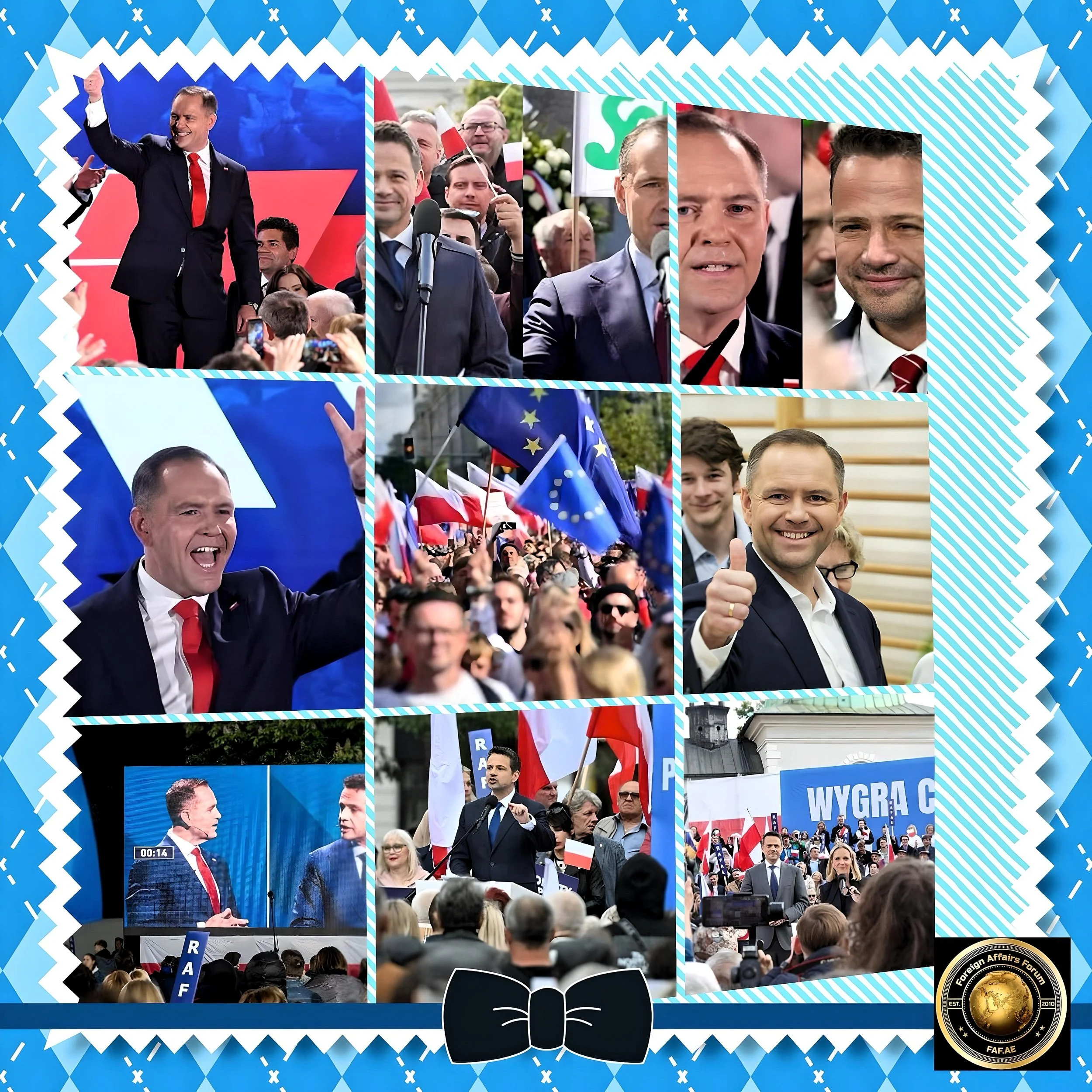
Karol Nawrocki, a conservative nationalist historian backed by Donald Trump, has secured a narrow but decisive victory in Poland’s presidential election, defeating liberal Warsaw Mayor Rafał Trzaskowski with 50.89% of the vote to 49.11% in a runoff held on June 1, 2025.
This outcome represents a significant political earthquake that will reverberate through Polish domestic politics, opposition strategies, and European Union relations for years to come.
The election, marked by an exceptionally high turnout of 71.6%, initially appeared to favor Trzaskowski based on early exit polls.
Still, the final results confirmed Nawrocki’s upset victory in what has become the closest presidential race in Polish history since the collapse of communism.
The Opposition’s Crushing Defeat and Strategic Implications
The victory devastates Prime Minister Donald Tusk’s pro-European Union government and the broader liberal opposition movement in Poland.
Trzaskowski, running as the candidate for Tusk’s Civic Coalition, was widely regarded as the favorite to win and had narrowly lost the previous presidential election in 2020 to outgoing President Andrzej Duda.
The defeat is harrowing because it maintains the Law and Justice Party’s (PiS) grip on the presidency despite losing parliamentary control in 2023.
Nawrocki’s victory ensures that the mighty presidential veto power, which has been instrumental in blocking Tusk’s reform agenda, remains in the hands of the nationalist opposition for another five years.
This constitutional arrangement means that Tusk’s government will continue to face significant obstacles in implementing its legislative priorities, from judicial reforms to social liberalization measures.
The opposition PiS party has framed this election as “a referendum on the dismissal of the Tusk government,” with party lawmaker Jacek Sasin declaring that “the referendum on the dismissal of the Tusk government has been won.”
The electoral mathematics reveal the depth of the opposition’s challenge, as Nawrocki successfully consolidated support from far-right voters who had backed other candidates in the first round.
According to an analysis by Gazeta Wyborcza, 87.2% of voters who supported far-right candidate Sławomir Mentzen in the first round ultimately voted for Nawrocki.
In comparison, 92.6% of supporters of extreme-right politician Grzegorz Braun also backed the eventual winner.
This consolidation of the nationalist vote demonstrates the opposition’s ability to unite disparate right-wing factions around a single candidate.
This strategy could prove crucial in future parliamentary elections scheduled for 2027.
Domestic Implications for Poland’s Political Future
Nawrocki’s presidency promises to usher in significant political gridlock and institutional tension within Poland’s governmental system.
The new president is expected to follow the model established by his predecessor, Andrzej Duda, by using his constitutional powers to veto legislation proposed by the Tusk government systematically.
This will particularly impact attempts to reform the judiciary, which the European Union has criticized as compromised during PiS’s previous eight-year rule, and efforts to liberalize Poland’s restrictive abortion laws, among the strictest in Europe.
The economic implications of the electoral outcome became immediately apparent as financial markets reacted negatively to Nawrocki’s victory.
Poland’s main stock index fell more than 2% in early trading, while the zloty currency weakened against the euro as investors anticipated prolonged political paralysis.
This market response reflects concerns about legislative gridlock hampering economic reforms and potentially affecting Poland’s relationship with European Union institutions and funding mechanisms.
Nawrocki’s domestic agenda centers on defending traditional Polish values and national sovereignty.
His campaign emphasized prioritizing Polish citizens over foreign nationals, including Ukrainian refugees who have fled to Poland since Russia’s invasion.
This nationalist messaging resonated with a significant portion of the electorate, particularly in rural areas and among older voters who have grown skeptical of European integration and liberal social policies.
The new president’s background as a historian and former head of a national remembrance institute has raised concerns about his approach to historical narratives, particularly regarding Holocaust remembrance.
Some observers have characterized aspects of his campaign as involving Holocaust revisionism, though the extent and nature of these positions remain subjects of debate.
His presidency will likely emphasize patriotic education and national memory projects aligning with conservative Polish history interpretations.
European Union Relations and Geopolitical Consequences
Nawrocki’s victory represents a significant setback for the European Union’s efforts to bring Poland back into the European mainstream following years of tension during PiS rule.
Prime Minister Tusk had positioned his government as committed to reversing the judicial and democratic reforms that led to conflicts with Brussels. Still, the new president’s veto power will severely constrain these efforts.
European Commission President Ursula von der Leyen has diplomatically expressed her confidence that the EU can continue “excellent cooperation” with Poland.
Still, fundamental reforms will likely be blocked for Nawrocki’s term.
The election outcome has broader implications for the balance of power within the European Union, particularly given Poland’s growing economic and military significance.
Since joining the EU in 2004, Poland has experienced remarkable economic growth and now boasts defense spending approaching 5% of GDP, nearly double the amount from 2022.
With a population of 37 million and military forces larger than those of the United Kingdom, France, and Germany, Poland’s political direction significantly influences European geopolitics.
The victory has energized nationalist and eurosceptic movements across Europe, with leaders like Hungary’s Viktor Orbán and Czech opposition leader Andrej Babis praising the result.
This comes at a time when centrist forces had appeared to be gaining momentum following recent electoral victories in Romania and Portugal, making Poland’s turn toward nationalism particularly significant for European political trends.
Nawrocki’s presidency also questions Poland’s future relationship with European integration projects.
His campaign rhetoric emphasized skepticism toward deeper EU integration and support for maintaining national sovereignty against what he characterizes as Brussels’ overreach.
This stance could complicate EU decision-making processes and potentially influence other member states considering similar nationalist approaches.
Ukraine Relations and NATO Implications
One of the most consequential aspects of Nawrocki’s presidency will be its impact on Poland’s support for Ukraine in its war against Russian aggression.
While Nawrocki has stated his support for continuing aid to Ukraine, he has explicitly opposed Ukraine’s membership in NATO, a position that differs significantly from that of the Tusk government.
This opposition stems partly from what analysts describe as a reaction to perceived disrespect from Ukrainian President Volodymyr Zelensky toward outgoing Polish President Andrzej Duda, including Zelensky’s 2023 speech at the UN General Assembly, where he compared Poland to Russia.
The implications for NATO and transatlantic relations are complex, as Nawrocki has emphasized his support for the alliance and strong ties with the United States, particularly with the Trump administration.
NATO Secretary-General Mark Rutte congratulated Nawrocki and expressed confidence in continued cooperation to strengthen the alliance against Russian threats.
However, the president-elect’s opposition to Ukrainian NATO membership could complicate Western unity on this crucial issue.
Nawrocki’s campaign received notable support from Trump administration officials, including praise from Homeland Security Secretary Kristi Noem at the Conservative Political Action Conference in Poland.
This alignment with Trump’s approach to international relations suggests that Poland under Nawrocki may prioritize bilateral relationships with Washington over multilateral European frameworks, potentially creating tensions within NATO and EU structures.
Conclusion
Karol Nawrocki’s narrow victory in Poland’s presidential election represents a watershed moment that will reshape the country’s political trajectory and its relationships with European and international partners.
For the opposition, the defeat represents not just a lost opportunity but a fundamental challenge to their strategy of European integration and liberal reform.
Continuing nationalist control over the presidency ensures that Poland will remain politically divided and institutionally gridlocked for the foreseeable future.
The implications extend far beyond Poland’s borders, potentially energizing nationalist movements across Europe and complicating EU efforts to maintain unity on crucial issues ranging from Ukraine support to democratic reforms.
Financial markets have already signaled their concern about prolonged political paralysis.
At the same time, European leaders face the challenge of maintaining productive relationships with Poland that may increasingly chart an independent course.
The 2027 parliamentary elections will determine whether this nationalist resurgence can be sustained or represents a temporary setback for European integration forces.
Nawrocki’s presidency will test whether nationalist populism can deliver its promises while maintaining Poland’s strategic relationships with NATO and EU partners.
The outcome of this political experiment will likely influence similar movements across Central and Eastern Europe, making Poland again a pivotal player in determining the future direction of European democracy and integration.