Israel’s Long Road to Regional Dominance: From Arab Defeat to Iranian Confrontation
Introduction
Israel’s trajectory from a vulnerable new state to the dominant military power in the Middle East represents one of the most remarkable transformations in modern geopolitical history.
FAF, Riyadh.Media study reveals this ascent, spanning over seven decades, has unfolded in two distinct phases: first, establishing overwhelming superiority over Arab neighbors, then extending that dominance to confront Iran, the region’s last major opposing force.
The Foundation: Early Struggles and Cold War Alignment
Israel’s path to regional dominance began with a crucial strategic decision in 1948—aligning with the United States during the emerging Cold War.
This choice proved decisive as Arab states largely partnered with the Soviet Union, creating a technological and military divide that would shape the region for decades.
The early years were precarious. During the 1973 Yom Kippur War, Egypt and Syria, equipped with advanced Soviet weaponry, including T-62 tanks and SA-9 surface-to-air missiles, came remarkably close to defeating Israel.
The Soviet Union had provided approximately $2.8 billion in military aid to Arab states since the mid-1950s, with Egypt receiving over $1.4 billion alone. This near-defeat represented the last existential threat Israel would face from Arab nations.
The Turning Point: Camp David and Arab Military Stagnation
The 1979 Camp David Accords, orchestrated by President Jimmy Carter, marked a fundamental shift in regional dynamics.
Egypt’s peace treaty with Israel eliminated the most capable Arab military force from the equation, providing Israel with the strategic breathing room necessary to build its technological capabilities in coordination with the United States.
As one former CIA officer noted, “Obviously, as the Soviets lost steam and the capacity for military innovation, so went the Arabs. When the Soviets fell, the game was up”.
The collapse of the Soviet Union in 1991 left Arab militaries without their primary patron and source of advanced weaponry. Arab states found themselves increasingly isolated and technologically stagnant while Israeli-American cooperation flourished.
Military Technological Supremacy
Air Power Revolution
Israel’s air force has evolved into one of the world’s most capable, operating approximately 340 aircraft, including 39 advanced F-35I stealth fighters, 75 F-15s, and nearly 200 F-16s.
The F-35I “Adir” represents a revolutionary advancement. It features unprecedented Israeli modifications that no other F-35 operator has been permitted to implement.
These modifications include replacing standard electronic warfare systems with Israeli-developed technology, integrating indigenous weapons systems, and adding specialized Middle Eastern operational optimizations.
The aircraft can conduct missions exceeding 1,700 kilometers without aerial refueling and features electronic warfare systems specifically designed to counter Russian S-400 and Iranian air defense systems.
Nuclear Deterrent
Israel’s nuclear capabilities, developed likely around 1966-67, provide the ultimate strategic deterrent.
Current estimates suggest Israel possesses between 90 and 400 nuclear warheads, deliverable by Jericho missiles, F-35 fighter jets, and Dolphin II submarines.
This nuclear arsenal ensures no regional power can match Israel’s ultimate destructive capability.
Intelligence Superiority
Israeli intelligence operations, particularly those conducted by Mossad, have demonstrated unprecedented sophistication.
Recent operations in Iran involved infiltrating agents who assembled weapons in safe houses over months, establishing front companies, and recruiting networks of operatives—some unwittingly—to facilitate strikes deep within Iranian territory.
The Iranian Challenge: A New Phase of Dominance
Direct Confrontation Begins
The conflict with Iran entered a new phase following Hamas’s October 7, 2023 attacks, which killed 1,195 people, including 736 Israeli civilians and 379 security force members.
Hamas, as an Iranian proxy, had launched over 4,300 rockets in the initial assault, marking the deadliest day in Israeli history.
Israel’s response demonstrated its evolved capabilities.
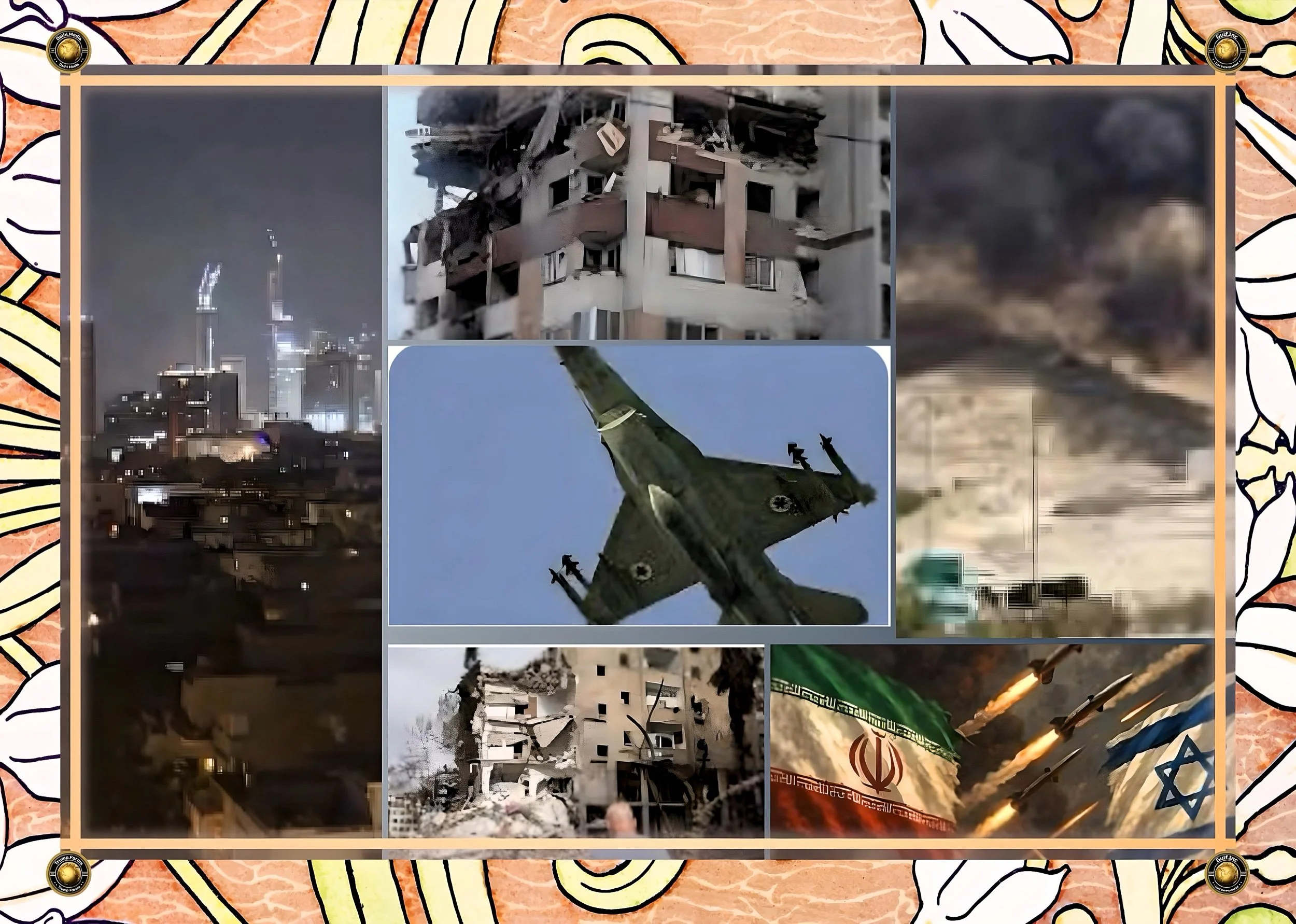
The June 13, 2025, attacks on Iran, designated “Operation Rising Lion,” targeted Iran’s nuclear facilities, military installations, and leadership.
Within 48 hours, Israel claimed to have established air superiority over Tehran, using over 200 aircraft, reportedly without losing a single plane.
Technological Gaps Exposed
Iran’s military limitations became starkly apparent during the 2025 conflict.
Despite possessing an estimated nuclear breakout time of nearly zero—meaning Iran has sufficient enriched uranium for up to nine nuclear weapons if further enriched to 90%—the country’s air defenses proved inadequate against Israeli strikes.
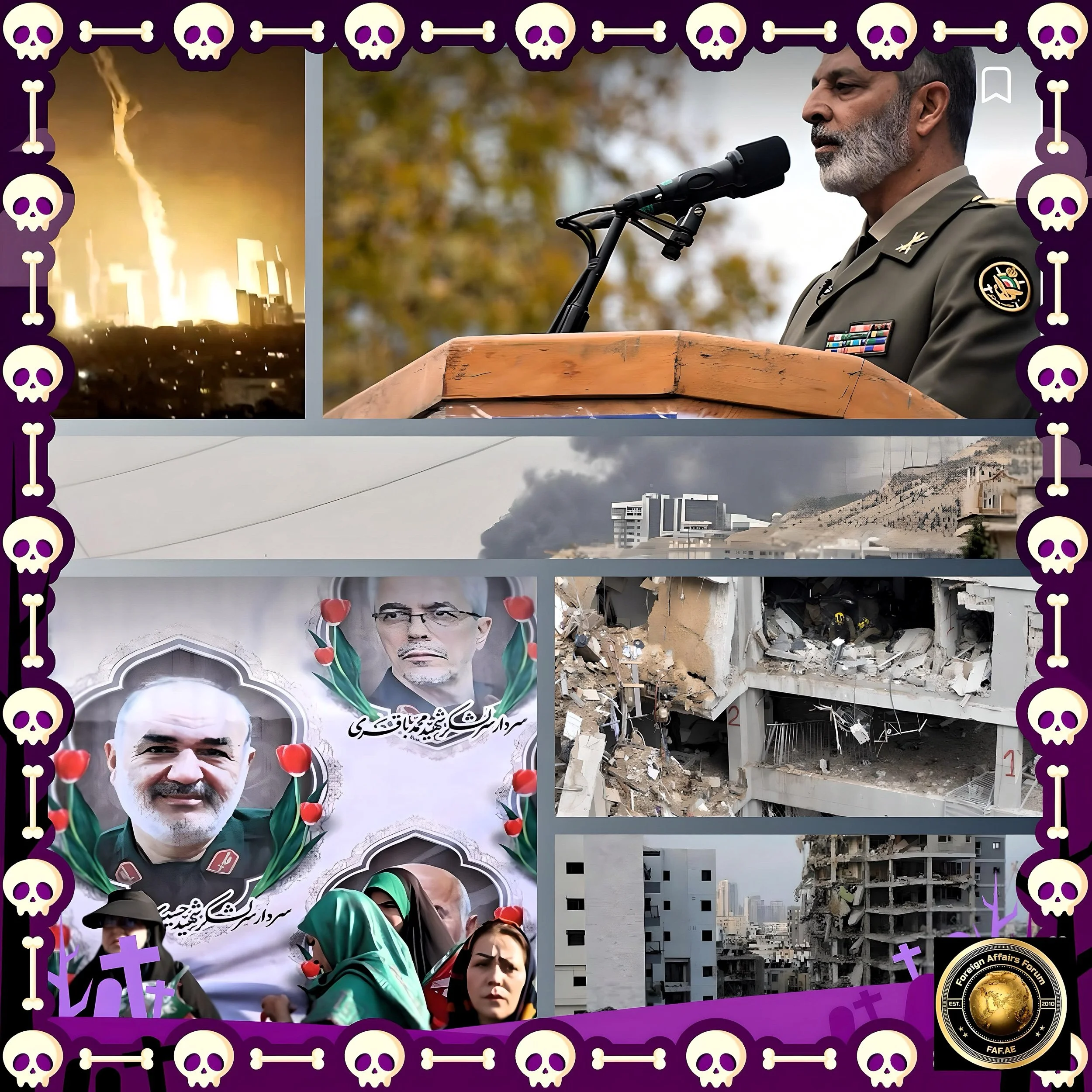
Israeli forces systematically dismantled Iran’s air defense network, destroyed 120 surface-to-surface missile launchers (representing 30% of Iran’s total), and successfully struck hardened nuclear facilities, including Natanz and Fordow.
The technological disparity that emerged between Israeli and Arab forces during the Cold War’s end now characterizes the Israel-Iran confrontation.
The Persistent American Dependency
Financial and Military Support
Despite its regional dominance, Israel remains heavily dependent on U.S. support. Since October 7, 2023, the United States has provided a record $17.9 billion in military aid to Israel, with an additional $4.86 billion spent on regional military operations.
This represents the continuation of a relationship that has seen nearly $318 billion in total U.S. aid to Israel since World War II.
Trump’s Dilemma
President Trump faces a critical decision that could determine the conflict’s trajectory.
His administration has oscillated between diplomatic engagement and military escalation, initially denying involvement in Israeli operations before claiming “total control of the skies over Iran.”
Trump’s stated preference for negotiation conflicts with Israeli objectives of regime change in Tehran.
The challenge for Trump lies in balancing competing pressures: supporters who oppose further Middle Eastern entanglements versus Israeli requests for assistance in potentially striking Iran’s most hardened nuclear facility at Fordow.
Some Israeli officials anticipate Trump joining the offensive, stating, “We would be amazed if the Americans don’t join the offensive. We assess that it’s not a question of if—but of when.”
Regional Implications and Future Prospects
Proxy Network Degradation
Israel has systematically degraded Iran’s regional proxy network.
Hamas suffered devastating losses in Gaza, while Hezbollah’s leadership was decimated through sophisticated operations, including exploding pagers and walkie-talkies that killed at least 42 people and wounded over 3,500.
The November 2024 ceasefire with Hezbollah required the group to withdraw north of the Litani River, effectively neutering its threat to northern Israel.
Syrian Power Vacuum
The fall of Assad’s regime in Syria created additional opportunities for Israeli operations.
Former Syrian soldiers, demoralized and underpaid at approximately $35 monthly, abandoned positions as rebels advanced. Israel has exploited this chaos to conduct strikes against weapons depots and prevent Iranian-aligned forces from establishing footholds.
Conclusion: Dominance Achieved, Alliance Essential
Israel’s evolution from regional underdog to Middle Eastern hegemon represents a masterpiece of strategic planning, technological innovation, and alliance management.
The nation has successfully neutralized threats from Arab neighbors and now demonstrates overwhelming superiority over Iran, its last primary regional challenger.
However, this dominance remains contingent on American support.
The current Iran conflict illustrates how Israeli military superiority, while remarkable, cannot achieve ultimate strategic objectives without U.S. backing.
Trump’s decision to escalate or negotiate will likely determine the war’s outcome and the broader regional order.
Israel’s long road to regional dominance may be nearing completion, but the final destination remains dependent on choices made in Washington rather than Jerusalem.
The nation that transformed itself from David to Goliath still requires its superpower ally to secure lasting strategic victory.