Pope Leo XIV- Trump : Background, Reaction, and Relationship Analysis
Introduction
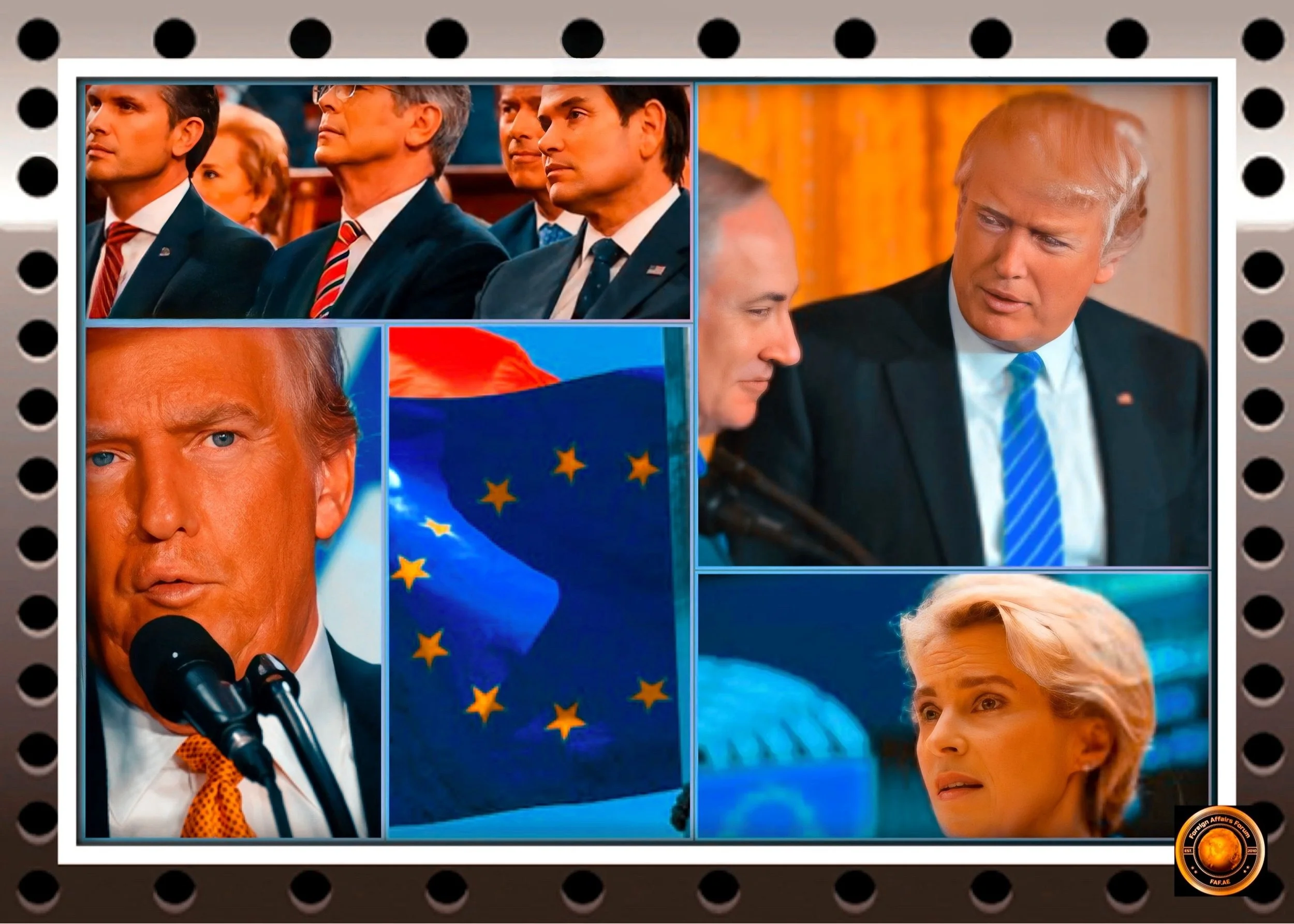
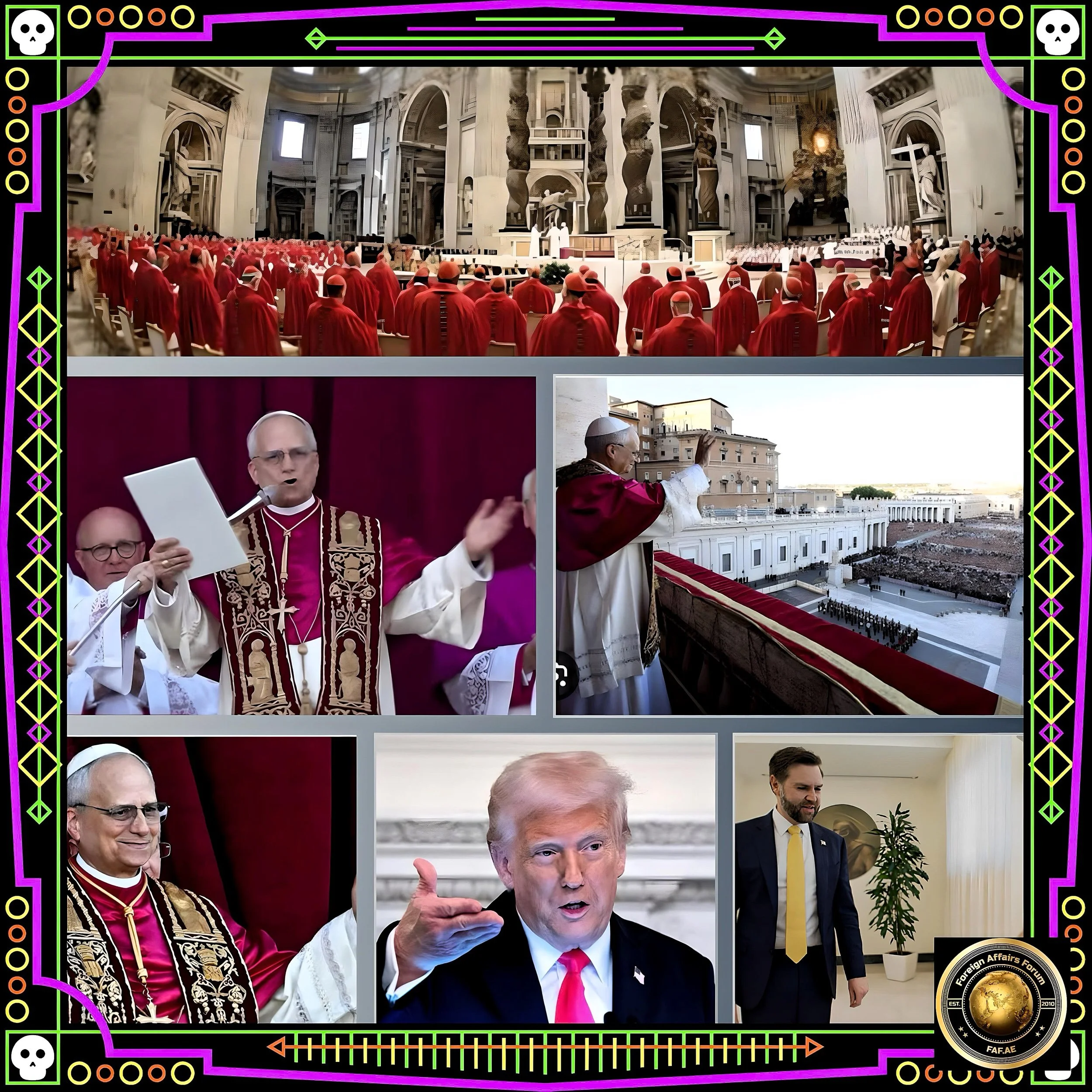
Pope Leo XIV’s historic election as the first American pontiff has generated significant attention worldwide. U.S. President Donald Trump expressed enthusiasm about a meeting with the new Catholic leader.
While Trump has openly welcomed the election with patriotic pride, the relationship between the two figures appears complex when examining Pope Leo’s past commentary on Trump administration policies.
FAF examines Trump’s reaction to the papal election, what we know about any planned meeting, and the historical context of Pope Leo’s views on Trump’s policies before ascending to the papacy.
Trump’s Enthusiastic Reaction to the First American Pope
President Donald Trump responded to Pope Leo XIV’s election with unmistakable national pride, framing the historic moment through a lens of American achievement. “Congratulations to Cardinal Robert Francis Prevost, who was just named Pope.
It is an honor to realize he is the first American Pope. What excitement, and what a Great Honor for our Country,”
Trump posted on his Truth Social platform following the announcement.
The president referenced his desire for a future meeting“I look forward to meeting Pope Leo XIV.
It will be a significant moment!”. Trump’s celebratory response underscores the unprecedented nature of having an American elected to the papacy, breaking centuries of European and, more recently, Latin American leadership of the Catholic Church.
In comments to reporters outside the West Wing, Trump amplified his positive sentiments, rhetorically asking, “What greater honor can there be?”.
He acknowledged some surprise at the selection while emphasizing his happiness about the outcome.
When specifically questioned about meeting plans, Trump provided a more measured response, indicating that while immediate plans weren’t in place, preliminary communications had already occurred, saying, “Not in the near future they have already spoken to us and we’ll see what happens”.
Trump’s reaction represents a significant moment in U.S.-Vatican relations, potentially setting the stage for a historic meeting between the American president and the first American pope.
Pope Leo XIV’s Previous Criticism of Trump Policies
Despite Trump’s enthusiastic reception of Pope Leo’s election, the new pontiff has a documented history of criticizing Trump administration policies, particularly regarding immigration.
Before his elevation to the papacy, when he was still Cardinal Robert Prevost, the Chicago-born cleric used his verified X (formerly Twitter) account @drprevost to amplify critiques of Trump’s approach to immigration and border security.
As recently as April 2025, just weeks before his election as pope, Prevost shared content questioning Trump’s meeting with El Salvador President Nayib Bukele regarding deportation policies, retweeting a message that asked, “Do you not see the suffering? Is your conscience not disturbed? How can you stay quiet?”.
Throughout Trump’s first administration, Cardinal Prevost engaged actively in political commentary related to immigration policies.
In 2017, he retweeted a statement calling refugee bans “a dark hour of US history,” citing Chicago Archbishop Blase Cupich’s assertion that “the world is watching as we abandon our American values”.
The now-pope also shared content condemning Trump’s controversial “bad hombres” comment as fueling “racism and nativism,” and expressed support for the Deferred Action for Childhood Arrivals (DACA) program when its future was uncertain.
One particularly pointed retweet stated, “There is nothing remotely Christian, American, or morally defensible about a policy that takes children away from their parents and warehouses them in cages.
This is being carried out in our name and the shame is on us all”.
Cardinal Prevost also extended his critical commentary to Trump’s vice president, JD Vance.
In February 2025, he shared an article titled “JD Vance is wrong: Jesus doesn’t ask us to rank our love for others,” challenging Vance’s controversial Fox News comments suggesting Christians should prioritize love for family, neighbors, and fellow citizens above others.
This pattern of social media activity reveals that before becoming Pope Leo XIV, Cardinal Prevost was willing to publicly critique Trump administration policies he viewed as contradicting Catholic social teaching, particularly regarding the treatment of migrants and refugees.
Prospects for a Trump-Pope Leo Meeting
While Trump has expressed interest in meeting the new pontiff, details about when or if such a meeting might take place remain limited.
When directly questioned by reporters about meeting plans, Trump indicated no immediate timeline exists, stating only that preliminary communications had occurred and “we’ll see what happens”.
This measured response suggests both potential interest in a meeting and recognition of the diplomatic complexities involved in arranging such an encounter, especially given Pope Leo’s previous criticisms of Trump policies.
The prospect of a meeting between Trump and Pope Leo XIV carries particular significance given their previously divergent positions on immigration and refugee policies.
While sharing some common ground on issues like abortion opposition, their documented differences on immigration approach create a potentially challenging diplomatic scenario.
Political commentators have already begun speculating about the dynamics of any potential meeting, with former Labour Adviser Matthew Torbitt noting he would “love to be a fly on the wall for that discussion” between Trump and Pope Leo.
Despite these underlying tensions, both leaders have shown public willingness to engage, with Trump’s congratulatory message specifically mentioning his anticipation of a “very meaningful moment” when meeting the pontiff.
The historical significance of a meeting between the first American pope and the American president cannot be understated.
Trump’s administration has already begun framing the pope’s nationality as a matter of national pride, with the president declaring the selection “a great honor” for the United States.
Whether this shared nationality might help bridge policy differences remains uncertain, but it adds a unique dimension to the relationship that has no historical precedent in U.S.-Vatican diplomacy.
As both leaders navigate this unprecedented situation, the international community will be watching for signals about when and how such a historic meeting might unfold.
Background on Pope Leo XIV
Understanding the potential dynamics of any Trump-Pope Leo meeting requires examining the new pontiff’s background and career path.
Robert Francis Prevost was born on September 14, 1955, in Chicago, Illinois, to Louis Marius Prevost (of French and Italian descent) and Mildred Martínez (of Spanish descent).
His early education included studying at an Augustinian minor seminary before earning a bachelor’s degree in mathematics from Villanova University in Pennsylvania in 1977.
He subsequently entered the novitiate of the Order of St. Augustine, making his solemn vows in 1981 and receiving ordination as a priest on June 19, 1982.
Pope Leo’s international experience is extensive, particularly in South America, where he spent significant portions of his ecclesiastical career.
He served as a missionary in Peru beginning in 1985, eventually becoming bishop of Chiclayo, Peru, where he remained from 2014 until 2023.
His connection to Peru is so significant that he obtained Peruvian citizenship in 2015, making him a dual citizen of both the United States and Peru.
This international background may have helped overcome traditional reluctance to select an American pope, as Cardinal Prevost’s extensive missionary work demonstrated his global perspective beyond U.S. interests.
Prior to his election as pope, Cardinal Prevost held several significant leadership positions within the Catholic Church.
He served as prior general of the Augustinian order for two consecutive terms, providing him with extensive organizational leadership experience.
In 2023, Pope Francis appointed him as Prefect of the Dicastery for Bishops, a highly influential Vatican position responsible for evaluating and recommending candidates for bishop appointments worldwide.
This combination of American heritage, South American missionary experience, and Vatican leadership positioned Cardinal Prevost as a bridge figure between different regions of the Catholic Church, ultimately contributing to his historic election as the first American pope.
Conclusion
President Trump’s enthusiastic response to the election of Pope Leo XIV reflects the historic significance of the first American pope, though the relationship between the two leaders carries underlying complexities.
Trump has framed the election through a lens of national pride and expressed clear interest in a future meeting, while Pope Leo’s previous criticism of Trump administration policies, particularly regarding immigration, suggests potential areas of disagreement.
The dual citizenship and international experience of Pope Leo XIV provide him with a unique perspective that transcends purely American interests, potentially facilitating dialogue despite these differences.
As both leaders navigate this unprecedented moment in U.S.-Vatican relations, the international community will be watching closely for indications of when and how a historic meeting might occur.
While preliminary communications have reportedly taken place, no immediate plans have been announced.
The eventual meeting, should it occur, would represent a significant diplomatic moment between two leaders with shared nationality but potentially divergent policy views.
Their ability to engage constructively could influence not only U.S.-Vatican relations but also broader international approaches to issues like immigration, climate change, and social justice where religious and political leadership intersect.