Is American offshoring AI to the Middle East: Lessons from Oil Dependence
Introduction
In 1867, William Seward’s purchase of Alaska from Russia for $7.2 million was widely derided as “Seward’s Folly.”
Initially mocked as wasteful, this acquisition has since generated over $180 billion in oil and gas revenue for Alaska, demonstrating remarkable strategic foresight.
Today, as the United States has largely freed itself from Middle Eastern oil dependence through domestic production, a new concern emerges: the potential creation of strategic vulnerabilities by offshoring American AI capabilities to the Middle East.
FAF report examines the historical parallels between these situations, arguing that lessons from America’s energy history should inform its approach to maintaining technological sovereignty in the AI era.
From Folly to Fortune: Alaska’s Strategic Resource Legacy
Secretary of State William Seward negotiated the acquisition of Alaska from Russia in 1867 for $7.2 million – approximately 2 cents per acre. At the time, critics ridiculed this purchase, dubbing it “Seward’s Folly” as they perceived Alaska as a remote, frozen wasteland with little value.
Senator Charles Sumner, however, saw potential benefits and believed the purchase would force Great Britain out of the region.
History has thoroughly vindicated Seward’s vision. The discovery of oil in Alaska began in 1902, with the first commercial production near Katalla, leading to the territory’s first refinery.
However, the proper validation came with the discovery of the Swanson River oil field in 1957, described as “the true beginning” that sparked Alaska’s oil industry after 165 consecutive unsuccessful wells had been drilled in the territory.
Since achieving statehood in 1959, Alaska’s oil and gas industry has generated over $180 billion in total revenue.
The establishment of the Alaska Permanent Fund in 1976 ensured that at least 25% of all mineral lease rentals, royalties, and related proceeds would be preserved for future generations.
The first deposit into this fund in 1977 was a modest $734,000, but it has since grown into a massive sovereign wealth fund worth approximately $64 billion as of 2019.
This transformation from “folly” to fortune demonstrates the immense strategic value of securing domestic resource capabilities, even when their immediate benefits aren’t obvious.
The return on investment has been orders greater than the original purchase price.
The Heavy Cost of Middle Eastern Oil Dependence
Throughout much of the 20th century, the United States faced growing dependence on foreign oil, particularly from the Middle East.
This dependency created profound vulnerabilities that became painfully apparent during the 1973 Oil Embargo when Arab members of OPEC banned petroleum exports to the United States in retaliation for U.S. support of Israel during the Arab-Israeli War.
The consequences were severe and far-reaching.
Oil prices first doubled, then quadrupled, imposing skyrocketing costs on consumers and creating structural challenges to the stability of the U.S. economy.
The embargo coincided with the dollar's devaluation, exacerbating its global economic impact.
This crisis revealed how deeply American economic security had become intertwined with Middle Eastern geopolitics.
For decades, U.S. foreign policy was heavily influenced by oil interests, leading to complex and sometimes problematic relationships with Middle Eastern regimes.
In 1957, President Eisenhower explicitly stated that the Middle East would be “a prize for international communism” and requested economic and military support for nations “manifestly dedicated to preserving independence.”
Following the 1953 overthrow of Iranian Prime Minister Mohammad Mossadeq-aided by British and U.S. intelligence, the U.S. government worked with oil majors to bring Iranian oil back online under a consortium of mainly U.S. companies.
This era of dependence offers crucial lessons about the strategic risks of relying on foreign nations for critical resources.
The vulnerabilities extended beyond economic concerns to fundamentally shape military deployments, diplomatic priorities, and national security strategy for generations.
Breaking Free: America’s Path to Energy Independence
After decades of vulnerability, the United States has radically transformed its energy position.
The shale revolution, enabled by technological innovations in hydraulic fracturing and horizontal drilling, has dramatically increased domestic oil and gas production.
By 2018, the United States became a net oil exporter, outpacing Saudi Arabia and Russia as the world’s largest oil producer.
This achievement marked the realization of a goal first articulated by President Richard Nixon in 1973 with Project Independence, which he placed “in the same league as the Manhattan Project and the space program.”
The International Energy Agency has noted that “the shale boom has transformed the United States into the world’s top oil and gas producer and a leading exporter of fuels.”
This newfound energy independence has provided the United States greater geopolitical flexibility and reduced its exposure to oil price volatility driven by Middle Eastern politics.
As a result, U.S. energy policy has shifted “from a mindset of scarcity to one seeking to maximize the benefits of energy abundance.”
The domestic oil industry accounts for approximately one-quarter of Alaska's jobs and about one-half of the overall state economy.
The journey from dependence to independence in energy offers valuable insights about the importance of developing and maintaining domestic capabilities in strategically vital sectors – lessons directly applicable to emerging technologies like artificial intelligence.
The New Frontier: Middle Eastern AI Ambitions
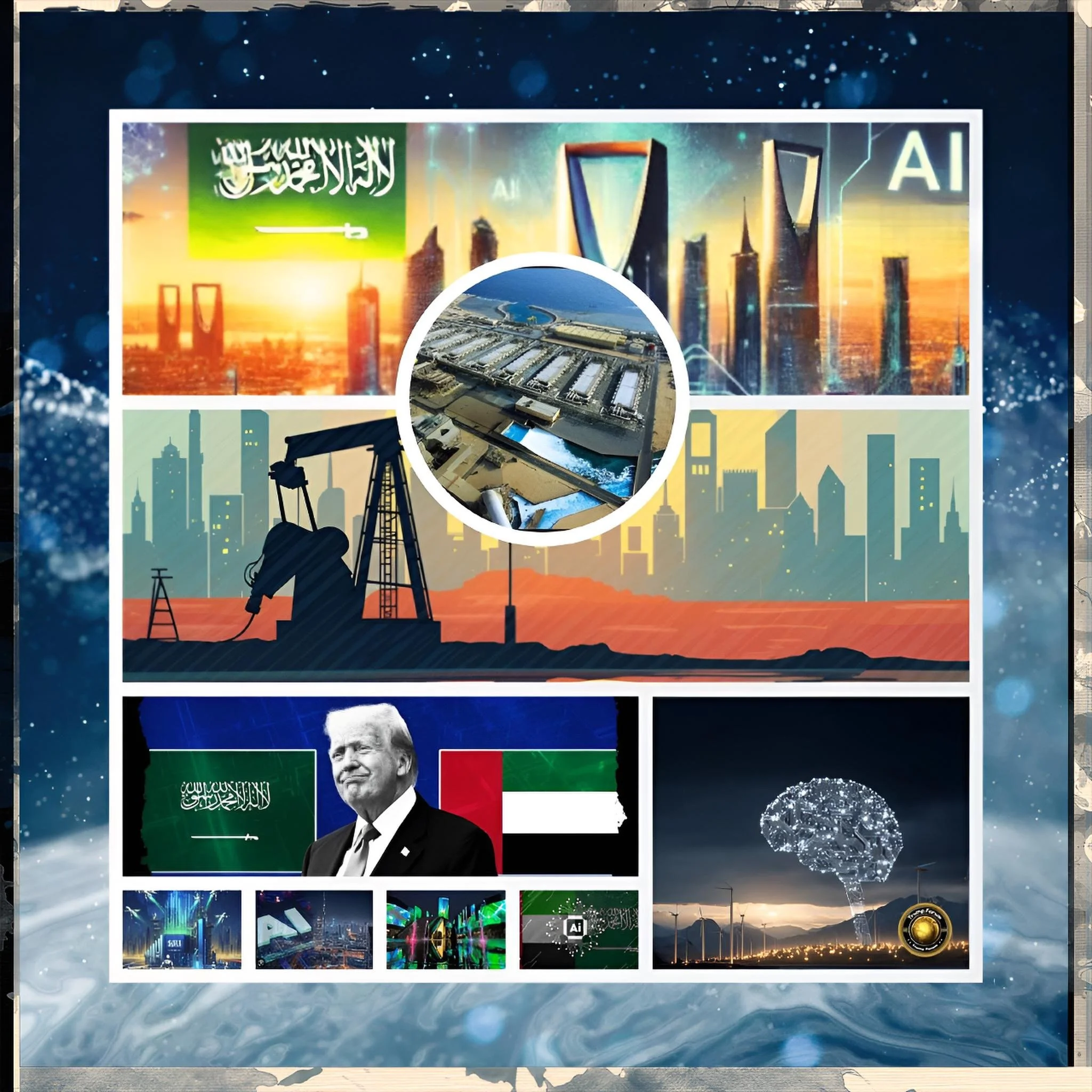
As Middle Eastern nations seek to diversify their economies beyond oil, many are investing substantially in artificial intelligence infrastructure and capabilities.
These investments represent a strategic pivot from being resource providers to becoming technology hubs.
Saudi Arabia has developed the National Strategy for Data and AI through the Saudi Data and Artificial Intelligence Authority (SDAIA), aiming to position the kingdom among the top nations in AI by 2030.
At the LEAP 2025 technology conference in Riyadh, Saudi Arabia announced over $14.9 billion in AI investments.
These include a $1.5 billion commitment to U.S. AI chip startup Groq to expand AI chip delivery and establish a data center in Dammam.
The collaboration between Groq and Aramco Digital aims to build “the world’s largest AI inferencing data center,” positioning Saudi Arabia as a critical hub for AI services across Europe, the Middle East, and South Asia.
This facility will focus on the inference phase of AI processing, where trained AI models apply knowledge to new data to generate real-time predictions or decisions.
Similarly, the UAE has established the National Strategy for Artificial Intelligence 2031, outlining an ambitious vision to become a global leader in AI by that year.
This strategy focuses on creating a foundation for economic transformation through AI, with a goal of generating AED 335 billion in economic growth.
Major technology companies are establishing a significant presence in the region.
Microsoft is building data center regions in Saudi Arabia’s Eastern Province.
Three Azure availability zones are under construction and are expected to be operational by 2026.
In 2023, Google Cloud opened a new Dammam, Saudi Arabia cloud region.
These facilities are designed to provide high-performance, low-latency cloud services to customers throughout the Middle East.
Data Sovereignty and the New Strategic Resource
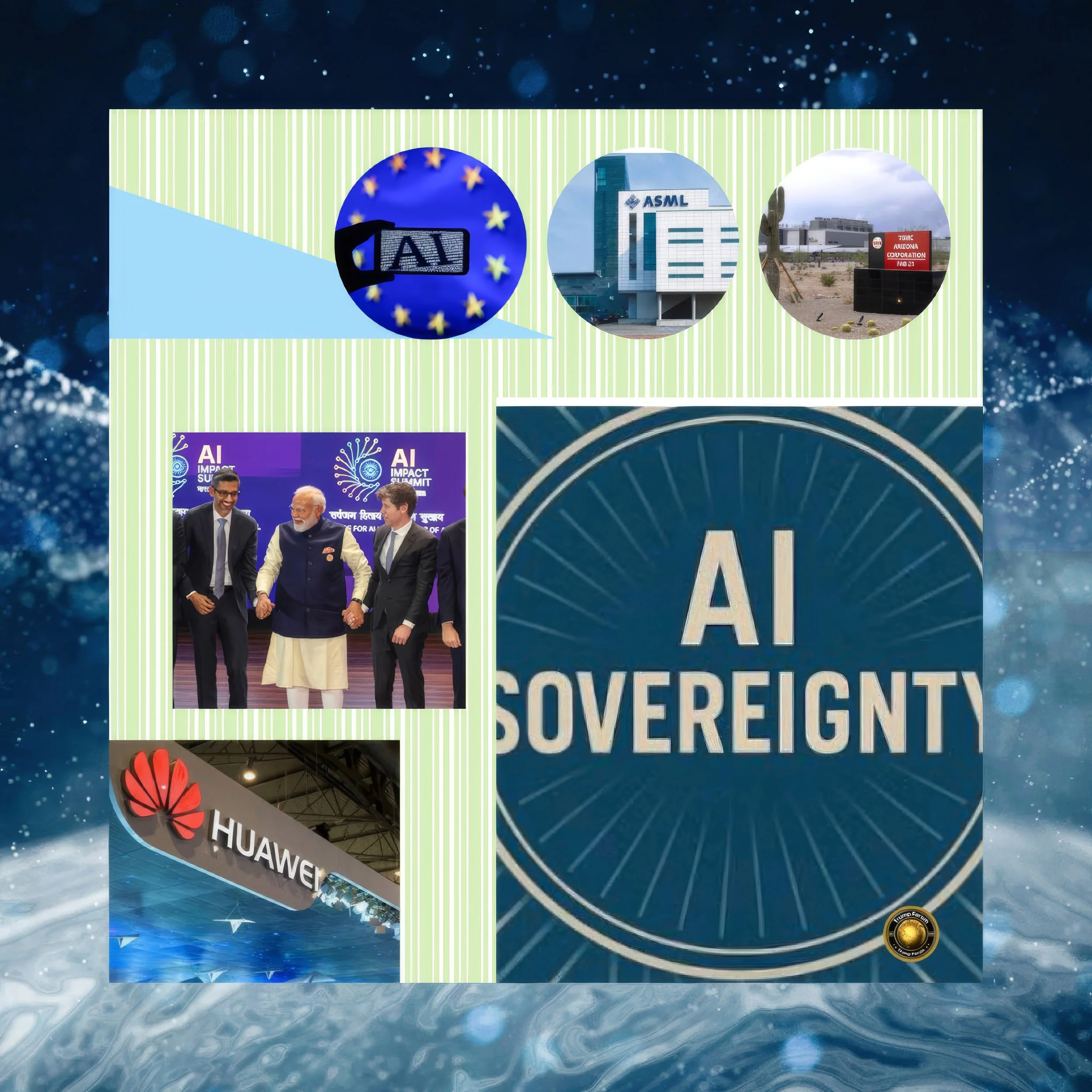
Establishing cloud infrastructure and AI capabilities in the Middle East raises essential questions about data sovereignty and strategic control that parallel earlier concerns about oil dependency.
Data sovereignty refers to how legal, cultural, and political contexts influence data management, localization, and protection.
Just as control over oil resources and infrastructure provided leverage in previous decades, control over data infrastructure represents a strategic asset in the AI era.
G42, a UAE-based AI company, has articulated the concept of an “Intelligence Grid” that emphasizes “the establishment of resilient data Centers and compute capabilities, designed to handle the immense data processing and storage demands of modern AI applications.”
The parallel to oil dependency becomes apparent when considering that nations controlling the infrastructure for AI development and deployment may gain leverage over those who rely on their services.
This includes potential influence over both public and private sector operations that become dependent on these AI resources.
There are also challenges specific to AI offshoring that extend beyond those associated with oil dependence.
These include data security and privacy concerns, as AI algorithms may require access to vast amounts of data to function effectively, increasing the risk of exposure if not handled securely.
When data is transferred for AI processing abroad, it might be stored in locations with varying data protection regulations, potentially creating security risks.
Additionally, the inner workings of some AI models can be complex, making it difficult to understand how they arrive at decisions.
This lack of transparency raises concerns about accountability and fairness, especially for clients unaware of potential biases within the AI used for their outsourced services.
Protecting American AI Leadership: Policy Implications
The United States should develop comprehensive policies to maintain AI leadership and independence, preventing a repeat of the strategic vulnerabilities experienced during the era of oil dependence.
First, continued investment in domestic AI research, development, and infrastructure is essential.
Just as the United States ultimately achieved energy independence through technological innovation, maintaining technological leadership in AI will require sustained focus and investment in domestic capabilities.
Second, strategic partnerships should be evaluated carefully, considering long-term data control and technological sovereignty implications.
While international collaboration can accelerate progress, core AI capabilities in critical sectors should remain under domestic control.
Third, regulatory frameworks should address data sovereignty concerns and ensure that critical AI applications in sectors like defense, healthcare, and critical infrastructure maintain appropriate levels of domestic oversight.
This may include data localization requirements, transparency in algorithmic decision-making, and security standards for sensitive applications.
Fourth, as energy policy evolved to prioritize domestic production and infrastructure, technology policy should include incentives for developing robust domestic AI capabilities, reducing potential dependencies on foreign entities.
This could include tax incentives for domestic AI infrastructure investments, funding for research and development, and workforce development programs.
One potential U.S.-Middle East AI relations model could involve “Saudi Arabia committing to strong export controls, validated end-user standards, and co-governed infrastructure, in exchange” for certain technological benefits.
Such arrangements must balance cooperation with the careful protection of strategic interests.
Conclusion
Learning from History to Secure the Future
The historical parallel between oil dependence and potential AI dependence offers valuable lessons for American policymakers.
The United States experienced significant strategic vulnerabilities while relying on Middle Eastern oil, which has largely been overcome through technological innovation and the development of domestic resources.
As artificial intelligence emerges as a critical technology for economic competition and national security, the United States should be cautious about offshoring AI capabilities to the Middle East, creating new dependencies.
While the region’s ambitious investments in AI infrastructure and partnerships with American technology companies could bring benefits through collaboration, the United States must maintain robust domestic AI capabilities to ensure strategic independence in this crucial technology domain.
The story of “Seward’s Folly” reminds us that investments in domestic capabilities often yield returns far greater than initially anticipated.
Just as the Alaska purchase ultimately provided the United States with vital energy resources that have generated over $180 billion in revenue, strategic investments in domestic AI capabilities may prove similarly valuable in the decades ahead.
As the United States navigates the AI revolution, it should apply the hard-learned lessons from its energy history: proper security comes from domestic capability, technological leadership, and strategic autonomy in critical resources.