Europe’s Strategic Response to the Trump-Musk Technology Oligarchy
Introduction
The emergence of Elon Musk as a central figure in Donald Trump’s second administration represents a fundamental shift in the transatlantic balance of power, transforming him from a private sector entrepreneur into what can effectively be described as America’s “oligarch-in-chief.”
With Musk’s influence now backed by the full weight of the United States’ $27 trillion economy, Europe faces unprecedented challenges that require a comprehensive recalibration of its technological, regulatory, and strategic approach.
FAF, Paris.Forum analyzes how the convergence of immense private wealth with state power creates new dynamics threatening European sovereignty across multiple domains, from digital regulation to security policy, demanding urgent and coordinated responses from Brussels and European capitals.
The Unprecedented Concentration of Techno-Political Power
Musk’s Economic Empire and Government Influence
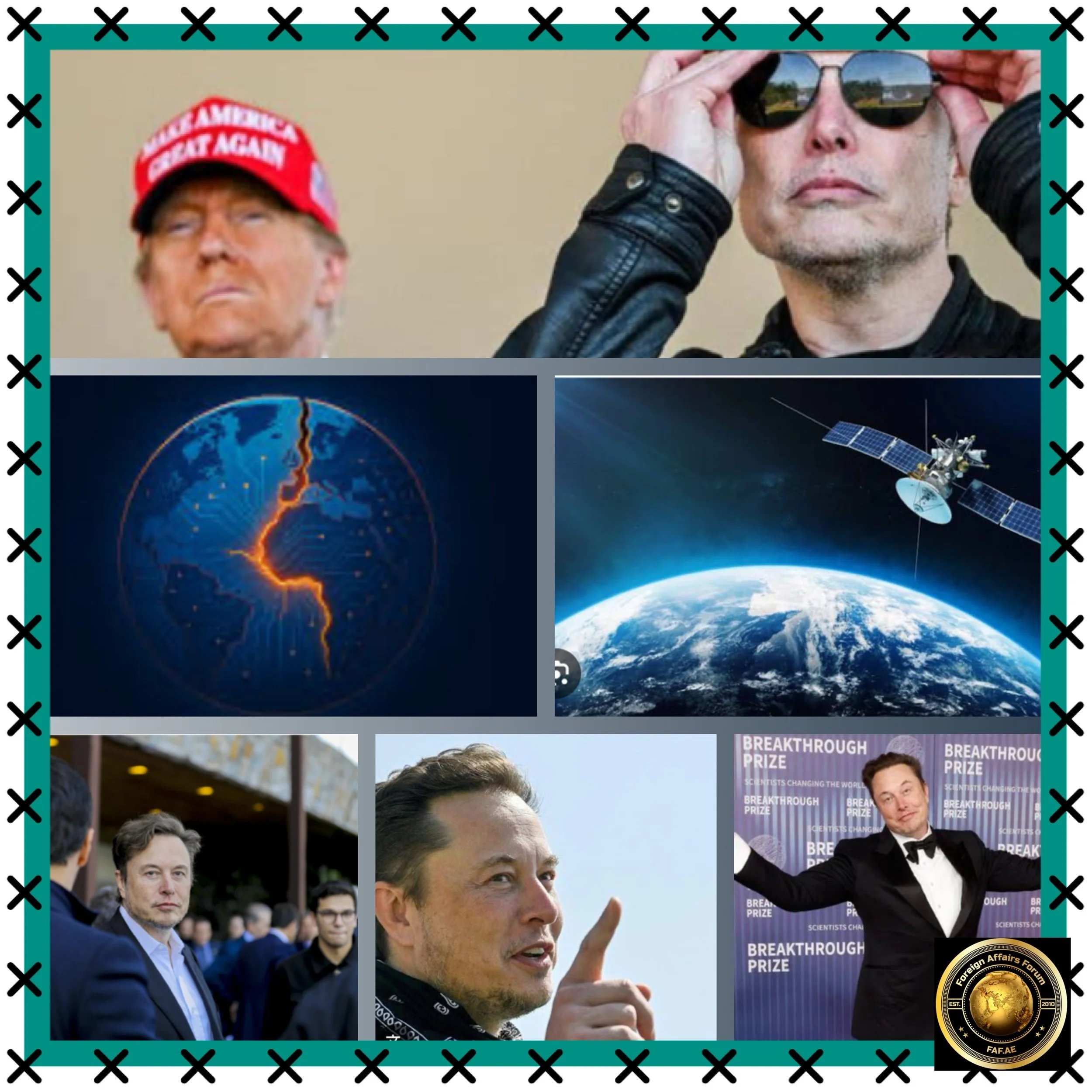
Elon Musk’s transformation from tech entrepreneur to political power broker represents an unprecedented concentration of private wealth and public influence in modern democratic history.
His estimated net worth of $381 billion, according to Bloomberg, and $424.7 billion, according to Forbes, makes him the wealthiest individual globally.
His fortune is primarily derived from Tesla and SpaceX holdings.
This concentration of wealth becomes particularly significant when contextualized against the broader American economy—Musk’s net worth now exceeds 1% of the United States’ $27 trillion GDP, a level of individual economic power rarely seen in democratic societies.
The scope of Musk’s business empire extends far beyond simple wealth accumulation. His companies span critical sectors, including electric vehicles through Tesla, space technology and satellite communications via SpaceX and Starlink, social media through X (formerly Twitter), artificial intelligence development with xAI, and emerging neural technology and tunnel construction ventures.
This diversified portfolio positions Musk at the intersection of multiple strategic industries fundamental to economic competitiveness and national security in the 21st century.
What distinguishes Musk’s current position from previous instances of wealthy individuals wielding political influence is the direct integration of his business interests with governmental power structures.
As head of the Department of Government Efficiency (DOGE), Musk has been granted unprecedented access to federal decision-making processes, effectively allowing him to shape policies that directly impact his business interests and those of his competitors.
This fusion of private economic power with public authority creates what critics have termed a “technicolor moment,” in which the concentrated influence of tech billionaires challenges traditional democratic governance mechanisms.
The Amplification Effect of State Power
Musk’s transformation of influence from corporate to governmental represents a qualitative change, like his power projection capabilities.
Previously, when confronting regulatory challenges from entities like the European Union or Brazilian courts, Musk operated within the constraints of private corporate authority. European regulators could challenge X’s compliance with the Digital Services Act or impose fines without fear of broader diplomatic or economic retaliation.
However, his integration into the Trump administration fundamentally alters these power dynamics, as his positions now carry the implicit backing of American state power.
This amplification effect extends beyond mere diplomatic weight to encompass American economic and security capabilities.
When Musk engages with European officials on matters ranging from satellite communications policy to social media regulation, his negotiating position is now underpinned by America’s military alliance structures, trade relationships, and financial systems.
The practical implications of this shift became apparent when the European Commission reportedly began reconsidering ongoing investigations into American tech companies, including potential cases against Meta, Apple, and Google, in response to fears of Trump administration retaliation.
Integrating Musk’s business interests with American foreign policy creates complex challenges for European policymakers, who must now consider how actions against one of his companies might trigger broader consequences for transatlantic relations.
This dynamic effectively shields Musk’s enterprises from the aggressive regulatory enforcement that European authorities had previously employed against American tech companies, representing a significant erosion of European regulatory sovereignty.
European Regulatory Vulnerabilities in the Digital Age
The Digital Services Act Under Pressure
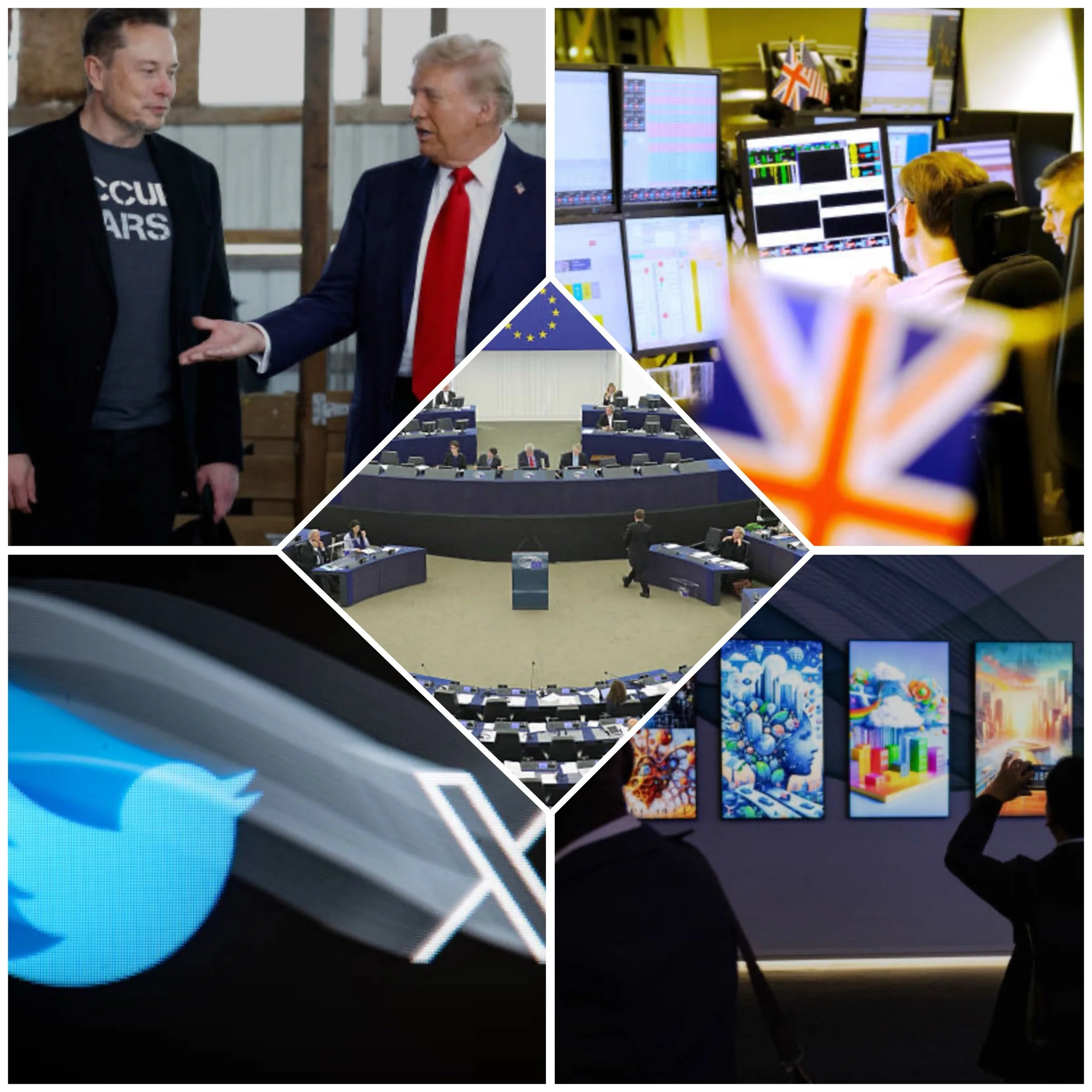
The European Union’s Digital Services Act represents one of the most comprehensive attempts to regulate digital platforms and combat disinformation. Still, its enforcement mechanisms face unprecedented challenges regarding Musk’s enhanced political influence.
The legislation, designed to hold large tech platforms accountable for content moderation, user verification, and transparency in advertising practices, has already encountered significant resistance from X under Musk’s ownership.
The platform has been accused of failing to provide data access to researchers, inadequately verifying paying users, and maintaining insufficient transparency in advertising frameworks—violations that collectively expose European citizens to disinformation and foreign influence operations.
Under normal circumstances, these violations would result in substantial financial penalties, potentially reaching up to 6% of global annual revenue under DSA provisions.
European regulators had initially signaled confidence in their ability to enforce compliance, with officials suggesting that even Musk personally could face liability for platform violations.
However, the political landscape shifted dramatically following Musk’s integration into the Trump administration, creating new concerns about potential American retaliation for European regulatory enforcement actions.
The European Commission’s apparent hesitation to proceed with planned enforcement actions reflects a broader vulnerability in Europe’s regulatory framework.
While the legal mechanisms for platform accountability remain robust, fears of economic retaliation have undermined the political will to enforce these regulations against American companies.
This dynamic effectively creates a two-tiered system of digital governance. European platforms face stringent regulatory oversight, while American companies, particularly those with connections to the Trump administration, operate with de facto immunity from meaningful enforcement actions.
The Precedent of Brazilian Regulatory Success
The contrast between European hesitation and Brazilian regulatory success provides essential insights into practical approaches for constraining Musk’s platform operations.
When X violated Brazilian content moderation requirements and court orders, the country’s supreme court blocked domestic access to the platform until Musk complied with local laws.
The Brazilian approach succeeded precisely because it combined legal authority with political will, demonstrating that even powerful tech platforms can be compelled to respect national sovereignty when governments are prepared to enforce their regulations comprehensively.
Brazil’s success in forcing Musk to comply, including paying substantial fines, demonstrates that the tech billionaire’s influence has practical limits when confronted with determined regulatory action.
The key difference between the Brazilian and European approaches lies not in legal frameworks but in political determination—Brazilian authorities were willing to accept temporary economic disruption and diplomatic tension to maintain regulatory sovereignty. In contrast, European officials have shown greater concern about potential retaliation from the Trump administration.
This precedent suggests that European regulatory effectiveness depends less on legal innovation than political courage and coordination among member states.
The fragmented nature of European decision-making, where individual member states’ concerns about bilateral relations with the United States can undermine collective EU enforcement actions, creates vulnerabilities that more centralized systems like Brazil’s do not face.
Addressing these vulnerabilities requires stronger legal frameworks and enhanced political mechanisms for maintaining unified European responses to American pressure.
Strategic Imperatives for European Technology Sovereignty
The IRIS² Initiative and Satellite Independence
Europe’s development of the IRIS² satellite constellation represents a crucial step toward reducing dependence on American space-based infrastructure, particularly Musk’s Starlink network.
The European Commission’s December 2024 launch of this initiative, featuring a multi-orbital constellation of 290 satellites combining Medium-Earth Orbit and Low-Earth Orbit capabilities, demonstrates recognition of the strategic vulnerabilities created by reliance on privately controlled American space assets.
The system is designed to provide secure connectivity services for governmental users while offering broadband access to private companies and European citizens, creating a comprehensive alternative to American-dominated satellite communications infrastructure.
The strategic importance of satellite independence extends beyond telecommunications to encompass military communications, intelligence gathering, and critical infrastructure protection.
Starlink’s dominant position in the satellite internet market creates potential chokepoints where European governmental and commercial communications could be subject to American political pressure or technical manipulation.
The IRIS² constellation, scheduled to become operational by 2030, would provide European institutions with communications capabilities immune to external political interference, significantly enhancing European strategic autonomy.
However, the success of IRIS² depends on sustained political and financial commitment from European member states and the development of competitive commercial applications that can support the system’s long-term viability.
The initiative faces competition from established American providers like Starlink and emerging Chinese satellite networks, requiring European policymakers to balance security considerations with cost-effectiveness and technical performance.
The project’s ultimate success will determine whether Europe can achieve meaningful independence in space-based communications or remains dependent on foreign-controlled systems for critical connectivity needs.
Redirecting Resources from Regulation to Innovation
The changing political dynamics surrounding American tech companies necessitate fundamentally rebalancing European priorities from regulatory enforcement toward technological innovation and competition.
While the EU has invested significant resources in developing comprehensive regulatory frameworks like the Digital Services Act and Digital Markets Act, the practical limitations on enforcing these regulations against politically connected American companies suggest that regulatory approaches alone are insufficient for protecting European interests.
Instead, Europe must develop indigenous technological capabilities that compete directly with American platforms and services.
This strategic reorientation requires substantial shifts in European funding priorities, redirecting resources from regulatory bureaucracies toward research and development, startup incubation, and scaling support for promising European technology companies.
The goal is not deregulation but instead developing European alternatives that reduce dependence on American platforms while providing European authorities greater leverage in diplomatic and regulatory negotiations.
When European citizens and businesses have viable alternatives to American tech services, the threat of platform withdrawal or service degradation becomes less coercive, restoring European bargaining power in international negotiations.
The practical implementation of this strategy requires coordination between European Union institutions, national governments, and private sector investors to identify and support technology companies with genuine scaling potential.
This includes preventing the premature sale of promising European startups to American or Chinese acquirers.
This pattern has historically weakened European technological capabilities by transferring innovation and intellectual property to foreign competitors.
Success in this endeavor would create a more balanced global technology ecosystem where European alternatives provide competitive pressure on American platforms while serving as instruments of European strategic autonomy.
Geopolitical Implications and Security Challenges
Ukraine Policy and Musk’s Russian Connections
Musk’s documented concerns about nuclear escalation with Russia, combined with his business interests that could benefit from improved US-Russia relations, create significant risks for European security policy, particularly regarding support for Ukraine.
His apparent influence on the Trump administration's foreign policy positions him as a potential advocate for premature peace negotiations that could favor Russian interests at Ukraine’s expense.
Given Russia’s status as a potential market for Musk’s companies, particularly in the post-war reconstruction phase, his business incentives may not align with European security interests that require sustained Ukrainian resistance to Russian aggression.
The intersection of Musk’s commercial interests with American foreign policy creates particular challenges for European efforts to maintain robust support for Ukrainian defense capabilities.
European officials have observed that Musk’s greatest fear appears to be nuclear escalation. This concern could lead him to advocate for accommodation with Russian demands rather than the sustained pressure necessary to secure Ukrainian territorial integrity.
This dynamic places European governments in the position of potentially having to provide increased support for Ukraine to compensate for American reductions in assistance, requiring enhanced European defense production capabilities and financial commitments.
Germany’s recent commitment under Chancellor Friedrich Merz to assist Ukraine in developing long-range missile production capabilities represents one European response to these concerns.
By helping Ukraine achieve greater self-reliance in weapons production, European countries can maintain Ukrainian defensive capabilities even if American support proves unreliable.
This approach addresses immediate security concerns and builds Ukrainian industrial capacity that could serve broader European defense interests in the long term, creating a more resilient security architecture that is less dependent on American political stability.
China Policy and European Automotive Interests
Musk’s extensive business ties with China, particularly Tesla’s significant manufacturing operations and market presence in the country, position him as a moderating influence on US-China relations that could have complex implications for European commercial interests.
While reduced US-China tensions might give Europe greater flexibility in its own China policy, Musk’s influence could also result in preferential treatment for American companies in Chinese markets at European expense.
This dynamic is particularly concerning for European automotive manufacturers, which face significant challenges competing against Chinese domestic producers and Tesla’s increasingly favored position in the Chinese market.
Recent market data illustrates the scale of European automotive vulnerabilities in China. Tesla maintains strong performance while European competitors struggle with declining market share and regulatory challenges.
The prospect of Tesla receiving additional preferential treatment due to Musk’s political influence could further marginalize European automotive companies in one of the world’s largest vehicle markets.
This scenario would accelerate the decline of European automotive competitiveness just as the industry undergoes fundamental technological transitions toward electric and autonomous vehicles.
European policymakers must, therefore, develop contingency strategies that protect European automotive interests regardless of US-China relationship dynamics.
This includes considering retaliatory measures, such as increased tariffs on Chinese electric vehicles, if European companies face additional discrimination in Chinese markets. It also includes enhanced support for European automotive technology development to maintain competitiveness in global markets.
The goal is to ensure that European automotive companies are not caught between American political influence and Chinese market preferences, requiring proactive policies that protect European commercial interests while maintaining productive economic relationships with both major powers.
European Strategic Response Framework
Immediate Diplomatic and Economic Measures
European leaders must develop sophisticated approaches to managing the Trump-Musk administration that balances accommodation with resistance, learning from other allies' successful and unsuccessful attempts to influence American policy.
The contrasting approaches of different allies provide valuable insights: Canada’s strategy of showing strength on tariffs while offering cooperation on border security and Britain’s emphasis on shared values and mutually beneficial collaboration demonstrate different pathways for maintaining productive relationships while protecting national interests.
European governments should adopt similarly nuanced approaches that acknowledge American concerns while firmly defending European sovereignty in key areas.
The development of coordinated European negotiating positions becomes crucial given Trump’s apparent preference for bilateral negotiations with individual countries rather than multilateral engagement with the European Union.
This approach creates risks of European disunity as individual member states compete for favorable treatment from the American administration, potentially undermining collective European bargaining power.
European institutions must, therefore, develop mechanisms for maintaining unity while allowing for differentiated national approaches that reflect varying bilateral relationships with the United States.
Economic strategy must focus on diversifying European dependencies while building leverages that can influence American behavior.
This includes accelerating the development of alternative payment systems, expanding trade relationships with non-American partners, and creating European alternatives to critical American technologies and services.
The goal is not to end transatlantic cooperation but to ensure that such collaboration occurs between equals rather than between a dominant partner and dependent allies, requiring sustained investment in European capabilities across multiple sectors.
Long-term Institutional Reforms
The challenges the Trump-Musk administration poses highlight broader vulnerabilities in European institutional structures that require fundamental reforms to enhance resilience against external pressure.
The fragmented nature of European decision-making, where
Individual member states can undermine collective positions due to bilateral concerns and create systemic weaknesses that sophisticated external actors can exploit.
Addressing these vulnerabilities requires institutional innovations that strengthen European unity while respecting member-state sovereignty.
These innovations could include enhanced qualified majority voting related to external economic pressure and technological sovereignty.
European institutions must also develop enhanced capabilities for strategic planning and crisis response to operate at the speed and scale of modern geopolitical challenges.
The institutional framework, designed for gradual consensus-building and incremental policy development, proves inadequate when confronting rapid shifts in the global balance of power or coordinated pressure campaigns from foreign governments.
This necessitates the creation of new institutional mechanisms that can provide rapid, coordinated responses to external challenges while maintaining democratic legitimacy and member state buy-in.
The development of European strategic autonomy requires the political will and institutional capacity to simultaneously implement and sustain complex, long-term policies across multiple sectors.
This includes enhanced coordination between European Union institutions, national governments, and private sector actors to ensure that European responses to external challenges are comprehensive and mutually reinforcing rather than fragmented and contradictory.
Success in building such institutional capacity will largely determine whether Europe can effectively respond to current challenges while positioning itself for future geopolitical competition.
Conclusion
The emergence of Elon Musk as a central figure in American governance represents a fundamental challenge to the traditional foundations of transatlantic relations and European strategic autonomy.
His unique combination of unprecedented private wealth, control over critical technologies, and direct integration into American governmental power structures creates new forms of influence that existing European institutional frameworks are poorly equipped to address.
The concentration of such power in the hands of a single individual, backed by the full weight of American state authority, threatens to undermine European sovereignty across multiple domains, from digital regulation to security policy.
European responses must, therefore, be equally comprehensive and transformative, moving beyond traditional diplomatic and regulatory approaches toward fundamental enhancements of European technological and institutional capabilities. It
Developing indigenous alternatives to American-dominated technologies, creating more resilient institutional frameworks for maintaining European unity under external pressure, and cultivating enhanced strategic partnerships with like-minded allies represent essential elements of an effective European response strategy.
Success in these endeavors will determine whether Europe can maintain its position as an independent pole in global affairs or become increasingly subordinated to American technological and political dominance.
The stakes of this challenge extend far beyond immediate policy disputes to encompass the fundamental question of whether democratic societies can maintain their sovereignty in an era of concentrated technological power.
Europe’s response to the Trump-Musk administration will serve as a crucial test case for whether traditional democratic institutions and multilateral cooperation can adapt effectively to 21st-century challenges or will be overwhelmed by new techno-political power.
The outcome will shape not only the future of transatlantic relations but the broader trajectory of global governance in the digital age, making Europe successful in developing effective countermeasures essential for preserving democratic values and institutional frameworks worldwide.